What a Conveyor Impact Idler Does
A conveyor impact idler works where the belt takes its hardest hits. At a transfer chute, crusher discharge, or truck dump point, rock and ore fall onto the belt with real force. A standard carrying idler would soon show dents, flat spots, and worn bearings. The impact idler is built to absorb that energy and protect both the belt and the frame.
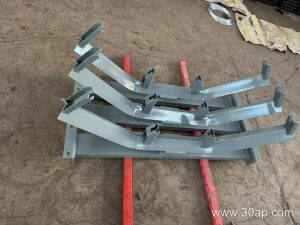
This roller sits in the same troughing position as an ordinary carrying idler, but its shell and bearing arrangement are made for shock loading. It is a buffer roller, not a drive or tail pulley, and it does not steer the belt. In a typical impact station, several of these rollers are mounted close together under the loading zone, often as a three-roller trough set with 20 to 45 degree trough angles.
How the Roller Is Built
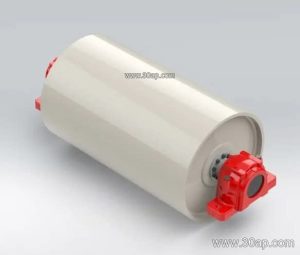
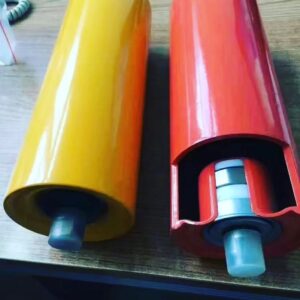
The most common form uses a steel tube body fitted with rubber rings, sometimes called a rubber disc impact roller. The rubber rings sit in grooves or between spacers and take the direct hit from falling material. A plain steel tube version is also available for lighter drop heights.
Inside, the shaft runs through sealed bearing housings. Common bearing sizes in this family include 6205, 6305, 6306, and 6308, matched to roller diameter and load rather than to belt width alone. Shell diameters usually follow the standard range, with Ø89, Ø108, Ø133, Ø159, and Ø178 being frequent choices for impact duty. Heavy stations may use larger shells to spread the load.
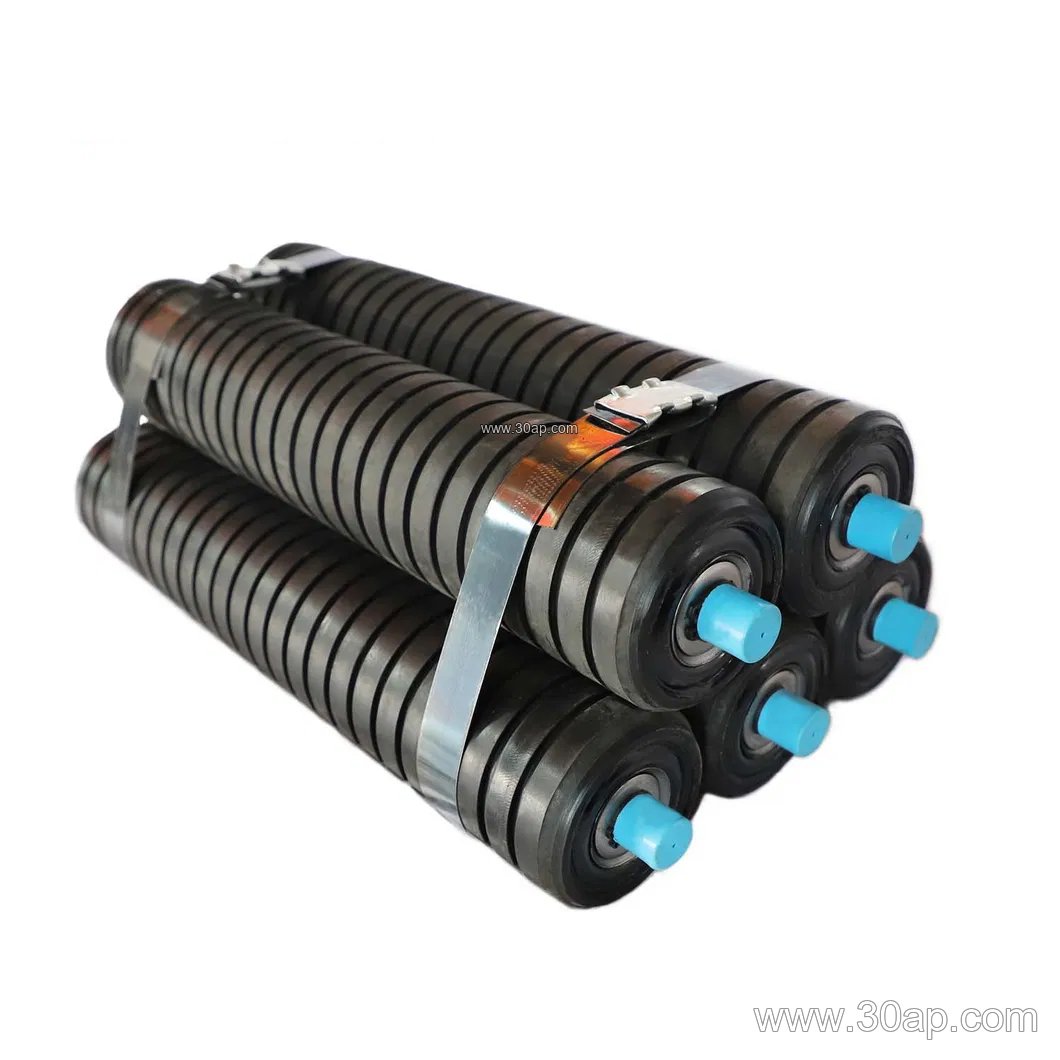
Mounting is through the conveyor bracket or frame, and the roller must align with the adjacent troughing idlers so the belt keeps a smooth line. A common specification table for this product family looks like this:
Reference Parameters
- Roller diameter: Ø89, Ø108, Ø133, Ø159, Ø178, Ø194 mm
- Belt width: B500, B650, B800, B1000, B1200, B1400, B1600, B1800, B2000
- Trough set: single roller, two-roller, three-roller
- Trough angle: 20, 30, 35, 45 degrees
- Surface form: steel tube, rubber ring, ceramic-faced where needed
- Bearing: 6204, 6205, 6305, 6306, 6308, 6310
- Roller length: set by belt width, trough angle, and roll position
These values are reference data. On a three-roller trough set, the side rollers and center roller can differ in length. For example, a B1000 belt may use a center roll around 380 mm, but the final length is fixed by the design of the station, not by one universal rule.
Where Impact Idlers Are Used
You will find them in quarry and aggregate lines under the primary crusher, in coal handling systems at power plants, in cement plants at clinker transfer points, and in iron ore or copper ore circuits where lump size is large. In a sand and gravel plant, they protect the belt right below the feed hopper. In a coal preparation plant, they sit under the screening and crushing discharge.
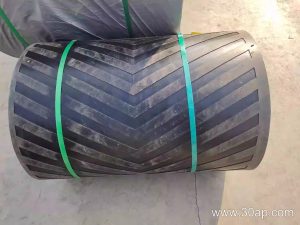
The belt above them is often a heavy-duty rubber conveyor belt, an abrasion resistant conveyor belt, or a high abrasion resistant conveyor belt. In underground coal mining, flame retardant conveyor belt and PVG conveyor belt constructions are common, and the impact zone still needs a buffer roller that will not deform under repeated shock.
Impact Idler Versus Standard Carrying Idler
The difference is in the energy absorption. A standard troughing idler is designed for steady belt load and smooth material. An impact idler adds rubber rings or a reinforced shell so the falling lump does not transfer all its force into the bearing and frame. That is why the buffer roller is placed only at the loading point; using it along the whole conveyor would add cost and rolling resistance without benefit.
For comparison, a return idler or a V-shaped return roller handles the empty side of the belt, while a self-aligning idler corrects belt drift. None of these is a substitute for the impact roller at the chute.
Buyer Checklist
- Match roller diameter and bearing to the drop height and lump size, not just to belt width.
- Confirm the trough angle and roller lengths with the existing frame before ordering.
- Ask for the rubber ring hardness and thickness if the material is sharp or hot.
- Check that seals suit dust and water in the plant.
- Keep a small stock of buffer rollers for the busiest transfer points.
For related belt and roller information, see Rubber Conveyor Belt, EP Conveyor Belt, and conveyor idler roller references. A well-chosen impact idler protects the belt, the frame, and the production schedule at the point where the load lands hardest.