What a Belt Conveyor Self-Aligning Idler Does
A belt conveyor self-aligning idler is a carrying or return roller assembly designed to correct belt drift without manual adjustment. When a conveyor belt wanders toward one side of the frame, the self-aligning idler pivots slightly around a vertical axis, and the resulting change in contact angle nudges the belt back toward the center line. This makes the self-aligning idler a practical choice on long runs, curved sections, and loading points where material impact or uneven tension tends to push the belt off track.
In a quarry or a limestone mine, a drifting belt can spill material along the walkway and rub against the structure. Fitting a self-aligning idler at selected stations reduces that wear and keeps the conveyor belt running closer to its intended path. It is a tracking aid, not a substitute for correct pulley alignment, and it works best when the whole conveyor is set up properly from the drive pulley to the tail pulley.
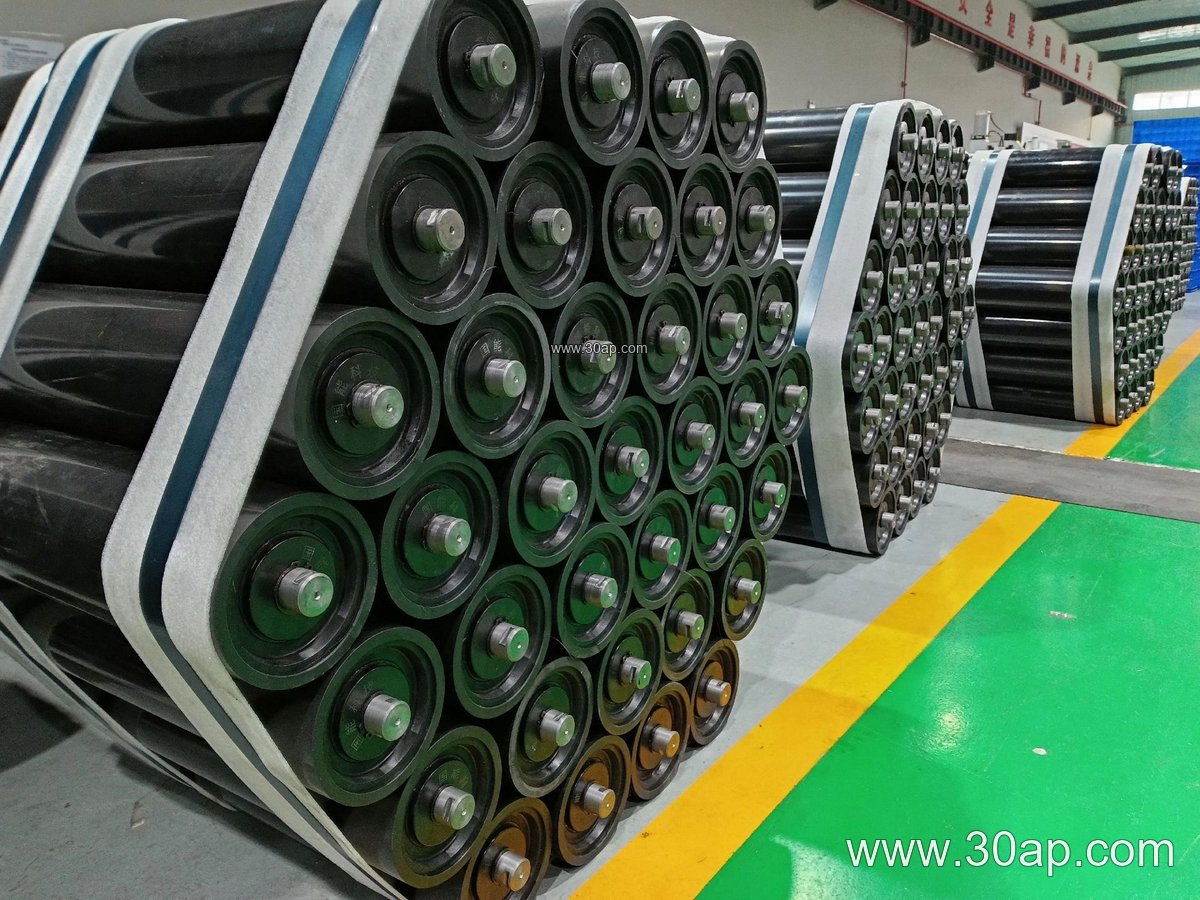
How the Assembly Is Built
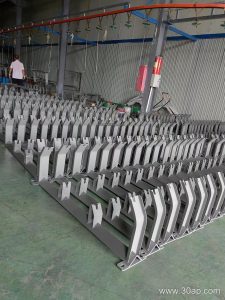
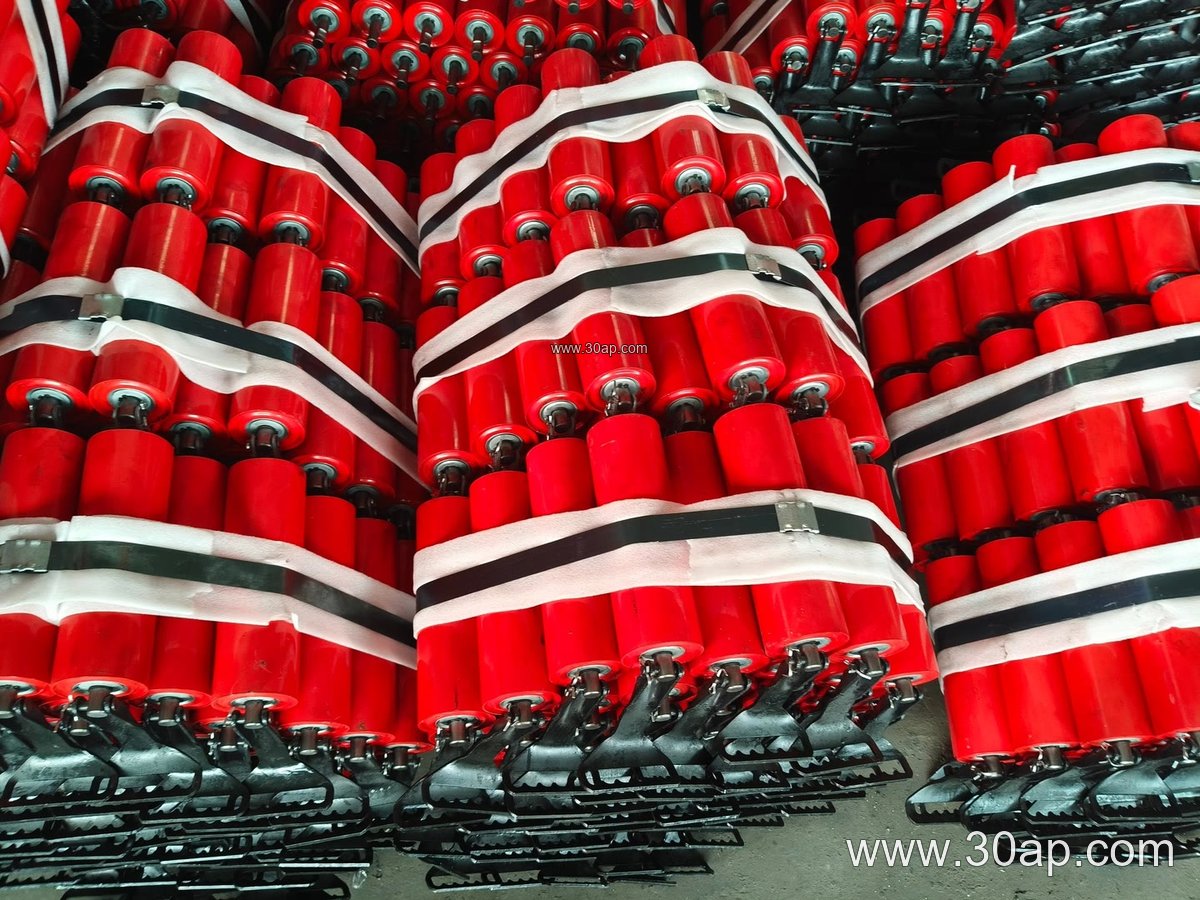
Most designs use a set of rollers mounted on a pivoting frame. The frame sits on a base that is fixed to the conveyor bracket, and a vertical pivot pin lets the roller set swing a few degrees when the belt pushes against one side. Friction self-aligning types rely on the belt contact itself to trigger the swing, while conical self-aligning idlers use tapered roller ends to create a restoring force. A return-side version often uses two rollers in a V shape to guide the belt from below.
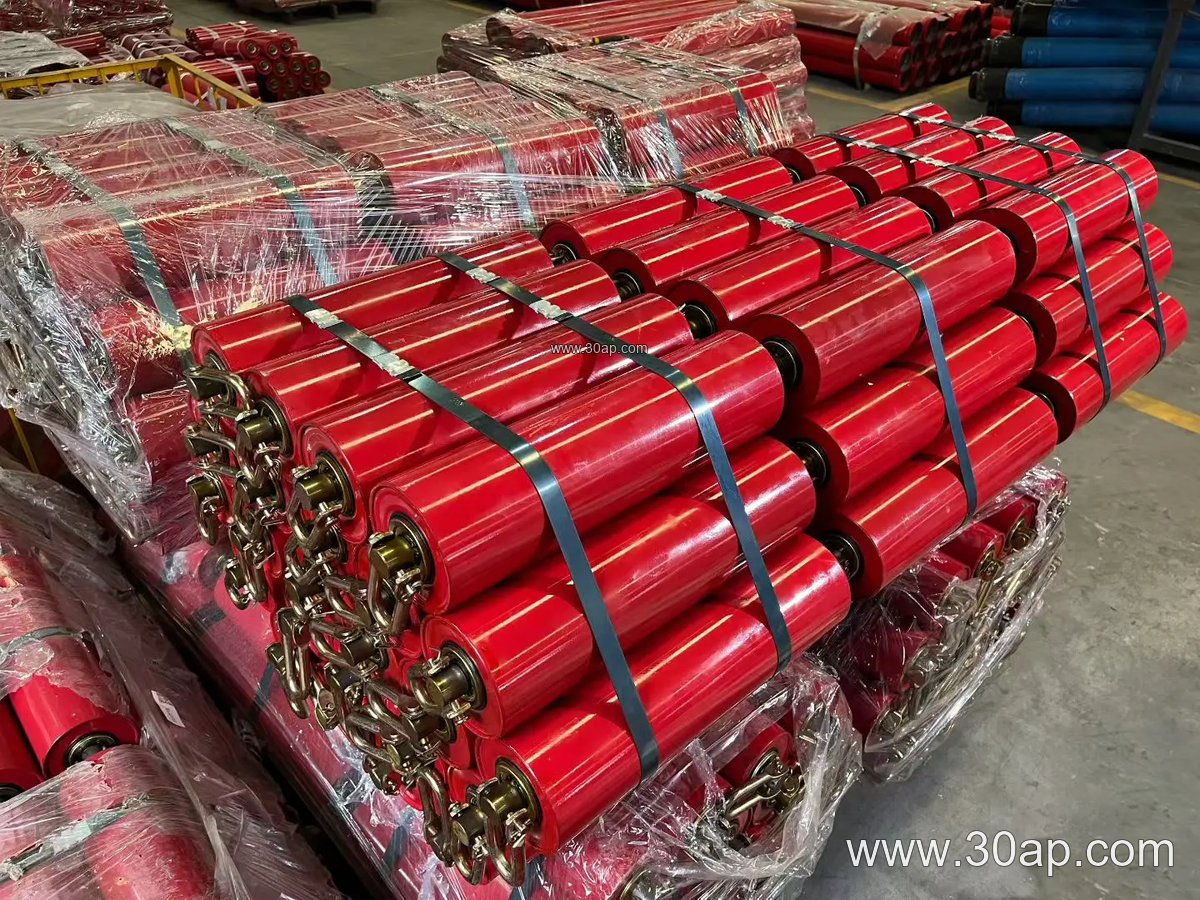
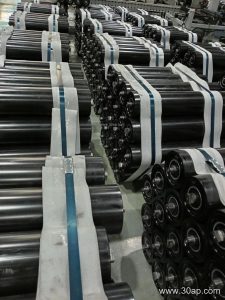
Roller shells are commonly steel tube, and the surface may be plain steel, nylon, ceramic, or rubber rings depending on the duty. Rubber rings help at impact points and improve grip on the belt. Bearings are usually sealed deep-groove types such as 6204, 6205, 6305, 6306, 6308, or 6310, matched to the shaft and load rather than to belt width alone. Shaft diameter, roller length, and mounting height should be confirmed by the conveyor designer.
Common reference dimensions
The table below shows typical reference values, not fixed combinations. Actual roller length depends on belt width, trough angle, and the idler group form.
| Belt width | Typical roller length, three-roll trough | Common trough angles |
|---|---|---|
| B500 | about 200 mm | 20, 30, 35 degrees |
| B650 | about 250 mm | 20, 30, 35 degrees |
| B800 | about 315 mm | 30, 35, 45 degrees |
| B1000 | about 380 mm | 30, 35, 45 degrees |
| B1200 | about 465 mm | 30, 35, 45 degrees |
| B1400 | about 530 mm | 30, 35, 45 degrees |
| B1600 | about 600 mm | 30, 35, 45 degrees |
| B1800 | about 670 mm | 30, 35, 45 degrees |
| B2000 | about 750 mm | 30, 35, 45 degrees |
Roller diameters in common use include Ø63, Ø76, Ø89, Ø102, Ø108, Ø127, Ø133, Ø159, Ø178, Ø194, and Ø219 mm. Side rollers and the center roller can differ in length, so a single belt width does not lock in one roller size. Forward tilt of about 1.5 to 2 degrees is sometimes used on carrying idlers to assist tracking, and this is a separate design detail from the self-aligning action.
Where It Fits on the Conveyor
Self-aligning idlers are often placed after the loading point, before and after curves, and at intervals along long straight sections. On a coal mining conveyor belt or an underground mining conveyor, they help counter the side forces created by uneven loading. In a cement plant or power plant coal yard, they protect the belt edges from rubbing the frame. The same idea applies on an aggregate conveyor belt line feeding a crusher, where impact and off-center feed are common.
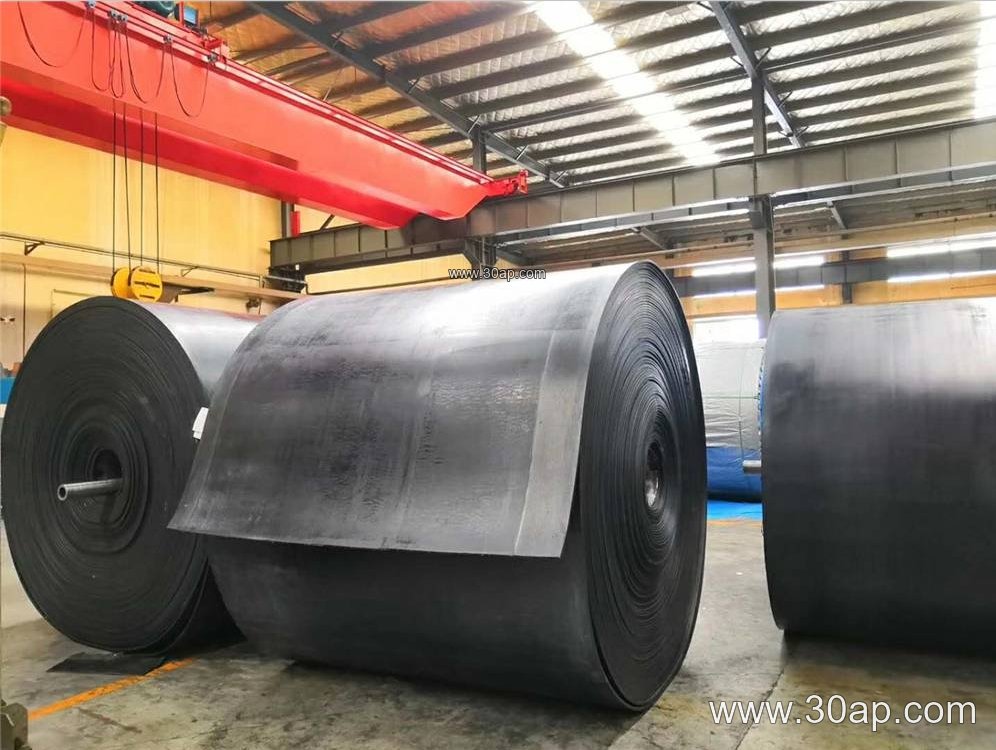
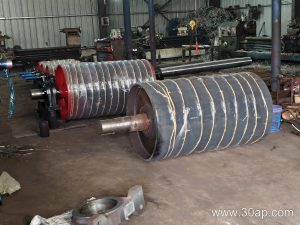
They are not the same as a drive pulley, tail pulley, or bend pulley; those parts transmit power and set belt path, while the self-aligning idler only corrects minor drift. A standard troughing idler or impact idler may be used nearby for carrying load or absorbing shock, but it does not replace the tracking function.
Buyer Checklist
- Confirm belt width and the existing idler group form, such as single-roll, two-roll, or three-roll trough.
- State the mounting dimensions and the conveyor bracket spacing so the pivot base fits.
- Choose the roller surface for the environment: rubber rings for impact, ceramic or nylon where build-up is a concern.
- Match bearing and shaft size to the actual load and speed, not to belt width alone.
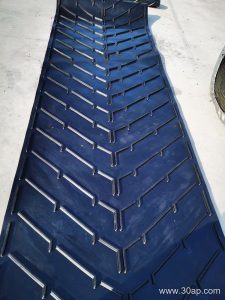
- Check whether the belt is a heavy-duty mining conveyor belt or a lighter fabric core type, since edge stiffness affects tracking.
- Ask for the pivot range and restoring force data rather than assuming every self-aligning idler behaves the same.
Used together with well-aligned pulleys and a properly tensioned belt, a belt conveyor self-aligning idler is a low-maintenance way to keep material moving on quarry, cement, and power plant lines. For matching conveyor belt, idler roller, and conveyor pulley details, work from the actual conveyor layout rather than a generic size chart.