What a Heavy-Duty Lagged Pulley Does
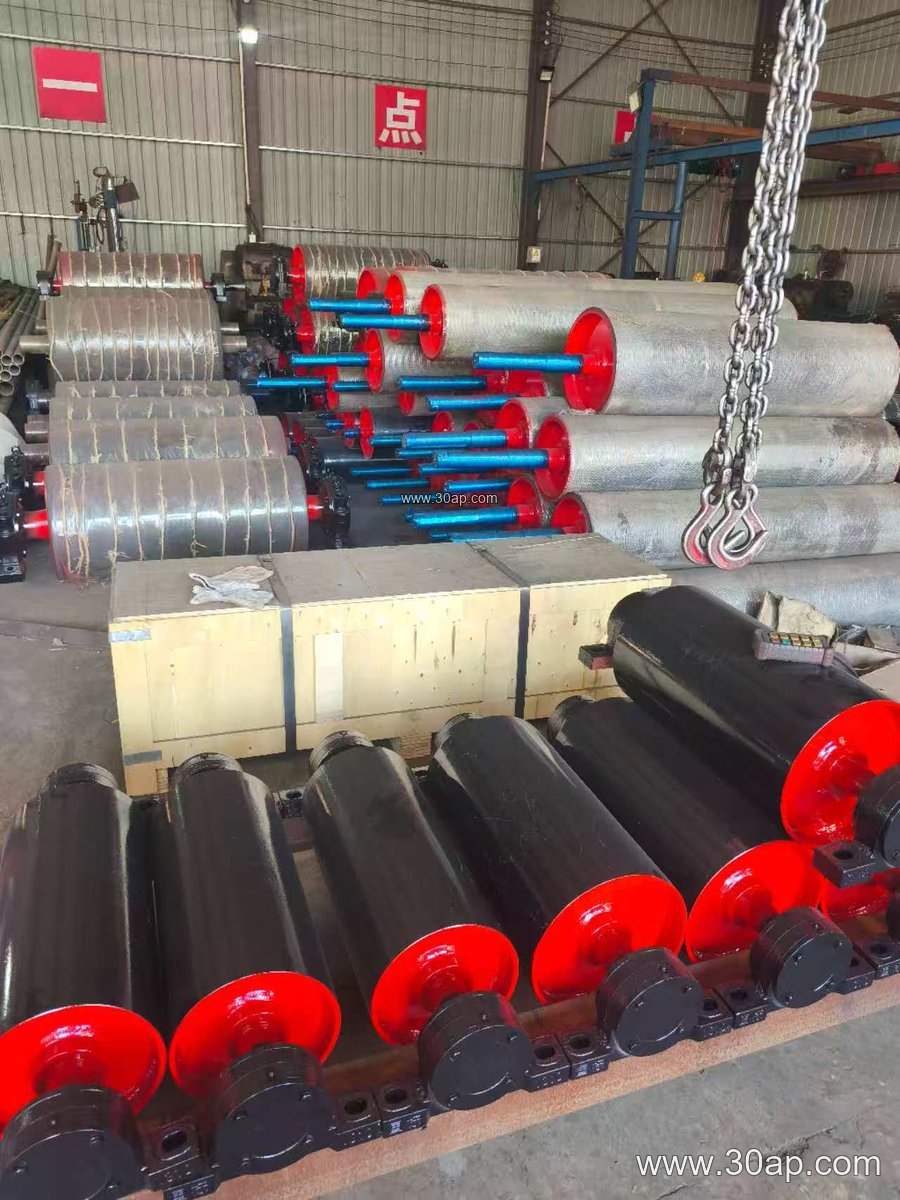
A heavy-duty lagged pulley is a conveyor pulley built with a thick, wear-resistant rubber or ceramic layer bonded to its shell, designed to transmit drive force or guide the belt under high tension and abrasive conditions. The lagging raises friction between the pulley face and the conveyor belt, reduces slip, and protects the shell from wear. In a crushing circuit at a quarry or a coal handling line feeding a power plant, this component often determines whether the belt starts smoothly under full load or stalls at the head end.
The same product is also described as a heavy-duty rubber-lagged drum pulley or a heavy-duty lagged conveyor pulley. These are equivalent names for the same assembly, not different equipment categories.
Construction Details That Matter
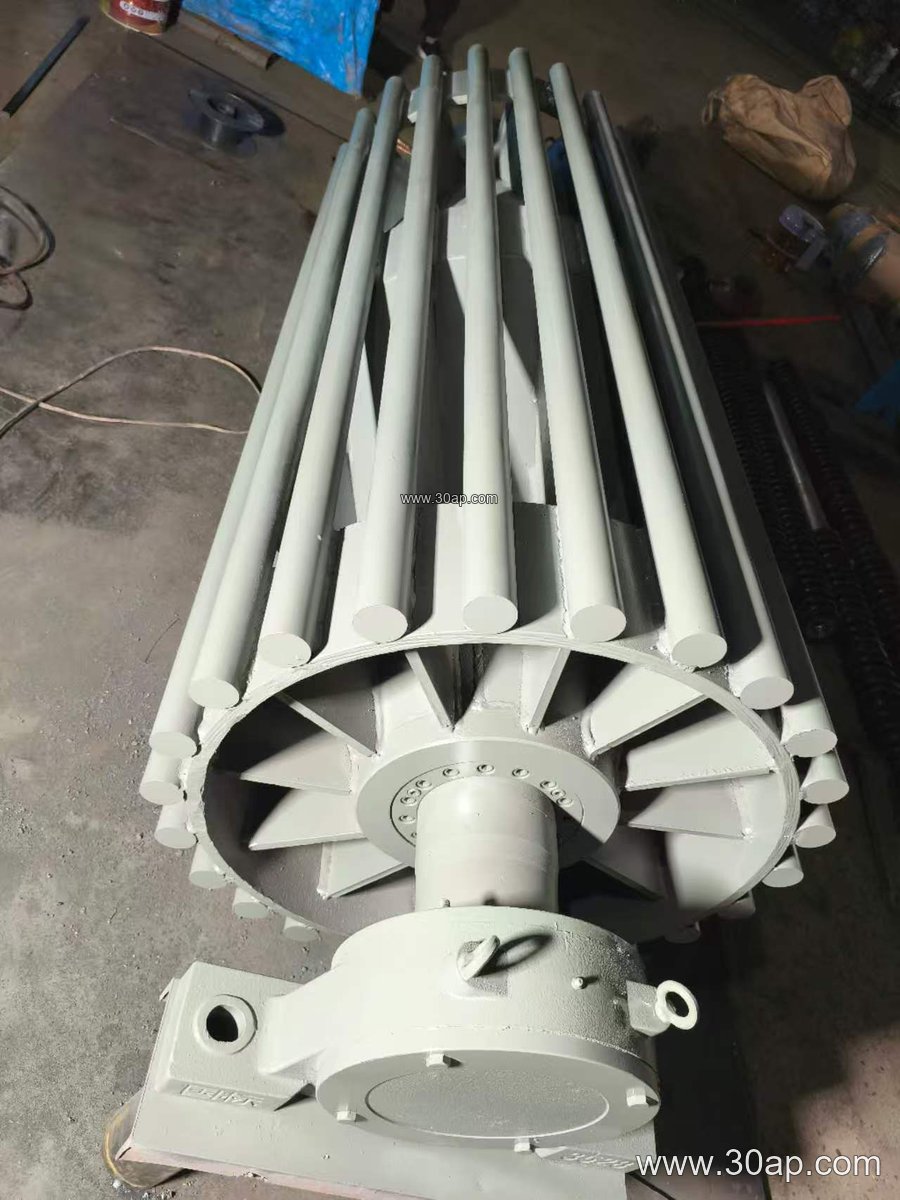
The shell is usually a rolled steel cylinder with welded end discs and a shaft sized by torque and load, not by belt width alone. Common shaft diameters include Ø80, Ø100, Ø120, Ø140, Ø160, and Ø180 mm, while shell diameters in heavy service often fall between Ø400 and Ø1250 mm, with larger sizes such as Ø1400 or Ø1600 mm used on wide, high-tension belts. Lagging thickness commonly ranges from 8 mm to 20 mm, and the surface may be plain rubber, diamond grooved, herringbone, or ceramic tile.
- Plain rubber lagging — general grip for dry bulk material
- Diamond or herringbone lagging — improved water and fines shedding
- Ceramic lagging — high abrasion resistance where slip and wear are severe
- Hot vulcanized or cold-bonded rubber — bonding method chosen by duty
Bearing housings, locking elements, and the conveyor bracket interface should be checked together, because a heavy-duty lagged pulley transfers significant radial load into the frame.
Where It Fits in the Conveyor
This assembly is most often used as a drive pulley at the head of a conveyor, where the highest belt tension and the greatest risk of slippage occur. It can also serve as a tail pulley on short, heavily loaded belts, or as a bend pulley in a tensioning arrangement. Drive, tail, and bend pulleys are not interchangeable; each has its own load profile and lagging requirement, so the position must be specified when ordering.
Typical duty sites include limestone quarries, iron ore and copper ore concentrators, cement clinker lines, and coal-fired power plant coal handling. In these environments, an abrasion resistant conveyor belt, a heat resistant conveyor belt near clinker, or a flame retardant conveyor belt in underground coal mining may run over the same pulley, so the lagging compound should suit both the belt cover and the material.
Sizing the Pulley to the Belt
The shell face is normally wider than the belt to keep the belt centered. Reference values include B800 belt with roughly 950 mm face, B1000 with about 1150 mm, B1200 with about 1400 mm, and B1400 with about 1600 mm. These are common proportions, not fixed rules, and one belt width can match several pulley diameters depending on tension and wrap angle.
| Belt width | Typical face width | Example diameter range |
|---|---|---|
| B650 | about 750 mm | Ø400 to Ø630 mm |
| B800 | about 950 mm | Ø500 to Ø800 mm |
| B1000 | about 1150 mm | Ø630 to Ø1000 mm |
| B1200 | about 1400 mm | Ø800 to Ø1250 mm |
Shaft diameter should be calculated from torque, belt tension, and bearing span. Do not assume a shaft size from belt width alone.
Buyer Checklist
- Confirm the pulley position: drive, tail, or bend, and the wrap angle.
- State belt width, belt type such as EP conveyor belt or steel cord conveyor belt, and maximum tension.
- Choose lagging thickness and pattern for the material and moisture level.
- Check shaft diameter, keyway, and bearing size against the conveyor bracket drawing.
- Verify balance and runout requirements for high-speed lines.
Matching the lagged pulley to the conveyor belt and the idler roller set keeps the whole conveyor stable and extends service life in abrasive bulk handling.