What a Heavy-Load Conveyor Pulley Does
A heavy-load conveyor pulley is the drum that transfers motion and tension between the drive system and the conveyor belt on high-capacity bulk handling lines. In a crushing circuit, a quarry conveyor, or a power plant coal yard, this pulley carries the belt load, the material load, and the starting torque without deflection that would shorten belt life. Engineers often call the same unit a heavy-duty conveyor pulley or a heavy-duty drum pulley when it is built for continuous duty and high radial loads.
The name describes a duty class, not a single mounting position. A heavy-load conveyor pulley can serve as the head pulley at the discharge, as a drive pulley on a long incline, as a tail pulley at the loading point, or as a bend pulley that redirects the belt. Drive, tail, and bend pulleys are different roles; each has its own load pattern and its own design checks. The shared requirement is that the shell, shaft, hubs, and locking assembly handle the calculated torque and belt tension with an adequate safety margin.
How the Drum Is Built
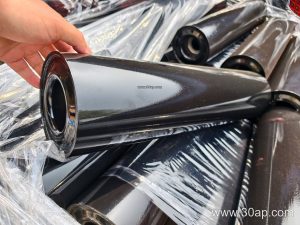
Construction starts with a rolled steel shell, usually machined for concentricity and fitted with end discs welded to the shaft hubs. The shaft is sized by torque and bending load, not by belt width alone; common shaft diameters include Ø80, Ø100, Ø120, Ø140, Ø160, and Ø180 mm, with larger sizes where the drive duty demands it. Bearings sit in pillow blocks or in a conveyor bracket at each end, and the whole assembly is aligned so the belt tracks centrally.
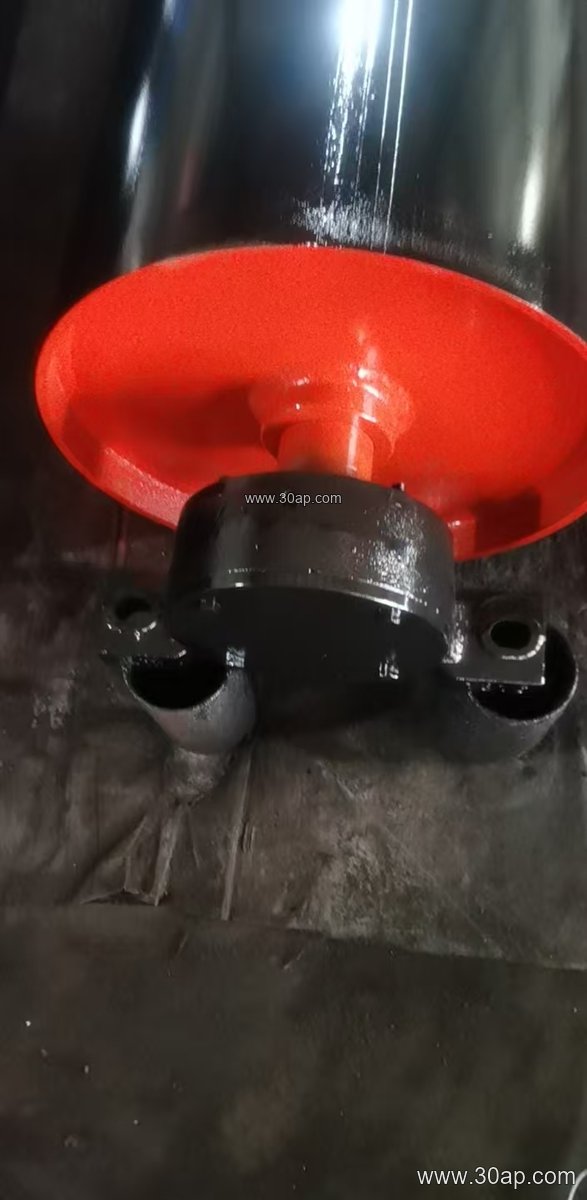
Surface treatment matters as much as the steel. A plain finish suits clean, low-slip positions. Rubber lagging, applied by cold bonding or hot vulcanizing, raises friction and protects the shell. Diamond lagging improves grip in wet conditions, while ceramic lagging is chosen where abrasive carryback wears rubber quickly. Lagging thickness commonly ranges from 8 mm to 20 mm, selected according to belt tension and slip risk rather than a fixed rule.
Where It Fits in the Line
In a limestone quarry or an aggregate plant, a heavy-load conveyor pulley drives the primary belt after the crusher, where lump size and impact are high. In a cement plant, clinker conveyors use robust pulleys because the material is hot and abrasive. Coal handling at a power station, sinter lines at a steel works, and port ship-loading systems all rely on the same principle: the pulley must survive steady tension plus shock loads.
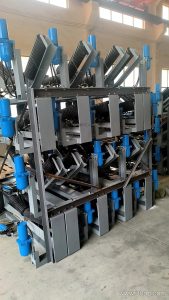
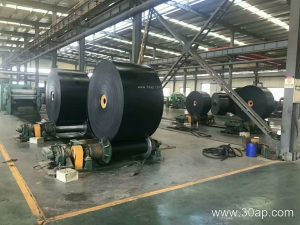
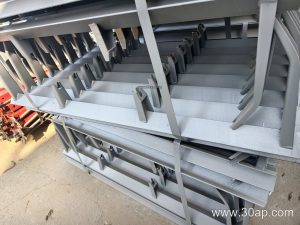
The pulley never works alone. It runs with a conveyor belt selected for the same duty, supported by idler rollers that keep sag within limits, and fixed by conveyor brackets that hold bearing alignment. A steel cord conveyor belt or a heavy-duty fabric belt such as an EP conveyor belt or NN conveyor belt may run over the same drum, but the pulley design must match the belt’s tension rating and thickness. Heat resistant, flame retardant, and abrasion resistant belt grades are common in these industries, and each places different demands on lagging and shell protection.
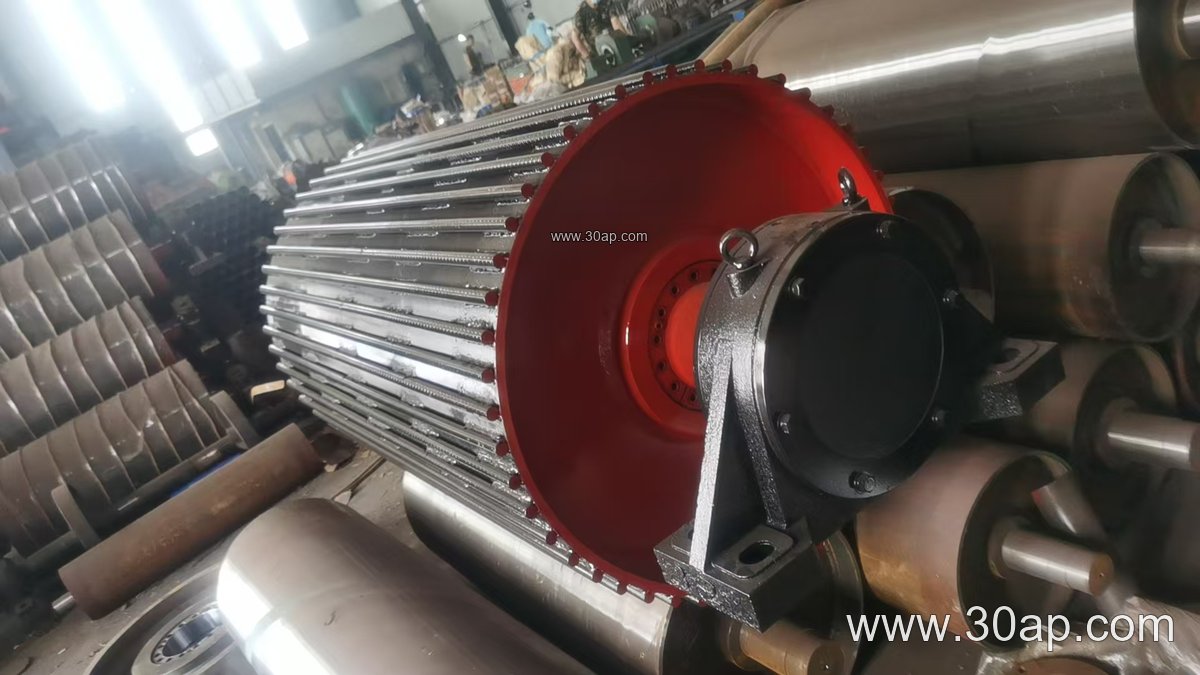
Matching Dimensions to the Duty
Pulley diameter and face width are chosen from belt width, belt tension, and the allowable bend radius of the belt carcass. A wider belt needs a wider shell, and the face width is normally a little greater than the belt width. The combinations below are common references, not fixed pairings; final values come from the conveyor design.
| Belt width (B) | Typical pulley face width | Example diameter range |
|---|---|---|
| B650 | about 750 mm | Ø315 to Ø500 |
| B800 | about 950 mm | Ø400 to Ø630 |
| B1000 | about 1150 mm | Ø500 to Ø800 |
| B1200 | about 1400 mm | Ø630 to Ø1000 |
| B1400 | about 1600 mm | Ø800 to Ø1250 |
| B1600 | about 1800 mm | Ø1000 to Ø1400 |
A B1200 belt might run on a Ø1000 mm drive drum in one plant and a Ø800 mm tail drum in another. Shaft diameter is determined separately from torque and bearing load, so a Ø120 mm shaft and a Ø140 mm shaft can both appear on the same belt width. Buyers should expect the supplier to ask for belt tension, speed, motor power, and loading conditions before confirming a size.
What Buyers Should Check
- Confirm the duty position: drive, tail, bend, take-up, or snub, because each role changes the load case.
- Ask for the calculated shaft and bearing life, not just a diameter figure.
- Match lagging type and thickness to slip risk and material abrasiveness.
- Check that the face width and crown suit the belt, especially with a steel cord conveyor belt that tolerates less misalignment.
- Review balance, concentricity, and runout tolerances for high-speed lines.
- Plan inspection of lagging wear, bearing temperature, and locking assembly tightness during scheduled shutdowns.
For more on matching drums with belts, idlers, and brackets, see the pulley and belt resources at heavy-load conveyor pulley and the belt guidance at conveyor belt. A well-specified heavy-load conveyor pulley is a long-life component; a poorly matched one becomes the weakest point in the whole conveying system.