What a Conveyor Frame Does on a Belt Line
A conveyor frame is the structural backbone that holds a belt conveyor together. It carries the idler roller sets, positions the conveyor pulley at each end, keeps the belt path aligned, and transfers loads into the ground or the steel structure of a plant. Without a square, well-aligned frame, even a premium conveyor belt will mistrack, spill material, and wear unevenly. In a quarry, a cement plant, or a coal handling system, the frame is the part that turns individual components into a working conveyor.
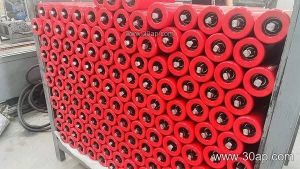
Frames are usually modular. A typical line is built from standard sections, each one carrying a set of idlers at a defined trough angle, plus transition, return, and impact sections near the loading and discharge points. The design of the frame therefore decides the belt width it can accept, the roller diameter it can mount, and how easily the line can be extended later.
How the Frame Is Built
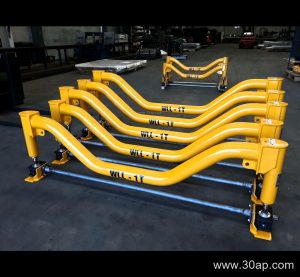
Most frames are fabricated from angle steel, channel steel, or folded steel plate, then drilled or punched for mounting holes and bolted together on site. Main beams, cross members, and support legs form the basic skeleton. Idler frames sit on the main beams and set the trough angle and the spacing between rollers. Conveyor brackets and fixing plates connect the frame to the foundation or to the surrounding structure.
Key parts of a typical frame include:
- Main longitudinal beams, usually channel or folded plate
- Cross beams and stringers that carry the idler frames
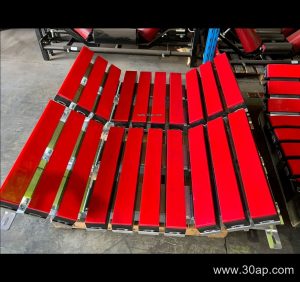
- Troughing, transition, impact, and return idler supports
- Pulley mounting points at the drive and tail ends
- Support legs, bracing, and anchor brackets
The frame must be straight and square. Small errors in cross-section alignment are magnified over a long line and cause the belt to run to one side. Galvanizing or painting is common for corrosion protection, especially in ports, fertilizer plants, and other humid or chemical environments.
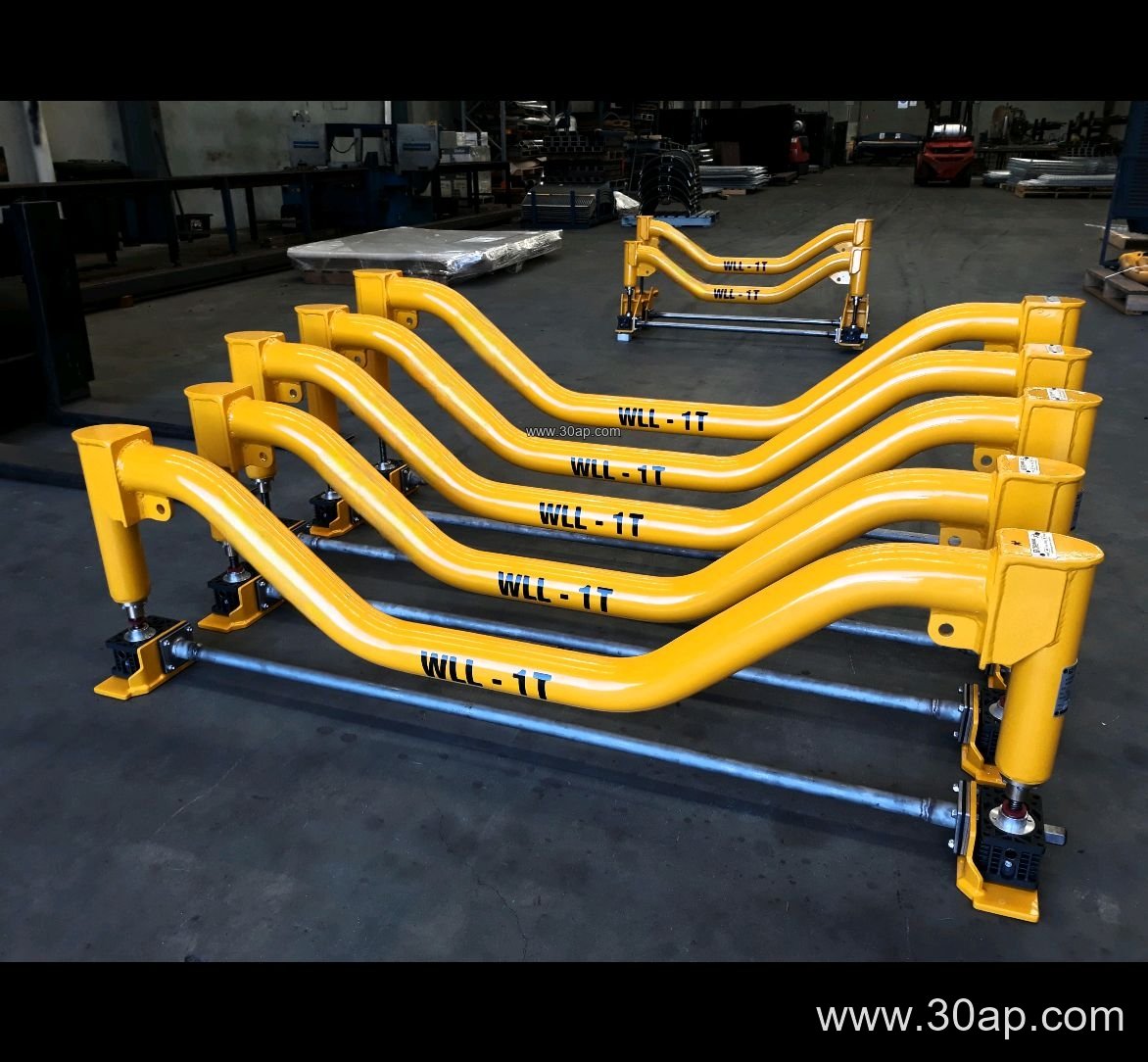
Trough Angle, Belt Width, and Roller Diameter
The frame sets the trough angle, and the trough angle affects how much material the belt can carry. Common angles are 20, 30, 35, and 45 degrees, and adjustable frames allow the angle to be changed within that range. A 35-degree frame with Ø108 rollers is a common combination for medium-duty lines, while a B1200 frame at 45 degrees with Ø133 rollers suits higher-capacity bulk flows. These are examples, not fixed rules: belt width, trough angle, and roller diameter are chosen together with capacity, material lump size, and belt stiffness in mind.
Typical reference combinations include:
- B650, 30 degrees, Ø89 rollers
- B800, 35 degrees, Ø108 rollers
- B1000, 35 degrees, Ø133 rollers
- B1200, 45 degrees, Ø133 rollers
- B1400 to B1600, 35 to 45 degrees, Ø159 rollers
- B1800 to B2200, heavy-duty frames, Ø194 rollers
Installation hole spacing and cross beam length change with belt width and trough angle, so they are confirmed per design rather than taken as universal figures. A wider belt does not automatically mean a larger pulley diameter, and shaft size is always calculated from the actual load case.
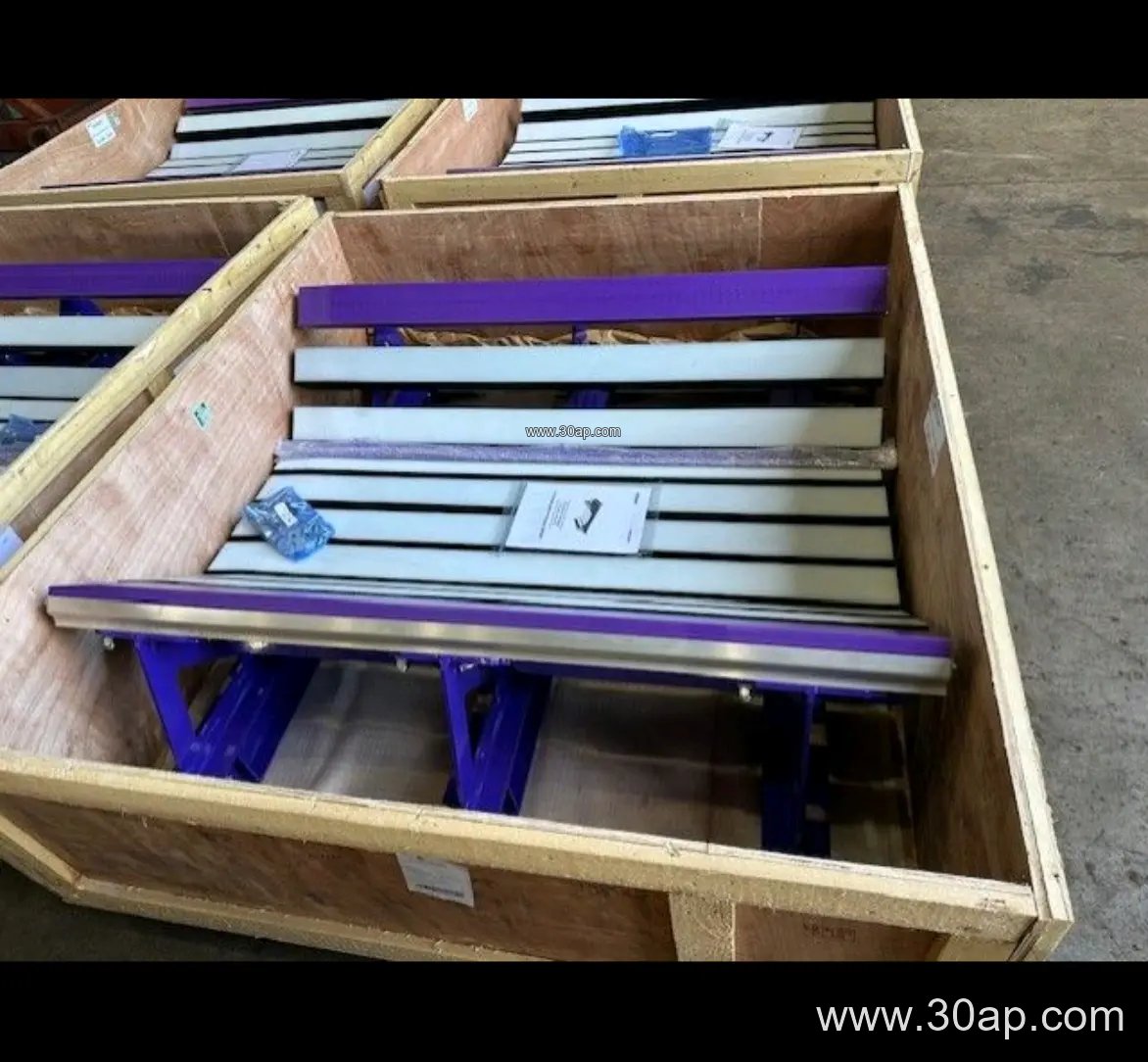
Where Frames Are Used
In a limestone quarry or a stone crushing line, frames carry crusher conveyor belts through loading, screening, and stockpile transfer points. In a coal preparation plant or a power plant coal yard, flame retardant and anti-static belts run on frames that must resist dust, vibration, and sometimes wash-down. Frames are also standard in cement plants, steel plants, ports, and fertilizer and grain facilities.
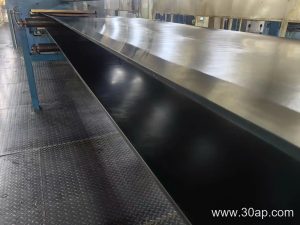
The frame works together with the conveyor belt, the idler roller sets, and the conveyor pulley. A heavy-duty mining conveyor belt needs a frame strong enough for its tension and weight, while a pipe conveyor belt or a corrugated sidewall belt needs a frame designed for that specific belt path and support arrangement.
What Buyers Should Check
Before ordering, confirm the belt width, the trough angle, the roller diameter and spacing, and the loading conditions. Ask for the frame material and surface treatment, the bolting arrangement, and the pulley mounting details. Check whether the design allows for adjustable trough angles, since this helps when material characteristics change.
For spare parts and replacement frames, matching the existing hole pattern and beam height saves installation time. Buyers should also consider future extensions, because a modular frame is easier to lengthen than a welded one. Finally, confirm that the frame is compatible with the planned belt type, whether that is an abrasion resistant conveyor belt for ore, a heat resistant belt near a kiln, or an oil resistant belt in a recycling line.
For more on matching frames with belts, rollers, and pulleys, visit conveyor frame and conveyor belt resources.