What a Ship Loading Conveyor Belt Does
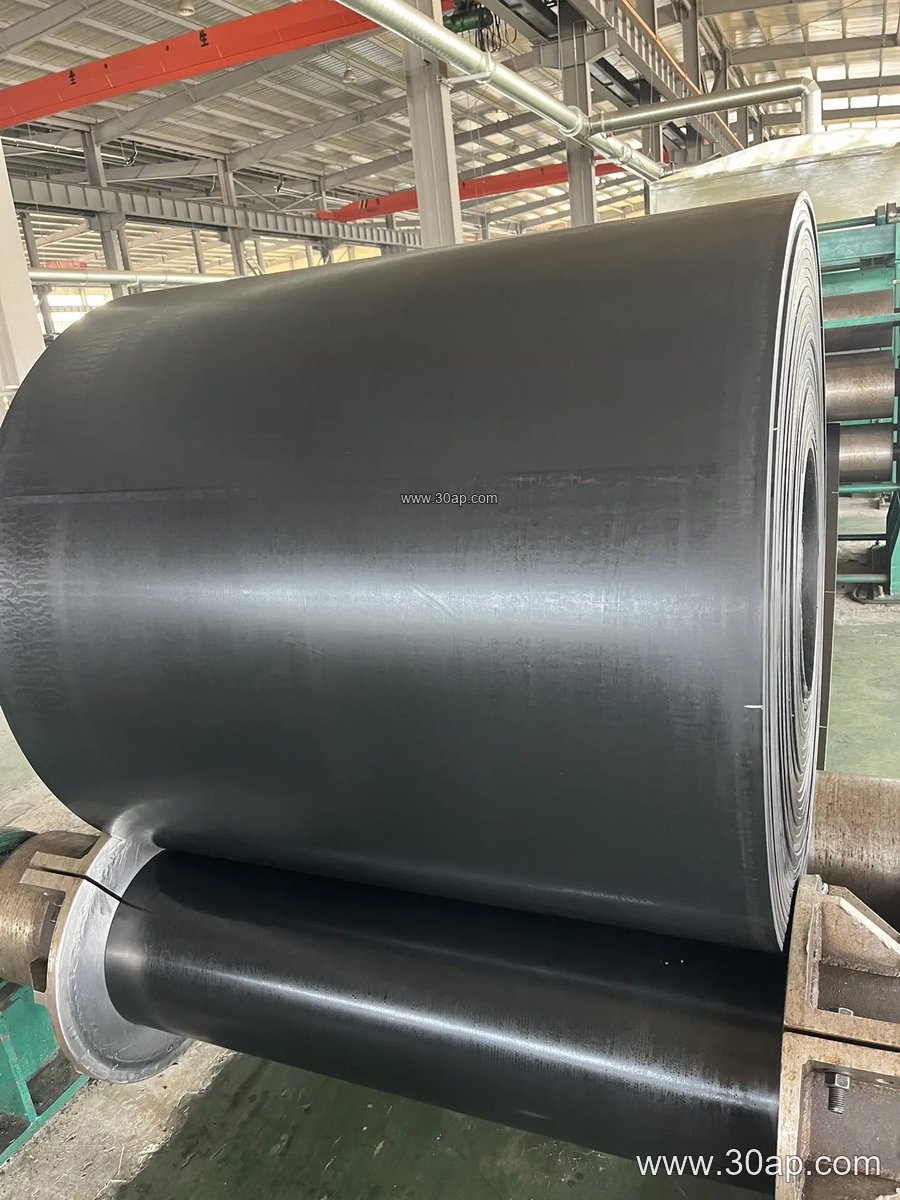
A ship loading conveyor belt is the heavy-duty belt that carries bulk material from a stockyard, silo, or train unloading point to the vessel hold. In a port, this belt is the final moving link before cargo drops into the ship, so it must handle high tonnage, long runs, and often a raised boom that shifts position as the hold fills. The same belt concept appears in other bulk handling lines, but ship loading duty adds reach, incline, and discharge control requirements that shape the belt specification.
Bulk terminals handling iron ore, coal, cement clinker, grain, fertilizer, and aggregates rely on this equipment. A well-matched belt keeps the loading rate steady and reduces spillage at the transfer points.
Construction and Belt Types
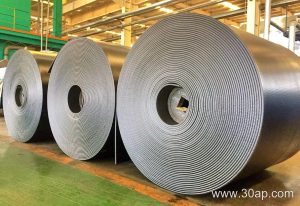
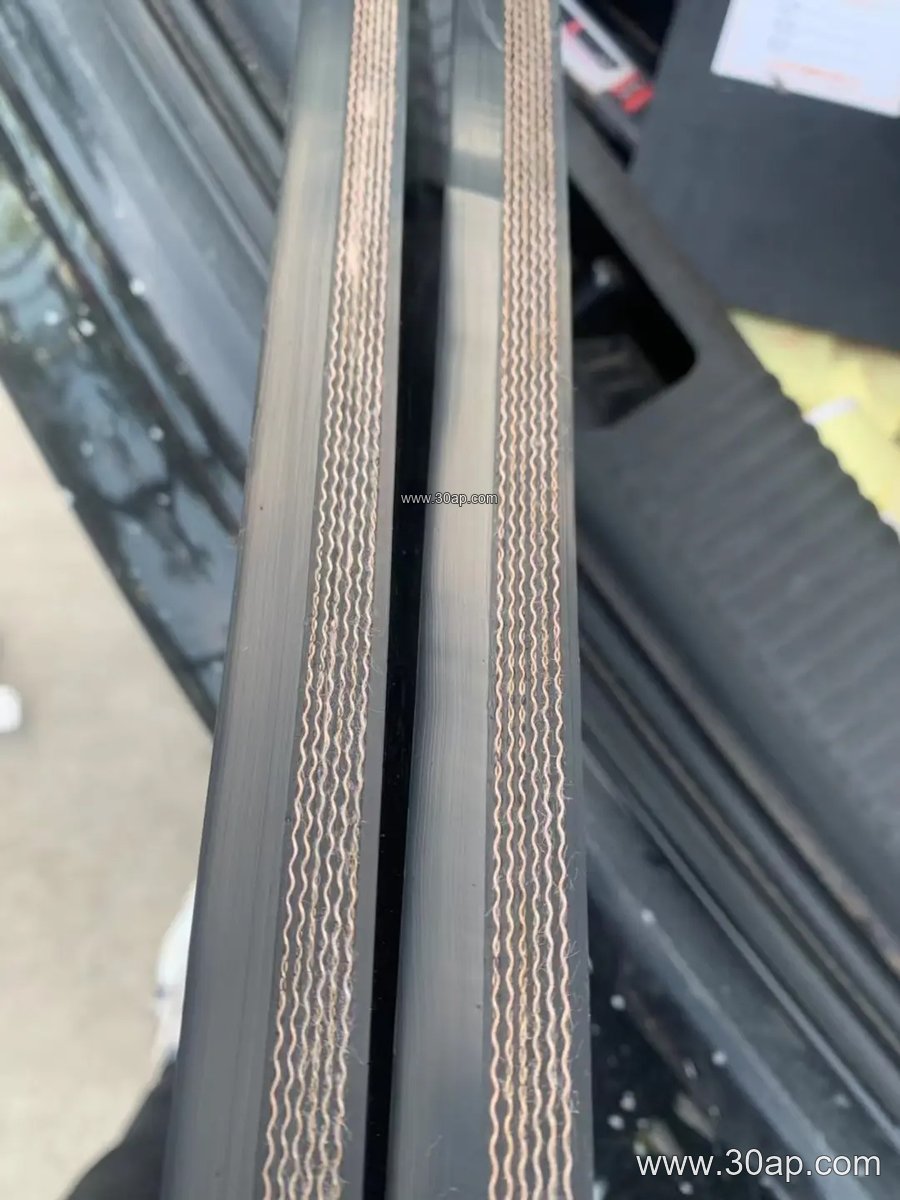
The ship loading conveyor belt is usually a fabric core or steel cord construction, selected by the load and the center distance. Common choices include EP conveyor belt and NN conveyor belt for medium-duty runs, and steel cord conveyor belt where high strength and low stretch are needed. A multi-ply fabric core conveyor belt with two to six plies is typical for many terminal lines, while a rubber conveyor belt cover protects the carcass from abrasion and weather.
Cover grade depends on the cargo. An abrasion resistant conveyor belt suits ore and clinker; a heat resistant conveyor belt suits cement or hot bulk; an oil resistant conveyor belt suits certain fuels and treated cargo. Where dust and static are a concern, an anti-static conveyor belt or flame retardant conveyor belt may be specified. For inclined loading booms, a chevron conveyor belt or corrugated sidewall conveyor belt can hold material on the slope, and a skirted conveyor belt limits spillage at the edges.
Typical Reference Data
The values below are common reference points, not fixed supply promises. Final selection follows the conveyor design.
- Belt widths: B500, B650, B800, B1000, B1200, B1400, B1600, B1800, B2000
- EP strength grades: EP200, EP315, EP400, EP500, EP630, EP800, EP1000, EP1250, EP1600, EP2000
- Cover rubber: 3+1.5 mm, 4+2 mm, 5+2 mm, 6+2 mm, 8+3 mm
- Carcass: 2 to 6 fabric plies, or steel cord for high tension
Conveyor Components Around the Belt
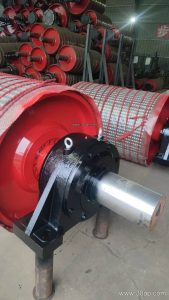
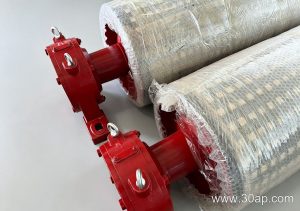
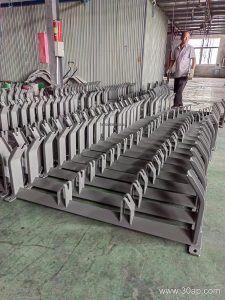
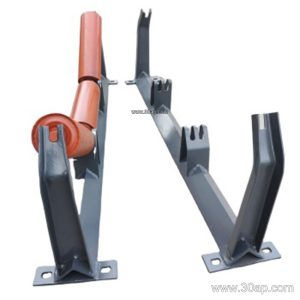
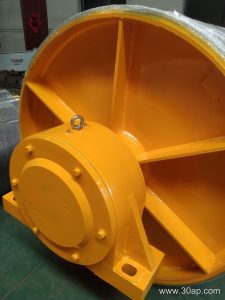
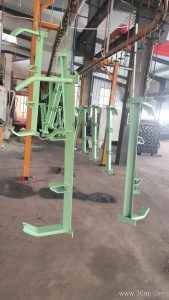
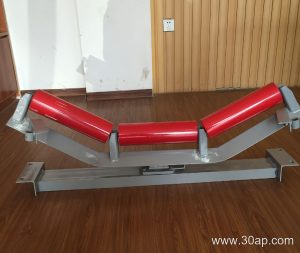
The belt does not work alone. A ship loading line includes a drive pulley at the head, a tail pulley at the feed end, and bend pulleys that route the belt through the boom and counterweight. These pulleys are not interchangeable, and each is sized for its own load and wrap angle. Idler rollers support the carrying and return strands, while conveyor brackets and frames hold the assembly in line. A conveyor pulley with worn lagging can slip, so pulley maintenance matters as much as belt condition.
For terminal operators, matching belt width to pulley face and idler trough angle is part of the design, but no single belt width is tied to one pulley diameter. The drive power, belt speed, and tension determine the pulley size.
Where It Is Used
Ship loading conveyor belts appear in port conveyor belt systems, power plant conveyor belt lines, cement plant conveyor belt circuits, and quarry conveyor belt operations that feed a jetty. Mining conveyor belt installations at iron ore and coal terminals often use heavy-duty mining conveyor belt grades. A coal mining conveyor belt or underground mining conveyor belt may feed a stockpile that later loads ships, so flame retardant and anti-static properties can carry through to the loading belt.
Other industries use related belts for different tasks. A crusher conveyor belt or aggregate conveyor belt moves material inside the plant, while a pipe conveyor belt encloses cargo on curved routes. These are different subtypes and are not replacements for the ship loading belt itself.
Buyer Checklist
Before ordering, confirm the cargo type, peak tonnage per hour, belt speed, incline angle, and center distance. Check whether the boom moves or telescopes, because take-up and belt length change with position. Ask for the cover grade and carcass construction in writing, and confirm the pulley and idler layout. For dusty or flammable cargo, state the required flame retardant or anti-static behavior clearly. Keep spare belt, pulley lagging, and idler rollers on site to reduce downtime.
A ship loading conveyor belt is a system component, not a commodity item. Matching the belt to the terminal duty, the pulley arrangement, and the cargo protects the investment and keeps vessels loading on schedule.