What a Spiral Idler Does on a Conveyor
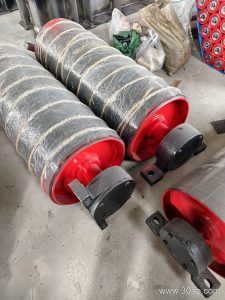
A spiral idler is a return-side roller wrapped with a continuous helical strip, usually welded to a steel tube shell. Instead of a smooth cylindrical surface, the belt rests on a raised spiral ridge that turns with the roller. This simple change does two jobs at once. First, the spiral helps shed sticky material before it cakes onto the roller face. Second, the helical shape tends to work like a self-cleaning screw, nudging fines and damp carryback toward the belt edges. That makes the spiral roller a practical choice on conveyors handling wet, clay-like, or dusty bulk materials.
The product is also called a spiral return roller or helical return idler. These are accurate equivalents for the same item; it is not a grooved pulley or a wing-type training idler. Drive pulleys, tail pulleys and bend pulleys are entirely different components and are not interchangeable with a spiral idler.
How It Is Built
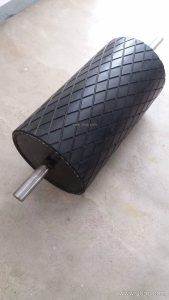
A typical spiral idler uses a steel tube body with pressed bearing housings at each end, sealed bearings, and a shaft that fits standard conveyor brackets. The spiral itself may be a flat strip or a formed profile, with a pitch wide enough to guide debris without trapping it. Surface options vary, and in abrasive service a rubber-covered or wear-resistant spiral can extend life. Buyers should ask about the shell wall thickness, the weld quality of the helix, and the bearing seal arrangement, because these details decide how well the roller survives a dirty return strand.
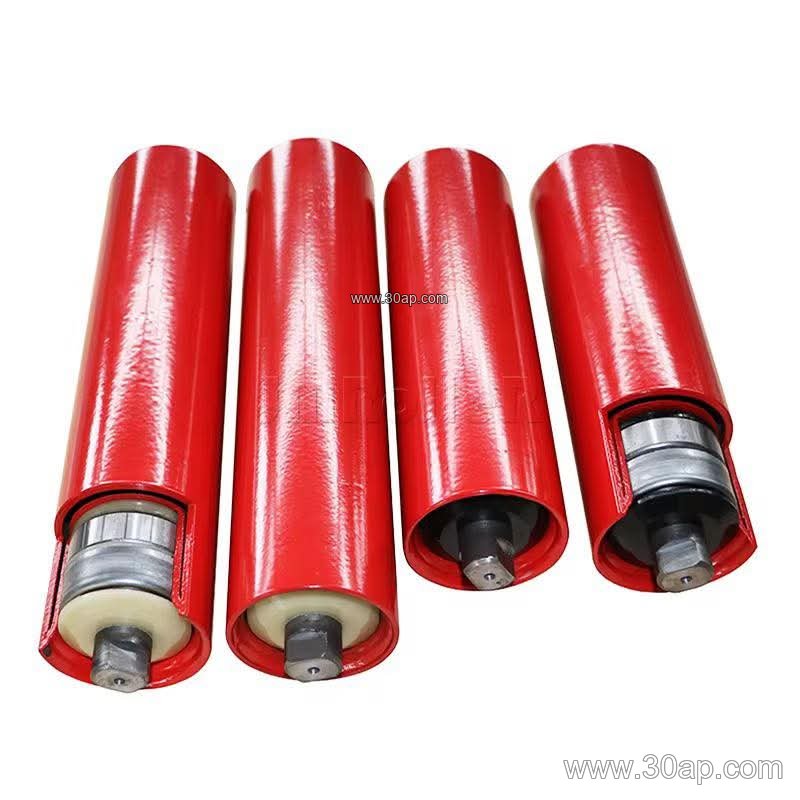
Common roller diameters include Ø89, Ø108, Ø127, Ø133 and Ø159 mm, and larger diameters such as Ø178 or Ø194 mm appear on heavy-duty installations. Bearing sizes are often drawn from the 6204, 6205, 6305, 6306 and 6308 series, though the correct bearing is chosen by load and design, not by roller diameter alone. Roller length follows the conveyor belt width and the bracket spacing, so a B800, B1000 or B1200 machine will each need its own length. No single shaft size should be assumed from belt width.
Typical reference values
| Parameter | Common range or example |
|---|---|
| Roller diameter | Ø89, Ø108, Ø127, Ø133, Ø159, Ø178 mm |
| Belt width | B500, B650, B800, B1000, B1200, B1400 mm |
| Bearing | 6204, 6205, 6305, 6306, 6308 |
| Surface form | Bare steel spiral, rubber spiral, wear-resistant spiral |
| Mounting | Standard conveyor bracket, fixed or suspended return frame |
These are reference figures only. Final dimensions are set by the conveyor design, belt speed, load and material conditions.
Where Spiral Idlers Fit Best
The return run is where carryback usually lands, so spiral idlers are common in a quarry or aggregate line handling damp sand and crushed stone. They also suit a cement plant where fine dust and moisture combine, and a coal handling section of a power plant where sticky fines build up under the belt. In a limestone mine or an iron ore transfer point, a spiral return roller can reduce the manual cleaning that smooth rollers demand. The same logic applies wherever a rubber conveyor belt carries wet or clinging cargo, including a bulk material conveyor belt in a fertilizer or mineral processing plant.
For the carrying side, spiral idlers are not a substitute for three-roll troughing sets. Troughed idlers, transition idlers, impact idlers and training idlers each perform a different task. A spiral idler belongs on the return strand, often near the tail area, where cleaning and material release matter most.
Selection and Maintenance Notes
- Match the idler to the actual belt width and bracket spacing; do not force a roller from another machine into service.
- Check whether the return strand needs a single spiral roller or a set with a V-return or flat-return arrangement.
- Confirm the shaft ends fit the existing conveyor bracket before ordering.
- Specify the material being carried, since sticky clay, coal dust and abrasive ore call for different surface choices.
- Inspect seals and spiral welds during routine shutdowns; a worn helix loses its cleaning effect.
- Keep the belt tracking and the belt cleaner in good order, because a spiral roller cannot compensate for heavy carryback.
When a spiral idler is specified alongside a heavy-duty mining conveyor belt or an abrasion resistant conveyor belt, it supports longer intervals between return-side cleanups. It also pairs well with a flame retardant conveyor belt in coal mining conveyor belt service, provided the roller and its lagging meet the site’s fire-safety requirements. Buyers should compare the spiral pitch, shell thickness and bearing protection across suppliers, then request drawings that show shaft length and mounting details for their own conveyor.
See more conveyor components and idler options at spiral idler and conveyor belt references.