What the Product Is
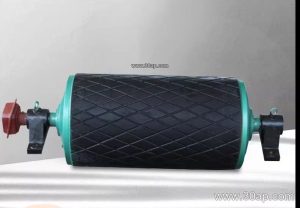
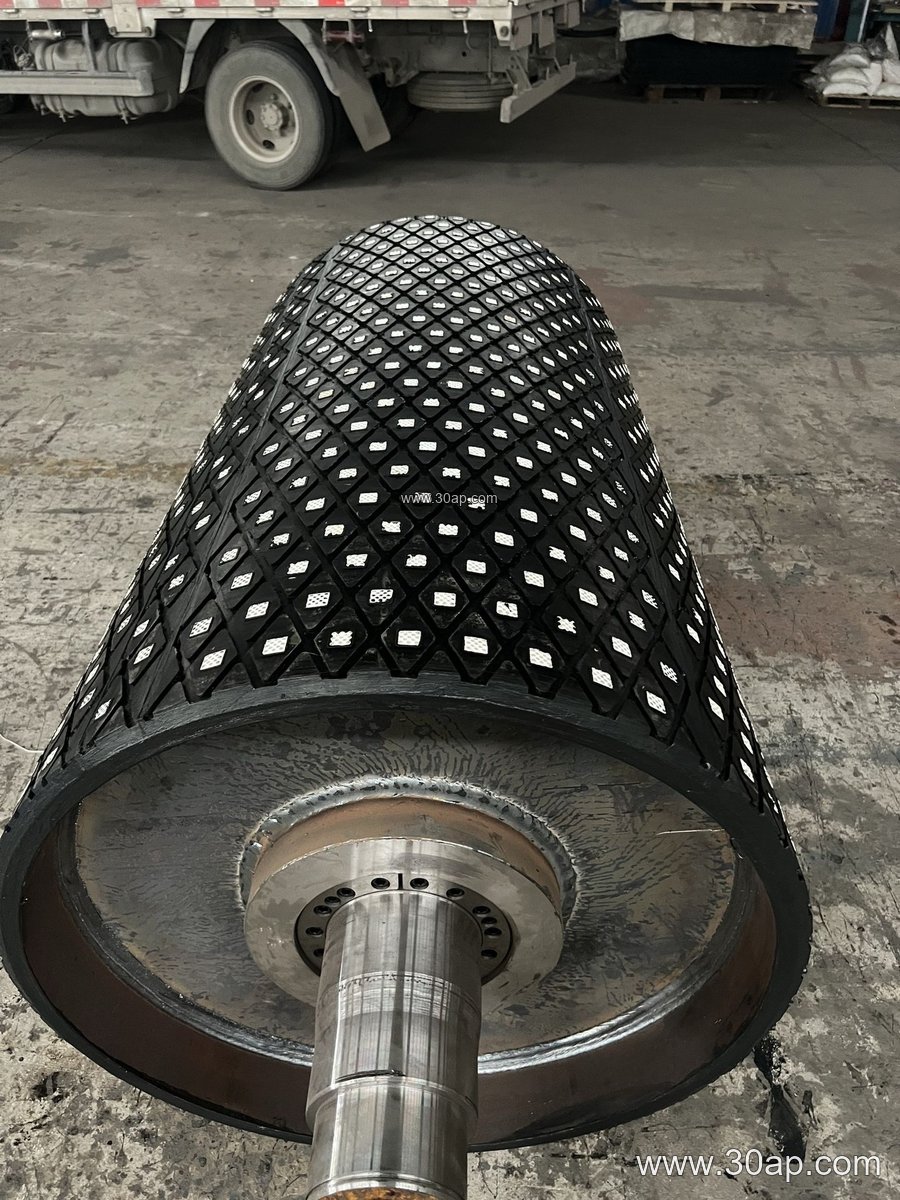
A high wear-resistant lagged pulley is a conveyor pulley whose shell is covered with a tough rubber or ceramic lagging layer designed to survive constant contact with sharp, gritty material and a slipping, tensioned belt. In practice, this is the conveyor pulley that keeps a drive or tail position working in a quarry, a limestone mine, a cement clinker line or a coal washing plant where fines and grit are everywhere. The lagging is the sacrificial surface; the pulley body underneath is the structural core.
The name is often shortened to wear-resistant lagged drum or abrasion-resistant rubber lagged pulley. It is the same product. A drive pulley, a tail pulley and a bend pulley are different positions with different duties, and one does not replace another.
How the Pulley Is Built
The shell is usually a rolled steel cylinder welded to end discs and a shaft hub. Lagging is bonded to the outside in one of several forms, and the choice matters more than the name on the drawing:
- Plain rubber lagging for general grip
- Diamond pattern lagging for wet or dusty traction
- Herringbone lagging to encourage self-cleaning
- Ceramic lagging tiles for the most abrasive duty
- Hot vulcanized or cold bonded rubber, typically 8, 10, 12, 15 or 20 mm thick
Common shell diameters run from Ø200 and Ø250 up through Ø315, Ø400, Ø500, Ø630, Ø800, Ø1000, Ø1250 and beyond, matched to belt width and torque rather than picked at random. Face width normally exceeds belt width; for example, a B800 belt usually sits on a pulley face of roughly 950 mm, and a B1200 belt on about 1400 mm. Shaft diameter is set by torque and load, commonly in the Ø80 to Ø200 range, and should never be assumed from belt width alone.
| Reference item | Typical range |
|---|---|
| Belt width | B400 to B2400 |
| Pulley diameter | Ø200 to Ø1800 |
| Lagging thickness | 8, 10, 12, 15, 20 mm |
| Surface form | Plain, diamond, herringbone, ceramic |
| Shaft diameter | Ø50 to Ø200, by design |
Combinations such as B800 × Ø500 or B1400 × Ø800 appear often in project drawings, but they are design choices, not fixed pairs.
Where It Earns Its Keep
The heaviest wear shows up in crushing and screening circuits, sinter plants and power station coal yards, where a fabric core conveyor belt or steel cord conveyor belt carries sharp rock and clinker. A high wear-resistant lagged pulley at the head or tail of such a line protects the belt from polishing the shell smooth and losing grip. In a sand and aggregate plant, an abrasion resistant conveyor belt running over a lagged drum benefits from the same hard surface.
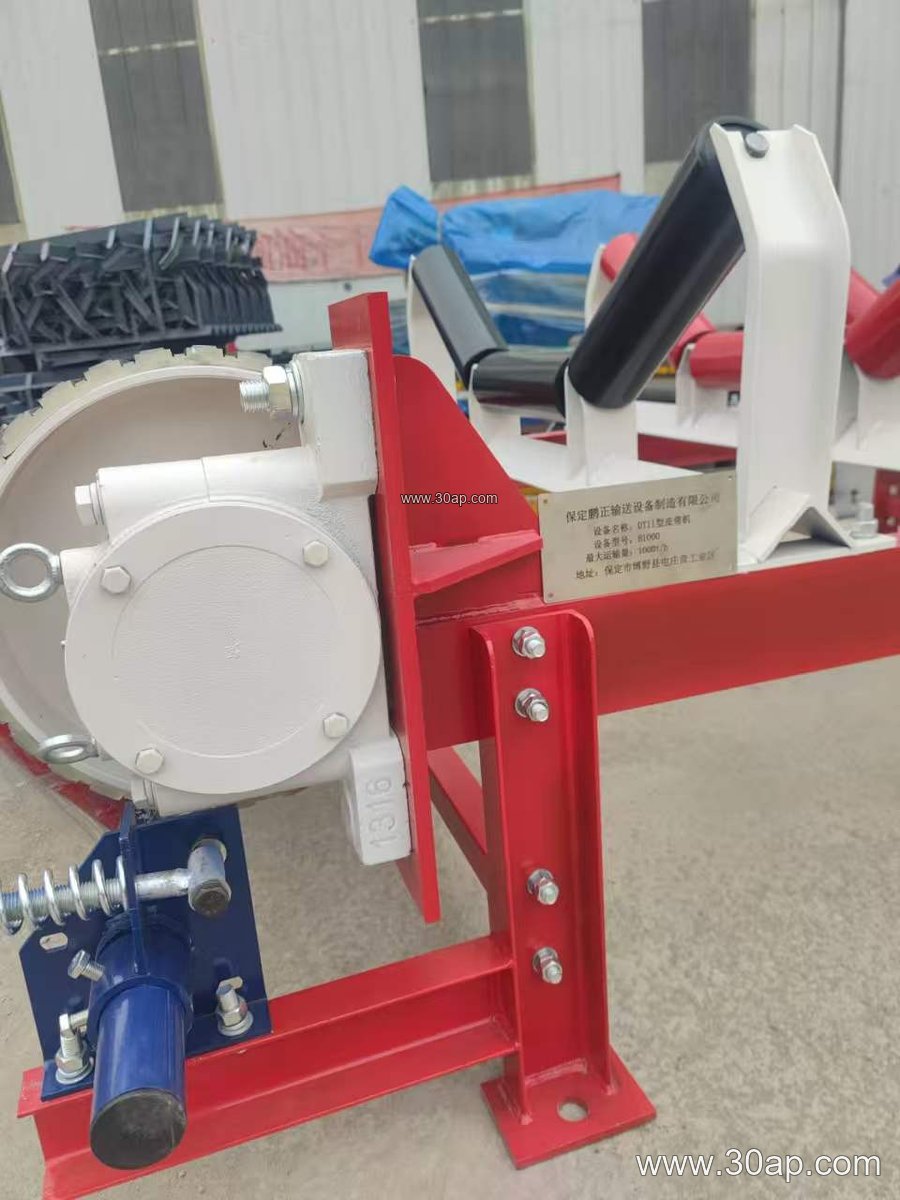
Position changes the job. At the drive, lagging supplies friction; at the tail, it resists material build-up; at a bend or snub position, it takes steady abrasion with lower tension. A conveyor bracket and the conveyor pulley mounting must be checked together, because a worn lagged shell changes the effective diameter and can affect belt tracking.
Selection Points for Buyers
Ask what the conveyed material is, its size and moisture, and whether the belt is an EP conveyor belt, an NN conveyor belt or a steel cord type. Confirm the required face width against the belt, and confirm the shaft by torque calculation. Specify the lagging form and thickness, and state whether hot vulcanized bonding is required. Check that the drum balances and that the lagging is grooved or smooth as needed.
Buyers comparing a drive pulley with a tail pulley should note they are not interchangeable, and a bend pulley is a separate position again. For abrasive ore or quarry rock, ceramic or thick rubber lagging on the drive is a common answer; on the tail, a self-cleaning pattern often suits better.
Maintenance Notes
Inspect lagging for cuts, glazing and loose edges, and check belt tracking after any re-lagging. Keep the conveyor belt and idler roller clean so grit does not grind the surface. Record diameter before and after re-lagging so the belt path stays predictable.