Introduction to Cement Plant Material Handling
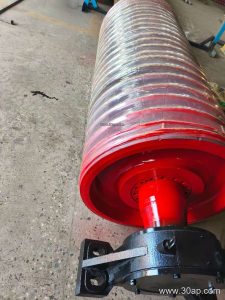
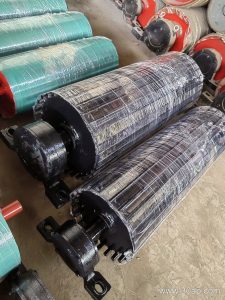
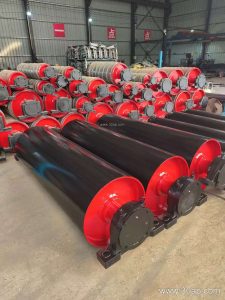
In modern cement manufacturing facilities, raw material handling requires robust mechanical components to sustain continuous production. The main conveying lines rely heavily on a Large Drive Pulley to transmit high rotational torque from the motor and gearbox directly to the heavy-duty conveyor belt. Unlike a tail pulley or simple bend pulley, this primary tractive component experiences the highest tension forces and must be engineered for extreme durability under demanding operating cycles.
Structural Design and Surface Coating Options
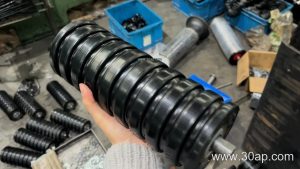
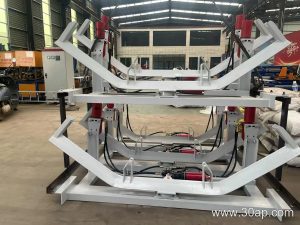
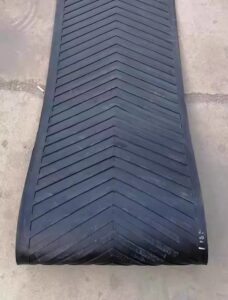
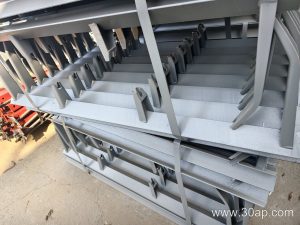
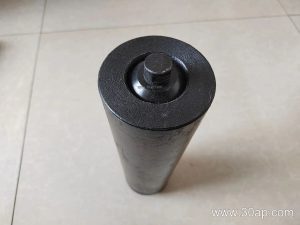
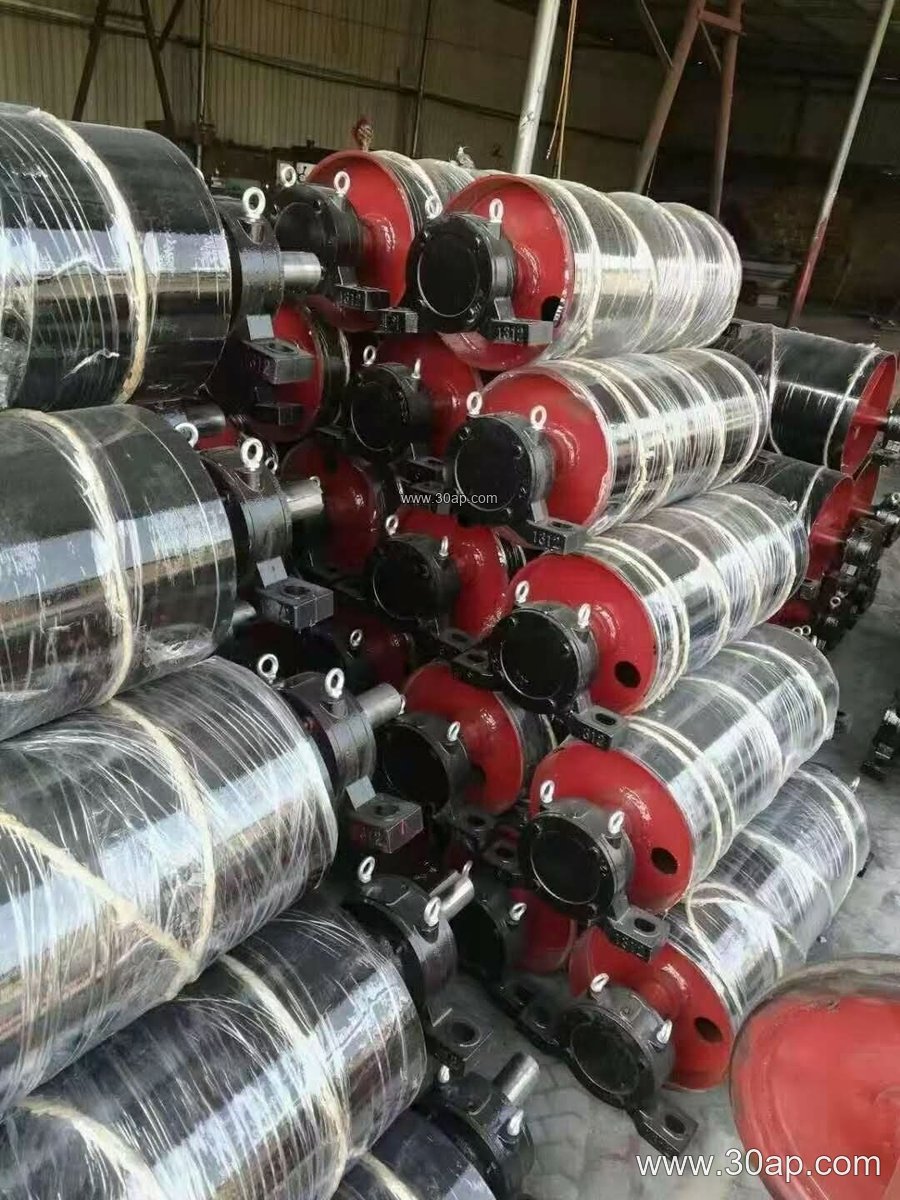
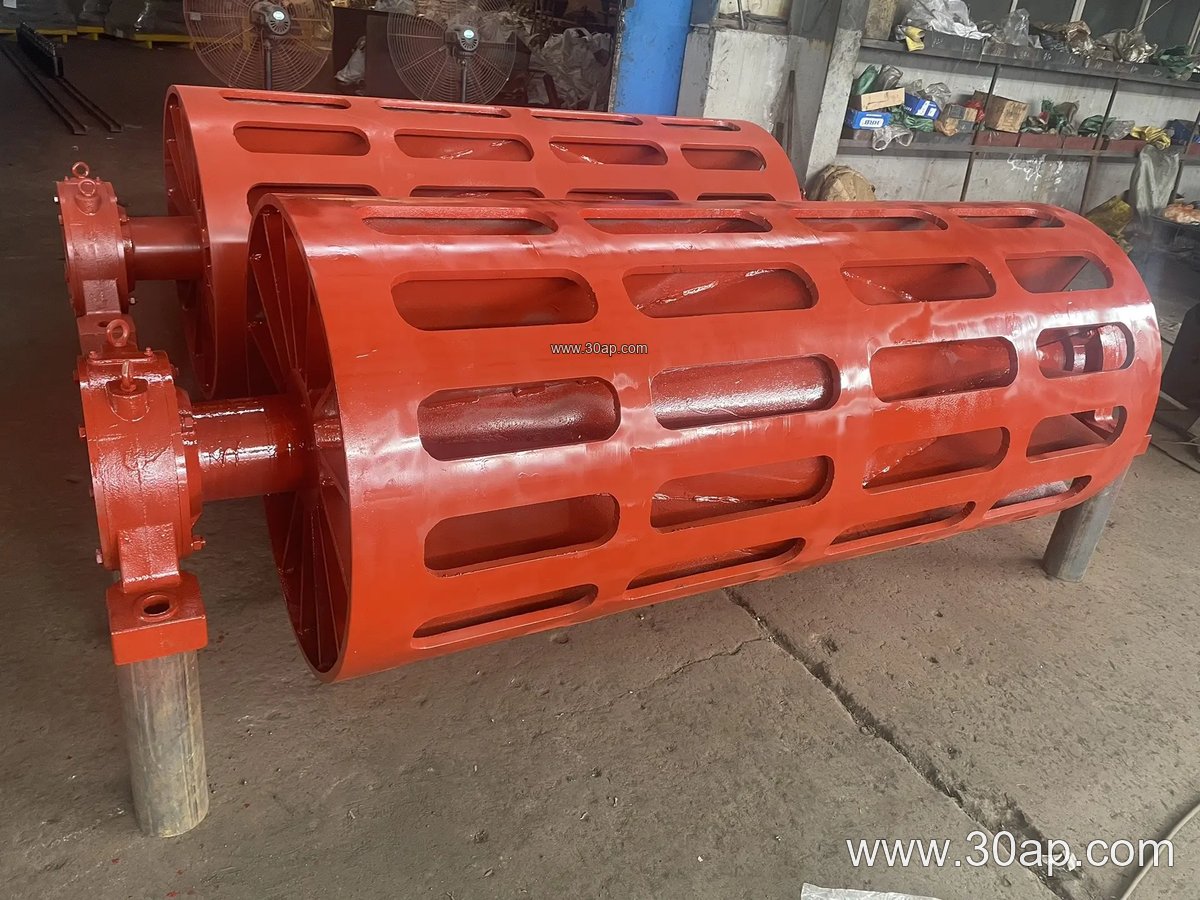
A typical Large Drive Pulley consists of a heavy steel shell, forged steel shaft, end discs, and locking assemblies or hub connections. To prevent belt slippage and improve friction coefficients, the cylindrical surface is often treated with specialized lagging. Operators can choose among several surface designs, including plain steel faces, cold-bonded rubber, hot-vulcanized rubber, diamond pattern lagging, herringbone lagging, or high-durability ceramic lagging. Common rubber thickness options usually measure 8, 10, 12, 15, or 20 mm depending on expected wear rates. When paired with proper idler roller assemblies and secure conveyor brackets, a well-lagged drum significantly extends the service life of an abrasive Steel Cord Conveyor Belt.
Reference Dimensions and Design Parameters
Selecting the correct shell diameter and face width depends on the specific belt rating and tensile requirements of the system. While not every diameter fits every application, engineering guidelines provide common sizing references for various belt widths (B). The shell width is normally wider than the corresponding belt to ensure proper tracking and alignment. Below are typical sizing references frequently utilized in heavy material handling layouts:
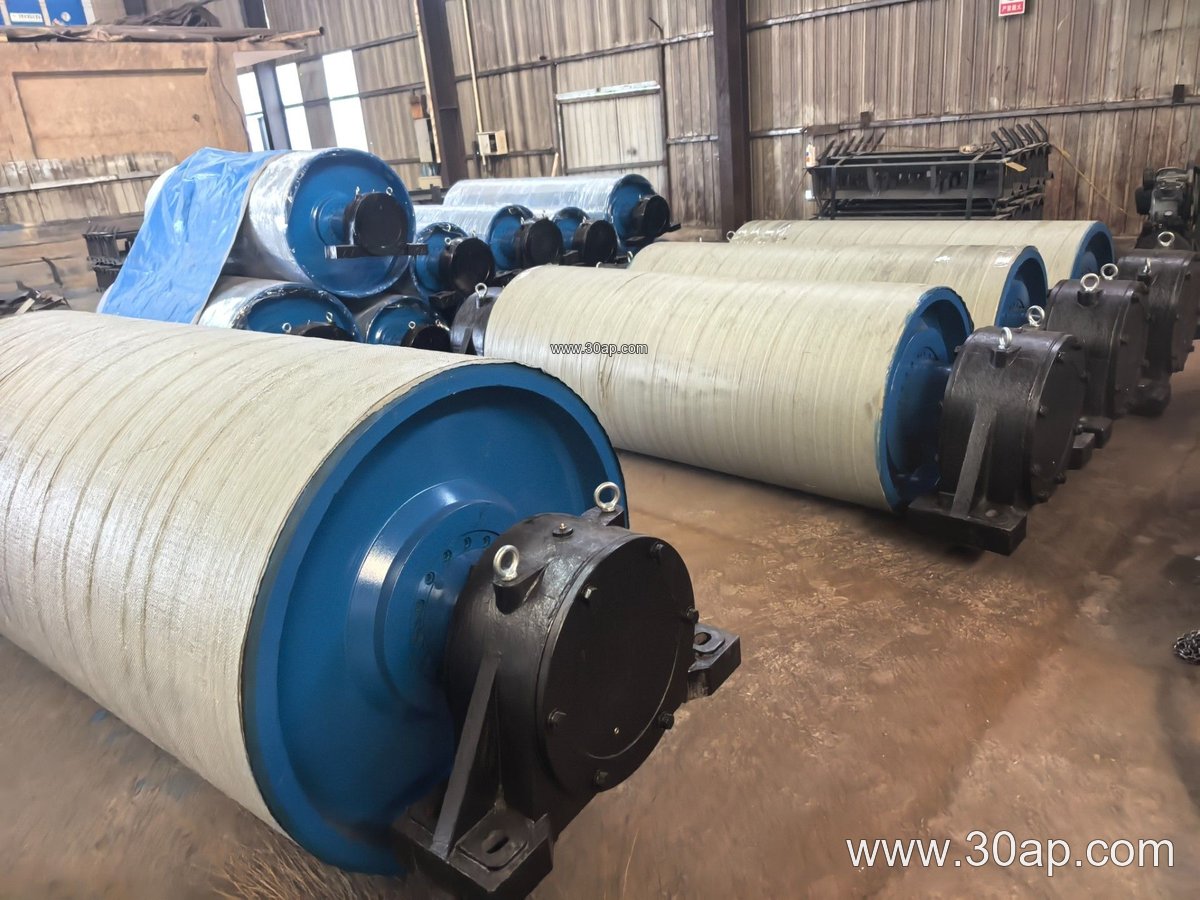
- B650 Belt: Face width approx. 750 mm, with common diameters including Ø500, Ø630, or Ø800 mm
- B800 Belt: Face width approx. 950 mm, with common diameters including Ø630, Ø800, or Ø1000 mm
- B1000 Belt: Face width approx. 1150 mm, with common diameters including Ø800, Ø1000, or Ø1250 mm
- B1200 Belt: Face width approx. 1400 mm, with common combinations such as B1200 x Ø1000 or B1200 x Ø1250 mm
- B1400 Belt: Face width approx. 1600 mm, with common combinations such as B1400 x Ø1250 or B1400 x Ø1400 mm
Shaft diameters are calculated strictly based on applied torque and structural load rather than derived automatically from belt width alone. Common shaft dimensions range from Ø100, Ø120, Ø140, Ø160, Ø180, up to Ø200 mm for extra-heavy cement clinker lines utilizing a Heavy-Duty Conveyor Belt or specialized Heat Resistant Conveyor Belt.
Operational Integration and Maintenance
Positioned at the discharge head of the conveyor network, a Large Drive Pulley works in tight coordination with the moving conveyor pulley assemblies, return idlers, and structural supports. Routine inspection schedules should monitor bearing temperatures, lagging wear conditions, and shaft alignment. Ensuring that the conveyor belt remains properly tensioned prevents premature edge fraying and guarantees steady, uninterrupted transport of raw meal and clinker throughout the facility.