What a Belt Conveyor Drive Pulley Does
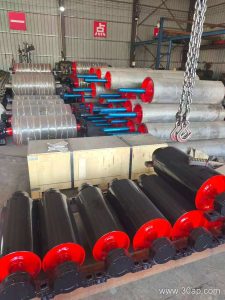
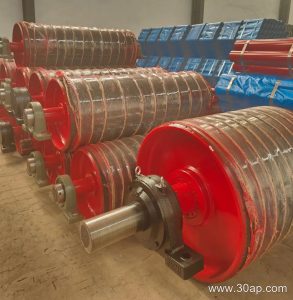
The belt conveyor drive pulley is the powered drum at the head of a conveyor that grips the conveyor belt and pulls the loaded strand forward. It transmits torque from the gearbox or motor to the belt through friction between the drum surface and the belt cover. In a quarry, a limestone mine, or a cement plant clinker line, this single component sets the pace for the whole material flow, so its diameter, lagging, and shaft design deserve careful attention.
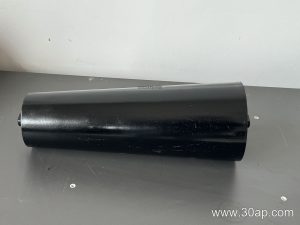
Because it drives rather than merely guides, the drive pulley (also called the head pulley when it sits at the discharge end) is built heavier than a tail or bend pulley. It is not interchangeable with those drums: the tail pulley returns the belt, and a bend pulley changes direction without transmitting drive torque. Each has its own bearing, shaft, and surface requirements.
How the Drum Is Built
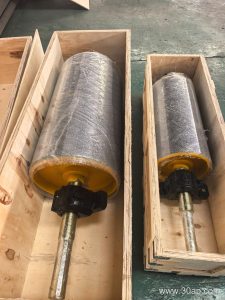
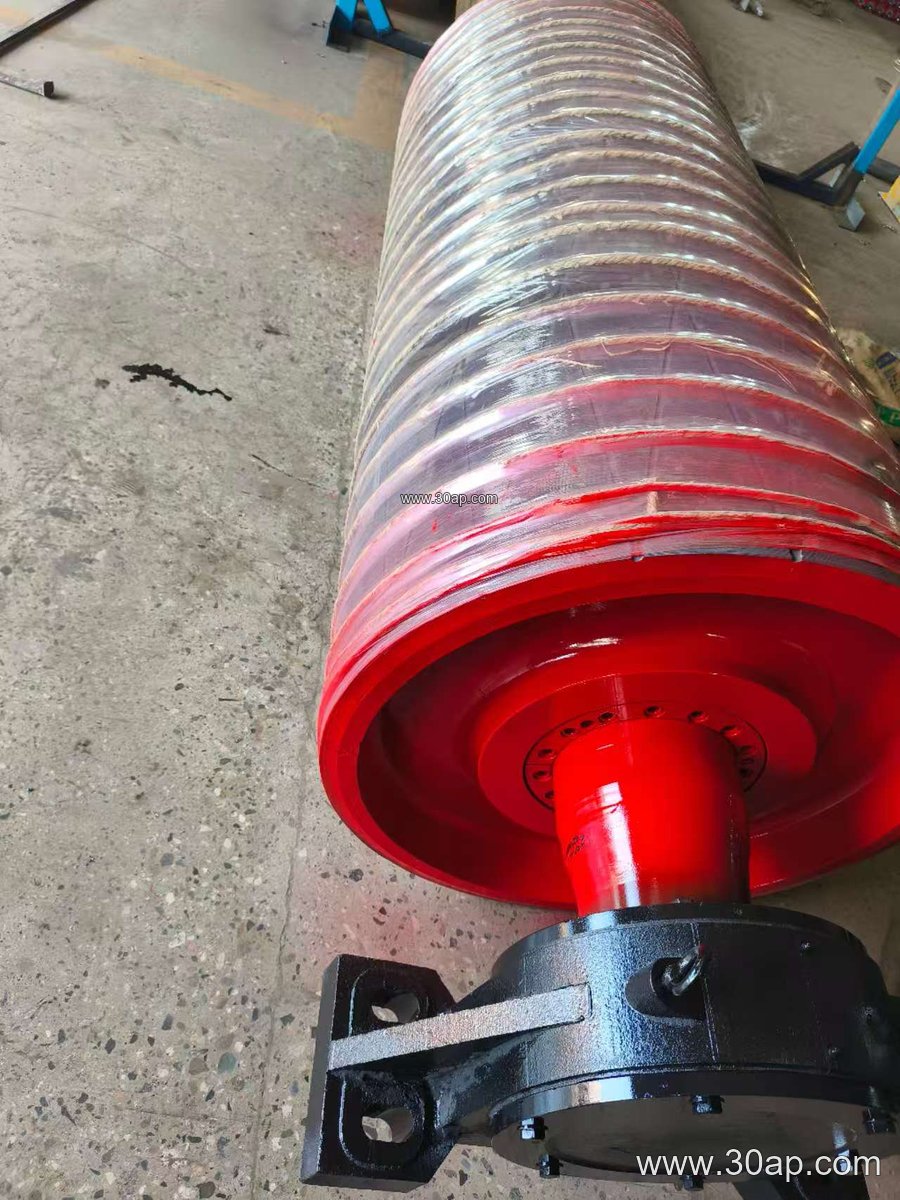
A typical unit combines a cylindrical shell, end discs, a through shaft, bearing housings, and a lagging layer. The shell is usually rolled steel; the shaft is keyed or shrink-fitted to the end discs and carried in self-aligning bearings mounted on conveyor brackets. Lagging is applied to raise friction and protect the shell:
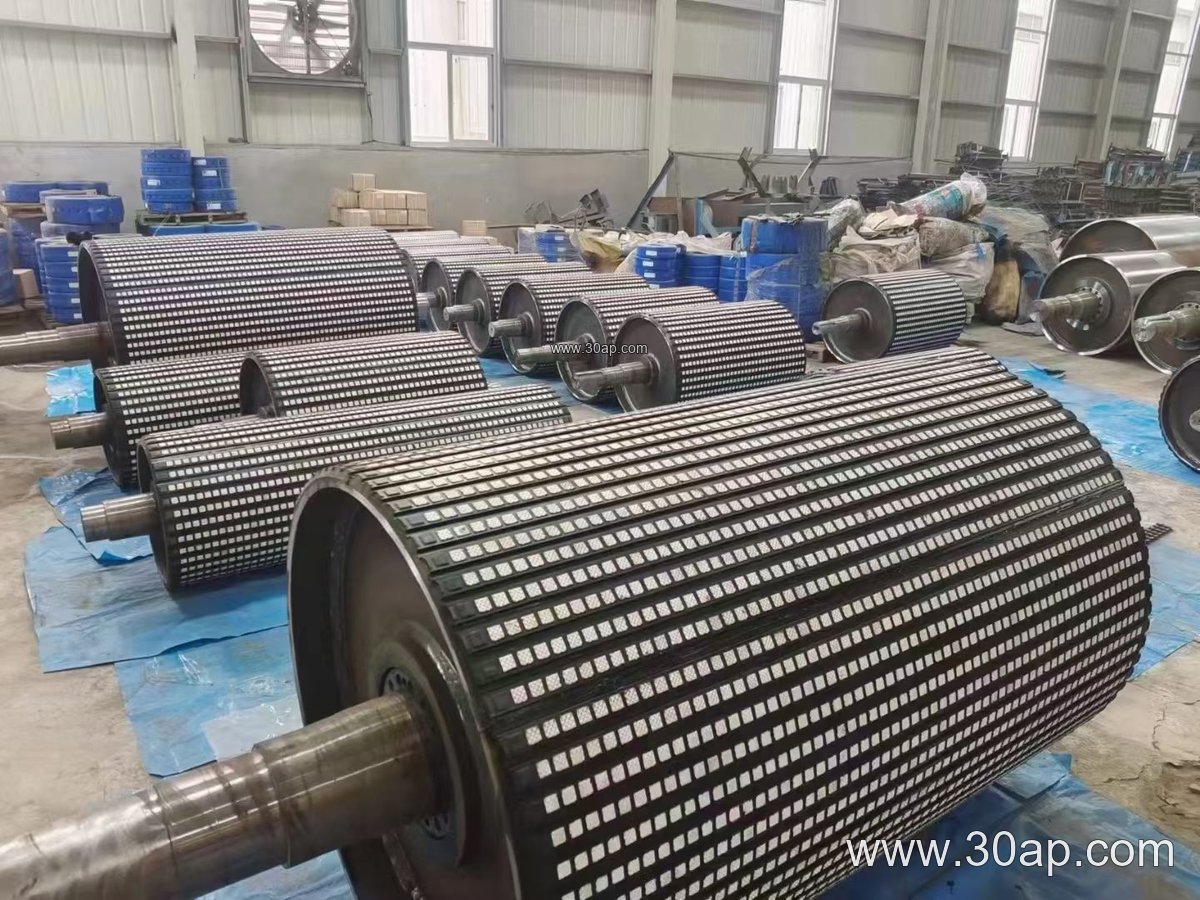
- Plain or smooth face for light duty and cleaning-friendly zones
- Cast rubber, cold-bonded rubber, or hot-vulcanized rubber for general grip
- Diamond or herringbone grooved lagging to shed water and fines
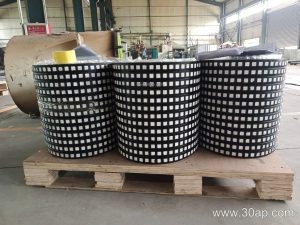
- Ceramic lagging for high-torque drives in wet, abrasive conditions
Lagging thickness commonly runs 8, 10, 12, 15, or 20 mm, chosen by torque demand rather than by belt width alone.
Matching Diameter and Face Width to the Belt
Diameter is a design decision, not a lookup from belt width. A larger drum increases wrap angle and reduces belt bending stress, which matters for high-tension belts such as steel cord or heavy EP constructions. Common diameters include Ø200, Ø250, Ø315, Ø400, Ø500, Ø630, Ø800, Ø1000, Ø1250, Ø1400, Ø1600, and Ø1800. The pulley face is normally wider than the belt; for example, a B800 belt often runs on a roughly 950 mm face, and a B1200 belt on about 1400 mm. Valid combinations such as B800 × Ø500 or B1200 × Ø1000 exist, but no single width locks to one diameter.
| Belt width (B) | Typical pulley face | Common diameter range |
|---|---|---|
| B500 | about 600 mm | Ø250 to Ø400 |
| B650 | about 750 mm | Ø315 to Ø500 |
| B800 | about 950 mm | Ø400 to Ø630 |
| B1000 | about 1150 mm | Ø500 to Ø800 |
| B1200 | about 1400 mm | Ø630 to Ø1000 |
| B1400 | about 1600 mm | Ø800 to Ø1250 |
| B1600 | about 1800 mm | Ø1000 to Ø1400 |
Shaft diameter is set by torque and radial load, not by belt width. Values such as Ø80, Ø100, Ø120, Ø140, Ø160, or Ø200 are common, but the final size should follow the drive calculation.
Where It Fits in the Plant
In a coal washing plant or a power station coal yard, the drive pulley usually sits at the transfer tower where the belt discharges onto the next stage. In a sand and aggregate line, it may be mounted on a portable frame with a compact electric drum. A crusher conveyor handling rock benefits from ceramic or grooved lagging because fines and moisture reduce friction. In underground coal mining, flame retardant and anti-static belt grades are paired with a drive drum whose lagging meets the same safety intent.
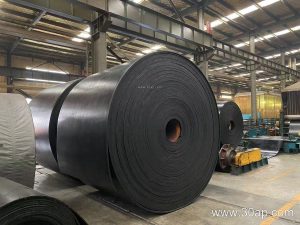
Whatever the site, the drum works alongside the conveyor belt, carrying idlers, and return rollers; the drive only performs well when belt tension, tracking, and pulley alignment are all correct. Users of EP or steel cord belts should confirm that the drum diameter gives acceptable bending fatigue for the belt construction.
What Buyers Should Confirm
- Required torque and belt tension, so diameter and lagging can be sized together
- Belt width and belt type, including whether a flame retardant or heat resistant conveyor belt is involved
- Shaft diameter, keyway, and bearing type matched to the gearbox output
- Lagging pattern and thickness for the material and moisture level
- Mounting interface with the conveyor bracket and take-up arrangement
- Balancing, runout, and surface finish expectations stated in the inquiry
Ask for a drawing showing shell thickness, shaft material, lagging specification, and bearing centers. A well-specified drive drum, paired with a compatible conveyor pulley set and correctly tensioned belt, keeps a quarry, cement works, or port bulk terminal running with fewer stoppages.