What the Q355 Conveyor Bracket Does on a Conveyor
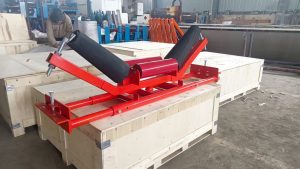
The Q355 conveyor bracket is the steel interface that holds idler rollers in position along a conveyor frame. In practice it is often called a Q355 idler bracket or a Q355 roller support bracket, and those names describe the same product. The bracket carries the load transmitted from the belt and the conveyed material into the frame, so its geometry and material grade have a direct effect on how evenly a conveyor runs.
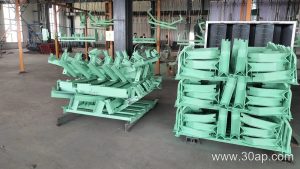
Q355 is a structural steel grade with a nominal yield strength of about 355 MPa. That makes the bracket suitable for medium to heavy conveying duty where mild steel brackets might bend or wear quickly. Brackets are commonly formed from angle steel, channel steel, or folded steel plate, with welded gussets where the design calls for extra stiffness.
How the Bracket Fits Into the Conveyor Structure
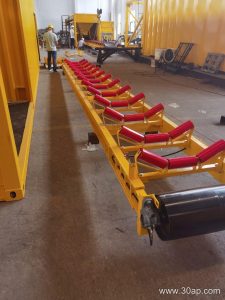
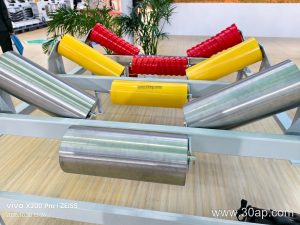
A bracket is not a standalone component. It connects the conveyor frame to the idler roller, and the belt rides on those rollers. On the carrying side, a troughed bracket set positions three rollers at an angle so that the belt forms a trough and keeps bulk material centered. On the return side, a flat or V-shaped bracket supports the return strand.
Typical bracket positions include:
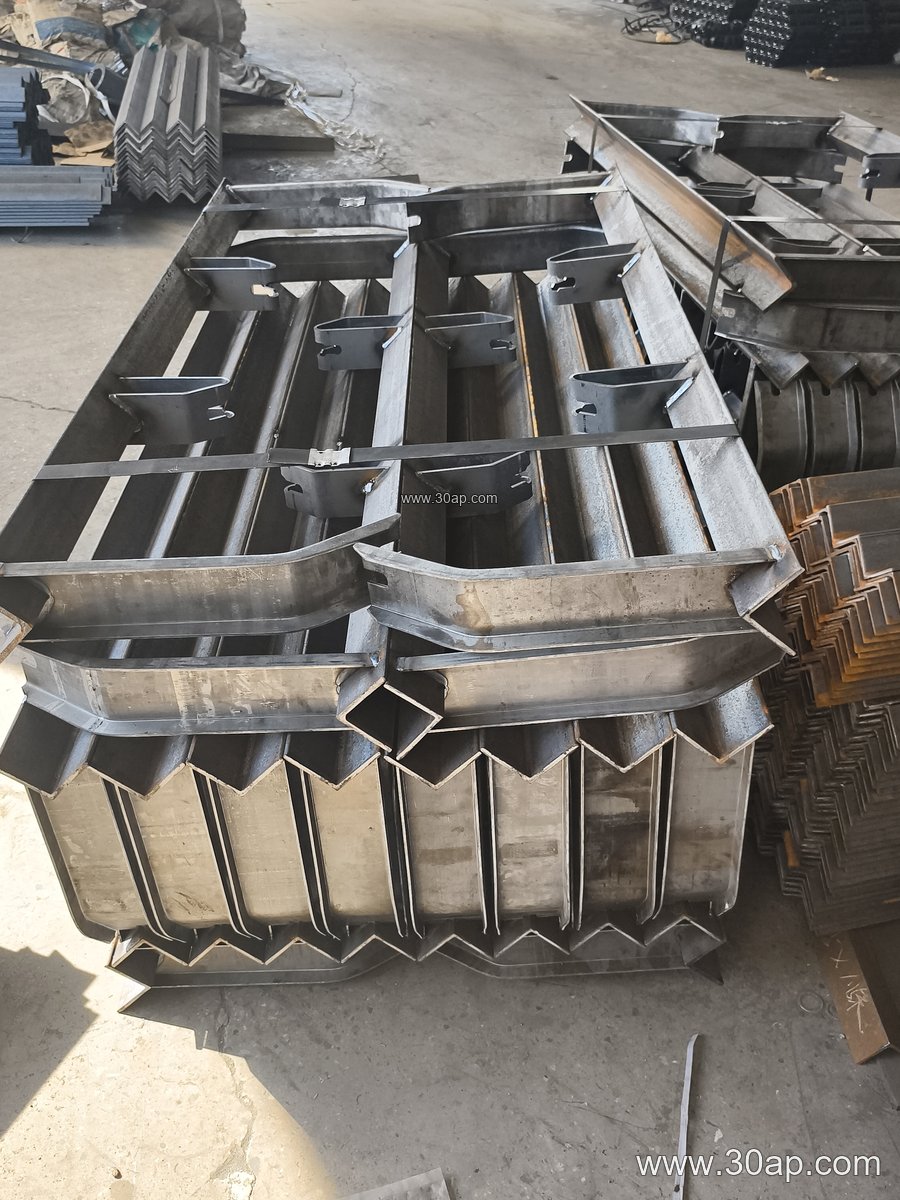
- Troughing brackets for the carrying run, with a fixed or adjustable trough angle
- Transition brackets near pulleys, where the belt changes from flat to troughed
- Return brackets and V-return brackets under the empty strand
- Impact brackets at loading points, paired with impact idlers
- Self-aligning brackets that allow slight movement to correct belt tracking
On a quarry or aggregate line, a heavy-duty bracket set under a crusher discharge area works alongside an Abrasion Resistant Conveyor Belt and impact rollers. In a coal handling plant, the same bracket family may be paired with a Flame Retardant Conveyor Belt and fire-resistant idler components. The bracket itself is selected for load, belt width, and mounting geometry rather than for the belt compound alone.
Trough Angle, Belt Width, and Roller Diameter
Buyers often ask how trough angle and roller diameter relate to belt width. There is no single rule that fixes one value to another. A 30 degree trough is common for general bulk material, while 35 degree and 45 degree brackets are used where a deeper trough helps contain the load. Transition brackets at the head and tail pulleys are usually shallower to avoid stressing the belt edges.
Roller diameter is chosen from load and speed considerations. Common roller diameters include Ø89, Ø108, Ø133, Ø159, and Ø194. A small diameter may suit a short, light conveyor, while a larger diameter is often used on wide, high-capacity lines. The bracket must match the roller shaft end and the frame hole spacing, and those dimensions follow the belt width and trough angle rather than a fixed table.
| Reference Example | Belt Width | Trough Angle | Roller Diameter |
|---|---|---|---|
| Light duty | B650 | 30 degrees | Ø89 |
| General duty | B800 | 35 degrees | Ø108 |
| Medium duty | B1200 | 45 degrees | Ø133 |
| Heavy duty | B1400 | 35 degrees | Ø159 |
| Wide belt | B1800 | 45 degrees | Ø194 |
These combinations are illustrative. Actual hole spacing and crossbeam length change with belt width and trough angle, so the bracket drawing should always be confirmed against the frame design.
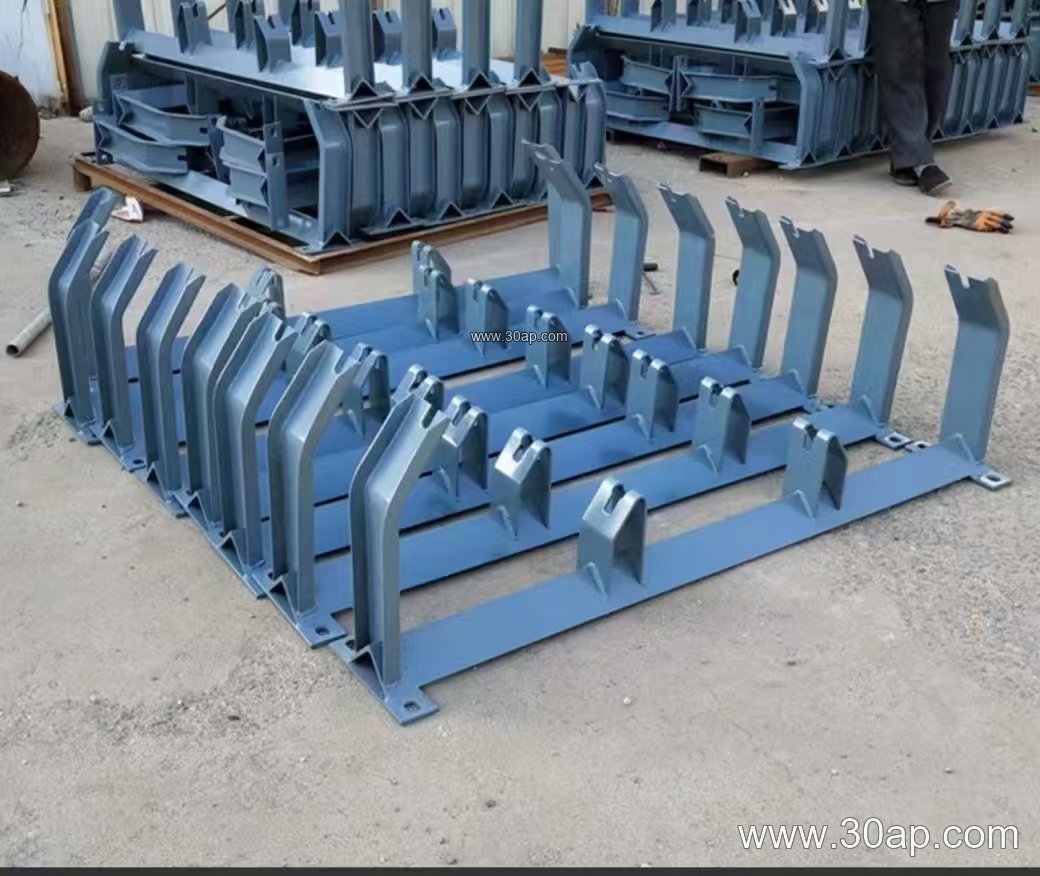
Fixed or Adjustable Brackets
A fixed bracket holds the rollers at one trough angle. It is simple, rigid, and common on conveyors that run a stable material load. An adjustable bracket lets maintenance staff change the trough angle within a range, often between 20 and 45 degrees, to tune belt capacity or reduce spillage. Adjustable designs are useful during commissioning or when a conveyor handles more than one material type.
Forward-leaning brackets, often set around 1.5 to 2 degrees, are a separate tracking aid and should not be confused with adjustable trough brackets. Self-aligning and spiral bracket designs also serve specific tracking or cleaning roles. Each type has its own place, and none should be treated as a universal replacement for another.
Buying Checklist for Q355 Brackets
Before ordering, confirm the belt width, roller diameter, trough angle, mounting hole pattern, and frame beam spacing. Ask for the steel grade and surface treatment, since Q355 brackets are often painted or galvanized for corrosion protection in wet or dusty plants. Check that the bracket set matches the idler roller shaft end and that welded joints are clean and square.
For a cement plant, power plant coal yard, or sand and gravel line, the bracket should be reviewed together with the conveyor belt, the idler roller, and the conveyor pulley layout. A bracket that fits the frame but not the roller will not perform, and a bracket that is too light for the load will deform over time. Matching the Q355 conveyor bracket to the actual duty is the practical way to keep a conveyor running straight and stable.