What a Quarry Conveyor Belt Has to Handle
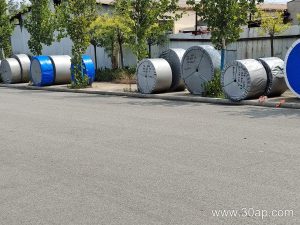
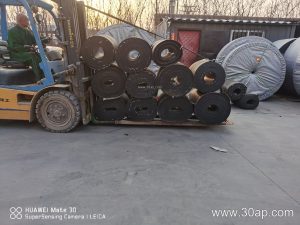
A quarry conveyor belt is the moving wear surface that links blasting, loading, crushing, screening and stockpiling. It carries run-of-quarry rock, crushed aggregate, sand and fines across long horizontal runs and steep inclines, often in open air, dust and constant shock loading. Because the belt is the component that touches the material, its cover compound and carcass decide how long the line stays productive. Buyers usually describe the product as a quarry conveyor belt, an aggregate conveyor belt, or simply a rock conveyor belt, and all of these mean the same heavy-duty rubber belt used in stone processing.
Construction and Common Configurations
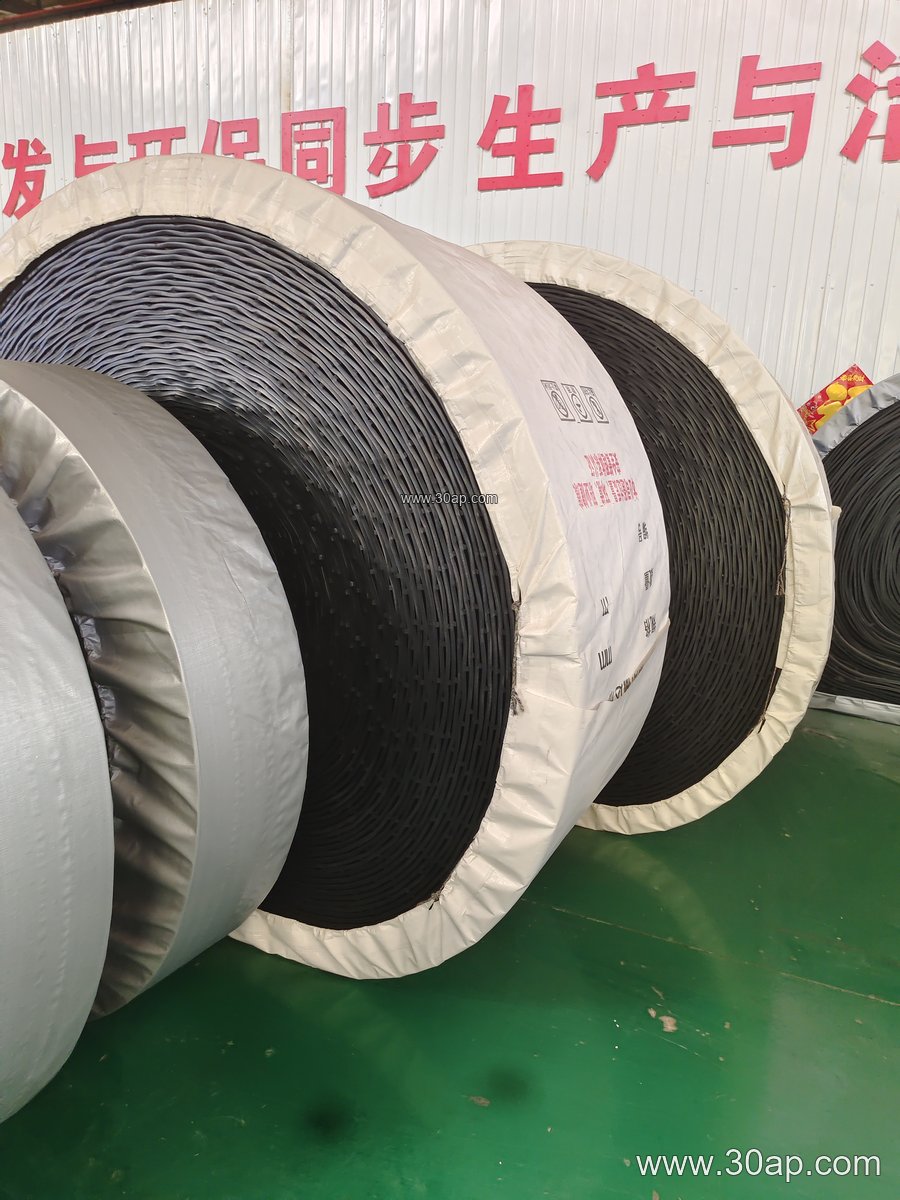
Most belts in this service are fabric-cored or steel-cored rubber belts. A fabric core gives flexibility and good troughing on smaller pulleys; a steel cord core suits very long, high-tension mainlines. Cover thickness is usually quoted as top plus bottom, for example 5+2 mm or 6+2 mm, while 8+3 mm appears on primary crusher discharge belts where lumps hit hard. Typical carcass builds run from 2 to 6 plies. Common strength grades for a general EP conveyor belt include EP200, EP400, EP630, EP1000 and EP1250, and NN nylon belts are also used where high elasticity is wanted. Widths in quarry plants commonly sit between B650 and B1400, with B800, B1000 and B1200 being frequent choices for secondary and tertiary circuits.
| Parameter | Typical reference values | Notes |
|---|---|---|
| Belt width | B500, B650, B800, B1000, B1200, B1400 | Chosen from tonnage, lump size and troughing angle |
| Strength grade | EP200 to EP1250 | Higher grades for long or inclined runs |
| Cover thickness | 4+2, 5+2, 6+2, 8+3 mm | Thicker top cover at impact points |
| Carcass plies | 2 to 6 | Depends on tension and pulley diameters |
| Surface form | Plain, chevron, skirted, corrugated sidewall | Patterned or walled belts for steep angles |
Surface Forms and Where They Fit
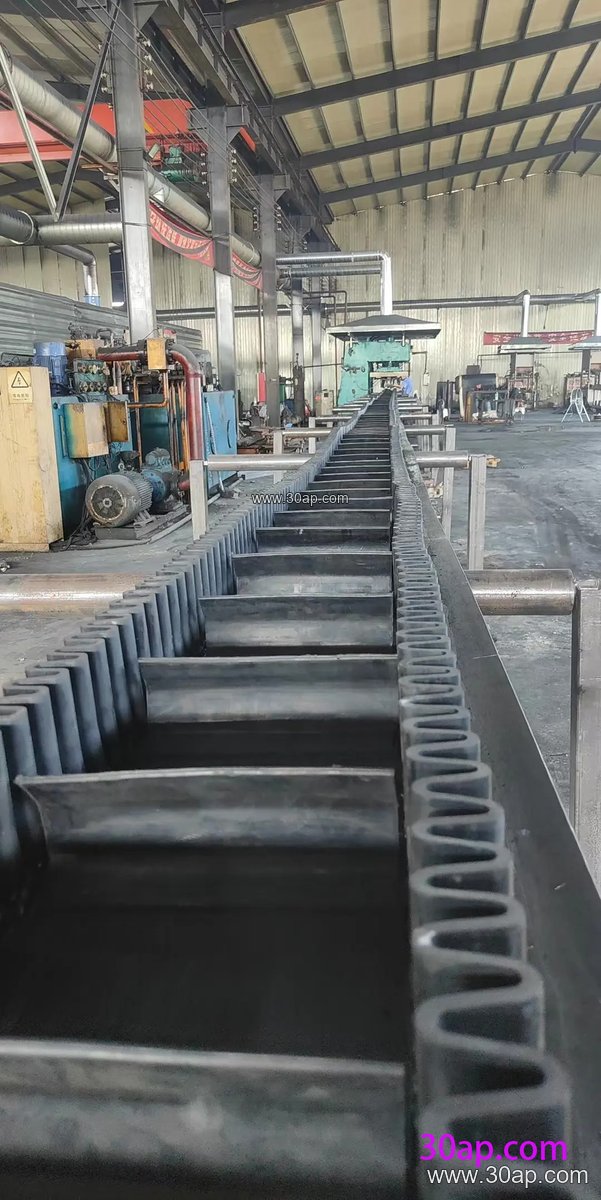
Plain belting is standard on horizontal and gently inclined sections. A chevron conveyor belt adds raised ribs to grip material on steeper slopes, while a corrugated sidewall belt with cleats allows very steep or vertical lifts in a compact footprint. Skirted belts help contain material at transfer points. In dusty quarry air, anti-static properties are sometimes requested, and where the belt passes near hot asphalt or dryer discharge, a heat resistant conveyor belt grade may be specified. Abrasion resistance is the single most requested property, since granite, basalt and quartzite cut covers quickly.
Matching the Belt to the Conveyor Hardware
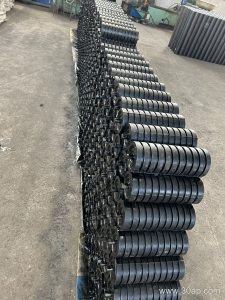
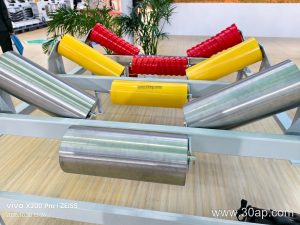
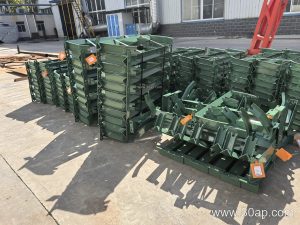
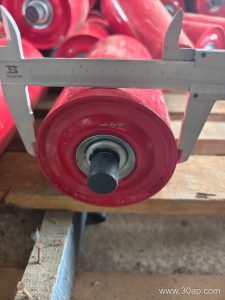
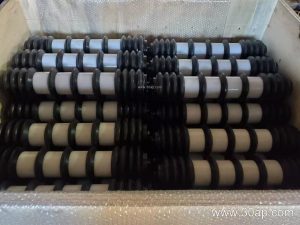
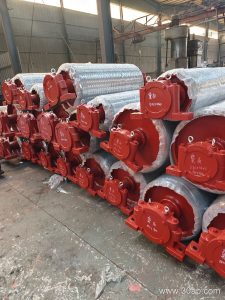
The belt never works alone. Troughing idler rollers set the belt profile and support the load between pulleys. The drive pulley transmits tension, the tail pulley returns the belt, and bend pulleys guide it through take-up and transition zones; these three are separate duties and are not interchangeable. A conveyor pulley with the wrong diameter for the carcass can over-flex the belt, so pulley sizing follows the belt construction rather than belt width alone. Conveyor brackets and frames keep idlers aligned, and misalignment is a common cause of edge damage. When replacing a belt, record the existing width, cover thickness, ply count and strength grade, then confirm the head and tail pulley diameters with the belt supplier.
Selection and Maintenance Notes for Buyers
- State the material: rock type, maximum lump size, moisture and temperature range.
- Give the duty: tonnes per hour, incline angle, centre distance and start-stop frequency.
- Confirm the environment: open pit, tunnel, washing plant or port stockyard, and whether flame retardant or fire resistant grades are required.
- Check splice preference, since an endless conveyor belt joint must match the carcass type.
- Inspect idler rollers and pulley lagging regularly; a seized roller can destroy a cover in days.
- Track belt tension and alignment, and keep spillage away from return runs.
For a sand and gravel operation, a moderately heavy EP belt with a 6+2 mm cover often balances cost and life, while a primary crusher discharge may justify a thicker cover or a steel cord design. The right answer comes from the duty data, not from a single catalogue number.