What a Lagged Pulley Does on a Conveyor
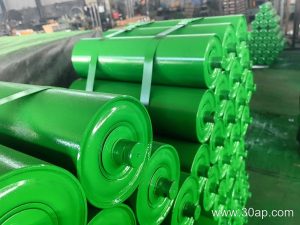
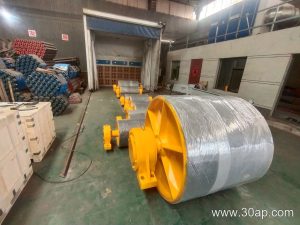
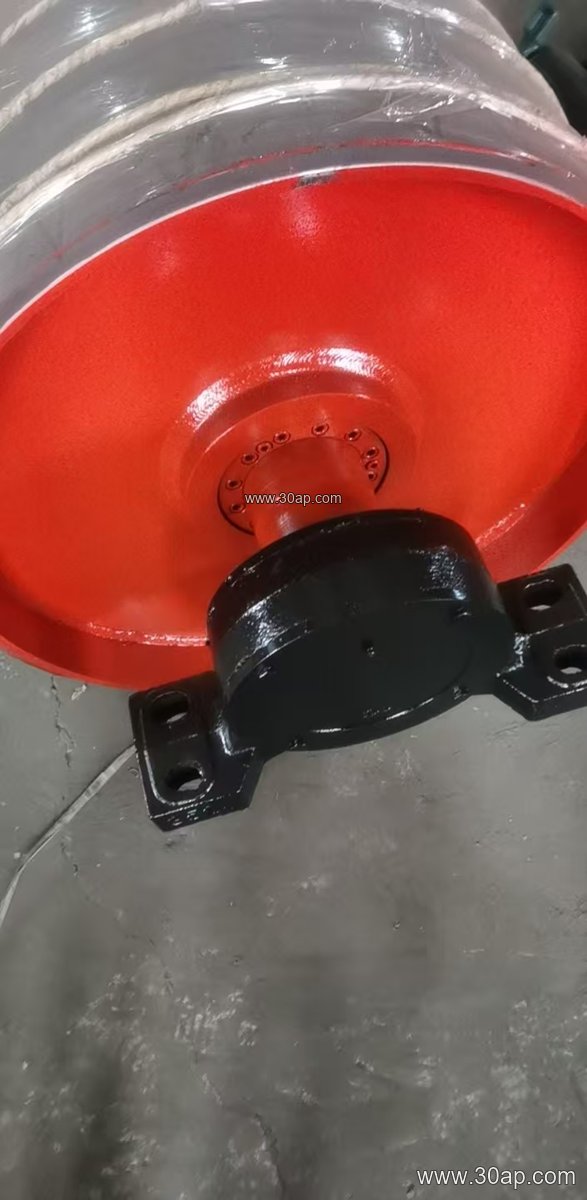
A conveyor belt lagged pulley is a drum with a rubber or ceramic layer bonded to its shell, and that layer is the reason the assembly grips instead of slips. The lagging raises friction between the pulley face and the belt cover, sheds water and fine dust from the contact zone, and protects the steel shell from abrasive wear. In a quarry or a cement plant, a plain drum that worked fine in dry weather can start slipping after a rain shower; a lagged face usually keeps the drive transmitting torque without drama. The same grip helps a tail pulley track better and reduces the chance of belt wander on a long overland run.
It is worth being precise about position, because the job changes with it. A drive pulley, often at the head, transfers motor torque into the belt and needs the highest friction coefficient. A tail pulley at the loading end mainly guides and supports the return strand. A bend pulley changes belt direction somewhere along the route, and a take-up pulley maintains tension. These are different duties, and a lagged face is chosen for different reasons in each case. The conveyor pulley family shares a common shell-and-shaft logic, but the surface treatment is where the application decides.
How the Lagging Is Built and Bonded
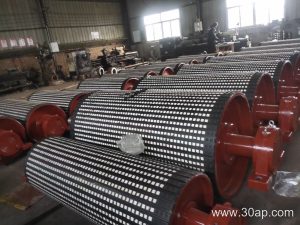
Most units start as a machined steel shell welded to a hub and shaft, then the rubber is applied in one of several ways. Cold-bonded rubber uses an adhesive system and is common for general duty. Hot-vulcanized lagging is cured under pressure and heat, giving a denser, more uniform bond that suits high-torque drives. Cast lagging is poured and formed directly, often with grooves. Diamond grooving improves water evacuation, while herringbone patterns are used where both grip and self-cleaning matter. Ceramic tiles set in a rubber matrix are chosen for extremely abrasive service, though they cost more and are heavier.
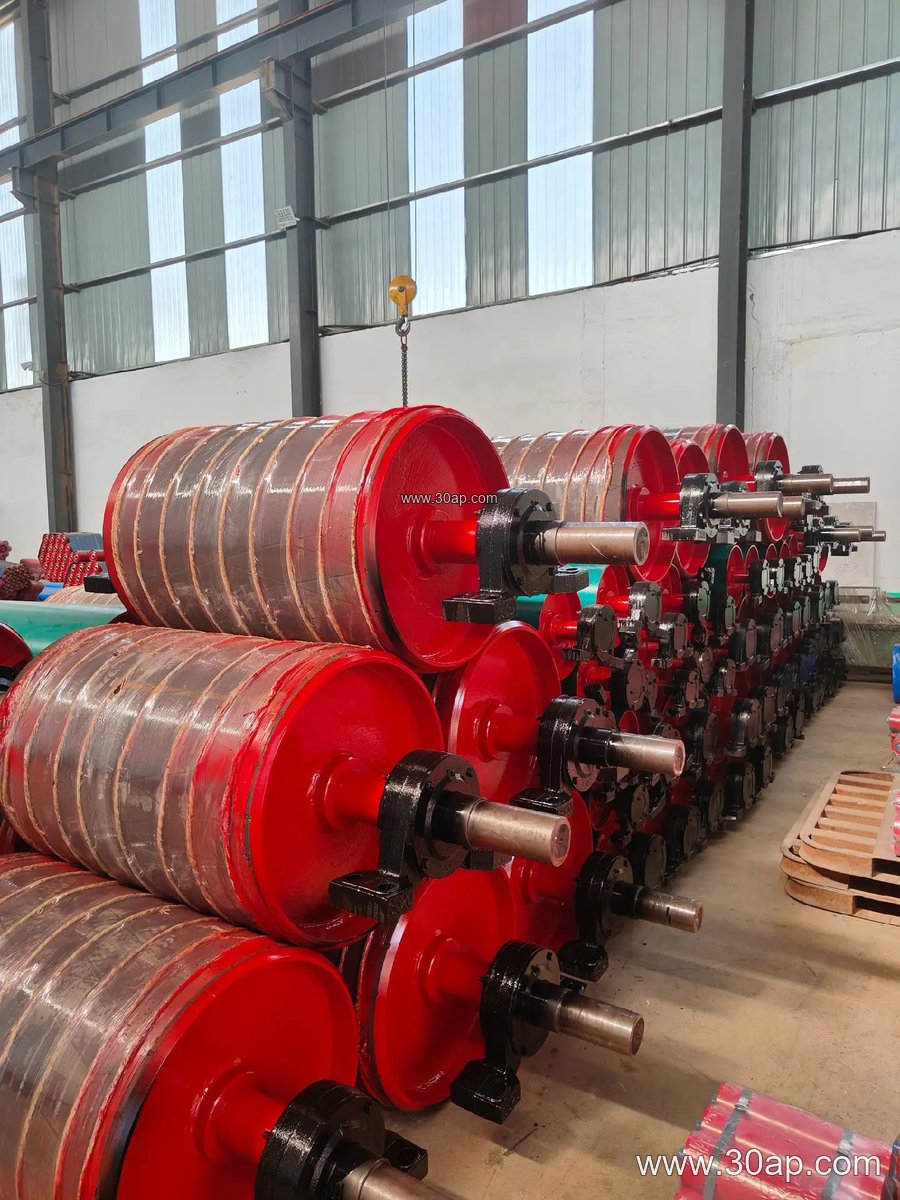
Thickness is usually 8, 10, 12, 15 or 20 mm, with the heavier layers reserved for high-tension drives and coarse ore. The shell diameter is selected from belt tension and shaft loading, not from belt width alone. A B800 conveyor might run a Ø500 drive pulley in a light aggregate line, or a Ø630 or larger drum where the duty is heavier and the shaft must carry more bending load. Common combinations such as B1200 × Ø1000 or B1400 × Ø800 appear in specifications, but no single diameter is compulsory for a given belt width.
Matching the Pulley to the Belt and the Duty
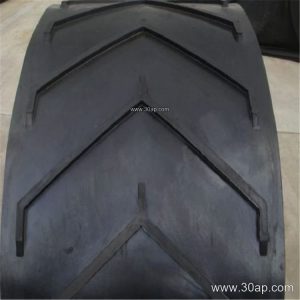
The lagging should be considered together with the belt it grips. A heavy-duty mining conveyor belt carrying iron ore at high tonnage puts more demand on the drive face than a fabric core belt on a short transfer. Where the belt is a steel cord conveyor belt, the drive pulley usually needs a robust, well-bonded lagging and a generous wrap angle. On a multi-ply fabric core conveyor belt in a sand and gravel line, a standard diamond-grooved rubber face often does the job. For a chevron conveyor belt or a corrugated sidewall conveyor belt, check that the profile and cleat height clear the pulley face and any skirt rubbers.
Environmental factors matter as much as tonnage. In a coal preparation plant or an underground coal mining conveyor, flame retardant and anti-static properties may be required for the belt, and the lagging specification should be consistent with that environment. In a power plant coal yard, oil and dust resistance may influence the rubber compound. For hot clinker or sinter, a heat resistant conveyor belt is used, and the pulley should be positioned and ventilated so that heat does not degrade the lagging bond.
Common Reference Data
The values below are typical reference ranges, not fixed supply commitments. Final dimensions follow the conveyor design, torque calculation and shaft load.
| Item | Common reference values |
|---|---|
| Belt width (B) | B400, B500, B650, B800, B1000, B1200, B1400, B1600, B1800, B2000 |
| Pulley diameter | Ø200, Ø250, Ø315, Ø400, Ø500, Ø630, Ø800, Ø1000, Ø1250, Ø1400 |
| Face width | Usually wider than the belt, e.g. B800 about 950 mm, B1200 about 1400 mm |
| Lagging thickness | 8, 10, 12, 15, 20 mm |
| Surface form | Plain, cast rubber, cold-bonded rubber, hot-vulcanized rubber, diamond groove, herringbone, ceramic |
| Shaft diameter | Ø50 to Ø200, determined by torque and load |
Installation and Maintenance Notes
Alignment is the first thing to check after installation. A lagged pulley that is out of square with the belt frame will still cause edge wear even with excellent grip. Confirm that the belt centerline, the conveyor bracket mounting faces and the pulley axis agree before tensioning. Keep the face clean; material build-up on a grooved surface can reduce contact area and cause vibration. Inspect the lagging for cuts, lifted edges and worn grooves during scheduled shutdowns, and replace or re-lag before the steel shell is exposed. On a drive pulley, uneven wear is a sign of belt slip or misalignment and should be investigated rather than simply re-covered.
When ordering, provide the belt width, belt type, pulley position, expected tension, shaft diameter and the environment. That information lets the supplier propose a sensible shell, lagging compound and surface pattern without guessing. A well-chosen lagged pulley is a small part of the conveyor cost but a large part of its reliability, especially where wet, dusty or abrasive conditions are normal.