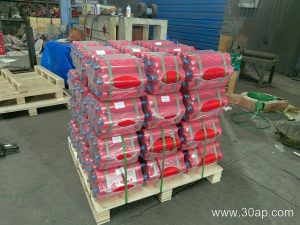
What a Heavy-Duty Belt Conveyor Idler Does
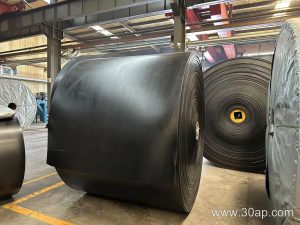
A heavy-duty belt conveyor idler is the rotating support that carries the conveyor belt and its load along the length of a conveyor. In a quarry, a cement plant, or a power plant coal yard, the idler is the part that quietly takes the daily punishment of dust, grit, and shock loading. The belt may be a heavy rubber conveyor belt or a steel cord conveyor belt, but the idlers underneath determine how smoothly that belt tracks and how long the whole system runs between stoppages.
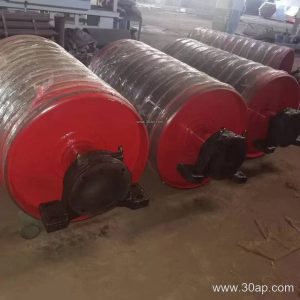
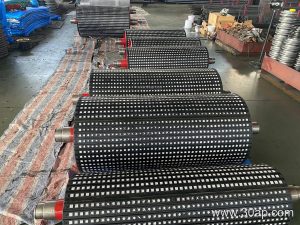
This component is often called a heavy-duty conveyor roller or simply an idler roller. It is not a conveyor pulley. Drive pulleys, tail pulleys, and bend pulleys transmit or redirect belt tension at the ends and corners of the conveyor, while idlers support the belt along the carrying and return runs. Confusing the two leads to the wrong spare part and wasted downtime.
Construction and Common Configurations
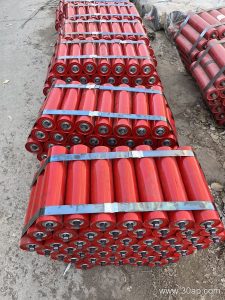
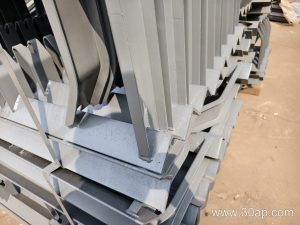
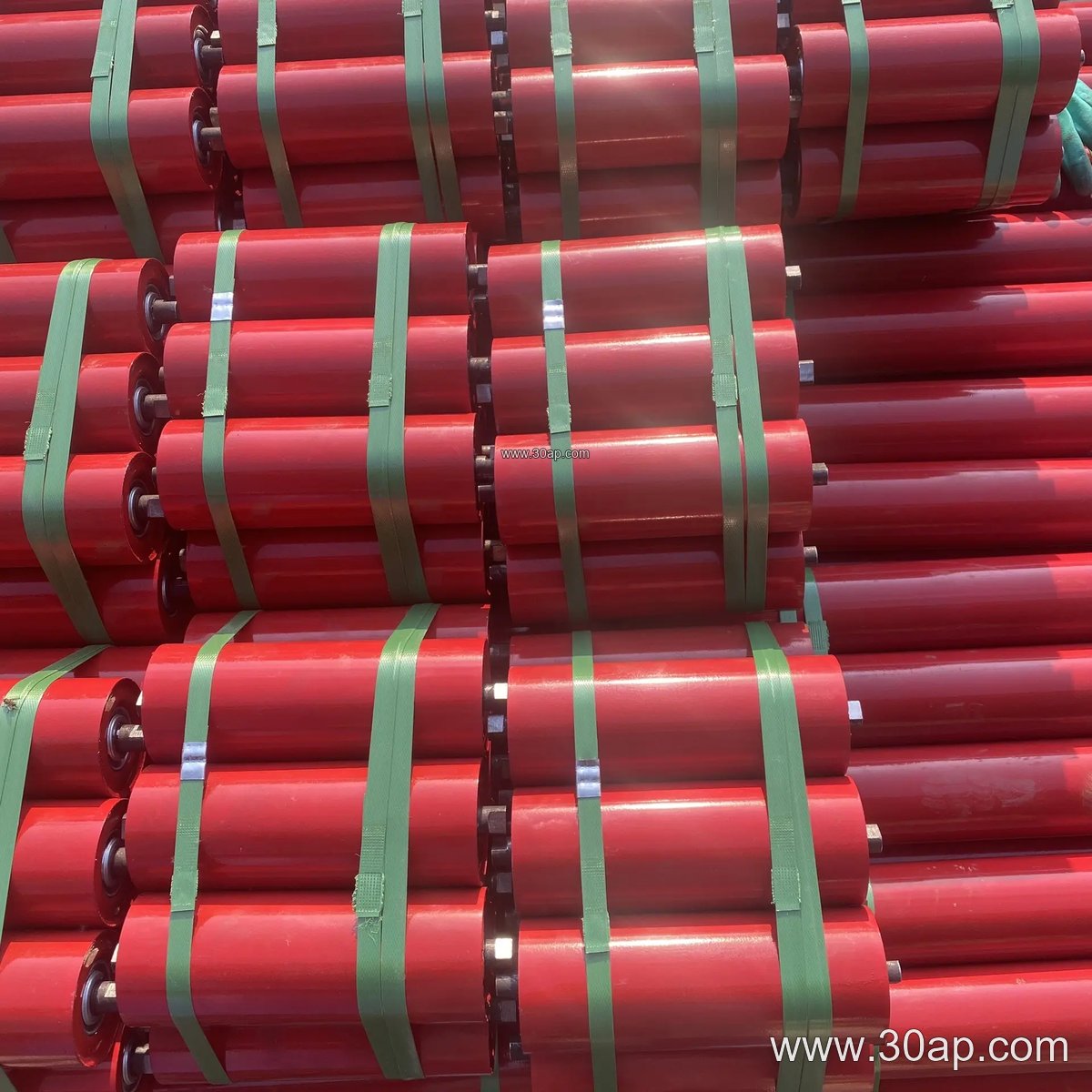
A typical heavy-duty idler uses a steel tube shell, welded bearing housings, sealed bearings, and a shaft that fits into a conveyor bracket on the conveyor frame. Roller surfaces may be plain steel, nylon, ceramic, or rubber ring, depending on whether the priority is abrasion resistance, material build-up control, or impact absorption. Bearing sizes commonly include 6204, 6205, 6305, 6306, 6308, and 6310, but the correct bearing is matched to load and speed by design rather than chosen from the tube diameter alone.
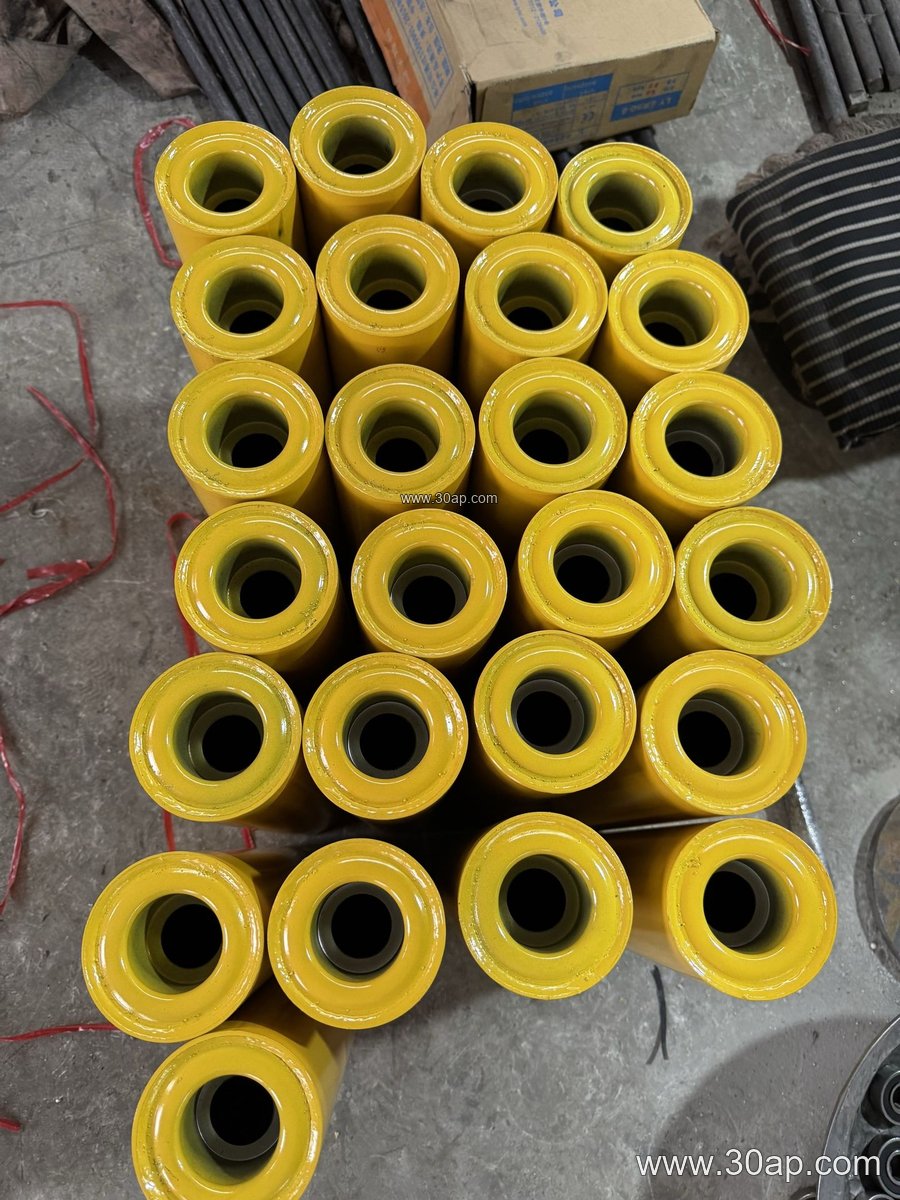
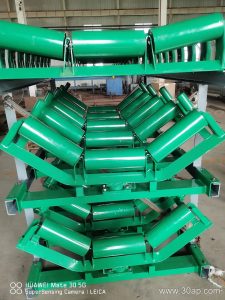
For the carrying side, three-roll troughing sets at 20, 30, 35, or 45 degrees are common; impact idlers with rubber rings are used at transfer points, and return idlers may be flat or V-shaped. The table below gives reference examples only, not fixed combinations.
| Reference item | Common examples |
|---|---|
| Idler diameter | Ø89, Ø102, Ø108, Ø127, Ø133, Ø159, Ø178, Ø194 mm |
| Belt width | B500, B650, B800, B1000, B1200, B1400, B1600, B1800 mm |
| Three-roll troughing roll length (example) | about 200 mm at B500, 315 mm at B800, 465 mm at B1200, 600 mm at B1600 |
| Trough angle | 20°, 30°, 35°, 45° |
Roll length changes with belt width, trough angle, and roll arrangement, and the side rolls and centre roll may differ. A wider belt does not automatically dictate one pulley diameter, and a given belt width does not fix a shaft size.
Where It Fits in Real Plants
In a limestone quarry or a sand and aggregate line, troughing idlers keep an abrasion resistant conveyor belt aligned while crushed rock moves from the crusher to the screen. At a coal handling facility, flame retardant conveyor belt and anti-static conveyor belt grades are often specified, and sealed idlers help resist fine coal dust. Similar units appear in iron ore and copper ore handling, in cement kiln feed lines, and in port ship loading conveyors.
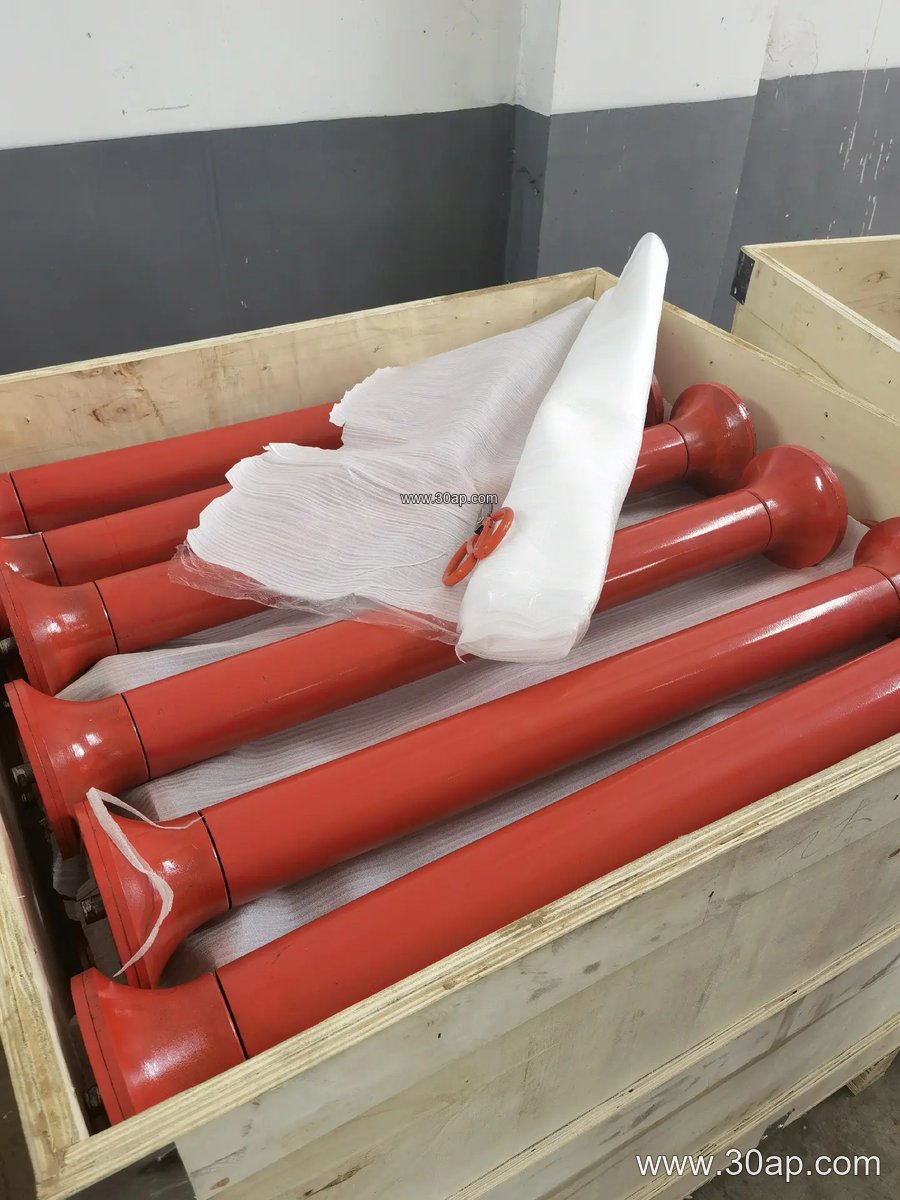
The return run deserves equal attention. A worn return idler can damage the belt edge and increase power draw, so inspection of return rolls, frames, and brackets belongs in the same walk-round as the carrying side.
Buying Advice
- Match the idler to actual load, belt speed, and material lump size, not to a catalogue page alone.
- Confirm shaft ends, bracket spacing, and mounting dimensions against the existing conveyor frame.
- Choose the roller surface for the duty: rubber rings at impact zones, ceramic or nylon where build-up is a problem.
- Check sealing and bearing grade for dusty or wet conditions, especially underground and washdown areas.
- Ask for dimensional drawings and material details before ordering a full conveyor set.
For related components such as the conveyor belt, conveyor pulley, and conveyor bracket, keep the same discipline: verify dimensions and duty class first, then order. A well-chosen heavy-duty belt conveyor idler reduces belt wear, noise, and unplanned stops across mining, cement, power, and bulk handling operations.