What a Conveyor Bracket Quotation Actually Covers
A conveyor bracket quotation is the priced, itemized offer a supplier prepares for the steel supports that hold idler rollers in place along a conveyor frame. In practice, buyers usually meet this product under the name idler bracket or idler frame, and both terms describe the same component. The quotation should state the bracket type, the belt width it serves, the trough angle, the roller diameter it accepts, the material and finish, and the mounting dimensions. Without those details, two offers that look similar on price may not be interchangeable at all.
Quotations are often requested for complete runs in a quarry, a cement plant, or a power plant coal yard, where dozens of brackets are needed per hundred meters of conveyor. That makes the document as much a technical checklist as a price sheet.
How the Bracket Is Built
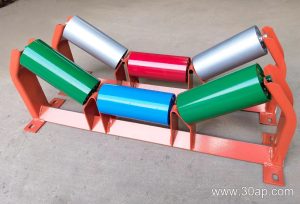
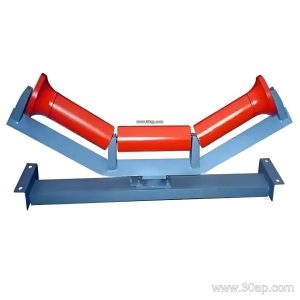
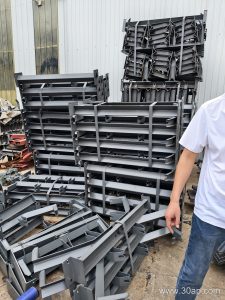
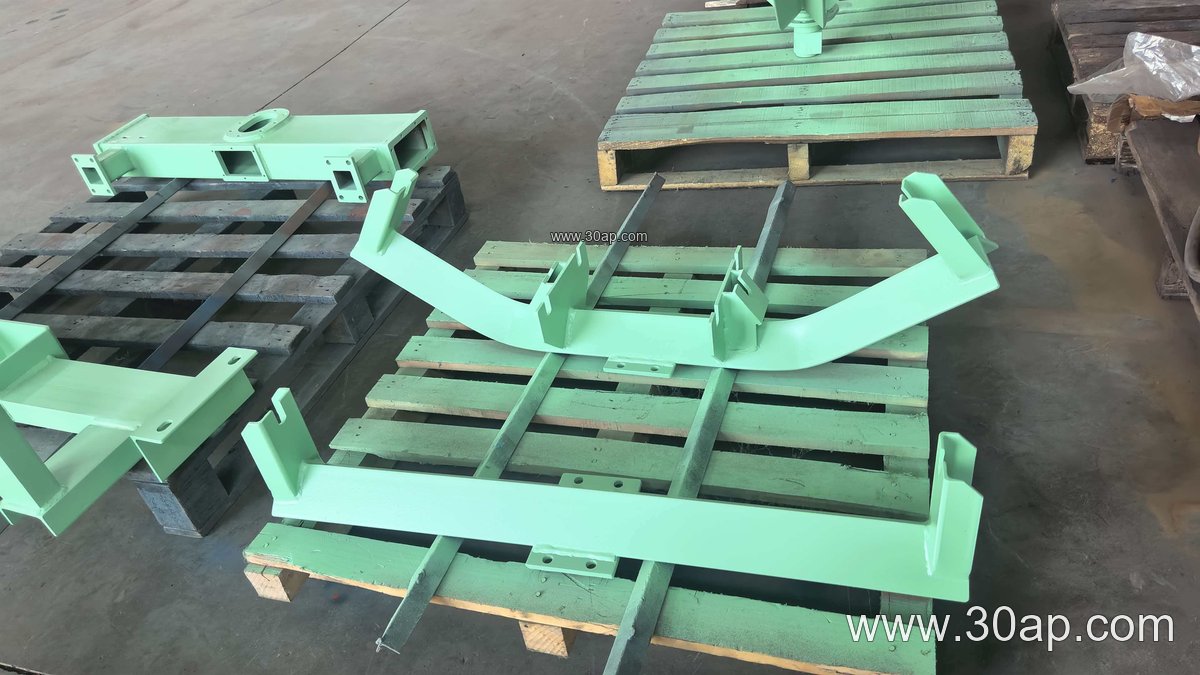
Most brackets are fabricated from angle steel, channel steel, or folded steel plate, then drilled or punched for mounting. A troughing bracket carries three idlers at a set angle; a return bracket supports the belt on the lower run, sometimes with a V-shaped arrangement. Transition and impact brackets sit where loads are heaviest, such as below a crusher discharge or a transfer chute.
Two structural details matter when comparing offers. First, the mounting hole spacing and crossbeam length change with belt width and trough angle, so they should be confirmed per line rather than assumed. Second, adjustable brackets allow the trough angle to be set on site, which helps when a conveyor handles different materials or when alignment needs fine tuning after installation.
Common Reference Configurations
The table below shows typical combinations used for reference only. Final values depend on the conveyor design, belt tension, and material being carried.
| Belt width | Trough angle | Roller diameter | Typical bracket style |
|---|---|---|---|
| B650 | 30 degrees | Ø89 | Troughing, fixed |
| B800 | 35 degrees | Ø108 | Troughing, adjustable |
| B1000 | 35 degrees | Ø108 or Ø133 | Troughing, transition |
| B1200 | 45 degrees | Ø133 | Troughing, impact |
| B1400 | 35 degrees | Ø159 | Return, V-type |
| B1600 | 45 degrees | Ø159 or Ø194 | Heavy-duty troughing |
Available trough angles commonly include 20, 30, 35, and 45 degrees, and forward-leaning brackets are often set at about 1.5 to 2 degrees to help belt tracking. None of these figures should be read as a fixed pairing rule; a wide belt may run at a modest angle, and roller diameter follows load and speed rather than width alone.
Where These Brackets Are Used
In a limestone quarry or sand and gravel line, troughing and impact brackets support the belt directly under the crusher and screen feed points, where a heavy-duty mining conveyor belt takes the sharpest loading. In a coal-fired power plant, return and self-aligning brackets keep the lower run stable along long transfer galleries, often alongside a flame retardant conveyor belt specified for the application.
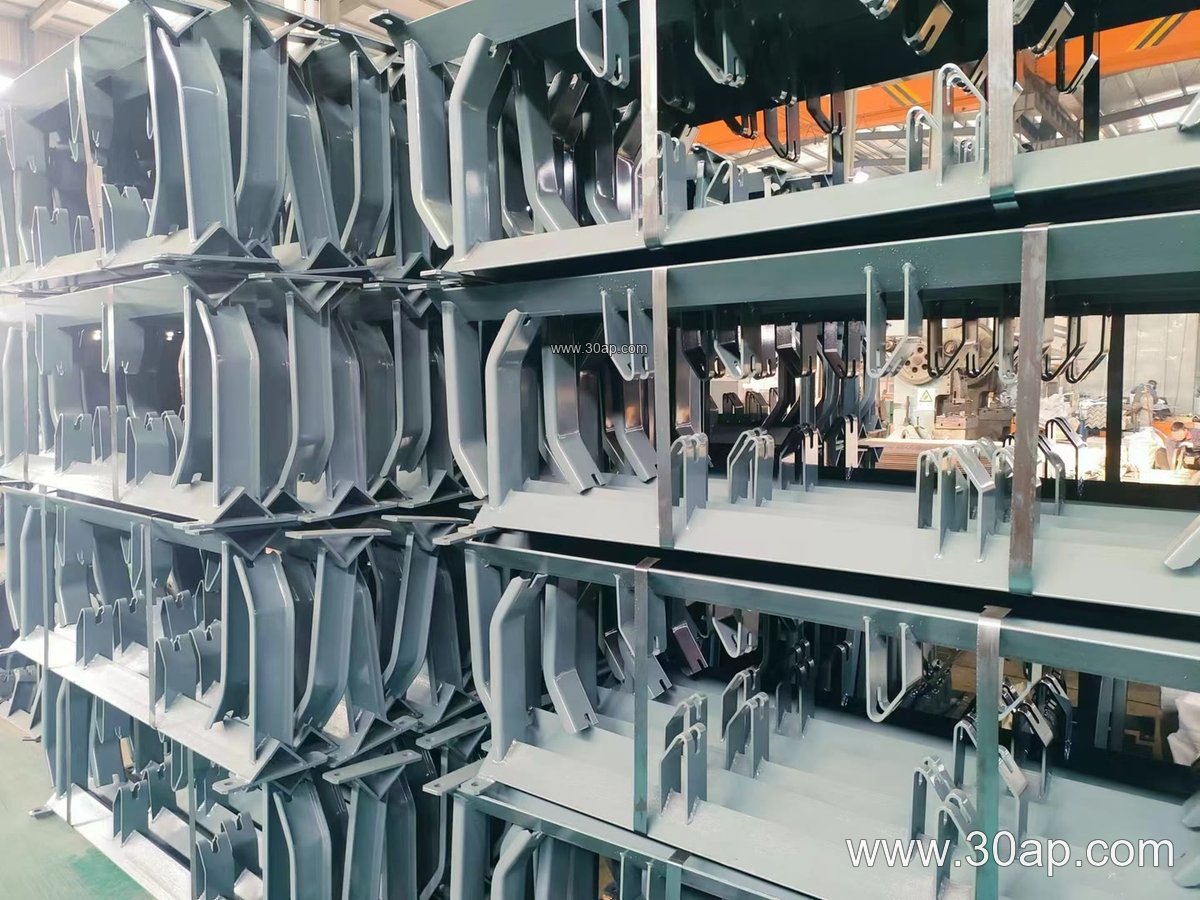
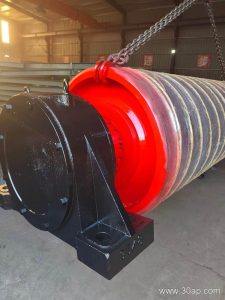
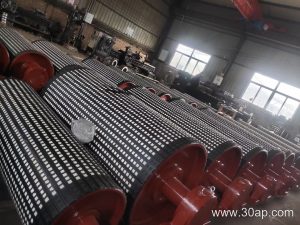
The bracket must work with its neighbors. A conveyor pulley at the head or tail sets belt tension, the idler roller set controls belt shape, and the bracket holds that set in position. A quotation that ignores the pulley and roller schedule is hard to verify.
What Buyers Should Confirm Before Ordering
- Bracket type per position: troughing, return, transition, impact, or self-aligning
- Belt width and required trough angle, with adjustable options noted
- Roller diameter and the corresponding cradle or seat dimensions
- Mounting hole spacing and crossbeam length, confirmed against the frame drawing
- Material, thickness, surface treatment, and whether fasteners are included
- Quantity per conveyor section, plus a reasonable spare allowance
It also helps to ask how the supplier handles mixed orders, since a single project may need several bracket styles plus a supply of conveyor belt and roller spares. A clear quotation lists each line separately so that maintenance teams can reorder individual items later.
Questions Worth Asking Early
Ask whether the quoted bracket suits the actual frame hole pattern, whether the trough angle can be adjusted after delivery, and what lead time applies to non-standard widths. For projects involving abrasive ore or hot clinker, mention the duty condition so the supplier can propose a heavier section or a different finish. These details are far cheaper to settle at quotation stage than during installation.
A well-prepared conveyor bracket quotation is short, specific, and traceable to the conveyor layout. When the type, width, angle, roller size, and mounting data all appear on the page, the buyer can compare offers on equal terms and avoid surprises on site.