What an Endless Conveyor Belt Is
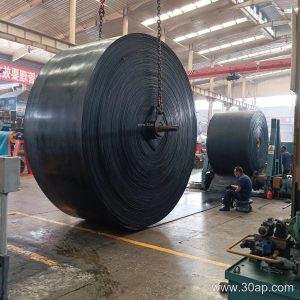
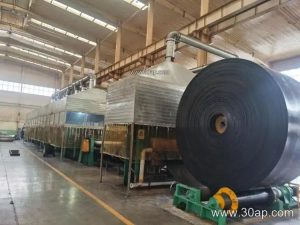
An endless conveyor belt is a closed loop of belting made to a specific center-to-center length so that it can run continuously over pulleys without a mechanical splice. Instead of joining the ends with clips or a vulcanized seam on site, the belt is manufactured as a single continuous ring. This construction is common on short to medium-length conveyors where smooth operation and minimal downtime matter, such as in a cement plant, a power plant, or a sand and gravel yard. The same product is also called a seamless conveyor belt or a spliced-on-site endless belt, depending on how it is produced.
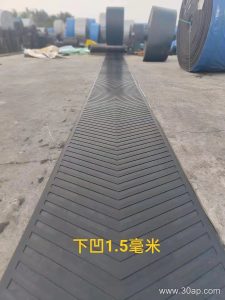
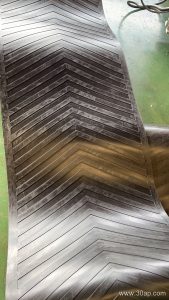
The endless format suits both fabric-cored and steel-cord belting, but it is most often requested in EP, NN, and PVC/PVG constructions for feeders, transfer points, and process lines. It should not be confused with a chevron conveyor belt or a corrugated sidewall conveyor belt, which are separate subtypes with their own profiles.
How the Loop Is Built
Manufacturers produce an endless belt in two main ways. In the first, the belt is vulcanized into a continuous ring at the factory, with the carcass plies aligned and the joint cured under heat and pressure. In the second, a length of open belt is joined on site using a vulcanizing press, and the result is often described as an endless belt once the splice is finished. The first method gives a more uniform loop; the second is practical when the conveyor frame is already installed and the belt must be fitted in place.
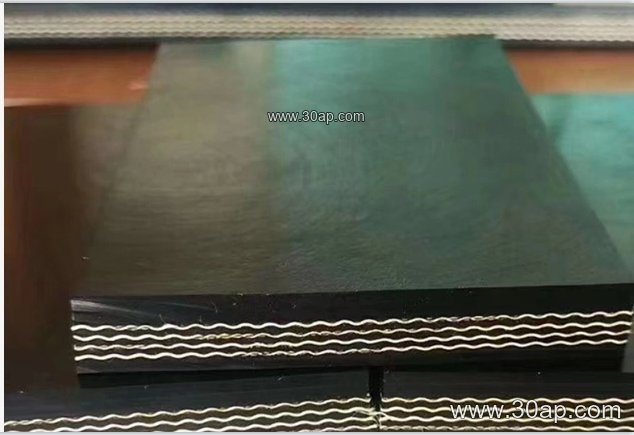
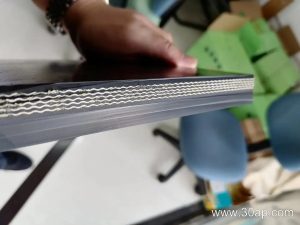
Cover rubber grades are chosen for the duty. A heat resistant conveyor belt may be specified near clinker coolers, while an oil resistant conveyor belt is used where lubricants or oily materials are present. In coal handling, a flame retardant conveyor belt and anti-static construction are typical. The carcass may be EP, NN, or steel cord, and the number of plies and cover thickness are set by the conveyor design rather than by a single universal rule.
Where It Fits in the Plant
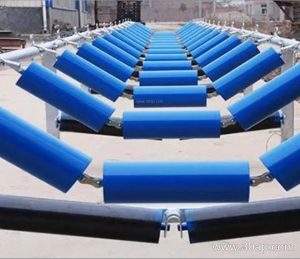
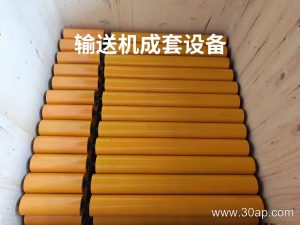
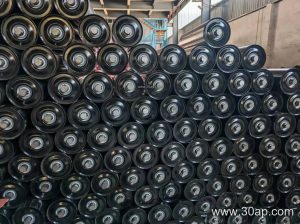
Endless belts are common on conveyor sections that are hard to re-splice, such as feeder belts under hoppers, short transfer conveyors, and process lines in a crusher conveyor belt circuit. They are also used in recycling and port ship-loading systems where a smooth, joint-free surface reduces catch points. The belt runs over a drive pulley, a tail pulley, and bend pulleys, supported by idler rollers and held in line by conveyor brackets. Drive, tail, and bend pulleys are not interchangeable; each has a distinct role in tension and direction change.
Common Reference Data
The values below are typical references, not fixed supply promises. Actual dimensions depend on the conveyor design and the manufacturer.
| Parameter | Common reference range |
|---|---|
| Belt width | B500, B650, B800, B1000, B1200, B1400, B1600, B1800, B2000 |
| Fabric core strength | EP200, EP315, EP400, EP500, EP630, EP800, EP1000, EP1250, EP1600 |
| Cover thickness | 3+1.5, 4+2, 5+2, 6+2, 8+3 mm |
| Carcass plies | 2 to 6 layers, depending on duty |
For a heavy-duty mining conveyor belt, a steel cord or high-strength EP carcass may be needed, while a light process line may use a PVC belt. A 1200mm wide conveyor belt and a 1000mm wide unit are both common, but belt width alone does not fix pulley diameter or shaft size.
Buyer Checklist
- Confirm the exact center-to-center length and pulley diameters before ordering an endless loop.
- State the material, temperature, and presence of oil or flame risk so the cover grade is correct.
- Check whether the belt will be installed as a factory-made ring or joined on site.
- Review the idler roller spacing and conveyor bracket layout to avoid edge damage.
- Ask for the splice method and cure data if the belt is supplied open and joined later.
An endless conveyor belt is a practical choice when continuous, low-maintenance operation matters more than the flexibility of an open-ended belt. Matching the loop to the actual conveyor geometry is the most important step.