What a Coal Conveyor Idler Does
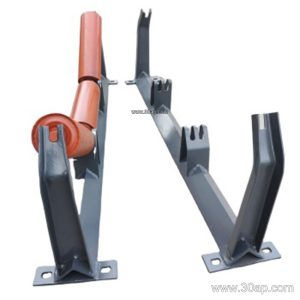
A coal conveyor idler is the rotating roller that supports the conveyor belt along its carrying and return runs. In a coal handling line, these idlers hold the belt in a stable profile so coal stays centered and the belt does not sag between frames. The idler is not a drive component; it is a support component. It works together with the conveyor belt, the conveyor pulley at each end, and the conveyor bracket that locks the roller into the structure. Selecting the right idler roller for coal duty is mostly about load, dust, and belt width.
How the Roller Is Built
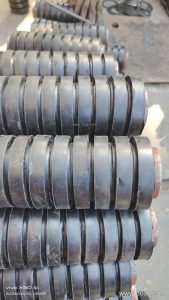
A typical coal conveyor idler has a steel tube shell, a shaft, bearing housings at both ends, and a sealing arrangement. The shell may be plain steel, nylon coated, ceramic lined, or fitted with rubber rings. Bearings are commonly 6204, 6205, 6305, 6306, 6308, or 6310, but the bearing choice follows the load and shaft design rather than the belt width alone. Seals matter in coal service because fine dust and moisture attack bearings quickly. A good labyrinth seal and grease retention design often extend service life more than a heavier shell.
Common Roller Diameters
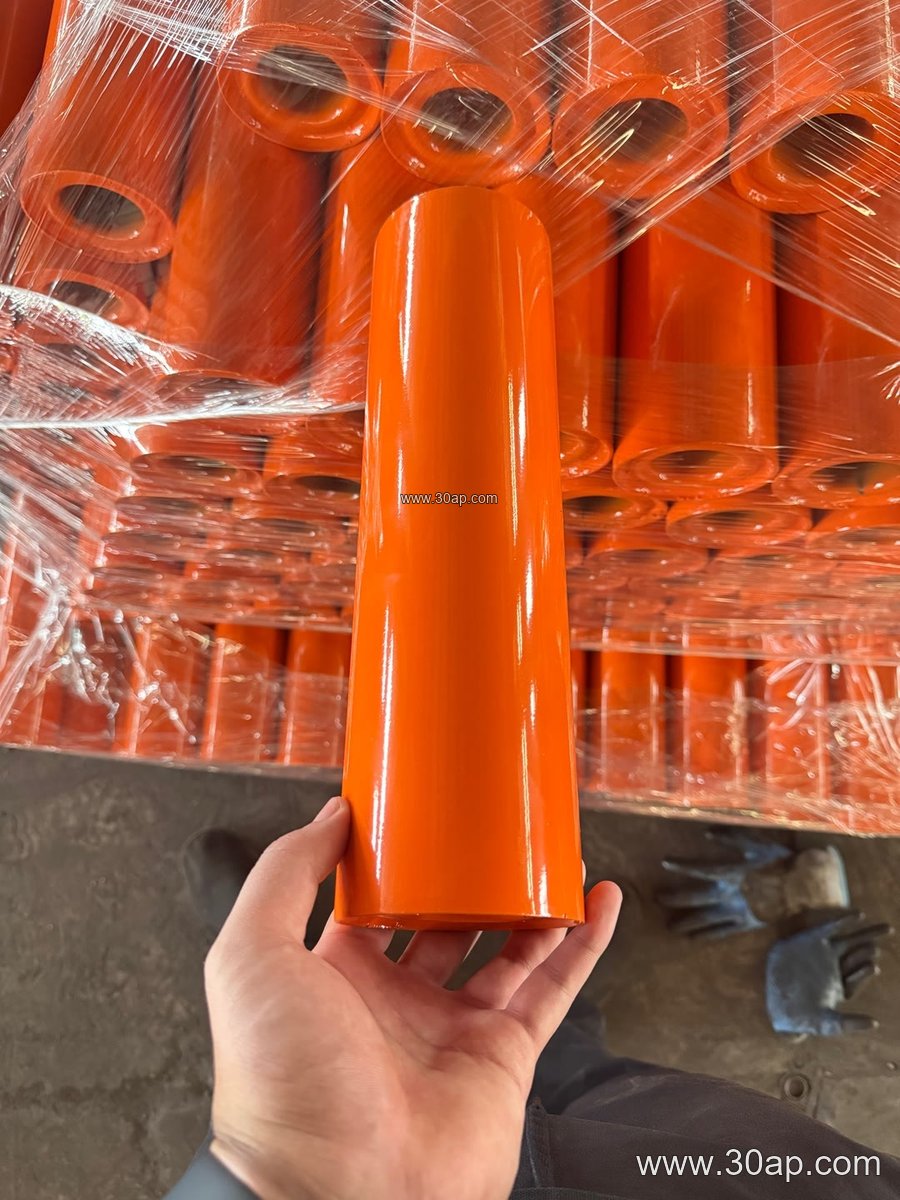
Idler diameters commonly seen in coal conveyors include Ø63, Ø76, Ø89, Ø102, Ø108, Ø127, Ø133, Ø159, Ø178, Ø194, and Ø219 mm. Larger diameters generally suit wider belts and heavier loads, while smaller rollers fit lighter runs. Roller length changes with belt width, trough angle, and the idler set arrangement.
| Belt width | Typical three-roll trough idler length (example) |
|---|---|
| B500 | about 200 mm |
| B650 | about 250 mm |
| B800 | about 315 mm |
| B1000 | about 380 mm |
| B1200 | about 465 mm |
| B1400 | about 530 mm |
| B1600 | about 600 mm |
| B1800 | about 670 mm |
| B2000 | about 750 mm |
These figures are common references, not fixed pairings. Side rollers and center rollers may differ, and the final length is set by design.
Idler Types Along the Coal Line
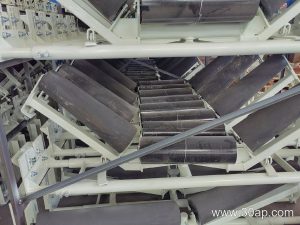
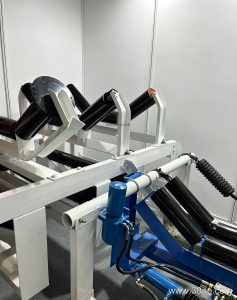
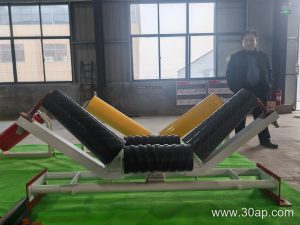
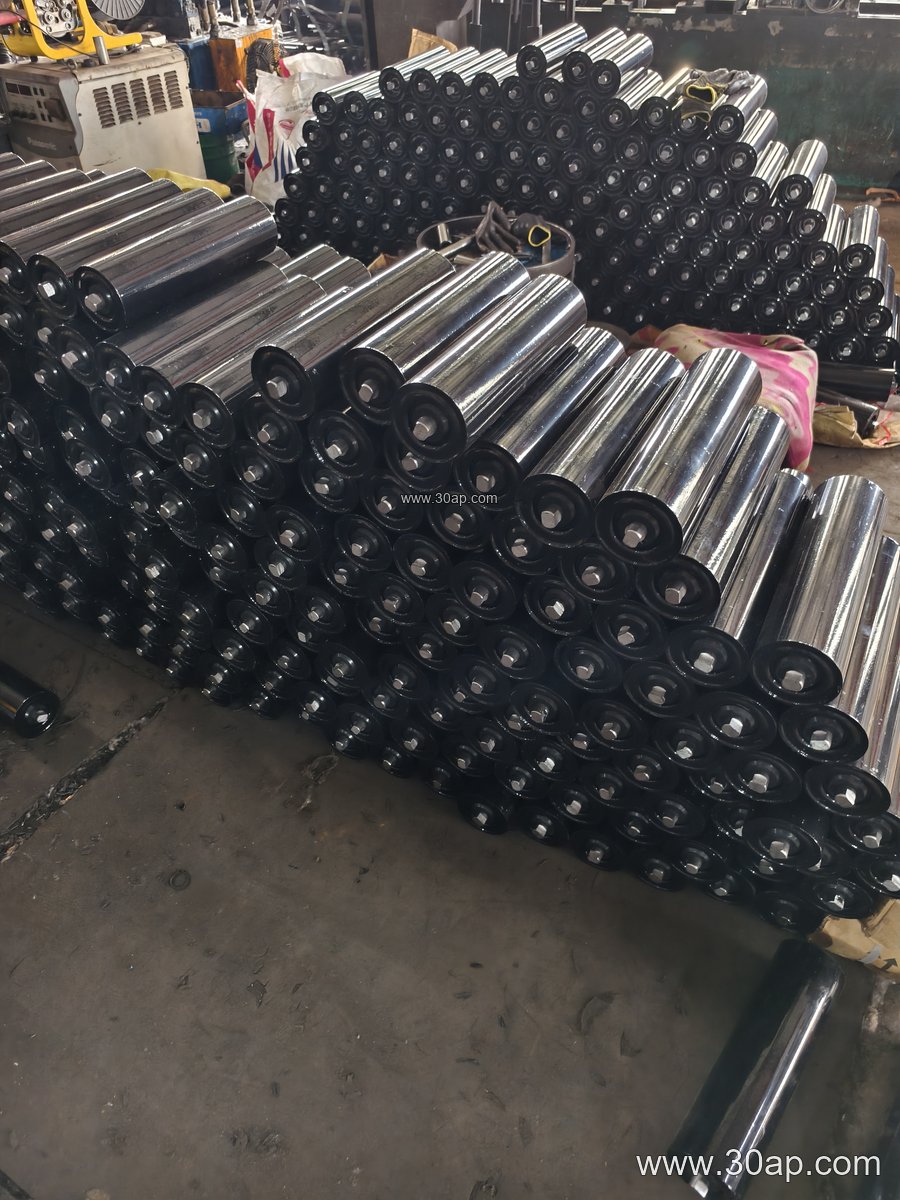
On the carrying side, trough idlers with 20, 30, 35, or 45 degree trough angles shape the belt into a channel. A three-roll trough set is common for wider belts, while two-roll and single-roll sets appear in narrower or special positions. Transition idlers ease the belt from flat to troughed near a conveyor pulley. On the return side, flat return idlers or V-return idlers support the empty belt. Impact idlers with rubber rings are placed under loading points where coal drops onto the belt. Self-aligning idlers, including friction and tapered types, help correct belt drift. Spiral idlers are sometimes used where sticky material tends to build up on the shell.
Where Coal Idlers Are Used
Coal conveyor idlers appear in wash plants, power plant coal yards, and underground mining sections. In a coal preparation plant, dust and moisture are constant, so sealed idlers and corrosion-aware coatings help. In a power plant coal handling system, long overland runs need steady roller spacing to keep belt sag low. The same idler family also works in cement plants, quarries, and port bulk terminals where similar belts run. Matching the idler to the belt, such as a flame retardant conveyor belt in underground service or a coal mining conveyor belt on the surface, keeps the whole line consistent.
Buyer Checklist
- Confirm belt width and trough angle before choosing roller length.
- Match roller diameter to load and belt speed, not to a single rule of thumb.
- Check seal type and bearing size for dusty coal conditions.
- Ask how the idler fits the conveyor bracket and frame spacing.
- Review shell material and coating for abrasion and corrosion.
- Confirm whether impact, return, or self-aligning idlers are needed at specific points.
A buyer should also treat catalog values as reference data. Roller diameter, shaft size, and bearing are design choices that depend on load, speed, and environment. No single belt width forces one pulley diameter or one shaft size. For coal duty, the practical goal is a idler roller that spins freely, seals well, and keeps the conveyor belt tracking straight through the load zone and the return run.