What a Q355 Conveyor Bracket Does
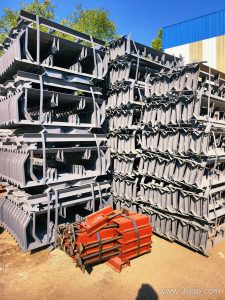
A Q355 conveyor bracket is the steel support that holds the idler roller at the correct height, angle and spacing along a belt conveyor. Because Q355 is a low-alloy, higher-strength structural steel, the bracket can carry heavy belt loads with a smaller section than a mild steel frame would need. In a quarry, a coal handling system or a cement plant, this bracket is the quiet link between the conveyor belt and the structure, and its accuracy decides how well the belt tracks.
In practice, buyers see the part under several names. A Q355 idler bracket, a Q355 conveyor idler support or simply a Q355 belt bracket all describe the same product; the material grade is the fixed point, while the shape changes with the frame design.
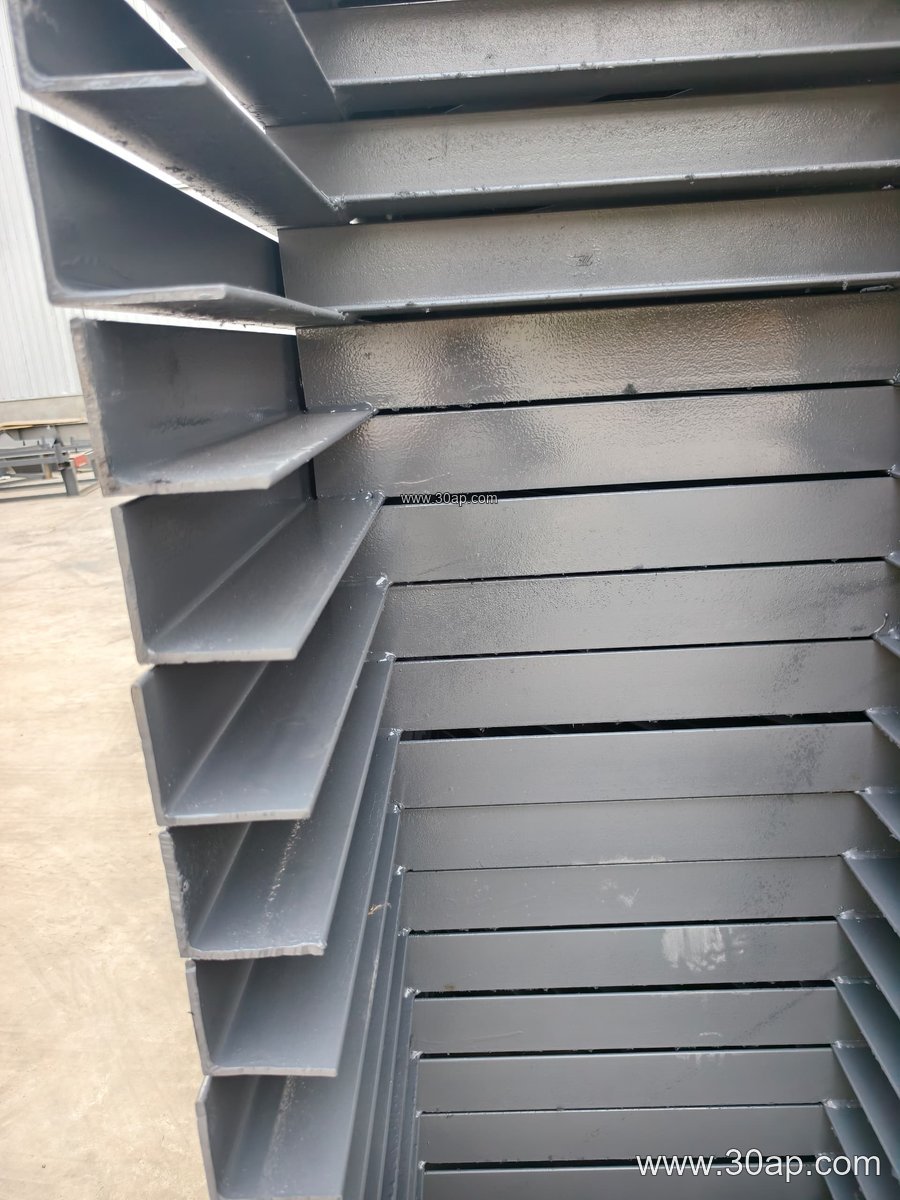
How the Bracket Is Built
Most units are fabricated from angle steel, channel steel or folded steel plate. The forming method affects stiffness and price. Folded plate gives a clean profile and good rigidity; channel sections suit heavier loads; angle sections are common on lighter frames. Welded joints should be continuous where the bracket meets the main beam, and bolt holes are usually slotted or paired so the idler can be adjusted on site.
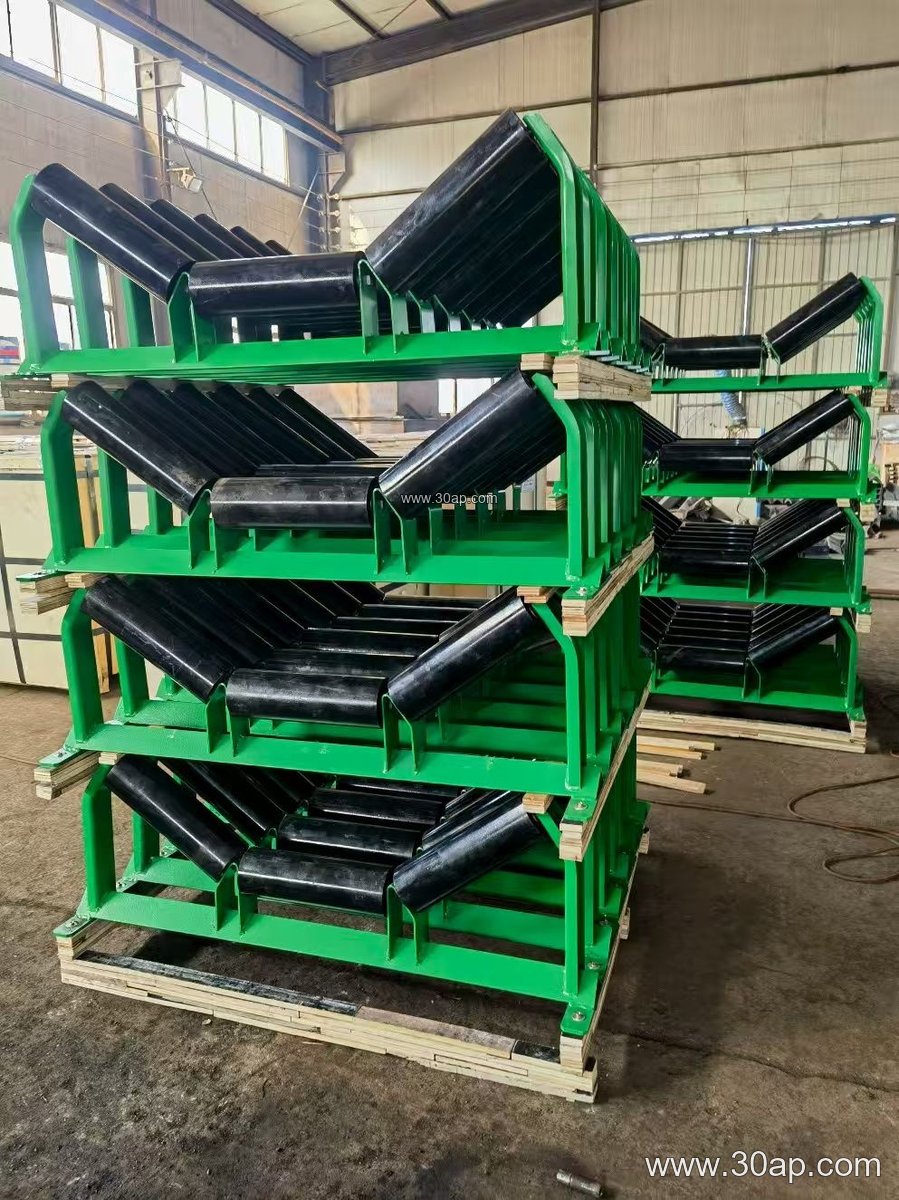
A Q355 bracket is often supplied as a set that includes the cross beam, the mounting plates for the idler roller and the bolt holes for fixing to the conveyor stringer. Surface finish is normally painted or galvanized, and the grade should be traceable to mill certificates when the project requires it.
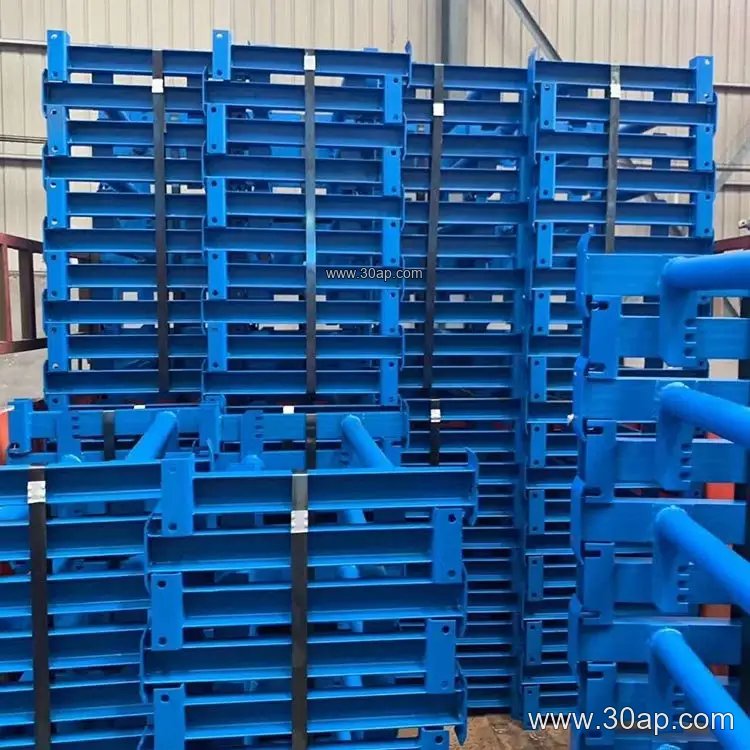
Main Types and Where They Sit
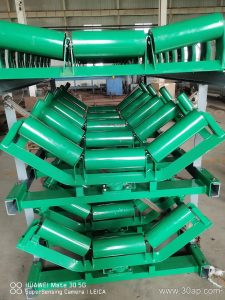
- Trough bracket – carries the three-roll troughing set on the carrying side and sets the trough angle.
- Transition bracket – used near the head and tail to change belt shape gradually.
- Return bracket and V-return bracket – support the belt on its return run.
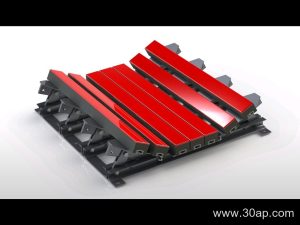
- Impact bracket – sits under the loading point and takes the shock of falling material.
- Self-aligning and forward-leaning bracket – help keep the belt centred; the forward lean is usually about 1.5 to 2 degrees.
- Adjustable bracket – allows the trough angle to be changed between common settings.
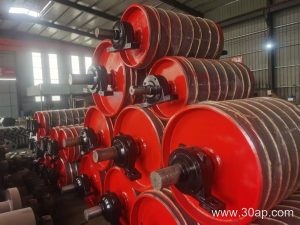
These are different support functions, not interchangeable parts. A return bracket cannot replace a trough bracket, and the drive pulley, tail pulley and bend pulley each have their own separate support arrangements.
Common Reference Dimensions
The table below gives typical reference data for planning; final values are set by the conveyor design, not by the bracket alone.
| Item | Common reference values |
|---|---|
| Belt width | B500, B650, B800, B1000, B1200, B1400, B1600, B1800, B2000 |
| Trough angle | 20, 30, 35, 45 degrees |
| Idler diameter | Ø89, Ø108, Ø133, Ø159, Ø194 |
| Material | Q355 angle, channel or folded plate |
| Mounting hole spacing | Determined by belt width and trough angle |
A combination such as B800, 35 degrees and Ø108 is common, as is B1200, 45 degrees and Ø133. A wider belt does not force one single trough angle or one single roller size; the engineer balances load, belt stiffness and transition length.
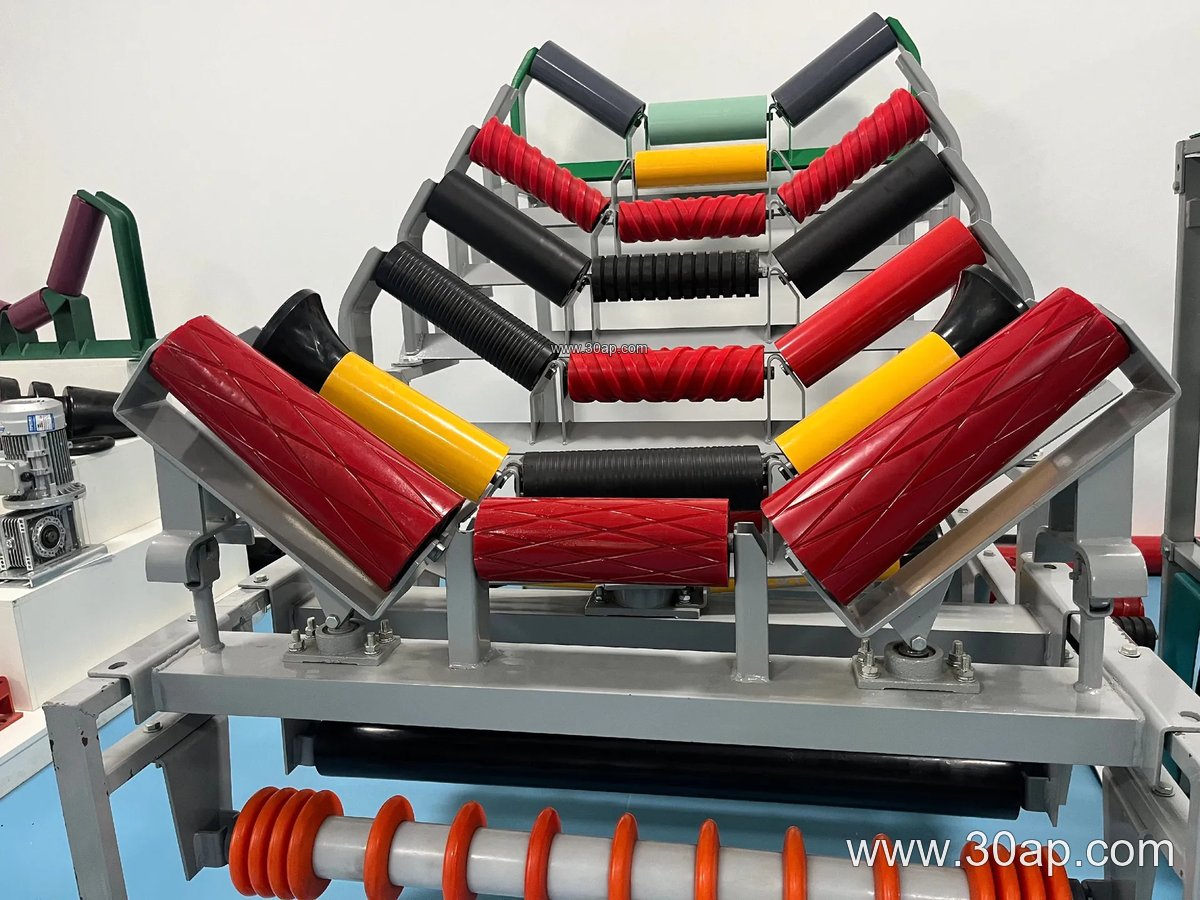
Where It Is Used
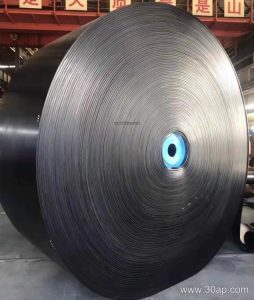
You will find Q355 brackets on belt conveyors in stone crushing lines, limestone mines, coal preparation plants, power station coal yards and port loading systems. In a crushing and screening circuit the bracket works together with the [conveyor belt] and the idler roller to keep material moving without spillage. In dusty or wet conditions, a galvanized or well-painted bracket lasts longer and keeps the adjustment free.
Buyer Checklist
- Confirm the belt width, trough angle and idler diameter before ordering.
- State whether the bracket is fixed or adjustable, and whether it is for carrying, return or impact duty.
- Ask for the material grade and, where needed, mill certificates for Q355.
- Check hole spacing and beam length against the existing stringer, since these change with belt width and trough angle.
- Match the surface finish to the site: wash-down, coastal air or abrasive dust.
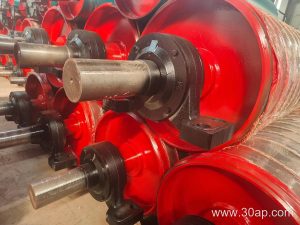
On a heavy-duty mining conveyor, the bracket is a small item but a weak one can wear the [conveyor pulley] alignment and shorten belt life. Ordering by function, not by shape alone, is the safest approach.