What a Feed Point Impact Idler Does
Material falling from a crusher, screen, or transfer chute hits the conveyor belt with force. That concentrated load can bruise the belt cover, loosen splices, and shake the frame. A feed point impact idler is the roll assembly placed directly under this landing zone to absorb the blow and keep the belt supported. In a quarry, a coal preparation plant, or a cement clinker line, this idler is often the first component the operator inspects after a belt change.
The product is also called an impact roller or buffer idler. It belongs to the same family as a troughing idler, but its role is shock absorption rather than plain support, so it should not be swapped for a standard carrying idler at the loading point.
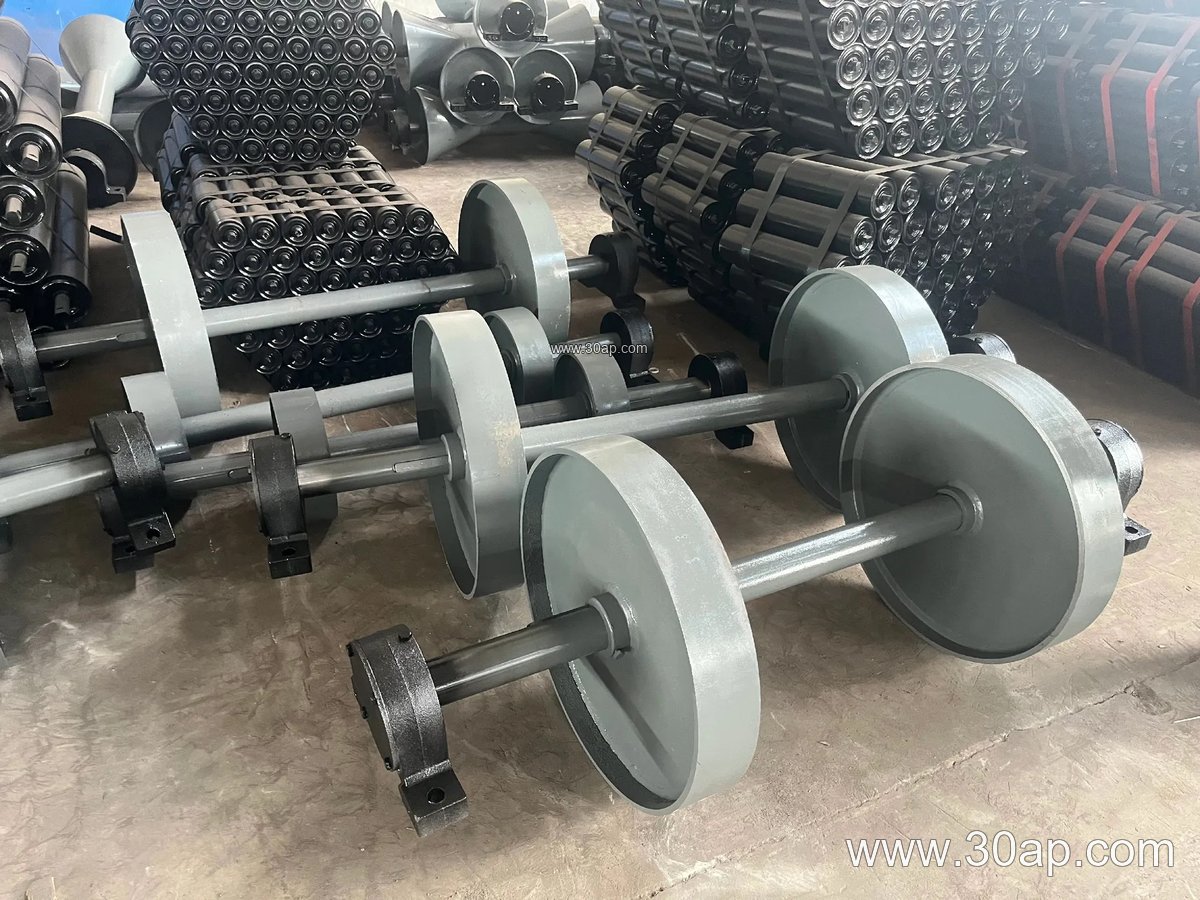
How the Impact Roller Is Built
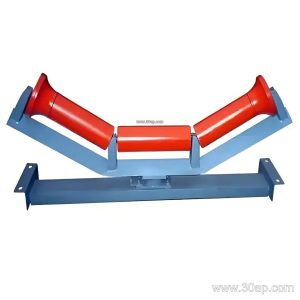
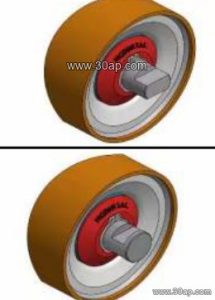
A typical unit uses a steel tube shell fitted with thick rubber rings, discs, or a rubber sleeve. The rubber compresses under falling stone or ore, spreading the impact over a longer section of belt. Inside, the shaft runs through sealed bearings, usually deep-groove ball bearings such as 6205, 6305, or 6308, selected to suit the load and roll diameter rather than a fixed rule.
- Shell options: steel tube, nylon, ceramic, or rubber ring surface
- Common roll diameters: Ø89, Ø108, Ø133, Ø159, Ø178 mm
- Arrangement: single roll, two-roll, or three-roll troughing set
- Trough angle: 20, 30, 35, or 45 degrees, set by the bracket and frame
- Bearing housing: sealed and greased for dusty service
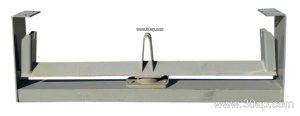
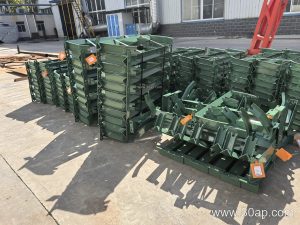
The idler sits in a conveyor bracket or impact frame that is bolted to the conveyor stringer. Because the assembly must resist vibration, the mounting bolts and frame stiffness matter as much as the roller itself. A rubber ring buffer roll works well where lump size is large; a steel shell with a rubber sleeve suits finer but heavy feed.
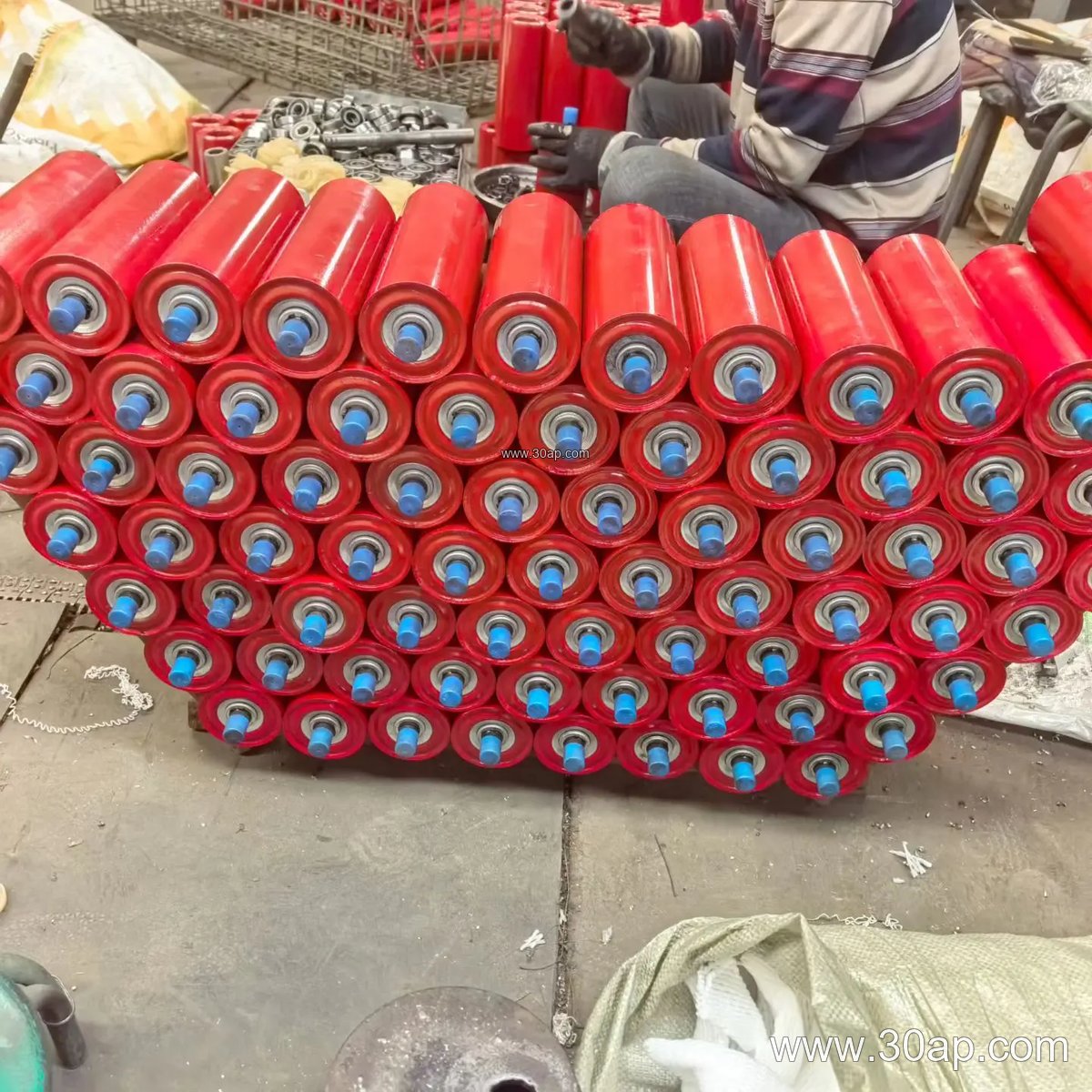
Where It Fits on the Conveyor
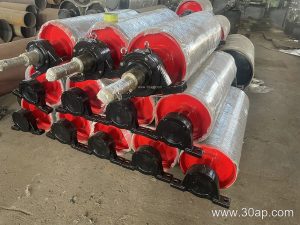
The impact idler is installed at the transfer point, immediately below the chute skirt and usually across several idler stations. In a limestone mine feeding a primary crusher, or a power plant unloading coal, this short zone takes the worst of the wear. Downstream, ordinary troughing idlers carry the belt, while a conveyor pulley drives and tensions it. The impact idler does not replace the drive pulley, tail pulley, or bend pulley; those are separate components with different duties.
Belt width and roll length are matched by design. For example, a three-roll troughing set may use roll lengths of about 315 mm for B800, 380 mm for B1000, 465 mm for B1200, and 530 mm for B1400. These are common references, not fixed pairings, and side rolls can differ from the centre roll.
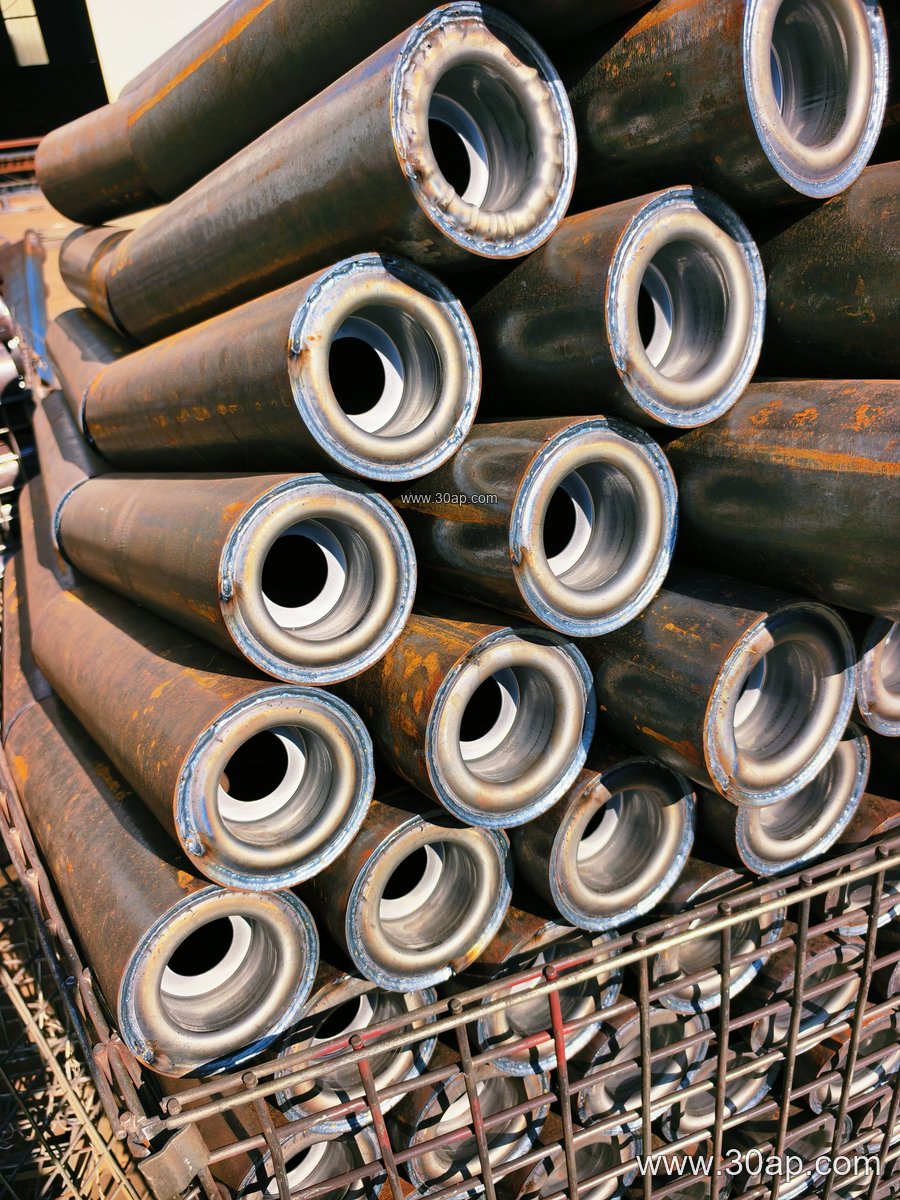
| Parameter | Common Reference Range |
|---|---|
| Belt width B | B500 to B2000, wider by design |
| Roll diameter | Ø89 to Ø178 mm |
| Trough angle | 20° to 45° |
| Roll surface | Rubber ring, rubber sleeve, steel, ceramic |
| Bearing | 6205, 6305, 6306, 6308 as selected |
When the belt is a heavy-duty mining conveyor belt or a steel cord conveyor belt carrying iron ore, the impact zone usually needs a larger roll diameter and a stiffer frame. Lighter service, such as a food grade conveyor belt in a grain facility, may call for a smaller rubber ring roll.
Selection Notes for Buyers
Start with the drop height, lump size, and tonnage at the transfer point. Then confirm belt width, trough angle, and the existing frame or bracket dimensions. Ask whether the idler is a single roll or part of a three-roll set, and check the shaft end fixing style so it fits the conveyor bracket. Sealing quality matters in dusty aggregate and coal handling, while rubber hardness affects how much shock the roll absorbs.
Inspect rubber rings for cracking, check bearing play, and confirm the roll turns freely. A worn impact idler lets the belt sag into the chute, so replacement before the belt cover is damaged saves cost. For abrasive loads such as quartz sand or sinter, an abrasion resistant conveyor belt paired with a well-chosen buffer roll extends service life.