What the Take-Up Pulley Does on a Conveyor
A belt conveyor take-up pulley is the drum that maintains working tension in the belt loop. It is usually mounted on a sliding or pivoting frame so it can move as the belt stretches, taking up slack and keeping the belt seated on the drive pulley. Without enough take-up travel, a conveyor in a quarry, coal preparation plant or power station coal yard will slip, wander or spill material. The take-up pulley is a tensioning component, not a drive or tail unit, and it should be specified as such.
In many systems the same duty is handled by a tension pulley, an accurate equivalent name for this product. The term appears on drawings alongside gravity take-up, screw take-up and hydraulic take-up arrangements.
How a Take-Up Pulley Is Built
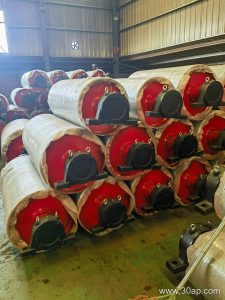
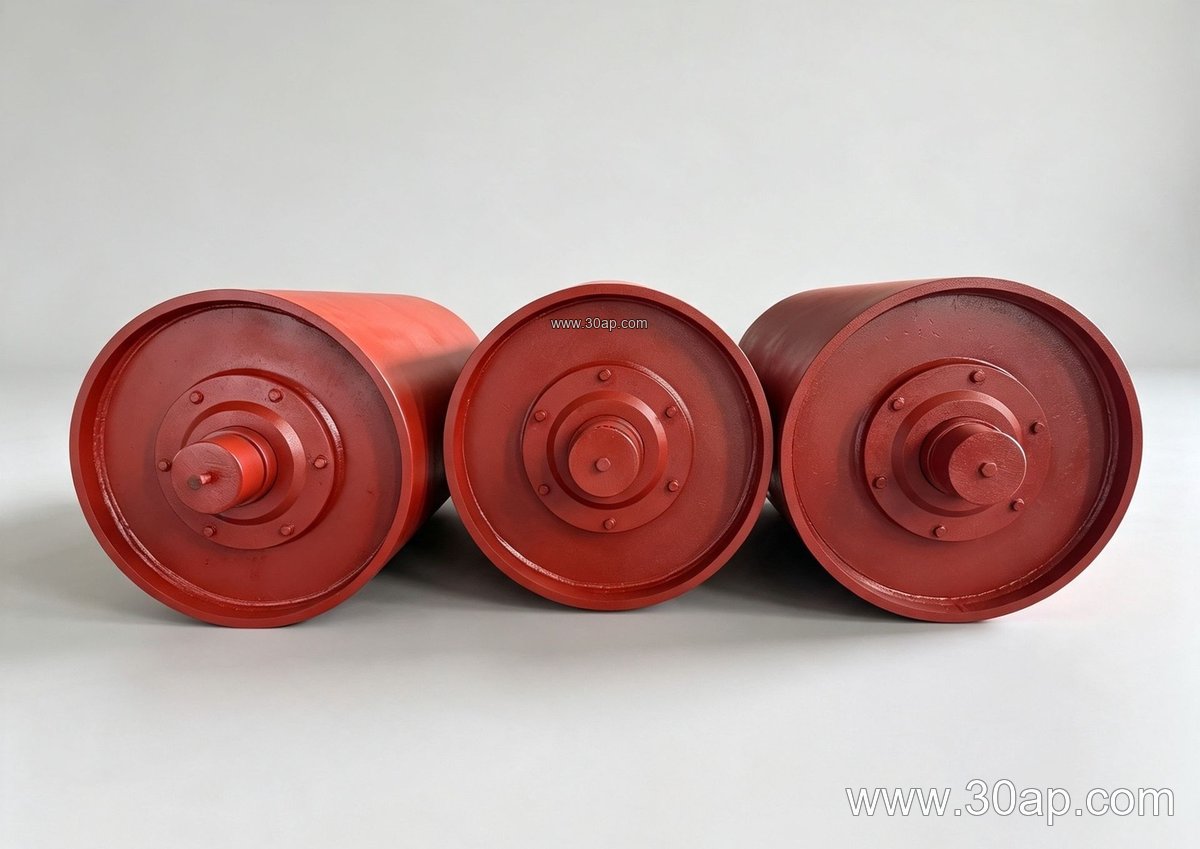
The assembly normally consists of a cylindrical shell, two end discs, a shaft, bearing housings and a bearing support that rides in the take-up track. Shells are commonly welded steel, machined for balance, and fitted with lagging where grip or wear resistance matters. Shaft ends are keyed or shrink-fitted, and bearing size follows the calculated load rather than belt width alone.
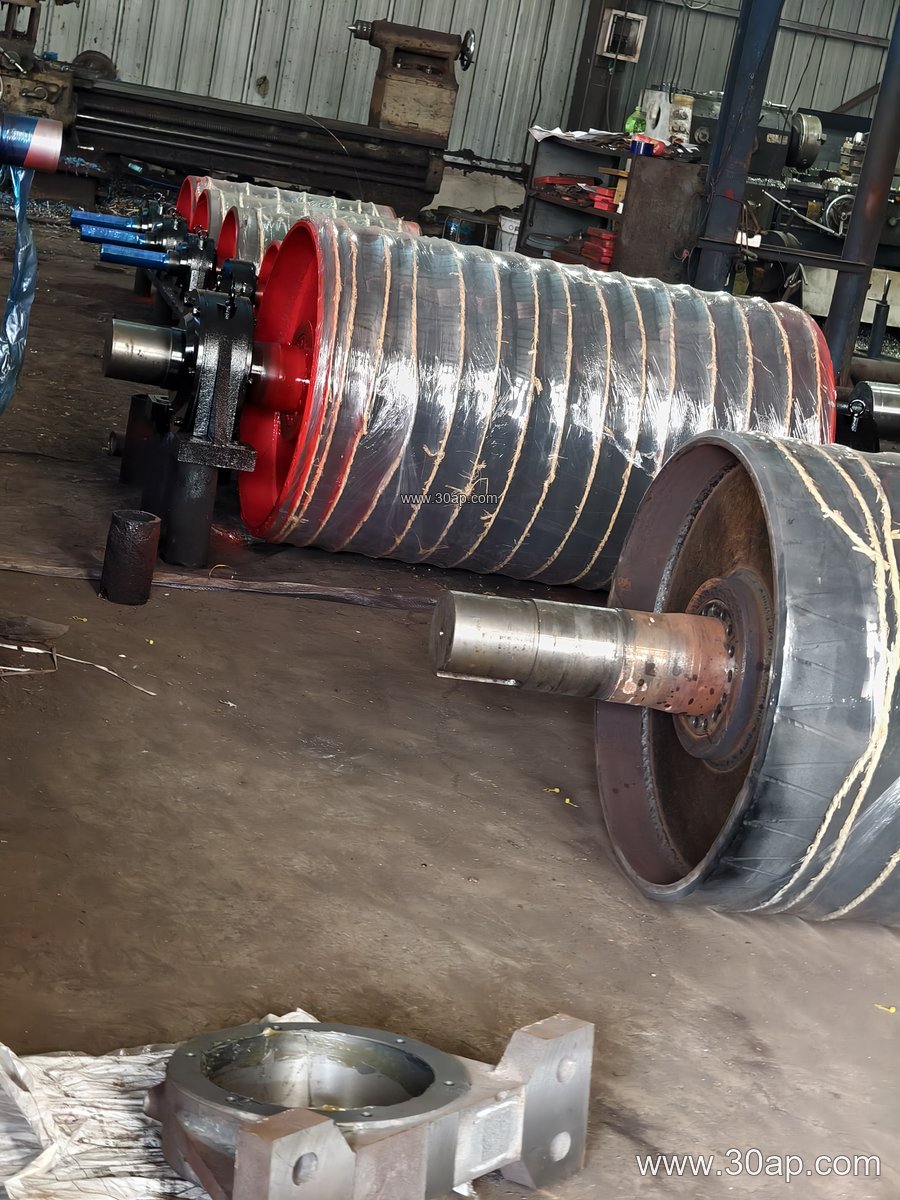
Typical reference dimensions include shell diameters from Ø200 to Ø1000 and shaft diameters from Ø50 to Ø200, but these are design ranges, not fixed pairings. A B1200 × Ø1000 unit and a B800 × Ø500 unit both exist; the correct choice depends on belt tension, wrap angle and available travel.
Common Surface Options
- Plain machined shell for light tensioning duty
- Cold-bonded or hot-vulcanized rubber lagging, 8 to 20 mm thick
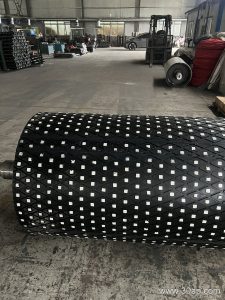
- Diamond grooved lagging for wet or dusty conditions
- Ceramic lagging for abrasive ore and aggregate service
Where It Is Used
Take-up pulleys appear in limestone mines, iron ore concentrators, cement clinker lines, port bulk terminals and tunnel spoil handling. Long overland conveyors carrying abrasive bulk material often use a gravity take-up tower with a tension pulley at the bottom of the loop. Shorter feeders in a concrete batching plant may use a screw-type frame with a compact drum.
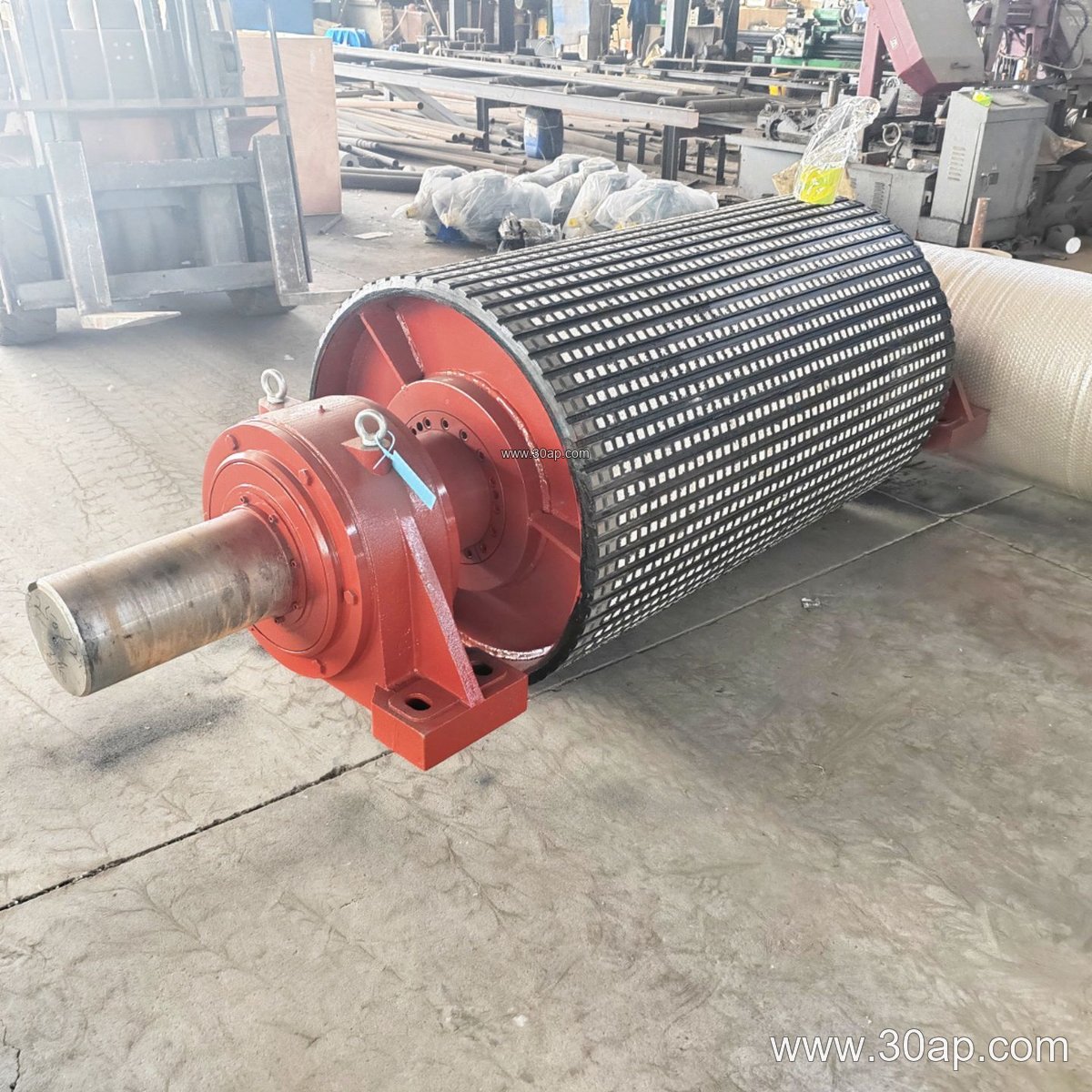
The belt itself influences the take-up design. A heavy-duty mining conveyor belt with a steel cord carcass needs more tension and longer travel than a lightweight fabric belt. Heat resistant conveyor belt in a sinter plant and flame retardant conveyor belt in an underground coal mine also affect lagging choice, because hot or oily carryback can degrade rubber surfaces.
Matching the Pulley to the Belt Line
Buyers should confirm shell diameter, face width, shaft diameter, bearing type, lagging thickness and take-up stroke before ordering. Face width is normally wider than the belt; for example, a B1000 belt usually runs on a shell around 1150 mm wide, and a B1400 belt on roughly 1600 mm. These are common proportions, not rules.
| Belt width | Typical shell face width | Reference diameter range |
|---|---|---|
| B500 | about 600 mm | Ø200 to Ø400 |
| B650 | about 750 mm | Ø250 to Ø500 |
| B800 | about 950 mm | Ø315 to Ø630 |
| B1000 | about 1150 mm | Ø400 to Ø800 |
| B1200 | about 1400 mm | Ø500 to Ø1000 |
| B1400 | about 1600 mm | Ø630 to Ø1250 |
| B1600 | about 1800 mm | Ø800 to Ø1400 |
Drive pulleys, tail pulleys and bend pulleys are separate components with different duties. A bend pulley changes belt direction, while the take-up pulley controls tension. Do not substitute one for another when preparing a spare parts list.
Installation and Maintenance Notes
Check that the frame slides freely and that the travel limit leaves reserve stroke for belt stretch. Align the pulley square to the belt centerline so the belt does not train to one side. Inspect lagging for glazing, chunking or embedded rock, and check bearing seals in dusty service. On a quarry conveyor belt line, worn lagging on the tension pulley often shows up first as belt slip under load.
Keep the area around the take-up clear so the counterweight or screw can move through its full range. Record shell diameter, face width and shaft size on the asset register, because replacement drums are built to those dimensions.
Buyer Checklist
- Confirm the take-up type: gravity, screw, hydraulic or fixed frame
- State belt width, belt type and expected maximum tension
- Give required travel and available mounting space
- Specify lagging surface and thickness, commonly 8 to 20 mm
- Provide shaft and bearing details, or the load calculation behind them
- Confirm whether a conveyor bracket or slide base is included
A well-chosen take-up pulley protects the whole conveyor, from the idler roller frames to the head drive. Buyers who share complete duty data usually receive a better-matched drum than those who order by belt width alone.