What a Steel Plant Conveyor Idler Does
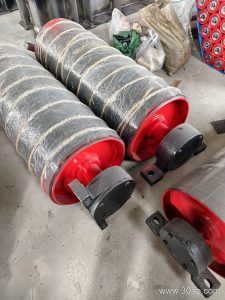
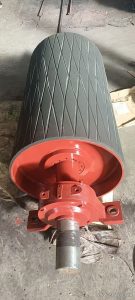
A steel plant conveyor idler is the rotating support that carries the belt and its load along every transfer line in a sinter plant, raw material yard, or finished product handling section. In a steel plant, belts move iron ore, pellets, coke, limestone, and hot sinter, so the idler roller must cope with abrasive dust, high temperatures near the sinter strand, and heavy point loads at transfer points. The idler is not a pulley; it is the small roller assembly mounted on a frame under or over the belt, while the conveyor pulley drives or turns the belt at the head and tail.
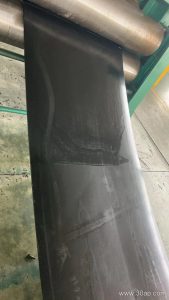
Because the duty is severe, a steel plant conveyor idler is usually specified together with the belt it supports. A heavy-duty mining conveyor belt or a heat resistant conveyor belt running over sinter fines will need a different idler arrangement from a smooth EP conveyor belt on a clean product line.
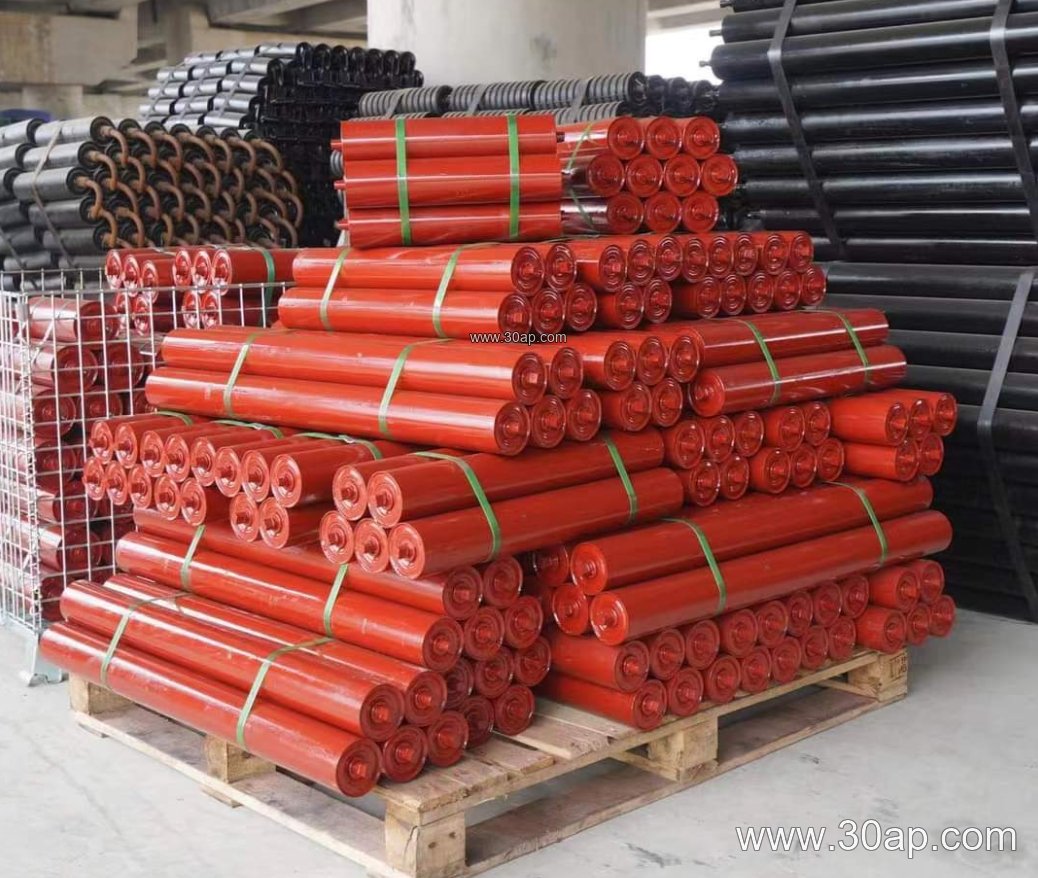
How the Idler Is Built
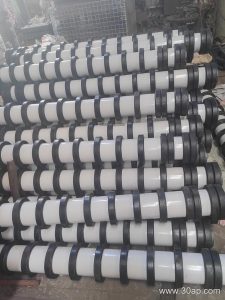
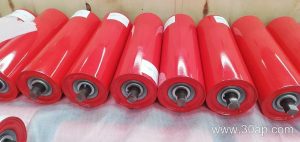
The basic construction is a steel tube shell, a shaft, two bearing housings, and a sealing system. The shell may be plain steel, nylon coated, ceramic lined, or fitted with rubber rings for impact absorption. Bearings are commonly 6204, 6205, 6305, 6306, 6308, or 6310, selected by load and speed rather than by belt width alone. The seal is the part that decides service life in a dusty steel plant environment, so labyrinth seals and multi-stage grease retention are worth checking.
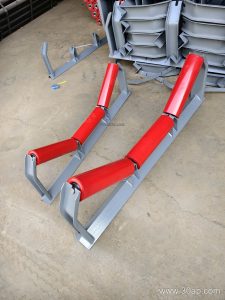
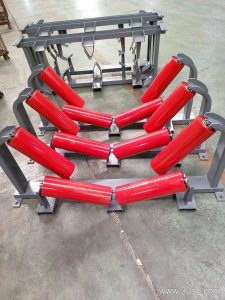
Troughing idler sets are usually single-roll, two-roll, or three-roll. The three-roll troughing set is the most common on bulk lines, with trough angles of 20, 30, 35, or 45 degrees. A forward tilt of about 1.5 to 2 degrees is used on training idlers to help keep the belt centered.
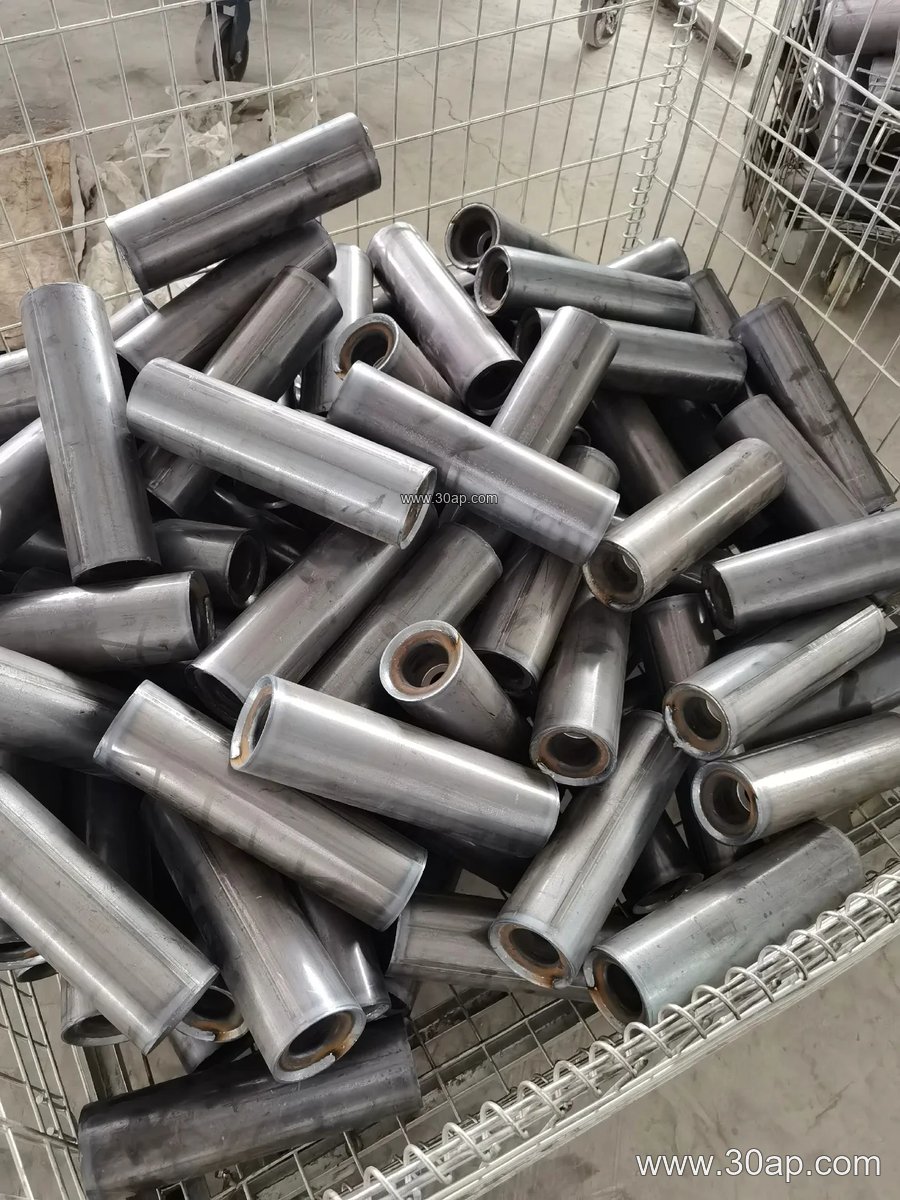
Common Sizes and Roller Lengths
Roller diameter and length are chosen from belt width, trough angle, and load. The table below shows typical reference values; actual dimensions are confirmed by design.
| Belt width | Typical roller diameter | Typical center roll length (three-roll set) |
|---|---|---|
| B500 | Ø89 to Ø108 | about 200 mm |
| B650 | Ø89 to Ø108 | about 250 mm |
| B800 | Ø108 to Ø127 | about 315 mm |
| B1000 | Ø108 to Ø133 | about 380 mm |
| B1200 | Ø127 to Ø159 | about 465 mm |
| B1400 | Ø133 to Ø159 | about 530 mm |
| B1600 | Ø159 to Ø178 | about 600 mm |
| B1800 | Ø159 to Ø194 | about 670 mm |
| B2000 | Ø178 to Ø219 | about 750 mm |
Side rolls differ from the center roll, so a full set should be ordered by assembly reference, not by one length. A belt width does not lock in one pulley diameter or one shaft size; those follow the conveyor design.
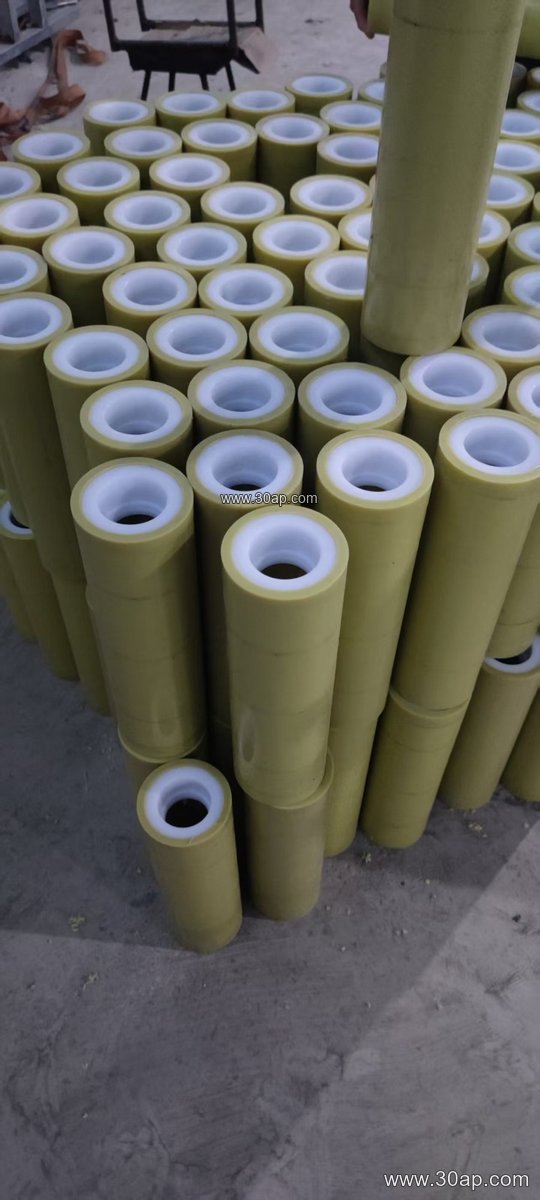
Idler Types Used Along the Line
Carrying idlers on the top run are mostly troughing sets. Return idlers on the bottom run are flat or V-shaped. Impact idlers with rubber rings sit under the loading chute, where ore or sinter drops onto the belt. Training idlers, including friction and tapered types, correct belt drift on long lines. Spiral idlers help shed sticky material in wet or dusty service.
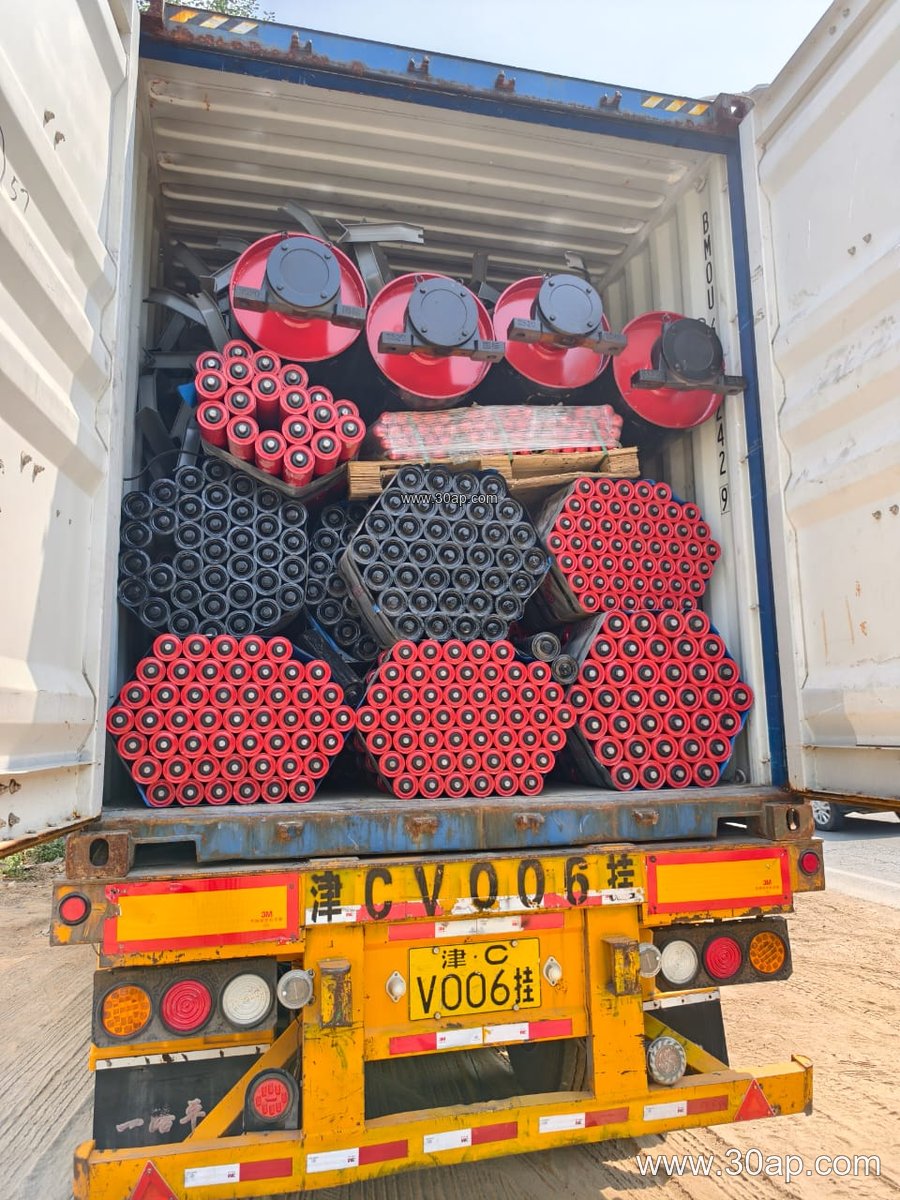
- Troughing idler: main carrying support on the load side.
- Impact idler with rubber rings: absorbs shock at transfer points.
- Return idler, flat or V-type: supports the empty belt.
- Training idler: controls misalignment on long conveyors.
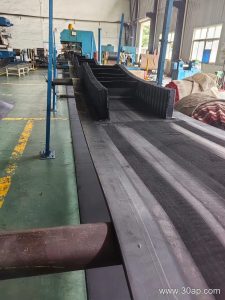
On a steel plant conveyor, a corrugated sidewall conveyor belt or a chevron conveyor belt may need special idler spacing and clearance checks because the cleats and sidewalls pass over the rolls.
Where Steel Plant Idlers Are Used
Typical locations include the ore yard, sinter plant, coke oven battery feed, blast furnace charging lines, and slag handling. Similar idler designs appear in cement plants, power plant coal handling, and quarry and aggregate lines, but the steel plant version often faces hotter material and sharper fines. In these areas, an abrasion resistant conveyor belt and a flame retardant conveyor belt are often paired with sealed, heavy-duty idlers.
Buyer Checklist
Before ordering, confirm belt width, trough angle, roll diameter, roll length, bearing size, seal type, and shell surface. Ask how the idler will be mounted on the conveyor bracket and whether the frame matches the existing stringer spacing. Check the belt speed and load to avoid undersized bearings. For hot sinter or coke, confirm the temperature rating of the bearing grease and the shell coating. Keep a spare set of the most wearing positions, usually impact and return idlers.
Related equipment such as the conveyor belt, conveyor pulley, and conveyor bracket should be reviewed together with the idler selection so the whole line runs smoothly. For more product references on belts and rollers, see steel plant conveyor belt and idler roller pages.