What a Self-Aligning Idler Bracket Does
A self-aligning idler bracket is the mounting component that lets a carrying or return idler assembly pivot slightly so the belt can be steered back toward the center line. Instead of being fixed rigidly to the conveyor frame, the bracket sits on a pivot or linkage that responds to belt wander. When one edge of the belt runs off track, the bracket swings and the idler skews against the belt direction, producing a gentle corrective force. This is why the part is also called a self-tracking idler bracket or, in many workshops, a training idler bracket. It is not a drive pulley, tail pulley or bend pulley; those are separate components with different duties, and they should never be treated as replacements for this bracket.
Training is usually needed where belts are long, where loading is uneven, or where structure alignment is difficult to maintain. In a quarry, a cement plant or a power plant coal yard, a small amount of drift can become edge damage and spillage quickly, so a self-aligning bracket is often fitted at intervals along the carrying side and on the return run.
Construction and Mounting Position
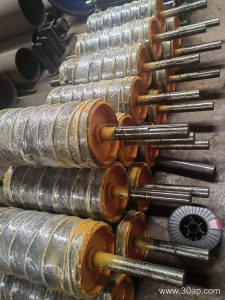
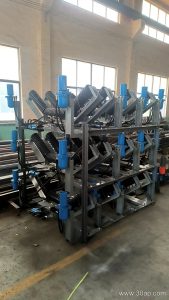
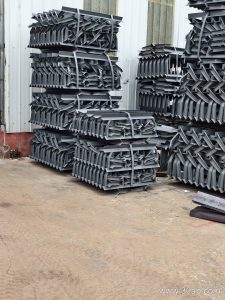
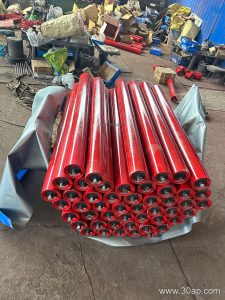
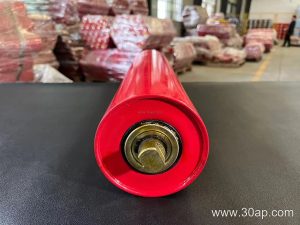
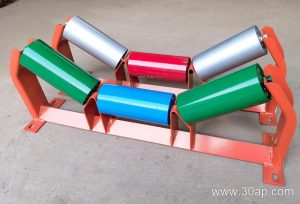
The bracket is typically fabricated from angle steel, channel steel or folded steel plate. A common design has a fixed base that bolts to the conveyor stringer, a rotating or swinging frame that carries the idler, and a pivot pin or bearing arrangement at the center. Some versions use a vertical pivot; others use a linkage that gives a small lead angle. The idler itself is usually a standard idler roller, mounted in the bracket’s saddles or slots.
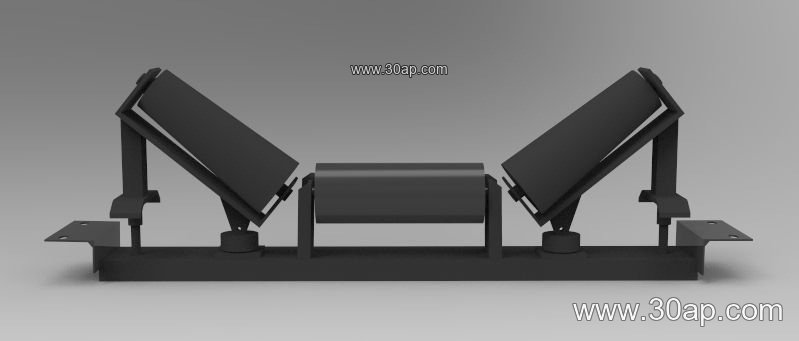
Mounting position matters. Self-aligning brackets are commonly placed after the loading point, before the discharge, and at intervals on long runs. On the return side, a V-type or flat self-aligning arrangement may be used. The bracket must be installed square to the belt center line at the start, because a badly aligned base will fight the self-aligning action instead of supporting it.
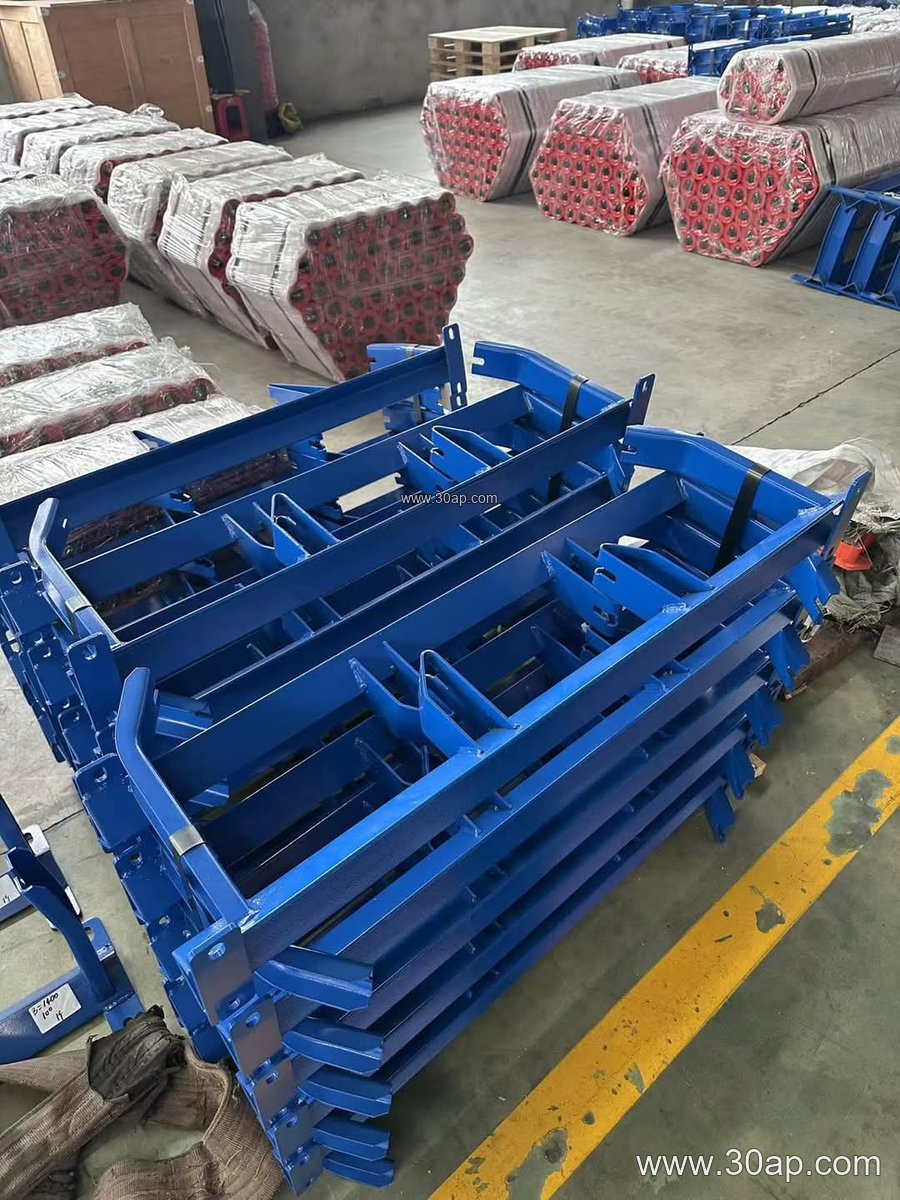
Where It Fits in Bulk Handling
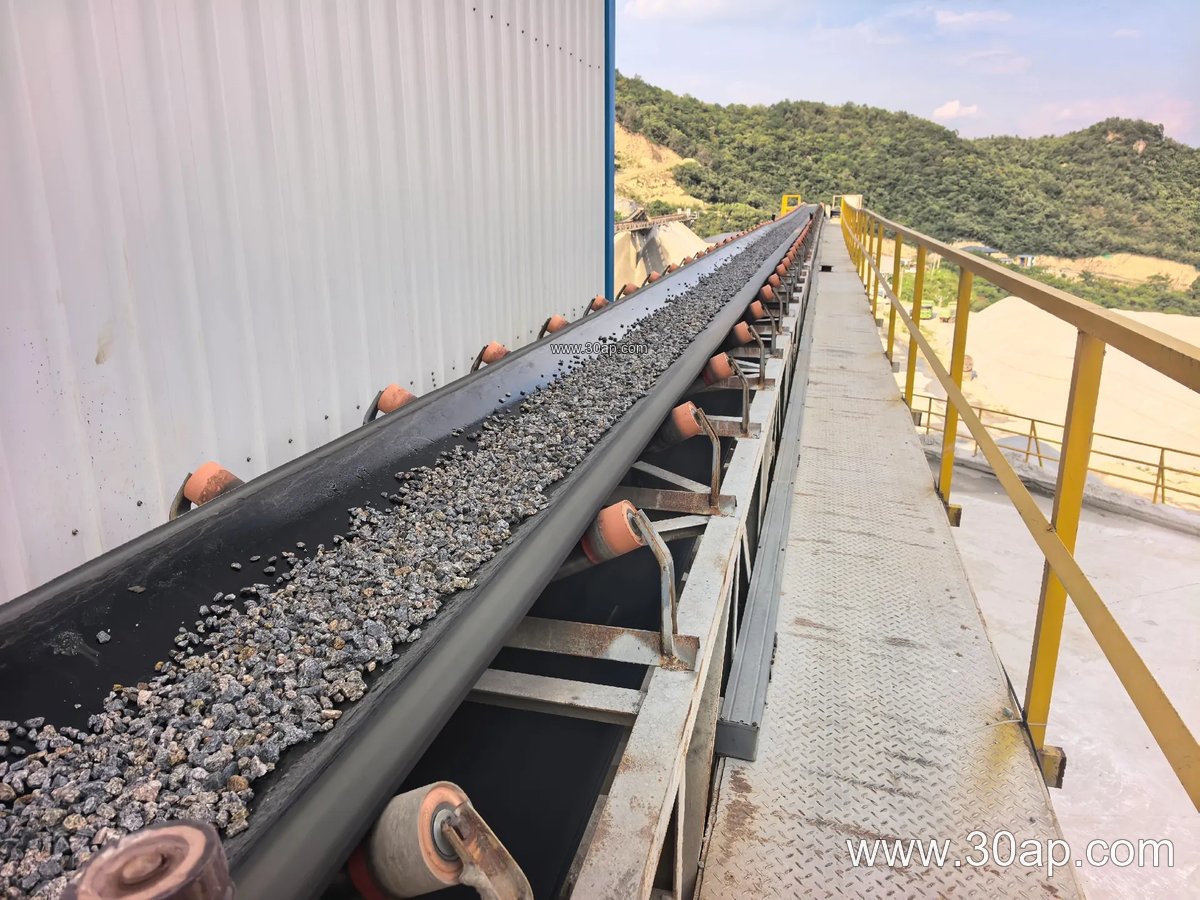
These brackets appear in stone crushing and screening lines, limestone mines, iron ore handling, coal washing plants, cement kilns and clinker lines, and port ship-loading systems. They are also found in tunnel spoil removal and fertilizer granulation plants. In each case the goal is the same: keep the conveyor belt centered so that material stays on the belt and edges do not rub the structure.
On a heavy-duty mining conveyor, a self-aligning bracket may work together with impact idlers at the transfer point and with return brackets underneath. The bracket does not replace troughing brackets or transition brackets; it supplements them where tracking correction is needed.
Common Reference Dimensions
The table below gives reference values only. Actual mounting hole spacing, beam length and pivot dimensions are determined by belt width, trough angle and idler diameter, so they should be confirmed with the conveyor design.
- Belt width range commonly referenced: B500, B650, B800, B1000, B1200, B1400, B1600, B1800
- Trough angle options: 20 degrees, 30 degrees, 35 degrees, 45 degrees
- Idler diameter options: Ø89, Ø108, Ø133, Ø159, Ø194
- Example combinations: B800 with 35 degrees and Ø108; B1200 with 45 degrees and Ø133; B650 with 30 degrees and Ø89
A bracket for a B1000 belt does not automatically dictate one trough angle or one roller diameter. The correct combination depends on belt speed, material lump size, load and the existing frame. Fabric core belts such as EP Conveyor Belt and steel cord belts behave differently in training, so the bracket setting should match the belt construction and tension.
Buyer Checklist
Before ordering, confirm the belt width, the idler diameter, the trough angle and the mounting hole pattern on the existing frame. Ask whether the bracket is fixed or adjustable, and whether the pivot is sealed against dust and water. For dusty sites such as a coal preparation plant or a limestone quarry, grease points and clearances deserve attention. Also check that the bracket material and finish suit the environment; a wash-down area may need a different coating from a dry cement plant.
Finally, plan maintenance. A self-aligning bracket should be inspected for free movement, worn pivot bushes and loose bolts. If the belt has been mistracking for a long time, the cause may be belt splice condition, material build-up on rollers or structure misalignment rather than the bracket itself. Correct diagnosis prevents unnecessary replacement and keeps the conveyor running straight.