What a Large Drive Pulley Does on a Conveyor
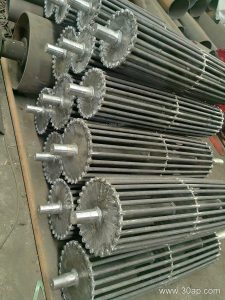
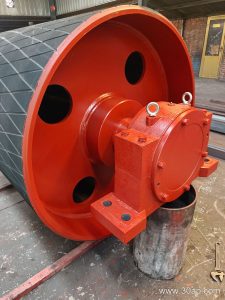
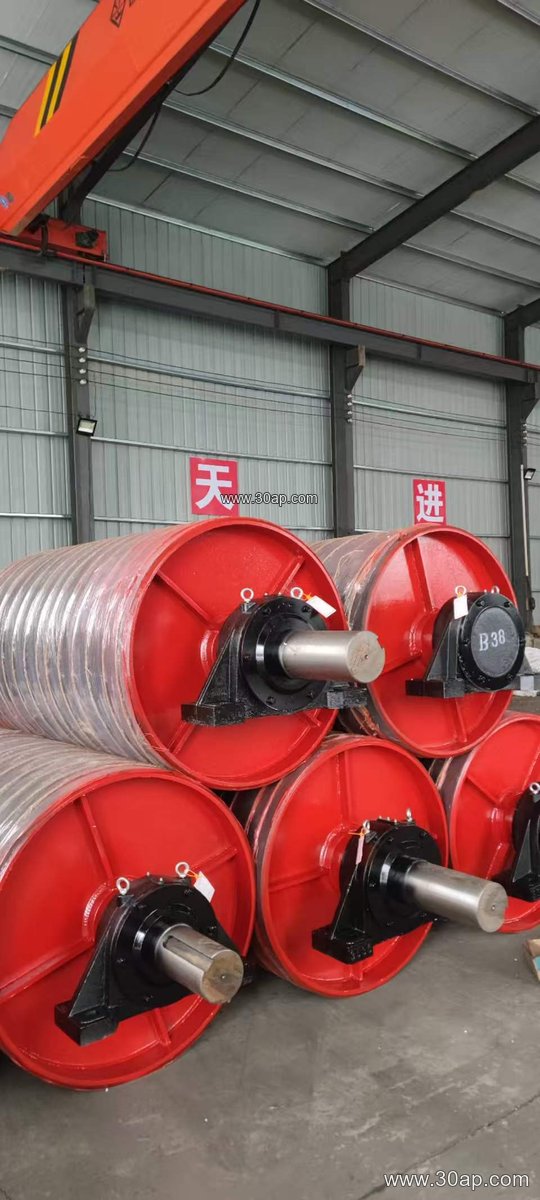
A large drive pulley is the head-end drum that transmits torque from the gearbox to the conveyor belt. In high-capacity circuits—such as a primary crusher discharge at an iron ore mine or a coal stockyard feeding a power plant—this pulley is sized well above the belt width’s minimum sheave diameter to keep belt stress low and traction stable. While tail pulleys and bend pulleys redirect or tension the belt without driving it, the drive pulley is the only one in the system that inputs power. That distinction matters when specifying spares, because a bend pulley cannot substitute for a drive pulley even if the face width looks similar.
Construction and Surface Options
The core is usually a welded steel cylinder with dished or flat end plates, machined hubs, and a shaft sized by torque rather than by belt width alone. Common shaft diameters range from Ø50 to Ø200 mm, with final selection based on load and bearing life. The pulley face is typically wider than the belt: for example, a B800 belt often runs on a 950 mm face, and a B1200 belt on about 1400 mm. Surface finish is chosen for grip and wear:
- Plain face for light-duty or low-tension runs
- Cold-bonded or hot-vulcanized rubber lagging in 8, 10, 12, 15, or 20 mm thickness
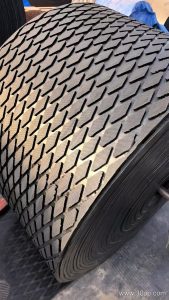
- Diamond or herringbone grooving to shed water and fines
- Ceramic lagging for high-abrasion service such as quarry conveyor belts handling sharp aggregate
Lagging thickness and pattern should match the duty, not simply the belt width. A 20 mm ceramic lagging on a Ø1250 mm drum may suit a heavy-duty mining conveyor belt, while a 10 mm rubber lagging on a Ø630 mm drum is often enough for a cement plant clinker line.
Where Large Drive Pulleys Are Used
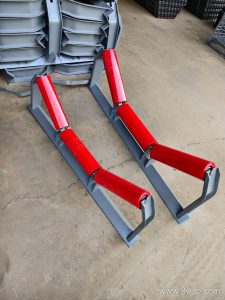
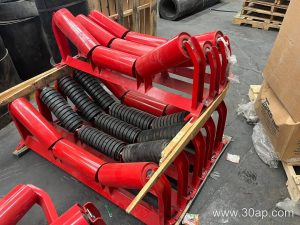
These pulleys appear wherever a conveyor moves bulk material at high tonnage: underground coal mining conveyor belts, copper ore transport, limestone quarries, ship-loading terminals, and steel plant sinter lines. In a sand and gravel plant, a large drive pulley at the head of a crusher conveyor belt must handle both the belt tension and the impact of uneven feed. In a coal-fired power plant, flame retardant conveyor belt and anti-static properties are often specified alongside the pulley’s lagging. The drive pulley works together with idler rollers, conveyor brackets, and the belt itself; poor alignment at the drive end quickly wears both lagging and belt edges.
Matching the Pulley to Belt and Duty
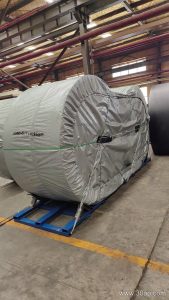
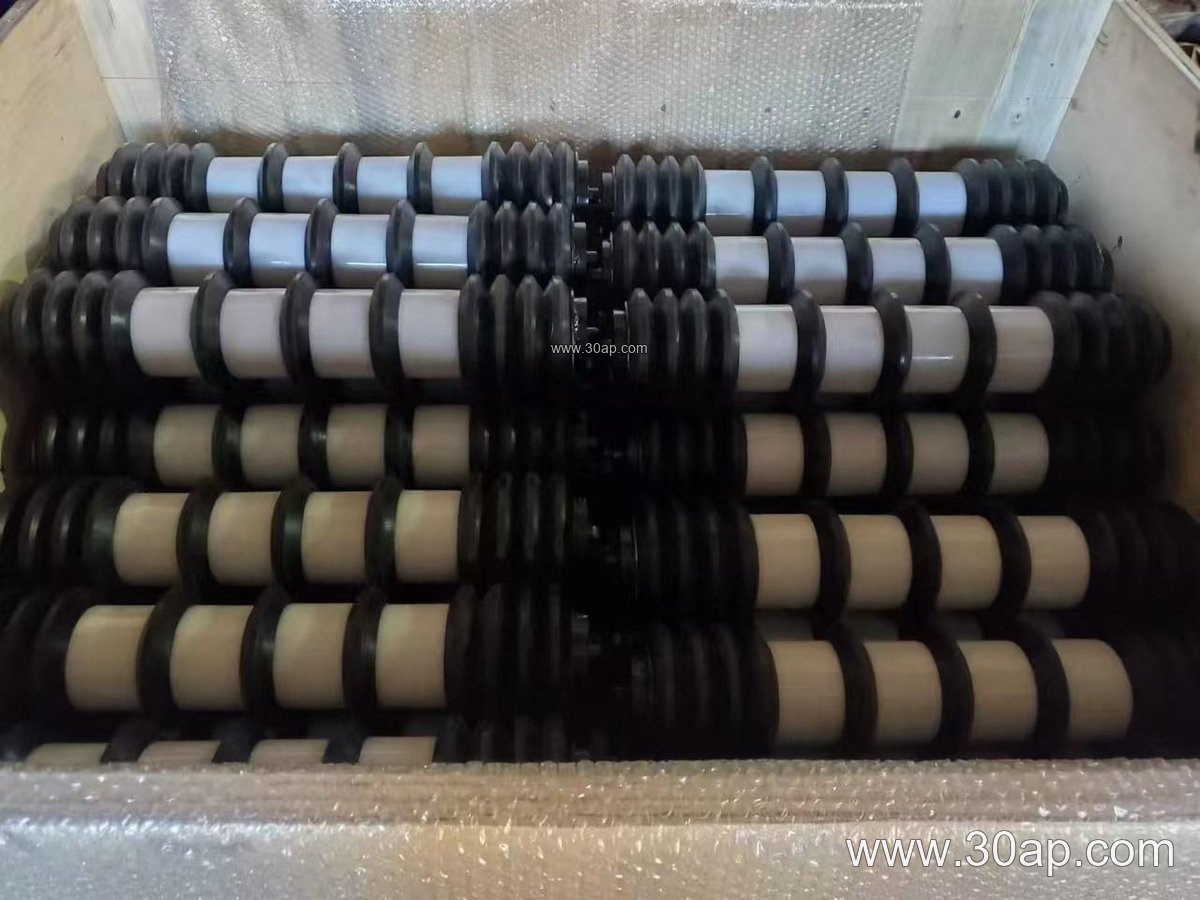
Belt width and pulley diameter are related but not fixed pairs. A B1000 belt might run on a Ø800 mm drive pulley in one plant and a Ø1000 mm drum in another, depending on tension, wrap angle, and space. Typical face widths include B650 × 750 mm, B1000 × 1150 mm, and B1400 × 1600 mm, but these are reference examples, not universal rules. The belt construction also matters: a steel cord conveyor belt or a multi-ply fabric core conveyor belt may require a larger diameter to limit bending stress. For high-abrasion duty, an abrasion resistant conveyor belt paired with ceramic lagging often extends service life. In cold climates, a cold resistant conveyor belt may be used, but the pulley lagging should still be selected for grip rather than temperature alone.
Reference Dimensions (Examples Only)
| Belt Width | Typical Pulley Face | Common Diameter Range |
|---|---|---|
| B500 | 600 mm | Ø250–Ø400 |
| B800 | 950 mm | Ø400–Ø630 |
| B1200 | 1400 mm | Ø630–Ø1000 |
| B1600 | 1800 mm | Ø800–Ø1250 |
| B2000 | 2200 mm | Ø1000–Ø1600 |
These values are indicative. Final diameter and shaft size are determined by design calculations, not by belt width alone.
Buyer Checklist
Before ordering a large drive pulley, confirm the belt width, belt type (for example EP conveyor belt or steel cord), maximum tension, wrap angle, and lagging preference. Check the shaft diameter and hub connection style against the gearbox output. Ask for the dynamic balance grade if the pulley will run at high speed. Verify that the lagging thickness suits the material—8 mm may be fine for a food grade conveyor belt, while 15–20 mm is more common on a heavy-duty mining conveyor belt. Finally, ensure the pulley is compatible with the conveyor bracket and idler roller arrangement at the drive station. A well-matched drive pulley reduces belt slip, extends lagging life, and keeps the whole conveyor system running smoothly.