What a Corrugated Sidewall Conveyor Belt Is
A Corrugated Sidewall Conveyor Belt is a specialized conveyor belt built with raised, wave-shaped walls along both edges. These sidewalls are usually combined with horizontal cleats or cross-stabilizers, forming pockets that hold bulk material on the belt surface. The design allows the belt to run at steep inclines and even vertical sections, reducing the need for multiple transfer points in mining, cement, power plant, and quarry operations. It is also known as a skirted conveyor belt with corrugated sides, and both names describe the same product family.
Compared with a flat conveyor belt that relies on friction and a shallow angle, the corrugated sidewall version keeps material contained inside the pockets. This makes it useful where space is limited and a long inclined route must fit into a compact plant layout.
Construction and Main Components
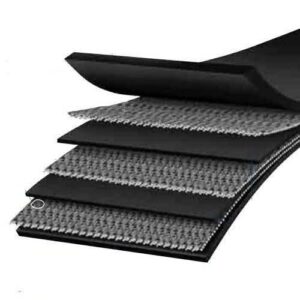
The belt body typically consists of a base belt, two corrugated sidewalls, and cleats. The base belt usually uses a fabric core such as an EP or NN carcass, while heavier duties may call for a steel cord carcass. Sidewalls are bonded to the edges and may include reinforcing fabric. Cleats are fixed between the walls at defined intervals to create individual compartments.
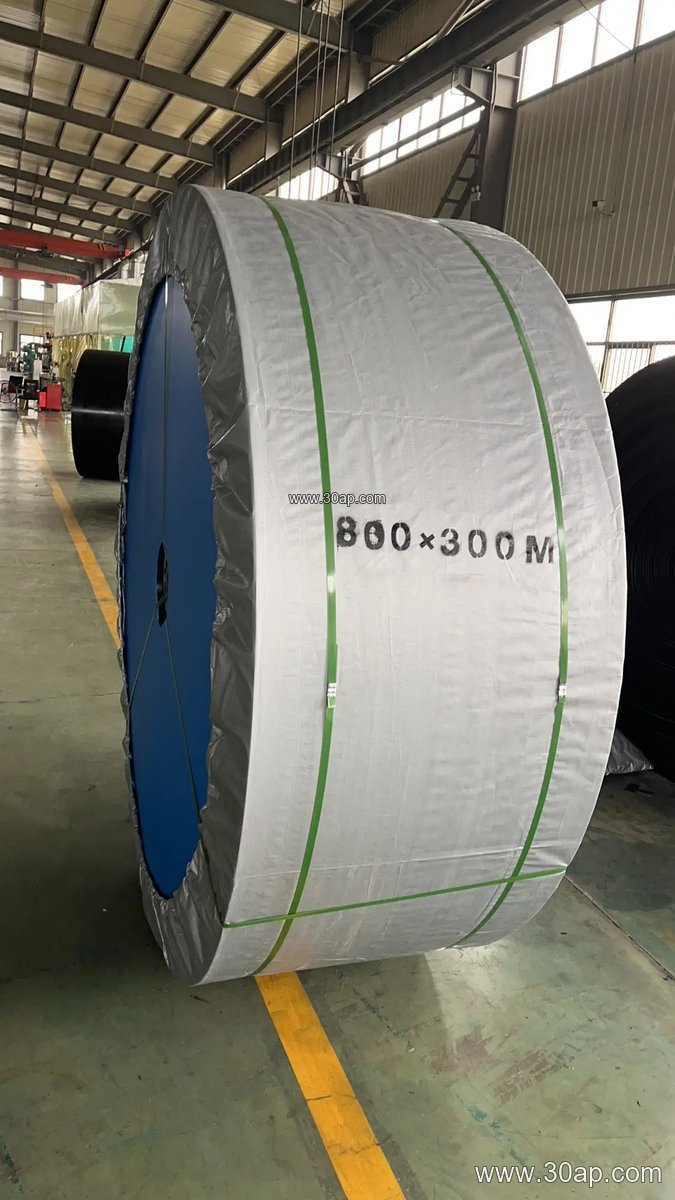
- Base belt — provides tensile strength and carries the load; common fabric cores include EP200, EP315, EP500, and EP800.
- Sidewall — corrugated rubber profile, often reinforced, available in different heights to suit material depth.
- Cleat — crossbars in shapes such as T, C, or TC, spaced according to the material and incline.
The base belt may also be supplied as a rubber conveyor belt with covers selected for abrasion, heat, oil, or flame resistance. A flame retardant conveyor belt grade is often requested for underground coal mining conveyor belt applications, while heat resistant conveyor belt covers are common in cement and steel plant service.
Where It Is Used
These belts suit bulk material conveyor belt systems that need to climb steeply. Typical industries include:
- Mining and coal mining — ore, coal, and waste rock on incline shafts.
- Cement plants — clinker and raw meal handling.
- Power plants — coal and ash transport.
- Quarries and sand making plants — aggregate and crushed stone.
- Ports and ship loading — bulk cargo transfer.
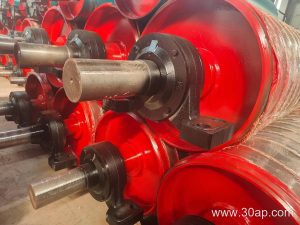
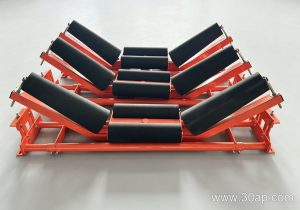
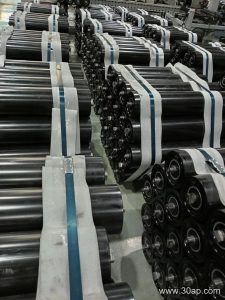
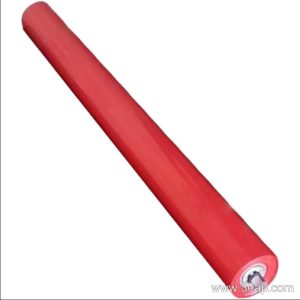
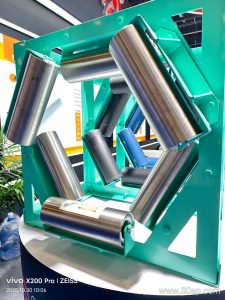
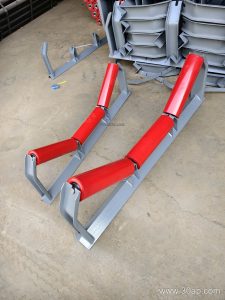
In these installations, the belt works together with a conveyor pulley at the drive and tail positions, idler roller sets supporting the return and carrying sides, and a conveyor bracket that holds the frame together. Drive, tail, and bend pulleys each have distinct roles and are not interchangeable.
Common Reference Dimensions
The following values are typical references, not fixed supply promises. Actual dimensions depend on the conveyor design and manufacturer.
| Parameter | Common Reference Range |
|---|---|
| Belt width | B500, B650, B800, B1000, B1200, B1400, B1600, B1800, B2000 |
| Fabric core strength | EP200, EP315, EP400, EP500, EP630, EP800, EP1000 |
| Cover thickness | 3+1.5 mm, 4+2 mm, 5+2 mm, 6+2 mm, 8+3 mm |
| Carcass plies | 2 to 6 layers, depending on load |
| Sidewall height | Selected by material depth and incline angle |
Sidewall height, cleat spacing, and pocket volume are usually matched to the material’s bulk density and the required capacity. A wider belt such as 1200mm or 1400mm does not automatically dictate one pulley diameter; the pulley size is determined by the belt thickness, tension, and shaft load.
Buyer Checklist
Before ordering, clarify the material type, particle size, moisture, temperature, and required incline. Confirm whether the base belt needs an abrasion resistant conveyor belt cover, oil resistant conveyor belt cover, or cold resistant conveyor belt cover. For underground work, specify flame retardant and anti-static properties. Ask for the sidewall profile drawing, cleat pattern, and splice method so the belt fits the existing conveyor pulley and idler roller layout. A well-matched corrugated sidewall conveyor belt reduces spillage and keeps steep conveying routes efficient.