What a Conveyor Carrying Bracket Does on the Belt Line
The conveyor carrying bracket is the structural support that holds the carrying-side idler rollers in place along the upper run of a belt conveyor. It sits between the conveyor stringers and the rollers, keeping the belt profile stable under the weight of material. In a quarry, a cement plant, or a power plant coal yard, these brackets are repeated at regular intervals and quietly determine how well the belt tracks and how long the rollers last. The same product is often called a carrying idler bracket or top bracket, and those names refer to the same component.
It should not be confused with a return bracket, which supports the belt on the lower run. Drive pulleys, tail pulleys, and bend pulleys are separate items entirely. A carrying bracket is a frame element, not a rotating part.
Construction and Mounting Details
Most carrying brackets are fabricated from angle steel, channel steel, or bent steel plate. The shape follows the trough angle: a three-roll bracket usually has two angled arms and a horizontal center seat. Bolted or welded crossbeams connect the bracket to the conveyor frame. Installation height and hole spacing are set by the belt width, the trough angle, and the idler diameter, so a bracket is normally matched to a specific conveyor design rather than chosen from a single universal size.
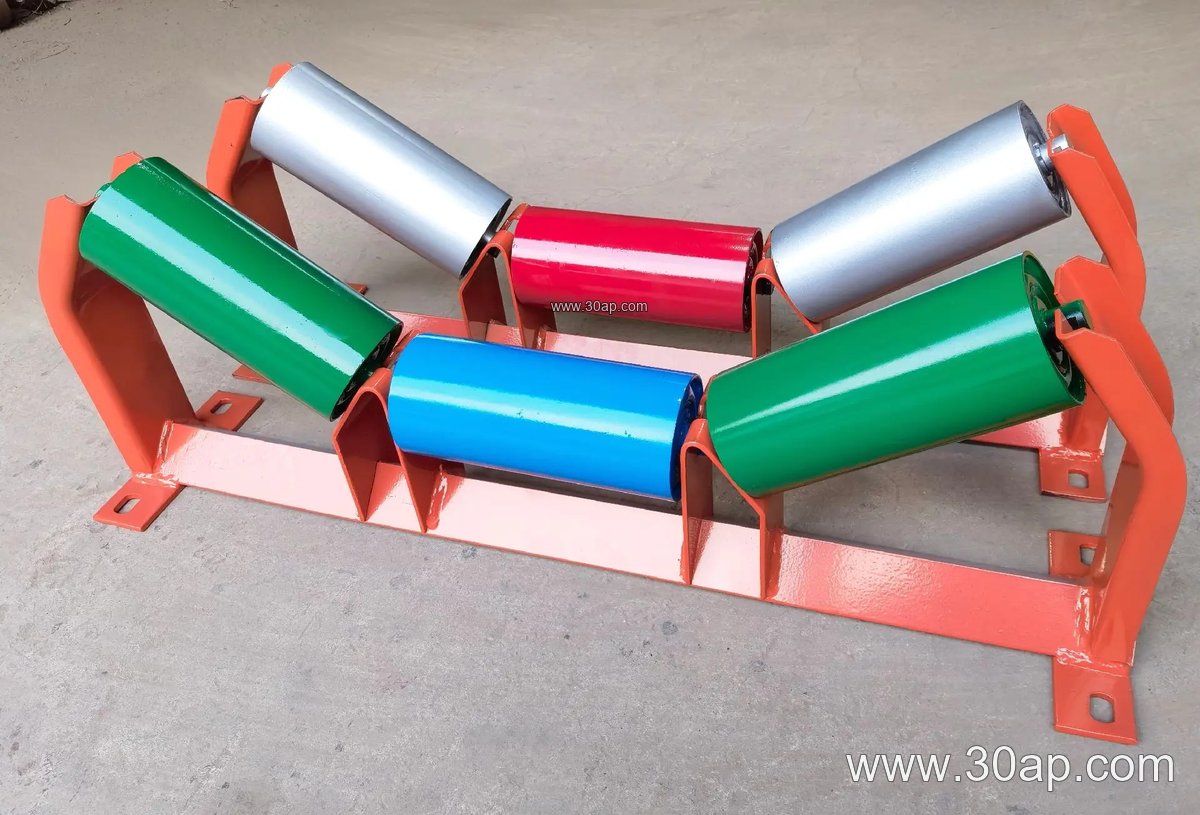
- Type: trough carrying bracket, transition bracket, buffer bracket, self-aligning bracket
- Material: angle steel, channel steel, folded steel plate
- Belt width range: B500 to B2200
- Trough angle: 20°, 30°, 35°, 45°
- Roller diameter: Ø89, Ø108, Ø133, Ø159, Ø194
Common combinations such as B800 with 35° and Ø108, or B1200 with 45° and Ø133, appear in many plant designs, but they are reference examples, not fixed rules. A B650 line may use 30° with Ø89 in one plant and a different arrangement in another. Forward-leaning brackets, often set at about 1.5° to 2°, are used where belt training is a concern.
Where Carrying Brackets Fit in the Plant
In a limestone quarry or a sand and gravel line, carrying brackets support the belt that moves crushed rock from the crusher to the screening section. In a coal-fired power plant, they carry the belt that feeds the bunkers, and the bracket spacing helps control sag between idlers. In a cement plant, the same component appears on clinker and raw material conveyors, where dust and heat demand sturdy frames. The bracket itself does not touch the material, but its alignment affects how the conveyor belt wears and how the idler roller bearings perform.
On a steel plant conveyor or a port ship-loading line, carrying brackets are often paired with heavy-duty rollers and a conveyor pulley at the discharge end. The bracket must resist vibration and keep the trough shape under a loaded belt. A poorly aligned bracket can cause edge damage even when the belt and rollers are in good condition.
Selection Points for Buyers
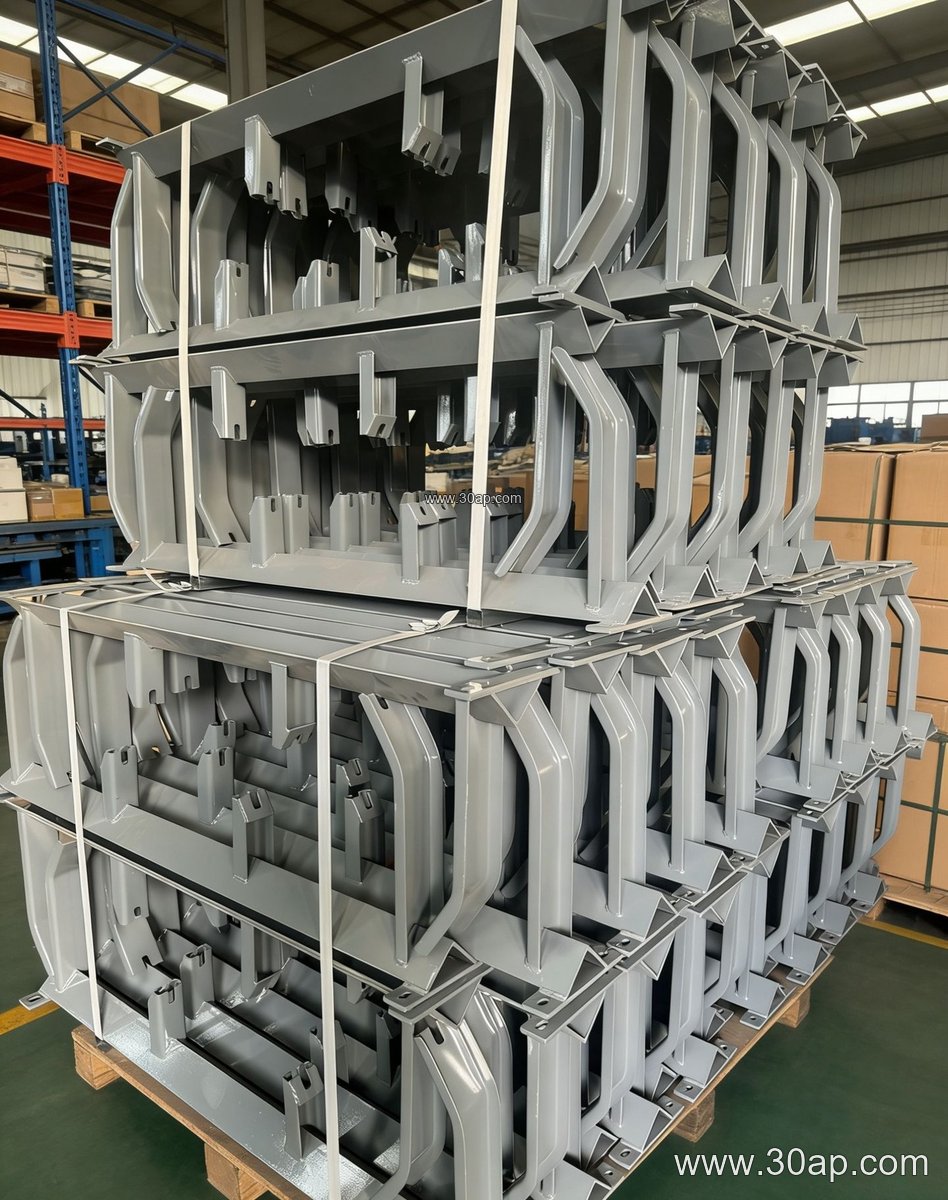
Start with the belt width and the required trough angle. Then confirm the roller diameter and the mounting hole spacing on the existing frame. If the conveyor uses a chevron conveyor belt or a corrugated sidewall belt, check that the bracket and rollers do not interfere with the cleats or sidewalls. For abrasive duties such as iron ore or copper ore, a reinforced bracket with buffer rollers at the load point is often preferred. For a coal mining conveyor, flame retardant belt and anti-static properties are belt matters, but the bracket still needs correct spacing and firm bolting.
Ask for the bracket drawing with hole centers, overall height, and material thickness. Do not assume a bracket for B1000 will fit a B1200 frame without checking. The conveyor bracket is a small item, but it sets the geometry for the whole carrying side, so matching it to the belt width, trough angle, and roller size is the practical way to avoid rework.
Maintenance and Daily Checks
Walk the line and look for loose bolts, bent arms, and worn roller seats. A bracket that has shifted will show as a belt that runs off-center or a roller that sits unevenly. Replace bent brackets rather than forcing a roller into a distorted seat. Keep the area around the bracket clear so that spilled material does not build up and push the belt out of its trough. In dusty plants such as a cement plant or a coal yard, a periodic check after shutdown is usually enough to catch problems before they affect the conveyor belt or the conveyor pulley.