What a Carbon Steel Conveyor Bracket Does on a Belt Conveyor
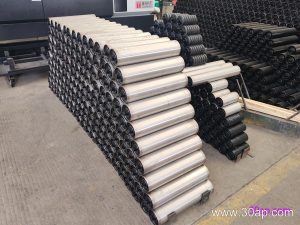
A carbon steel conveyor bracket is the structural element that holds the idler roller in place and sets the belt line profile. It sits between the conveyor frame and the roller, so its job is simple to describe but important in practice: keep the roller at the right height, the right angle, and the right spacing so the conveyor belt runs smoothly under load. In a quarry, a coal handling system, or a cement plant, a weak or badly fitted bracket shows up quickly as belt wander, spilled material, and worn rollers.
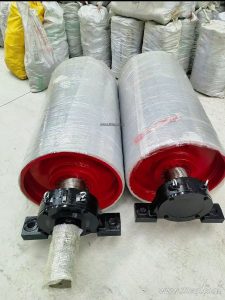
The same item is often called a carbon steel idler bracket or a steel conveyor roller bracket, and those names describe the same product. Drive pulleys, tail pulleys, and bend pulleys are different components and are not covered here; this article stays on the bracket that supports the rollers.
How the Bracket Is Built
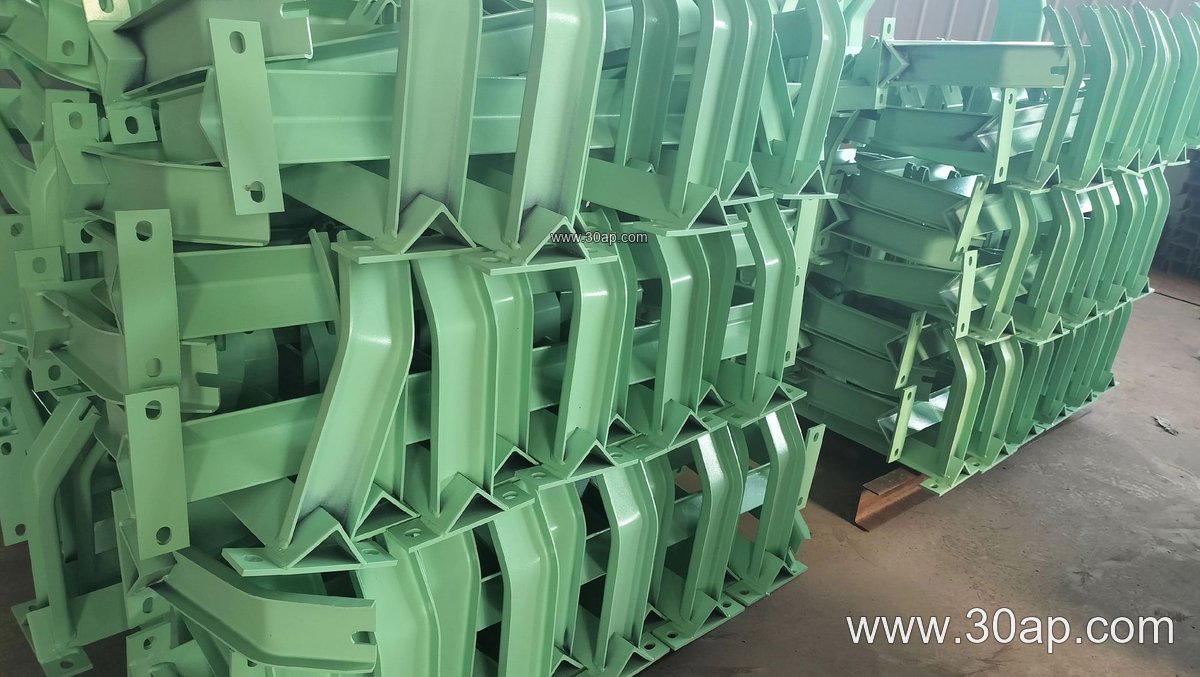
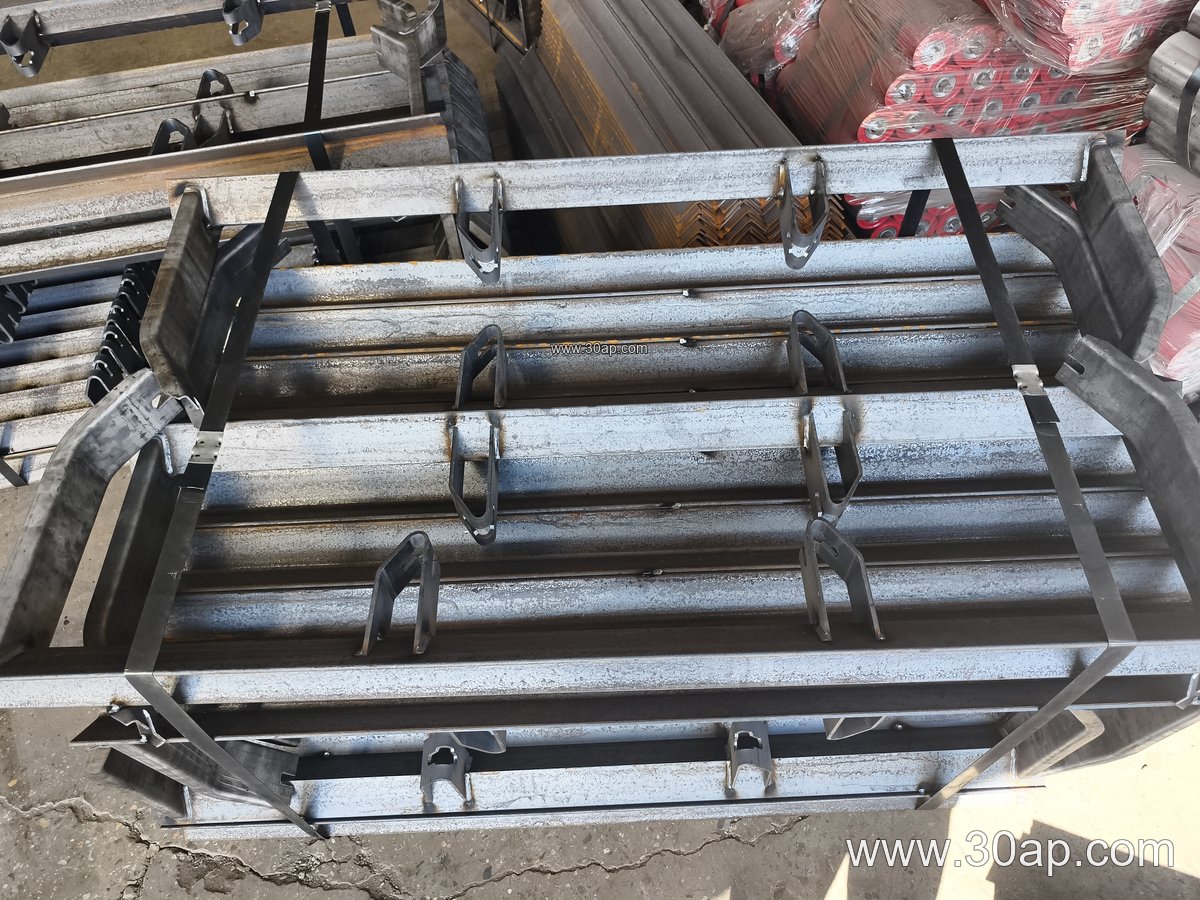
Most units are fabricated from angle steel, channel steel, or folded steel plate. The grade and thickness are chosen by the conveyor designer to suit the load and the belt width. Typical production steps include cutting, punching or drilling the mounting holes, bending, welding, and a surface treatment such as painting, galvanizing, or powder coating. Bolt slots and hole spacing are usually made to match the frame and the roller shaft, so the bracket is not a universal part.
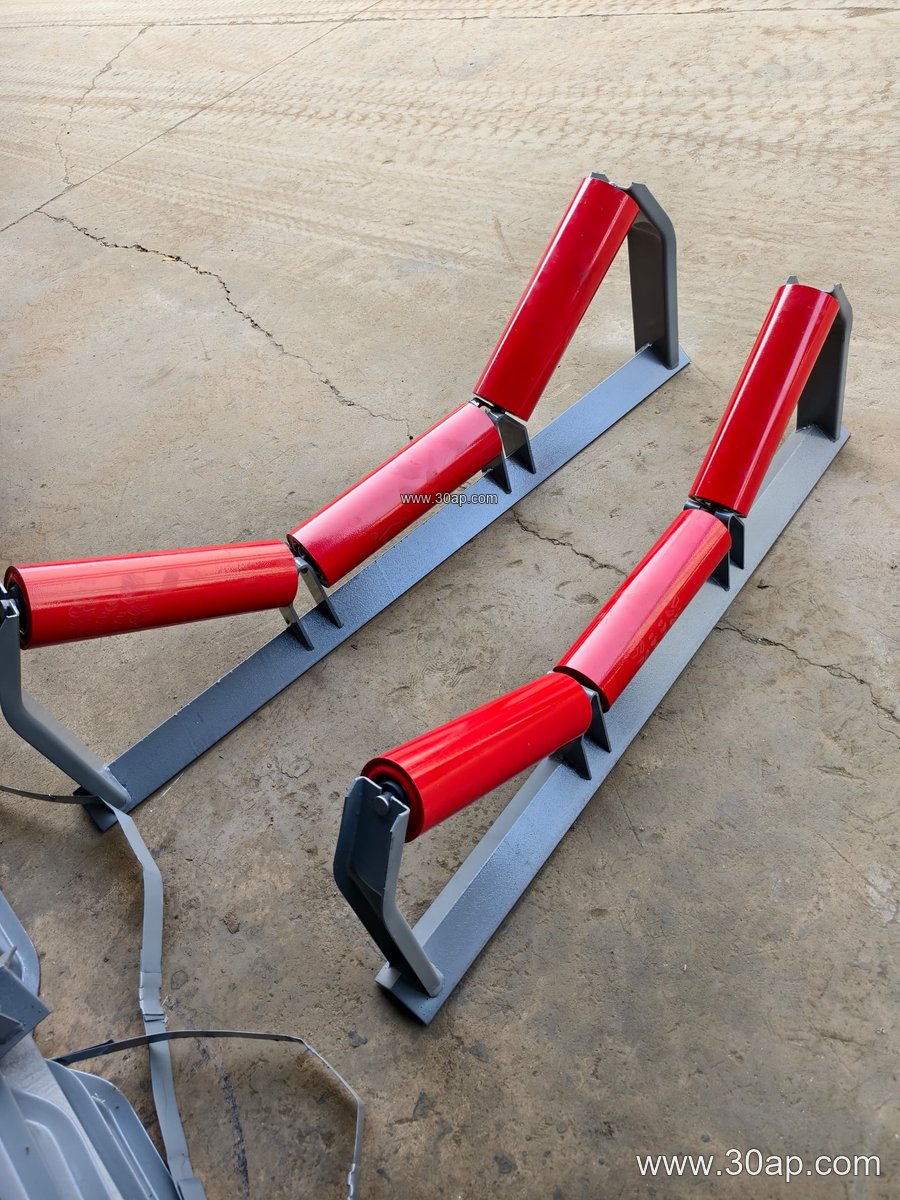
Because the bracket is carbon steel, it offers good stiffness at a reasonable cost, which is why it appears in heavy-duty mining conveyor lines as well as smaller aggregate conveyors. Buyers should confirm the steel thickness, the welding quality, and the coating system rather than assume that two brackets with the same outline perform the same way.
Common Bracket Types and Where They Sit
Bracket types follow the roller position along the conveyor. Troughing brackets carry the upper carrying rollers and set the trough angle. Transition brackets sit near the pulleys where the belt changes shape. Return brackets support the lower run, including V-return and flat-return forms. Impact brackets sit under loading points and hold impact rollers. Self-aligning and forward-leaning brackets help with belt training, while adjustable brackets allow the trough angle to be changed on site.
- Troughing and upper brackets for the carrying side
- Transition brackets near head and tail areas
- Return and V-return brackets for the lower strand
- Impact brackets under chutes and loading zones
- Self-aligning and forward-leaning brackets for belt tracking
- Adjustable brackets for angle changes
Forward-leaning brackets usually use a small lead angle of about 1.5 to 2 degrees. This is a training feature, not a replacement for proper alignment of the whole conveyor.
Matching Bracket, Belt Width, and Roller Diameter
Belt width and roller diameter are linked by the conveyor design, not by a single fixed rule. A B800 belt may use a 30-degree or 35-degree trough with Ø108 rollers, while a B1200 line in an iron ore plant might run 45-degree troughs with Ø133 rollers. Wider belts and heavier loads generally call for larger rollers and stronger brackets, but the final combination comes from the conveyor calculation.
| Belt width | Common trough angle | Common roller diameter |
|---|---|---|
| B500 / B650 | 20 to 30 degrees | Ø89 / Ø108 |
| B800 / B1000 | 30 to 35 degrees | Ø108 / Ø133 |
| B1200 / B1400 | 35 to 45 degrees | Ø133 / Ø159 |
| B1600 / B1800 | 35 to 45 degrees | Ø159 / Ø194 |
| B2000 / B2200 | 35 to 45 degrees | Ø159 / Ø194 |
These values are reference examples only. Installation hole spacing and crossbeam length change with belt width and trough angle, so they should not be treated as fixed numbers.
Where Carbon Steel Brackets Are Used
In a limestone mine or a crushing and screening line, troughing and impact brackets take the shock of large feed and keep the belt supported at the load point. In a power plant coal yard, return brackets and self-aligning brackets help control belt wander on long runs. Similar brackets appear in fertilizer plants, grain silos, and tunnel spoil handling, where dust and moisture make the coating choice matter.
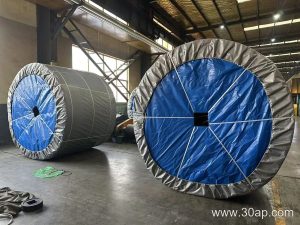
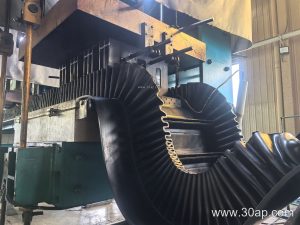
Bracket performance also depends on the belt it carries. A heavy-duty mining conveyor belt or an abrasion resistant conveyor belt running over correctly aligned rollers will last longer than the same belt on a poorly set frame. Where the belt is a flame retardant conveyor belt in an underground coal mine, the bracket should still be checked for coating condition and bolt tightness during routine inspection.
Buyer Checklist
- Confirm the bracket type and its position on the conveyor.
- Give the belt width, trough angle, and roller diameter together.
- Check steel thickness, welding, and surface treatment.
- Match hole spacing and crossbeam length to the actual frame.
- Ask whether the bracket is fixed or adjustable if the angle may change.
For related conveyor components such as the conveyor belt, idler roller, and conveyor pulley, keep the bracket dimensions consistent with the rest of the frame. A well-chosen carbon steel conveyor bracket is a small part of the total cost, but it directly affects roller life, belt tracking, and the amount of maintenance a plant faces each month.