What a Custom Conveyor Bracket Really Is
A custom conveyor bracket is a made-to-order support component that positions idlers and related hardware on a conveyor frame when standard catalog brackets will not fit. Instead of forcing a frame to accept off-the-shelf hole spacing, a fabricated bracket is dimensioned around the actual belt width, trough angle, and roller diameter of the line. In a quarry or a cement plant, this often means the difference between a smooth-running idler station and one that vibrates, misaligns, or wears belts prematurely.
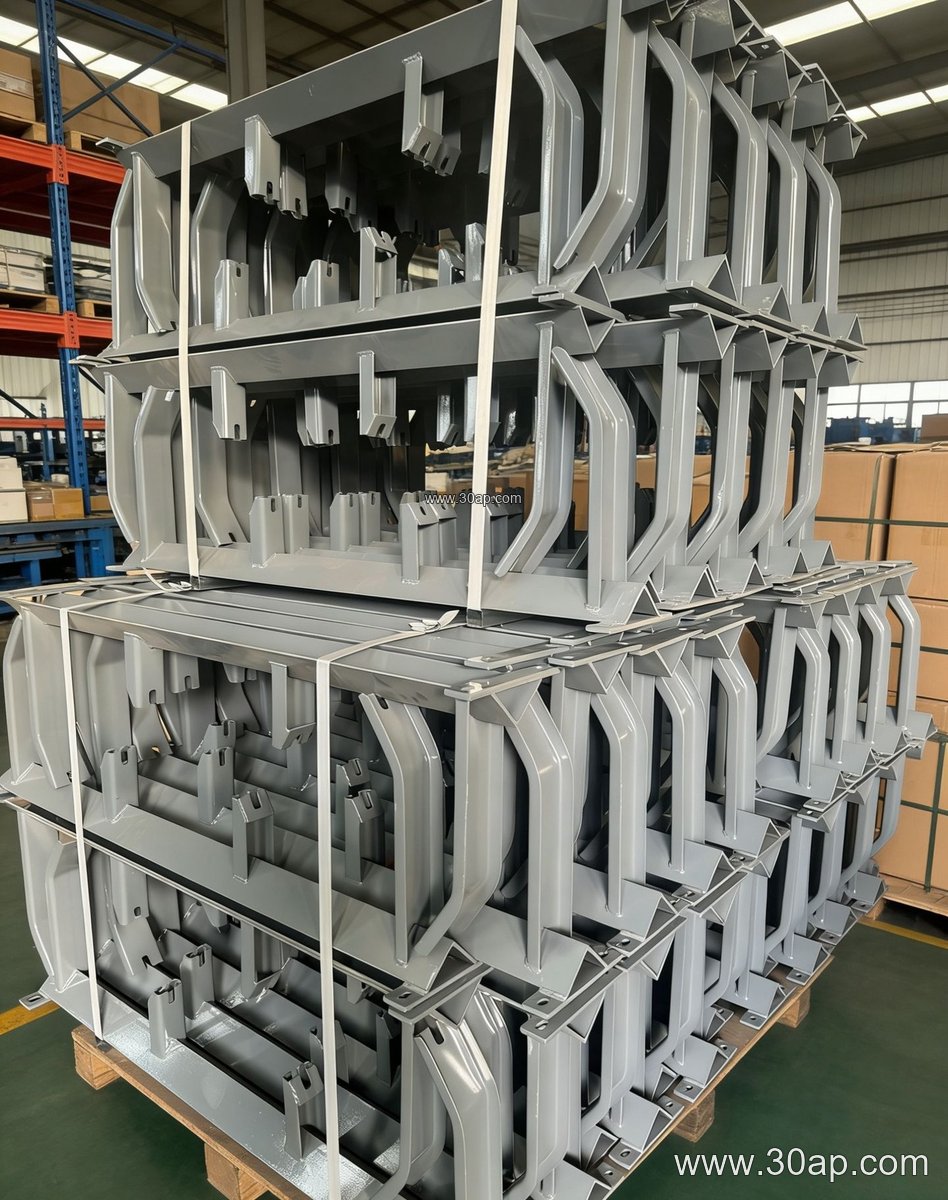
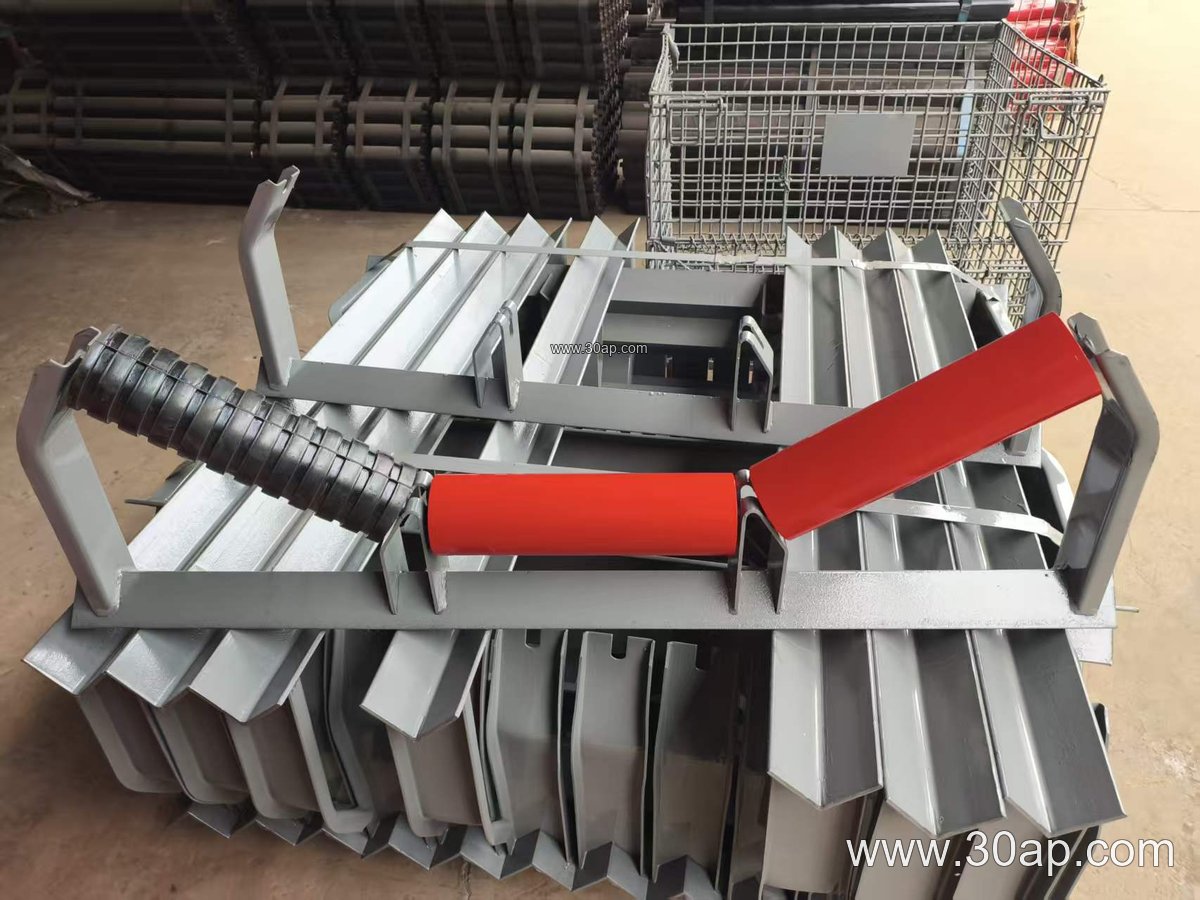
The bracket itself is usually a simple but precise steel part. It may be an angle-steel or channel-steel section, or a folded steel plate, drilled and sometimes slotted to accept idler shafts. The same product is also called a custom-made conveyor support bracket or a bespoke idler bracket, and those names describe the same thing.
How the Bracket Is Built
Fabrication starts with the mounting geometry. The bracket must match the frame rail spacing, the idler shaft ends, and the trough profile. Common materials are angle steel, channel steel, and bent steel plate, chosen for stiffness and for the welding or bolting method used on site.
- Hole spacing and crossbeam length are set by belt width and trough angle, so they are determined by design rather than fixed figures.
- Slotted holes or adjustable segments allow fine positioning during installation.
- Surface treatment is selected to suit the environment, from dusty crushing circuits to humid port terminals.
Because the part is custom, a buyer should supply a drawing or clear measurements: frame rail gap, shaft diameter, required trough angle, and the idler type it will carry.
Trough Angle and Roller Diameter Choices
Trough angle strongly affects how a belt carries bulk material. A 20-degree or 30-degree profile suits many medium-width lines, while 35 degrees and 45 degrees are common where higher capacity and better material containment are wanted. Adjustable brackets can move between these angles, which helps during commissioning or when a line is modified.
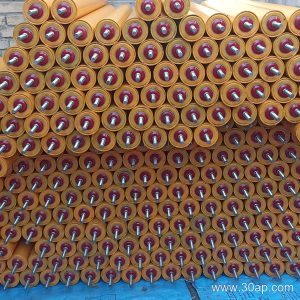
Roller diameter is a separate decision. Common idler sizes include Ø89, Ø108, Ø133, Ø159, and Ø194, and the bracket must match the chosen shaft and roller. There is no rule that ties one belt width to one roller diameter or one trough angle; the combination follows load, belt stiffness, and the conveyor design. For example, B800 with 35 degrees and Ø108 is a familiar arrangement, and B1200 with 45 degrees and Ø133 also appears in heavy-duty work, but neither is mandatory.
Where It Fits on the Conveyor
Custom brackets appear at carrying idler stations, transition zones near pulleys, and return-side positions. A transition bracket may need a shallower angle to guide the belt gradually from a flat pulley into a troughed run. Return brackets, including V-return and flat-return designs, are separate subtypes and are not interchangeable with carrying brackets, so each position should be specified on its own.
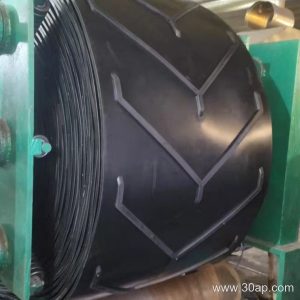
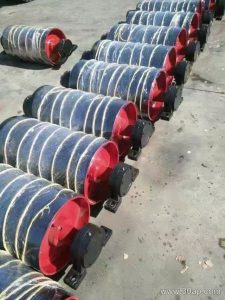
Typical sites include limestone mines, iron ore operations, coal washing plants, aggregate crushing and screening lines, and power plant coal handling. In these places the bracket works alongside the conveyor belt, conveyor idler rollers, and conveyor pulleys, and its accuracy influences belt tracking and splice life. A line carrying an abrasive Abrasion Resistant Conveyor Belt in a crusher circuit benefits from stable idler spacing just as much as a port line using a Steel Cord Conveyor Belt.
Adjustable Versus Fixed Designs
Fixed brackets lock the trough angle and idler position permanently. They are simple and rigid, and they suit lines that will not change. Adjustable brackets allow angle and sometimes height adjustment, which is useful for transition zones, for lines that handle several material types, or for sites where installation tolerances are uncertain. Adjustment adds setup time, so the choice should follow how much flexibility the operation actually needs.
In a coal preparation plant, for instance, a fixed 35-degree bracket may serve the main run, while an adjustable bracket near the head pulley eases the transition. On a Mining Conveyor Belt line with frequent belt changes, slotted brackets can reduce downtime during realignment.
Buyer Checklist
- Confirm belt width, such as B650, B1000, or B1400, and the frame rail dimensions.
- State the idler type and shaft diameter the bracket will hold.
- Specify trough angle, for example 30 degrees or 45 degrees, and whether adjustment is needed.
- Describe the environment, including dust, moisture, and temperature, so material and coating suit the site.
- Ask for a dimensioned drawing before production, since hole spacing follows the actual design.
A well-made custom conveyor bracket is a small part with a large effect on tracking, wear, and maintenance effort. Matching it to the belt, idlers, and frame from the start avoids the improvisation that often shortens component life in demanding bulk handling work, whether the line runs a Heat Resistant Conveyor Belt in a sinter plant or a standard fabric belt in a sand and gravel yard.