What a Wear-Resistant Ceramic Lagged Pulley Is
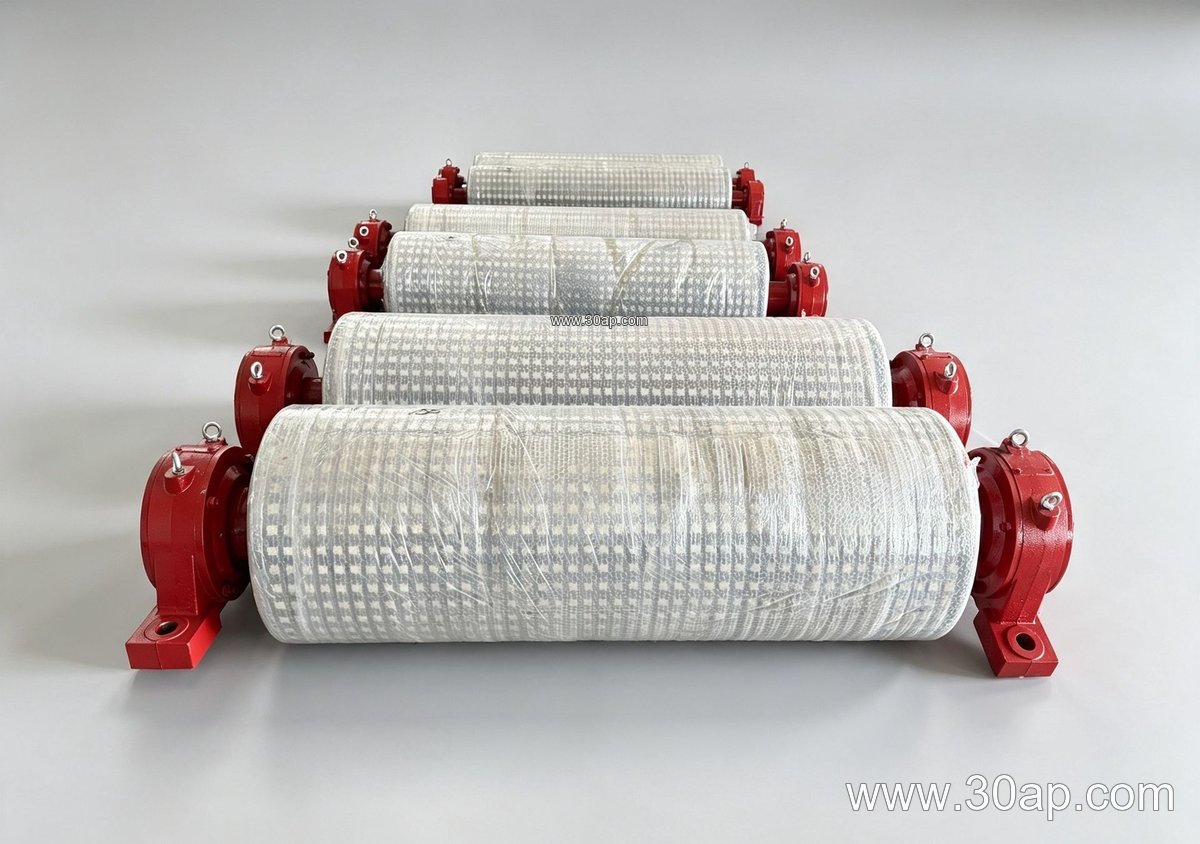
A wear-resistant ceramic lagged pulley is a conveyor pulley whose shell is covered with ceramic tiles set in a rubber or epoxy backing. The ceramic pieces give the surface a hard, grippy face that resists abrasion far better than plain steel or standard rubber lagging. In a quarry, a coal washing plant, or a cement clinker line, this kind of pulley is often chosen where the belt is wet, dusty, or carrying sharp material that chews through ordinary lagging.
It is still a conveyor pulley at heart. The ceramic lagging is a surface treatment, not a different machine, so the pulley must first be correctly sized for the belt and the load. Ceramic lagging is most often applied to drive pulleys, where grip and wear life matter most, but it can also appear on other positions when slippage or abrasion is a concern.
How the Ceramic Surface Is Built
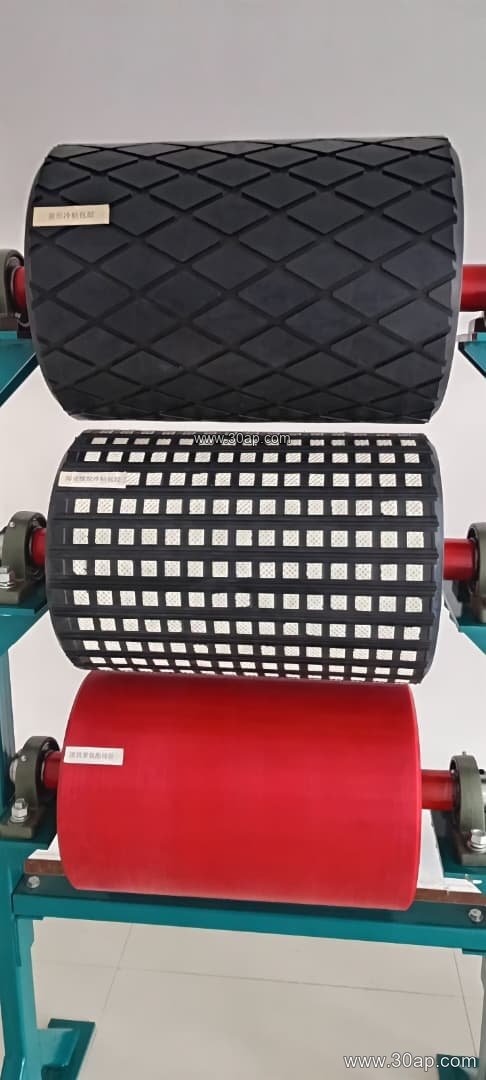
The shell is usually machined steel, then covered with a bonding layer. Ceramic tiles are embedded in that layer, often in a diamond or block pattern with small gaps between tiles. The gaps help water and fines escape so the belt does not hydroplane, and the raised ceramic edges bite into the belt cover for traction.
Common lagging thicknesses are 8, 10, 12, 15, and 20 mm, with the ceramic layer chosen according to belt tension and the severity of the duty. A heavier drive on a high-abrasion conveyor may call for a thicker build, while a light transfer point may need only a modest layer. The tiles are hard and brittle, so the bond between tile and backing is the critical part of the construction.
Where It Fits on the Conveyor
Ceramic lagging is frequently specified for the drive pulley at the head of a conveyor, especially where the belt carries abrasive ore, crushed stone, or clinker. It also suits tension and bend positions when the belt wraps at a high angle and the rubber face would wear quickly. In a port bulk terminal or a power plant coal handling system, a ceramic lagged drive pulley can help hold a heavily loaded belt without excessive slip.
Tail pulleys and snub pulleys are usually less demanding, and standard rubber lagging may be enough there. A plain bend pulley without lagging may also be fine on a clean, dry run. The point is to match the surface to the job rather than to lag every pulley the same way.
Matching the Pulley to Belt and Load
Belt width and pulley diameter are related but not locked together. A B800 belt might run on a Ø500 pulley in one conveyor and a larger diameter in another, depending on wrap angle, belt tension, and the space available. Typical shell face widths run slightly wider than the belt, for example about 950 mm for B800, about 1150 mm for B1000, and about 1600 mm for B1400. Shaft diameter should be set from torque and bearing load, not from belt width alone.
| Belt width | Typical pulley face width | Common diameter range | Common lagging thickness |
|---|---|---|---|
| B650 | about 750 mm | Ø315 to Ø630 | 8 to 15 mm |
| B800 | about 950 mm | Ø400 to Ø800 | 10 to 15 mm |
| B1000 | about 1150 mm | Ø500 to Ø1000 | 10 to 20 mm |
| B1200 | about 1400 mm | Ø630 to Ø1000 | 12 to 20 mm |
| B1400 | about 1600 mm | Ø800 to Ø1250 | 15 to 20 mm |
These figures are reference ranges, not fixed rules. A B1200 × Ø1000 drive pulley and a B800 × Ø500 tail pulley are both plausible, but the final choice belongs to the conveyor designer who knows the belt tension and the duty cycle.
Working With the Rest of the Conveyor
A ceramic lagged pulley does not work alone. It must match the conveyor belt cover grade, the belt tension, and the alignment of the whole run. An abrasion resistant conveyor belt paired with a ceramic drive pulley can give a long, stable service life in a primary crusher discharge. On a coal mining conveyor belt, flame retardant properties of the belt and the pulley lagging are separate issues, so buyers should keep the belt specification and the pulley surface specification on the same page.
Idler rollers, the conveyor bracket, and the pulley bearings all share the load path. Poor alignment at the pulley can wear one edge of the ceramic face and shorten belt life. A smooth transition from troughing idlers into the pulley helps the belt seat evenly.
Buyer Checklist
- Confirm the pulley position: drive, tail, bend, or tension. The duty differs, and lagging choice should follow it.
- State the belt width, belt type, and expected tension. A steel cord conveyor belt and a fabric core belt load the pulley differently.
- Give the required diameter, face width, and shaft size, or ask the supplier to confirm them from the belt data.
- Specify lagging thickness and pattern, and ask how the tiles are bonded and finished at the edges.
- Check that the ceramic face is compatible with the belt cover, especially on heat resistant or oil resistant belts where the rubber compound matters.
- Plan for inspection. Chipped tiles and lifted edges should be checked during shutdowns before they damage the belt.
For an abrasive quarry conveyor or a dusty coal handling line, a wear-resistant ceramic lagged pulley is often a practical upgrade over plain rubber lagging. The key is to treat it as part of a matched system, with the pulley, belt, and supporting components selected together rather than in isolation.