What a Belt Conveyor Trough Idler Does
A belt conveyor trough idler is the group of rollers that supports the loaded side of a conveyor belt and shapes it into a trough. By lifting the belt edges, the idler keeps bulk material centered on the belt and reduces spillage between the loading point and the discharge. In a stone crushing line, a cement plant, or a power plant coal yard, the trough idler is one of the most numerous components on the whole conveyor, so its condition directly affects belt life and energy use.
The same component is often called a troughing idler or carrying idler set. These are accurate equivalent names for the same product, while a return idler, impact idler, or self-aligning idler is a different subtype with a different job.
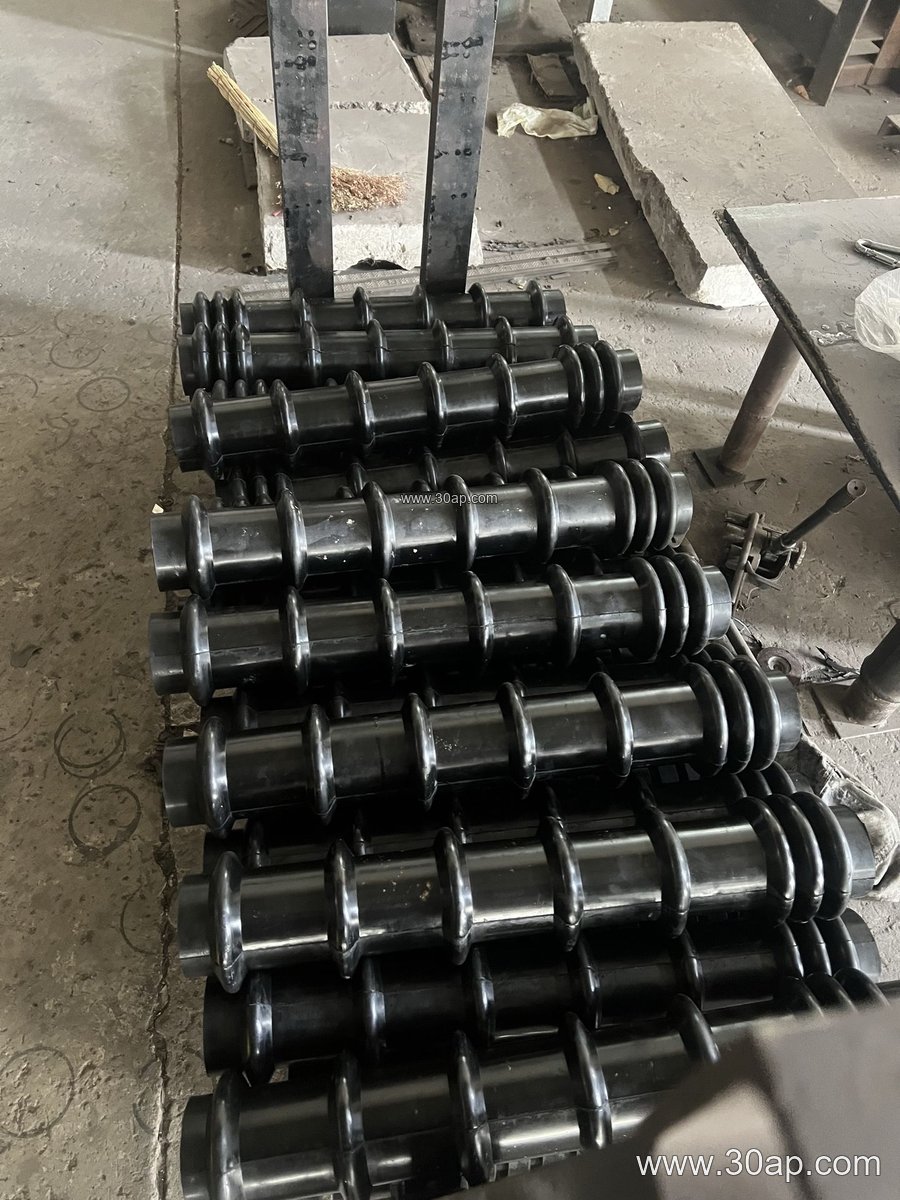
How the Trough Idler Set Is Built
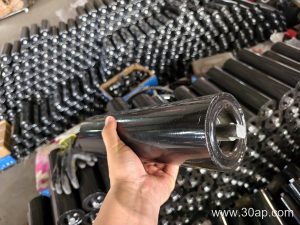
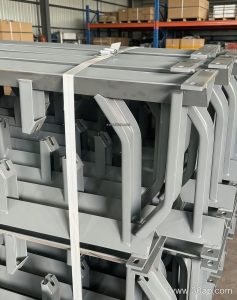
A typical set has two or three rollers mounted on a common frame. The three-roll arrangement is common on wider belts, with a horizontal center roll and two inclined side rolls. Each roller usually contains a steel tube, a shaft, bearing housings, and seals. The frame may be fixed or have slots for adjustment. Common roll diameters include Ø89, Ø108, Ø127, Ø133, Ø159, and Ø178 mm, while bearings such as 6204, 6205, 6305, 6306, 6308, and 6310 appear across different sizes. A larger roll is not automatically better; it should match belt speed, load, and the space available in the conveyor bracket.
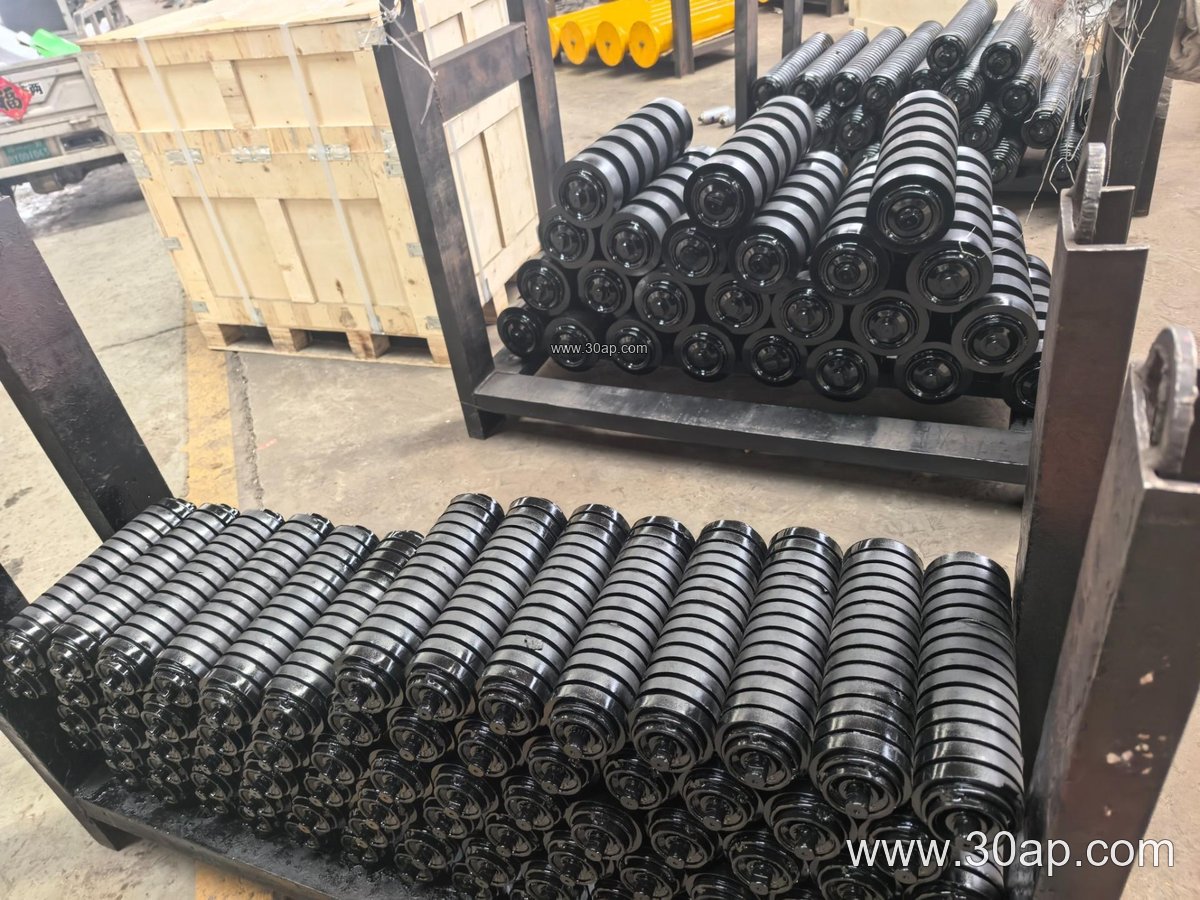
Trough Angles and Belt Width
The trough angle controls how deeply the belt sits in the idler. Common angles are 20, 30, 35, and 45 degrees. A shallow angle suits flat or easily shifted material, while a deeper trough helps contain a full load on a fast-moving belt. The roll length changes with belt width and trough angle. For reference, a three-roll set may use rolls of about 200 mm at B500, 315 mm at B800, 380 mm at B1000, 465 mm at B1200, 530 mm at B1400, 600 mm at B1600, and 750 mm at B2000. These are common examples, not fixed pairings, and the center and side rolls can differ.
| Item | Common Reference Range |
|---|---|
| Roll diameter | Ø63 to Ø219 mm; Ø89, Ø108, Ø127, Ø133, Ø159 and Ø178 are frequent |
| Belt width | B400 to B2400 mm |
| Trough angle | 20, 30, 35 or 45 degrees |
| Roll surface | Steel tube, nylon, ceramic, rubber ring |
| Set form | Single roll, two-roll, three-roll trough |
Where Trough Idlers Are Used
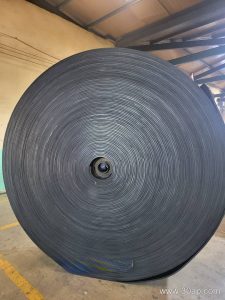
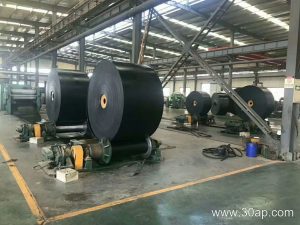
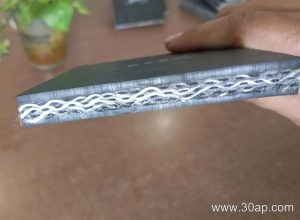
These idlers appear wherever a conveyor carries loose material. In a limestone quarry or aggregate line, they support crushed rock on the way to screening. In a coal washing plant or underground coal mining conveyor, flame retardant and anti-static belt grades are often specified, and the trough idler must run smoothly to avoid heat build-up. Cement plants, steel plants, and port ship loaders also rely on long trough idler strings to keep a heavy-duty conveyor belt tracking correctly. The belt itself may be an EP conveyor belt, a steel cord conveyor belt, or a fabric core conveyor belt, and each has its own tracking behavior.
What a Buyer Should Check
- Confirm the belt width, trough angle, and roll length before ordering, and check the mounting dimensions of the conveyor bracket.
- Match the roll diameter and bearing to the actual load and speed rather than copying a neighbor’s conveyor.
- Choose the roll surface for the environment: rubber rings for impact zones, ceramic or nylon where build-up and wear are concerns.
- Ask how the seals and bearing housings are protected against dust and water, especially in wash plants and tunnels.
- Plan regular inspection of rotation, alignment, and frame condition, because a seized idler can damage the belt quickly.
On a long overland system, a trough idler that is slightly misaligned can push a wide belt against the frame. Checking the idler set together with the conveyor pulley and belt tension saves trouble later. For abrasive ore or high-speed coal, an abrasion resistant conveyor belt paired with well-sealed trough idlers usually gives a more stable result than upgrading only one part.
Maintenance Notes
Keep the trough idlers clean and free-turning. Replace rollers that no longer spin freely, and check that the trough angle still matches the belt load. When material builds up on the rolls, the belt may wander, so cleaning and inspection belong in the normal maintenance schedule. A trough idler is a simple part, but it is the contact point between the belt and the structure, and that makes it worth attention.