What a Cement Conveyor Belt Has to Handle
A cement conveyor belt is the rubber or fabric-based carrying surface that moves clinker, limestone, gypsum, raw meal, and finished cement between crushers, silos, and packing lines. In a cement plant the belt rarely faces one condition at a time. It may carry hot clinker from the cooler, fine abrasive dust from the raw mill, and damp material that sticks to the cover. That mix is why a general-purpose conveyor belt is often a poor fit and why buyers look for a specification written around the duty.
The same belt family serves mines, coal handling, power plants, and sand and gravel yards, but cement duty usually adds heat and fine dust to the abrasion problem. A belt that works well on dry aggregate may fail early on a clinker line.
Construction and Common Specifications
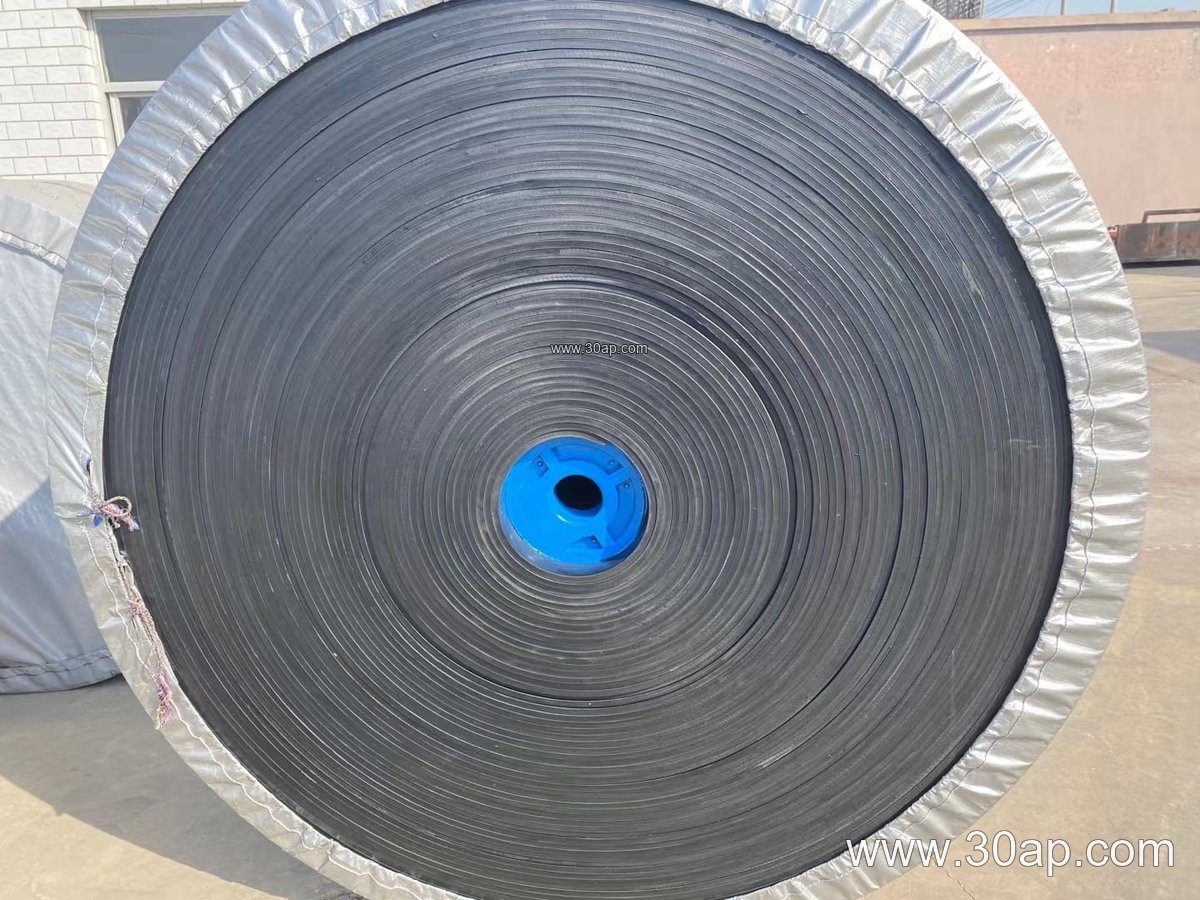
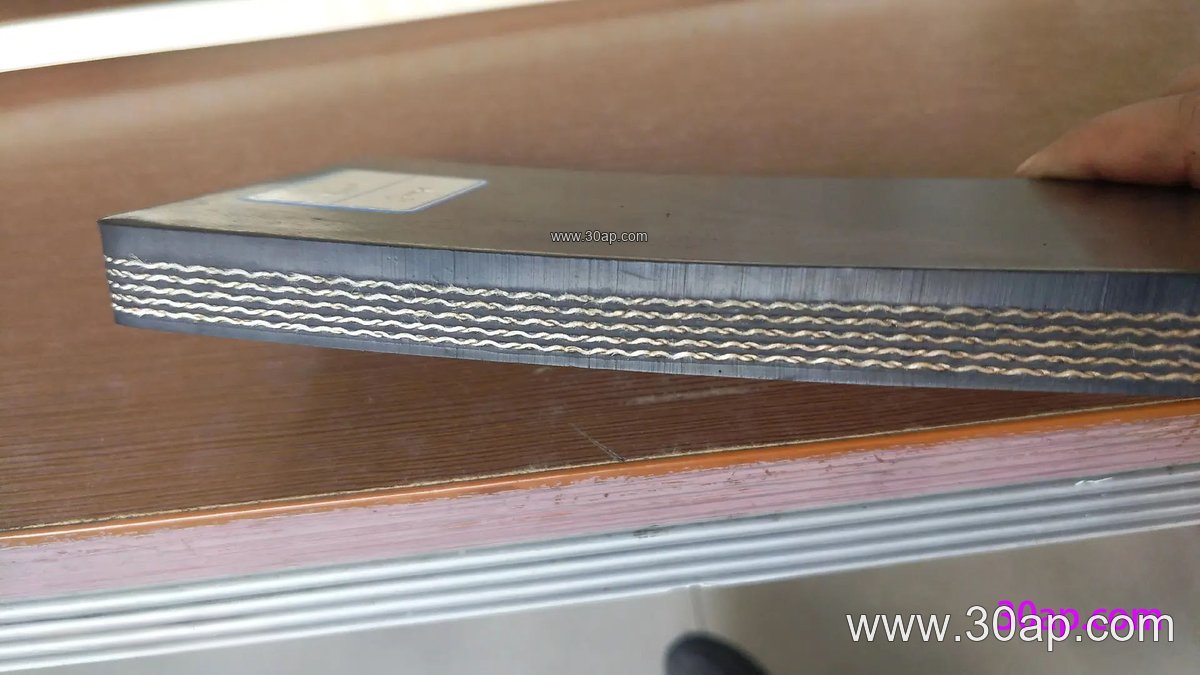
Most cement belts use a fabric core with rubber covers. EP (polyester-cotton) and NN (nylon) carcasses are common, and heavier lines may move to a steel cord core. Cover thickness and compound quality decide how long the belt survives abrasive dust and hot material. Typical reference values are shown below; actual selection depends on the conveyor design, and different manufacturers will quote different combinations.
| Parameter | Common Reference Values |
|---|---|
| Core type | EP fabric, NN fabric, steel cord |
| Strength grades | EP200 to EP2000; NN100 to NN400 |
| Belt width | B500, B650, B800, B1000, B1200, B1400, B1600, B1800, B2000 |
| Cover thickness | 3+1.5, 4+2, 5+2, 6+2, 8+3 mm |
| Ply count | Usually 2 to 6 layers |
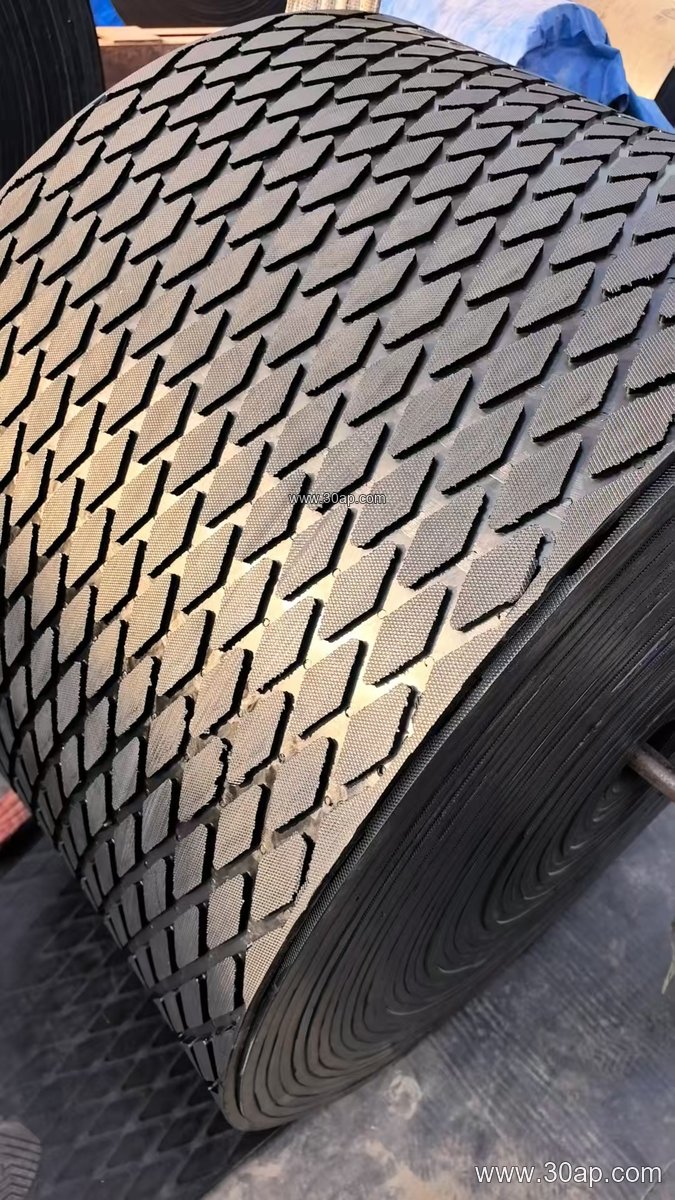
For hot clinker, a heat resistant conveyor belt with a suitable cover compound is the usual starting point. For coal handling or enclosed transfer points, a flame retardant grade is often required. Fine limestone dust calls for good abrasion resistance, and a chevron or corrugated sidewall belt can help on steep inclines where material would otherwise slide back.
Where the Belt Sits in the Line
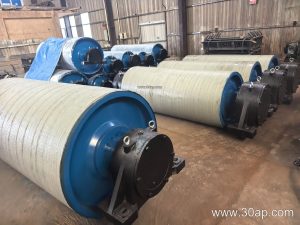
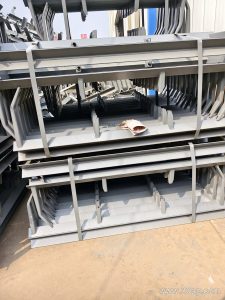
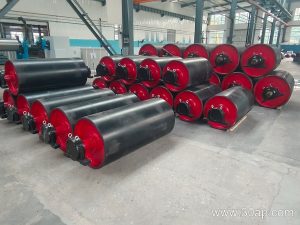
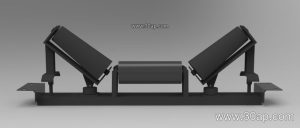
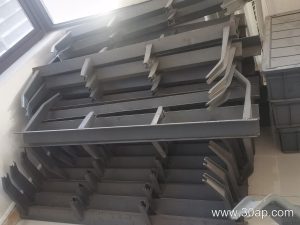
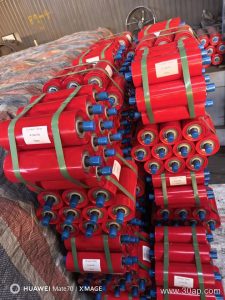
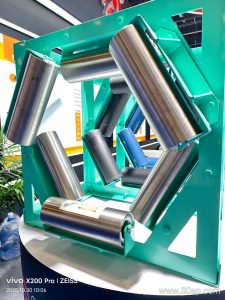
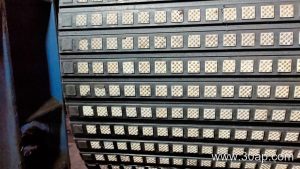
The belt runs over idler roller sets that support the load, and around a head pulley, tail pulley, and bend pulleys that set the path. These pulleys are not interchangeable: the drive pulley transmits torque, the tail pulley returns the belt, and a bend pulley changes direction at a curve. A conveyor pulley is selected by shaft load, lagging, and belt tension, not by belt width alone. Brackets and frames hold the idlers and pulleys in alignment, and poor alignment is one of the most common causes of edge wear.
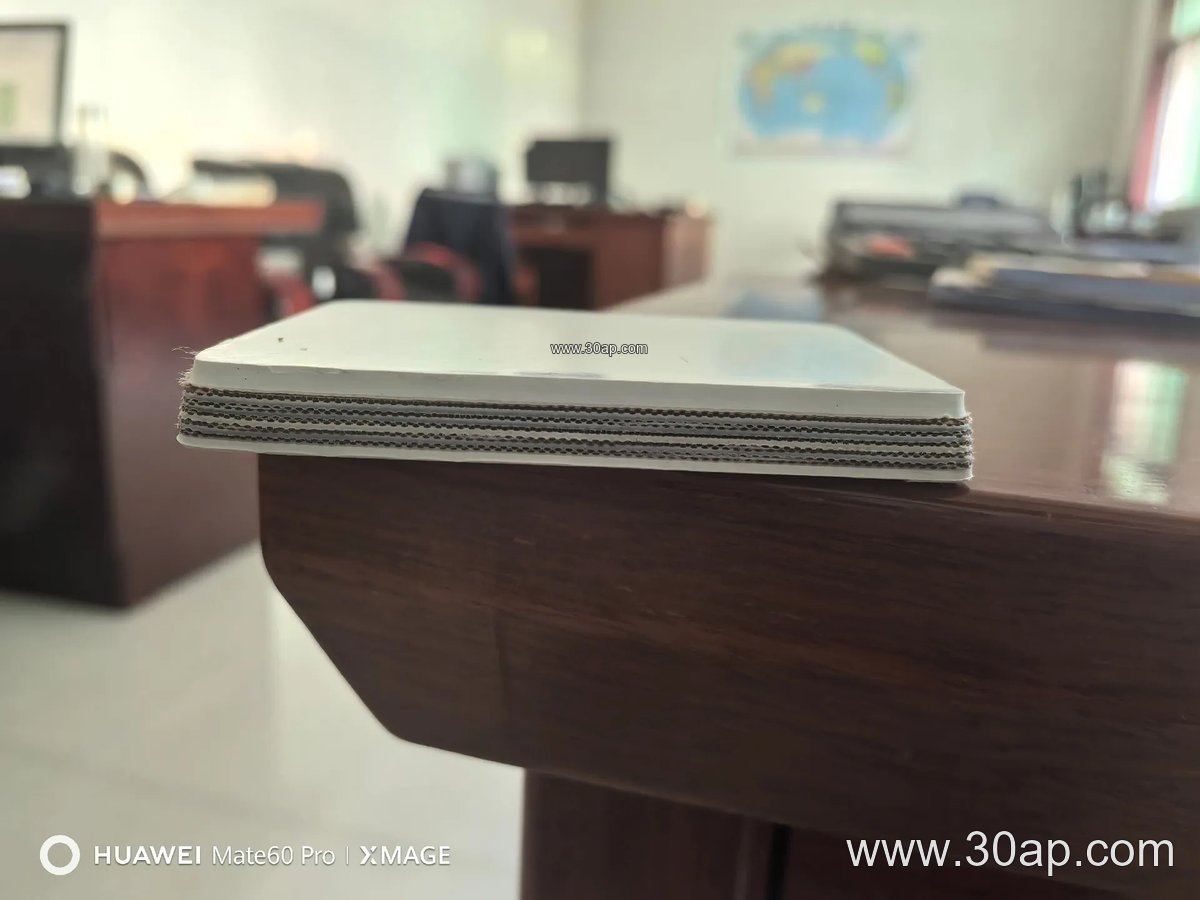
In a quarry or crusher circuit, impact at the loading point is the main threat. Impact idlers and a thicker top cover reduce damage from large lumps. In a port or ship loading line, long centre distances and high tension may point toward a steel cord belt rather than a multi-ply fabric core.
What to Confirm Before Ordering
- Material and temperature: clinker, raw meal, gypsum, and coal each call for different cover compounds. State the maximum lump size and the expected material temperature.
- Belt width and speed: match width to the required tonnage and to the existing pulley and idler set. Do not assume that one width fixes the pulley diameter.
- Strength grade: confirm the calculated tension against the EP or NN grade offered, and check the safety factor used by the conveyor designer.
- Cover thickness: a 6+2 or 8+3 mm cover often suits abrasive clinker, while a thinner cover may be enough for fine cement dust.
- Special properties: flame retardant, anti-static, oil resistant, or cold resistant grades should be requested only where the site condition actually requires them.
Ask for the splice method as well. A vulcanized endless joint usually gives a smoother running surface than mechanical fasteners, and on a long cement line the joint is often the first place wear shows. Keep spare belt length, idler rollers, and pulley lagging on hand so a stoppage does not idle the whole kiln feed section.