What an Impact Idler Bracket Does
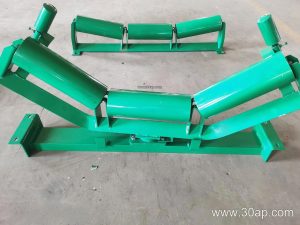
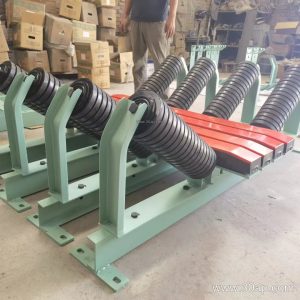
An impact idler bracket is the support frame that holds impact idler rollers directly beneath a conveyor loading point. Its job is simple to describe but critical in practice: it absorbs the shock of falling material before that energy reaches the belt carcass. In a quarry, a crusher discharge, or a cement plant transfer tower, rock and clinker can drop several metres onto the belt. The bracket keeps the impact rollers at the correct height and angle so the belt is cushioned rather than hammered.
Because the bracket sits at the receiving end, it works together with the conveyor belt, the idler roller set, and the conveyor bracket system as a whole. A weak frame here shows up quickly as belt edge damage, roller misalignment, and spillage.
How the Frame Is Built
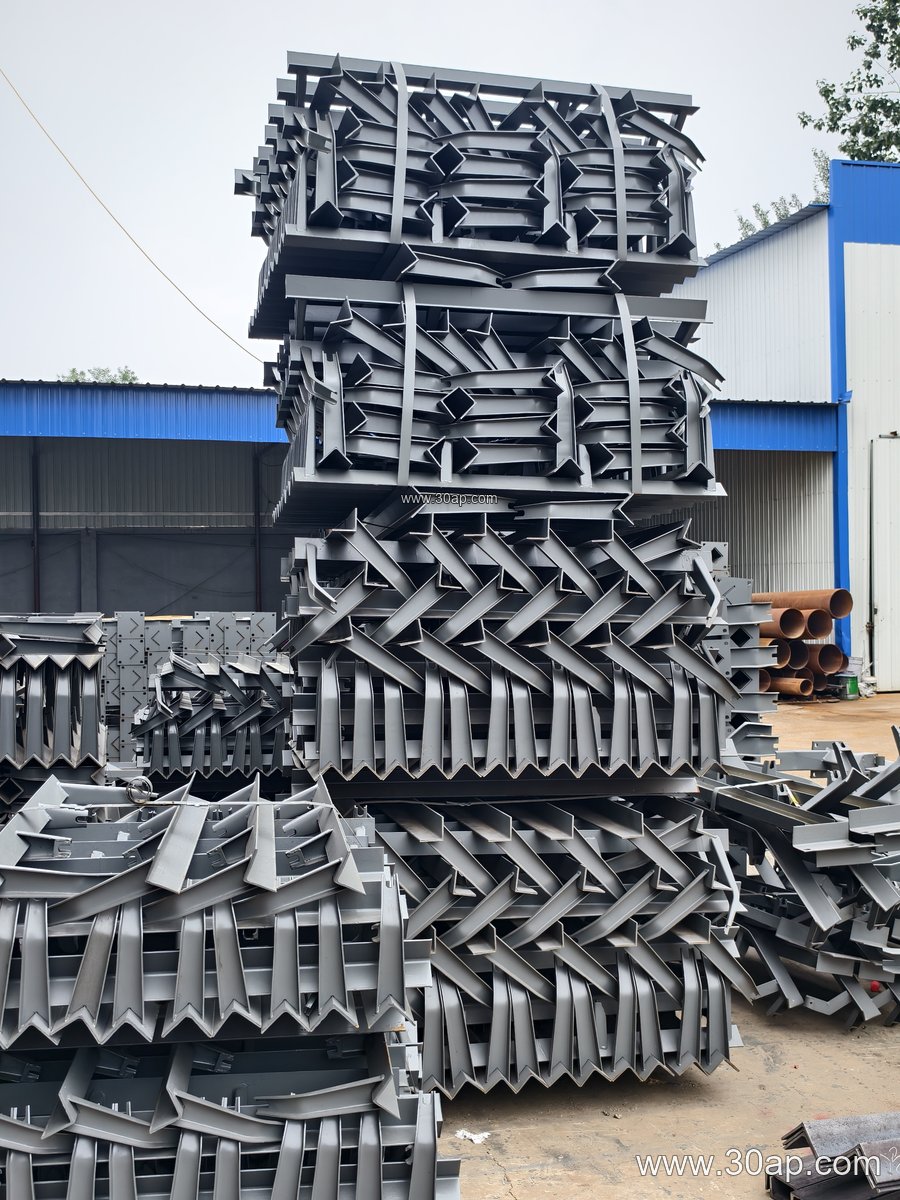
Most impact idler brackets are fabricated from angle steel, channel steel, or folded steel plate. The structure usually includes a cross beam, two side mounting plates, and slots or holes for the idler shaft. Impact versions are often made heavier than standard carrying brackets because the dynamic load at a loading point can be several times the static weight of the material.
Several variants exist. Fixed impact brackets hold the rollers at a set trough angle, while adjustable versions allow the angle to be changed on site. Some designs add rubber or polyurethane buffer pads between the roller and the frame to further soften the drop. Installation height is normally set so the impact rollers sit slightly higher than the adjacent carrying idlers, letting the belt transition smoothly onto the cushioning section.
Where It Fits on the Conveyor
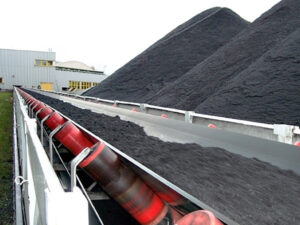
The typical location is under the skirted loading chute, often across two to five idler positions. In a coal handling system or a power plant coal yard, the bracket protects the belt where coal drops from the feeder. In a sand and gravel line, it sits below the screen discharge. In an iron ore or copper ore operation, it handles lump ore that would otherwise cut or bruise the belt cover.
It is not a substitute for a bend pulley or a tail pulley, and it should not be confused with a return bracket. Each support position has its own load direction and its own frame geometry. A bend pulley changes belt direction; an impact bracket simply carries and cushions the load.
Matching the Bracket to Belt Width and Roller Diameter
Belt width and roller diameter are the first two numbers a buyer needs. Common belt widths run from B500 through B650, B800, B1000, B1200, B1400, B1600, B1800, B2000, B2200. Roller diameters typically include Ø89, Ø108, Ø133, Ø159, and Ø194. Trough angles are usually 20, 30, 35, or 45 degrees, with adjustable brackets able to move between these values. A forward tilt of about 1.5 to 2 degrees is sometimes used on training idlers, but not on impact frames.
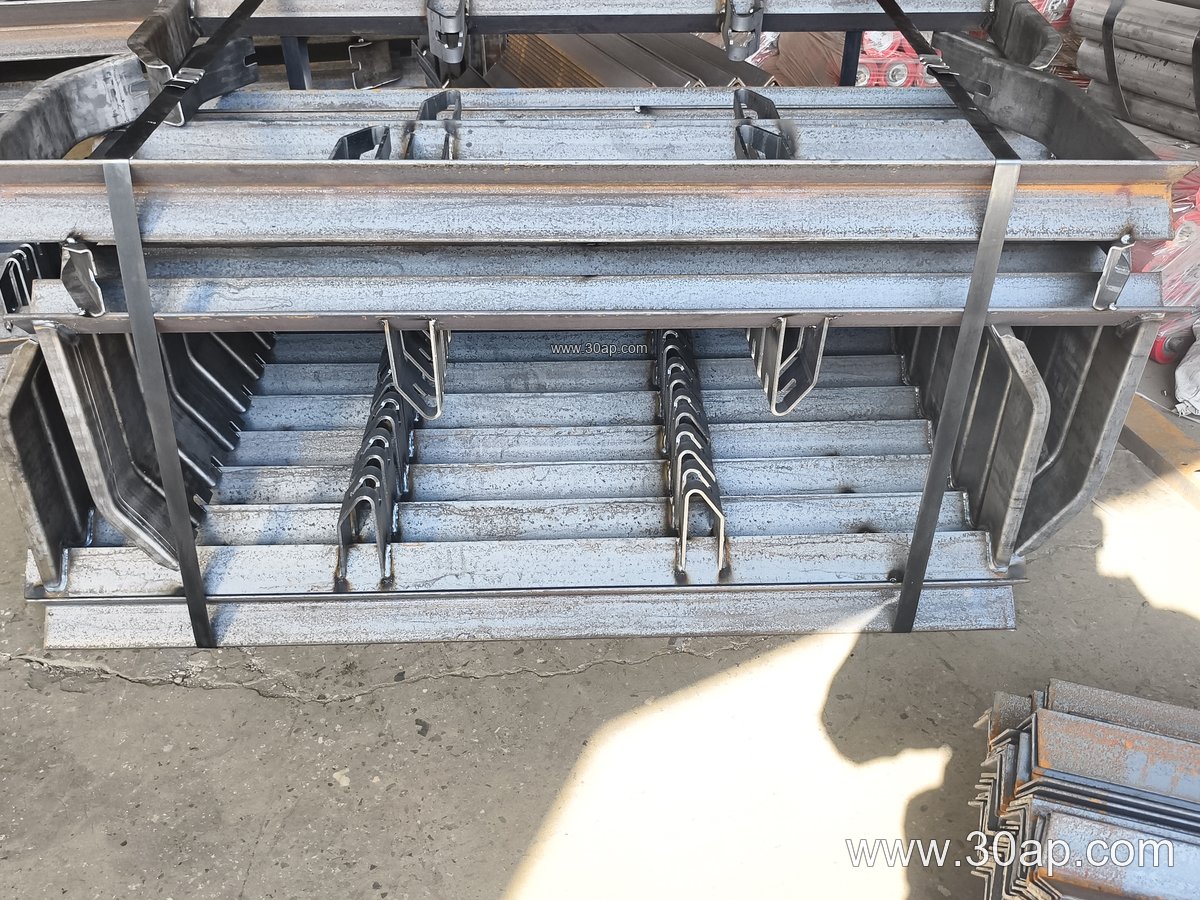
The table below shows example combinations, not fixed rules. Hole spacing and cross beam length are determined by the actual belt width, trough angle, and frame design.
| Example Reference | Belt Width | Trough Angle | Roller Diameter |
|---|---|---|---|
| Light duty | B500 | 20 degrees | Ø89 |
| Medium duty | B650 | 30 degrees | Ø89 |
| General duty | B800 | 35 degrees | Ø108 |
| Heavy duty | B1200 | 45 degrees | Ø133 |
| Large width | B1600 | 35 degrees | Ø159 |
| Extra heavy | B2000 | 45 degrees | Ø194 |
One belt width does not lock the design to a single angle or roller size. A B1000 conveyor may run 30 degrees with Ø108 rollers in one plant and 35 degrees with Ø133 rollers in another, depending on lump size and belt speed.
Buyer Checklist
- Confirm the belt width and the impact roller diameter before ordering.
- State the trough angle and whether adjustment is needed.
- Check the drop height and lump size; heavier impact may call for buffer pads or a heavier frame.
- Match the bracket material to the environment. A wet coal yard and a dry cement plant place different demands on the steel.
- Ask for hole spacing and cross beam dimensions against the actual conveyor layout.
- Keep spare brackets at loading points. These positions wear faster than ordinary carrying frames.
At a loading zone, the belt itself also matters. A heavy-duty mining conveyor belt, an abrasion resistant conveyor belt, or a flame retardant conveyor belt for underground coal mining will each behave differently under impact. A thick EP conveyor belt or a steel cord conveyor belt can tolerate more shock, but no belt should be expected to absorb impact without a proper impact bracket underneath. For high-drop transfer points, an impact resistant conveyor belt combined with a well-built frame is the practical pairing.
Maintenance Notes
Inspect the frame at every shut-down. Look for bent cross beams, elongated bolt holes, cracked welds, and worn buffer pads. Loose impact idlers usually point to a deformed bracket rather than a roller fault. Replace the frame as a unit where possible, and re-check alignment against the carrying idlers on both sides so the belt does not step or twist.