What a Conveyor Welded Pulley Is
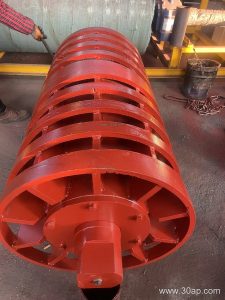
A conveyor welded pulley is a drum shell built from rolled steel plate and joined by continuous welds, rather than a cast or bolted design. It carries the conveyor belt around the head, tail or bend of a conveyor and transfers the belt load into the shaft and bearings. Because the shell is welded, the pulley can be produced in a wide range of diameters and face widths, and the weld quality becomes the main point of inspection. Quarries, cement plants and crushing lines often choose this construction for its balance of stiffness and repairability.
How the Welded Shell Is Built
The body usually starts as a rolled steel cylinder. End discs are welded to the shell, and the shaft is fitted through a machined hub, either keyed or shrink-fitted depending on the design. Weld seams are continuous around the shell and disc joints so that the drum resists fatigue from repeated belt pressure. A machined crown or flat face follows, and the surface may stay plain or receive lagging.
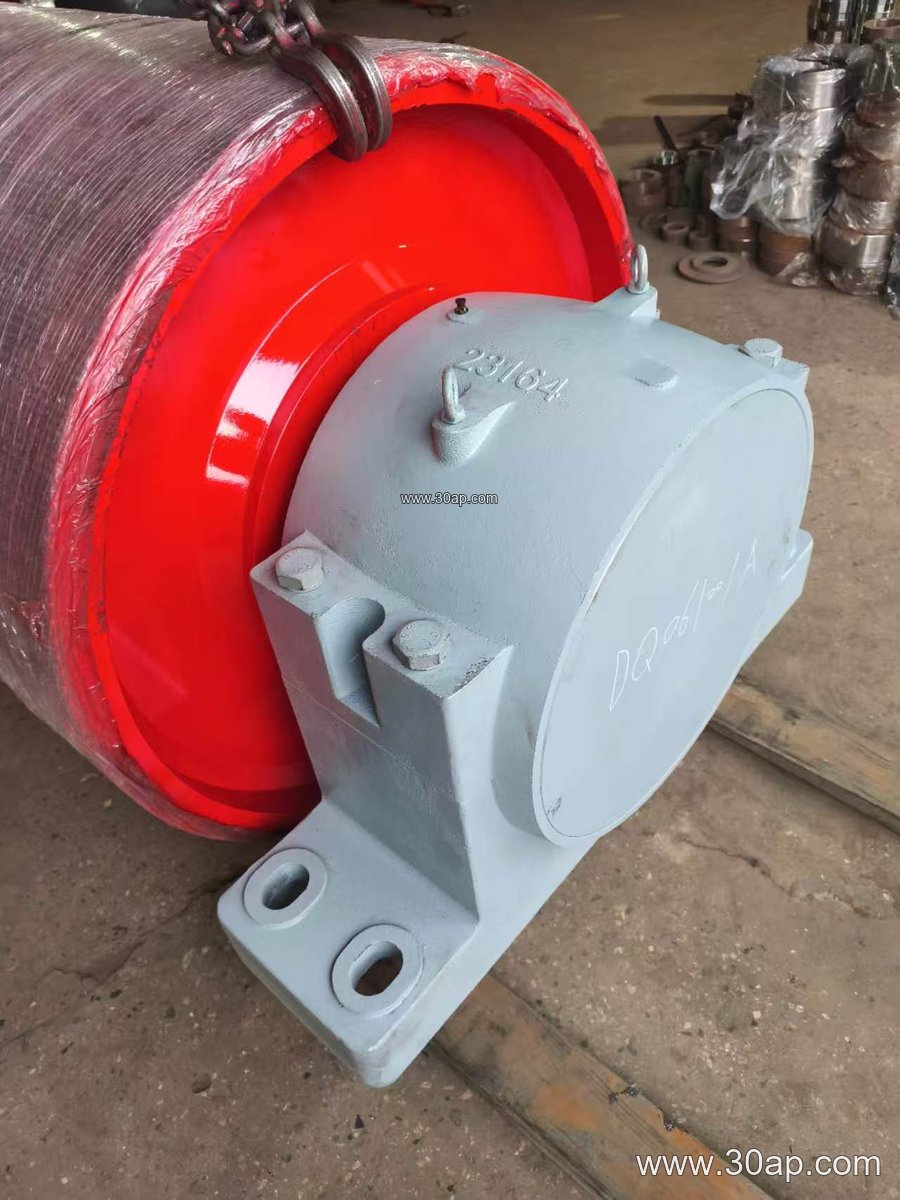
- Shell plate thickness is selected by load and diameter, not by habit.
- End plates and hubs are welded, then machined for concentricity.
- Shaft diameter is set by torque and bearing loads; common sizes include Ø80, Ø100, Ø120, Ø140 and Ø160, but the value is calculated for each drive.
- Dynamic balancing is advisable for high-speed or large-diameter units.
Typical Face Widths and Diameters
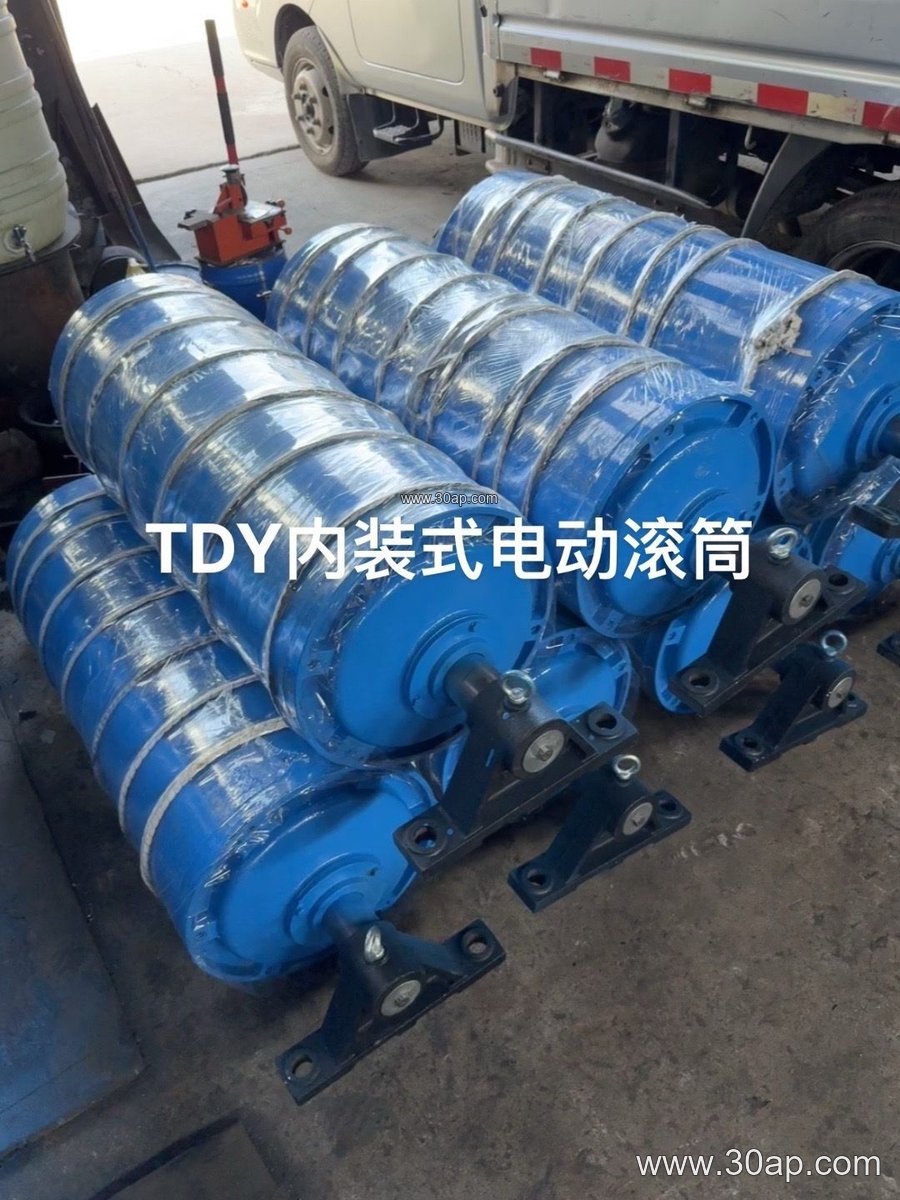
The face width normally exceeds the belt width so the belt is fully supported. Reference combinations are often written as B800 × Ø500, B1000 × Ø630 or B1400 × Ø800, but these are examples, not fixed pairings. A wider belt may run on more than one diameter depending on tension and wrap angle.
| Reference belt width | Typical face width | Common diameter range |
|---|---|---|
| B500 | about 600 mm | Ø250 to Ø400 |
| B650 | about 750 mm | Ø315 to Ø500 |
| B800 | about 950 mm | Ø400 to Ø630 |
| B1000 | about 1150 mm | Ø500 to Ø800 |
| B1200 | about 1400 mm | Ø630 to Ø1000 |
| B1400 | about 1600 mm | Ø800 to Ø1250 |
| B1600 | about 1800 mm | Ø1000 to Ø1400 |
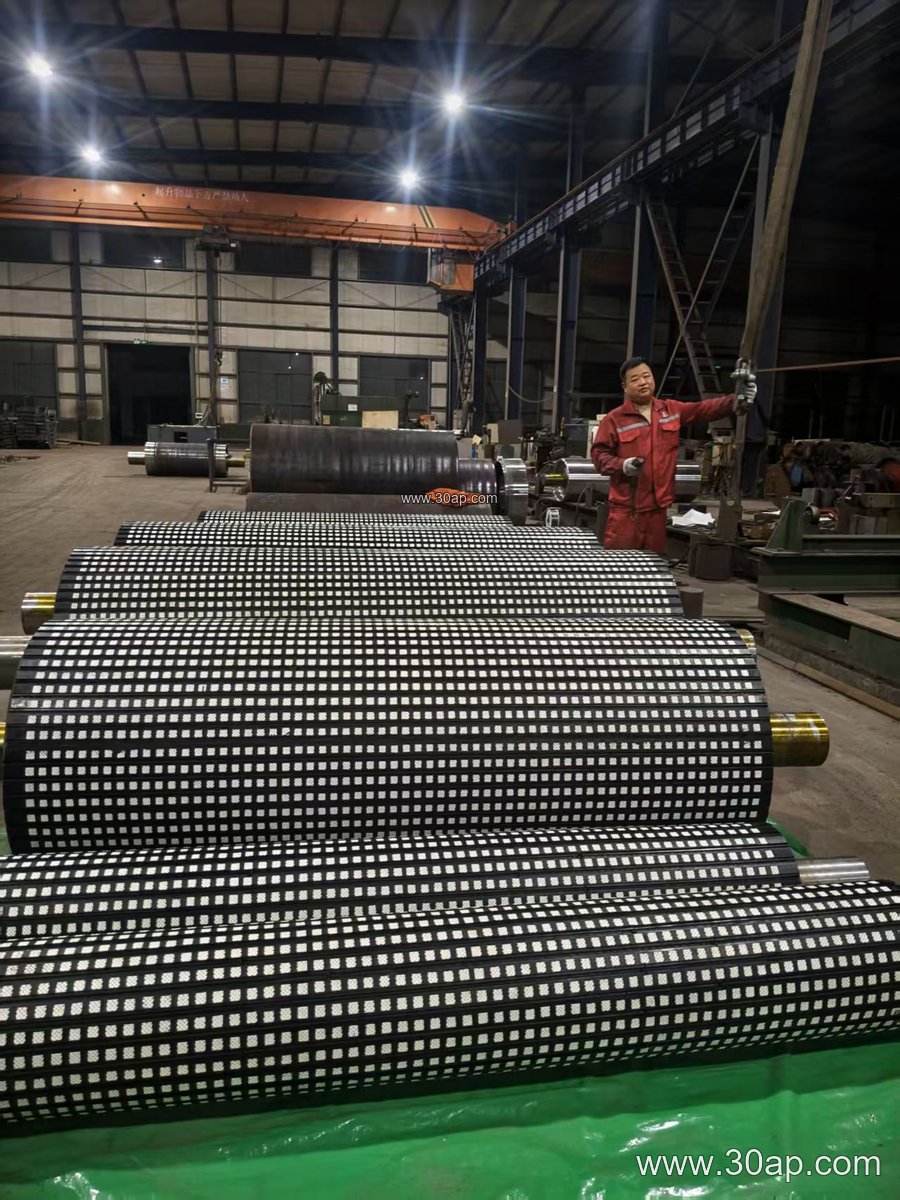
Surface forms include plain, hot-vulcanised rubber, cold-bonded rubber, diamond lagging, herringbone lagging and ceramic lagging, usually at 8, 10, 12, 15 or 20 mm thickness. Lagging choice follows the duty: aggressive grip for a drive position, a cleaner face for a bend position.
Where It Sits in the Conveyor
Position changes the job. A drive or head pulley transmits torque through the lagging and must resist slip; a tail pulley guides the return belt and often runs with a slightly smaller diameter; a bend pulley redirects the belt without driving it. These roles are not interchangeable, and the welded pulley is specified differently for each location. In a cement plant clinker line or a quarry primary crushing station, the head pulley usually carries the highest tension, while bend pulleys in the take-up area see repeated flexing.
Belt compatibility matters as much as the drum. A stiff steel cord conveyor belt needs a larger diameter to limit bending stress, while a flexible fabric construction tolerates tighter wraps. Heavier belting such as a high abrasion resistant conveyor belt in a stone crushing line also loads the shell and shaft more heavily, so the welded drum, hubs and bearings should be reviewed together.
Buyer Checklist Before Ordering
- Duty and position: confirm whether the unit is a drive, tail or bend pulley and state the belt tension range.
- Dimensions: give belt width, required face width, diameter and shaft size, plus bearing centres.
- Lagging: specify surface form and thickness, and whether grooving is needed for wet or dusty service.
- Weld and balance: ask for weld inspection records and balancing grade on larger diameters.
- Interface parts: check bearing housings, locking assemblies and the conveyor bracket dimensions so the pulley fits the frame without modification.
- Environment: for a coal handling or power plant conveyor, a flame retardant conveyor belt is often paired with a drum that meets the same fire-safety expectations, including static dissipation.
Finally, plan maintenance. Track lagging wear, check weld seams for cracks during shutdowns, and confirm that the idler roller alignment and belt tracking are correct before blaming the pulley. A well-specified welded drum, matched to the belt and the duty point, is a durable and serviceable choice for aggregate, cement and bulk material conveyors.