What a Conveyor Welded Pulley Is
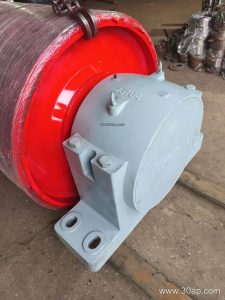
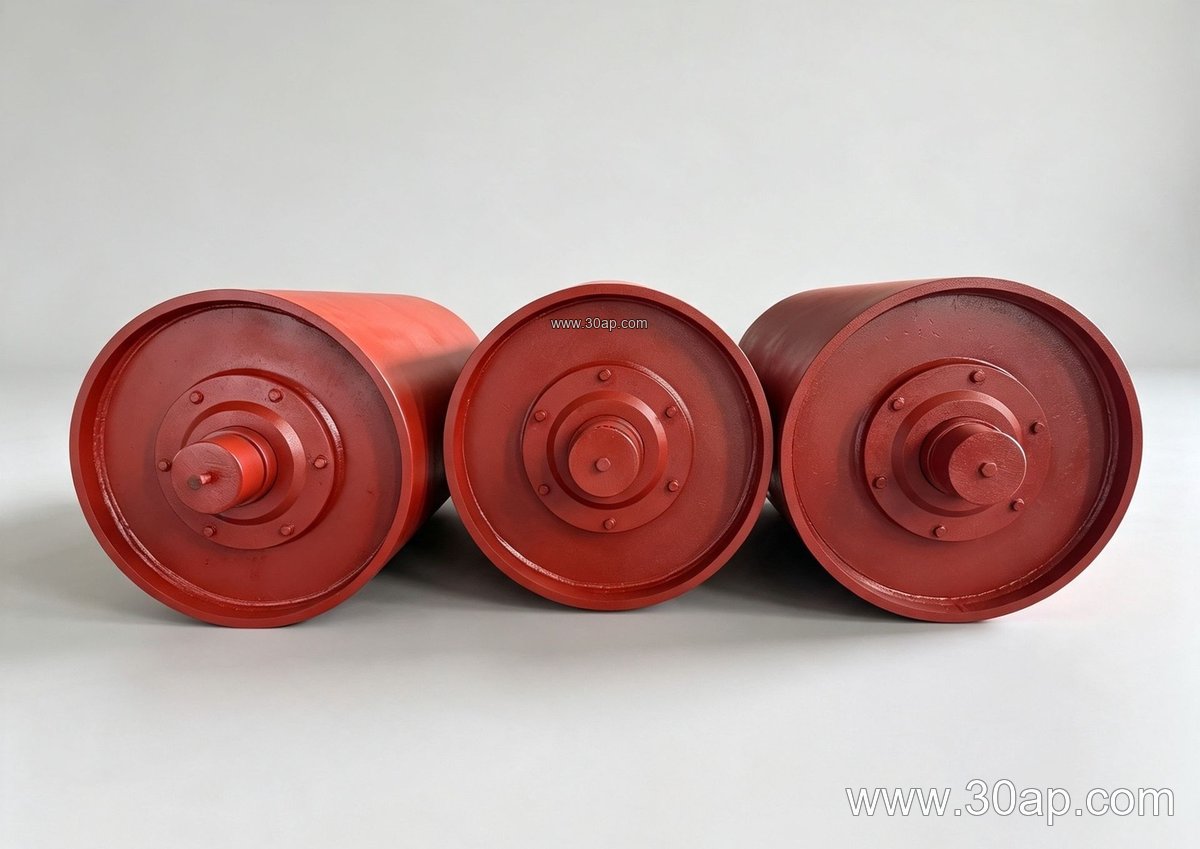
A conveyor welded pulley is a drum assembly built by welding end discs, a shell and a hub structure into one rigid unit, then machining the running surface and shaft seats. In many bulk handling circuits it serves as a drive, tail or bend component, and the welded construction is chosen where the drum must carry high radial loads without the risk of a loose shell. It is a distinct product from a cast pulley or a bolt-on lagged drum, and it should not be confused with a drive pulley, tail pulley or bend pulley simply because those roles exist in the same conveyor.
The welded drum body is normally fabricated from rolled steel plate, with the shell thickness selected according to belt tension and load. The shaft is inserted through the hub and welded or keyed, then the assembly is machined so that the face runout stays within a workable tolerance. This is the reason a welded pulley can be repaired and re-lagged in the field, which matters in a quarry conveyor belt line where downtime is costly.
How the Drum Is Built
- Shell: rolled steel plate, welded longitudinally and machined on the outside diameter.
- End discs: welded to the shell with stiffening ribs where required.
- Hub and shaft: welded hub with a machined bore, keyway and bearing seats.
- Surface: plain, cast rubber, cold-bonded rubber, hot-vulcanised rubber, diamond lagging, herringbone lagging or ceramic lagging.
- Finishing: primer and top coat, with balance checking before dispatch.
Common lagging thicknesses are 8, 10, 12, 15 and 20 mm. The surface form is matched to the duty: diamond lagging helps shed water and fines, while plain rubber is often used on a bend or tension position where grip is less critical. The welded shell allows the lagging to be replaced without scrapping the whole drum.
Where It Fits in a Conveyor
Welded drums appear at the head, tail, take-up and snub positions. At the head, the drum drives a steel cord conveyor belt or a fabric core belt and transmits the full torque of the drive. At the tail, it turns the belt and often carries impact from the feed. At a bend or snub point, it changes belt direction and increases wrap angle. In a coal preparation plant or a power plant coal yard, the welded drum is frequently specified because the shell can be reinforced for shock loads from lump coal.
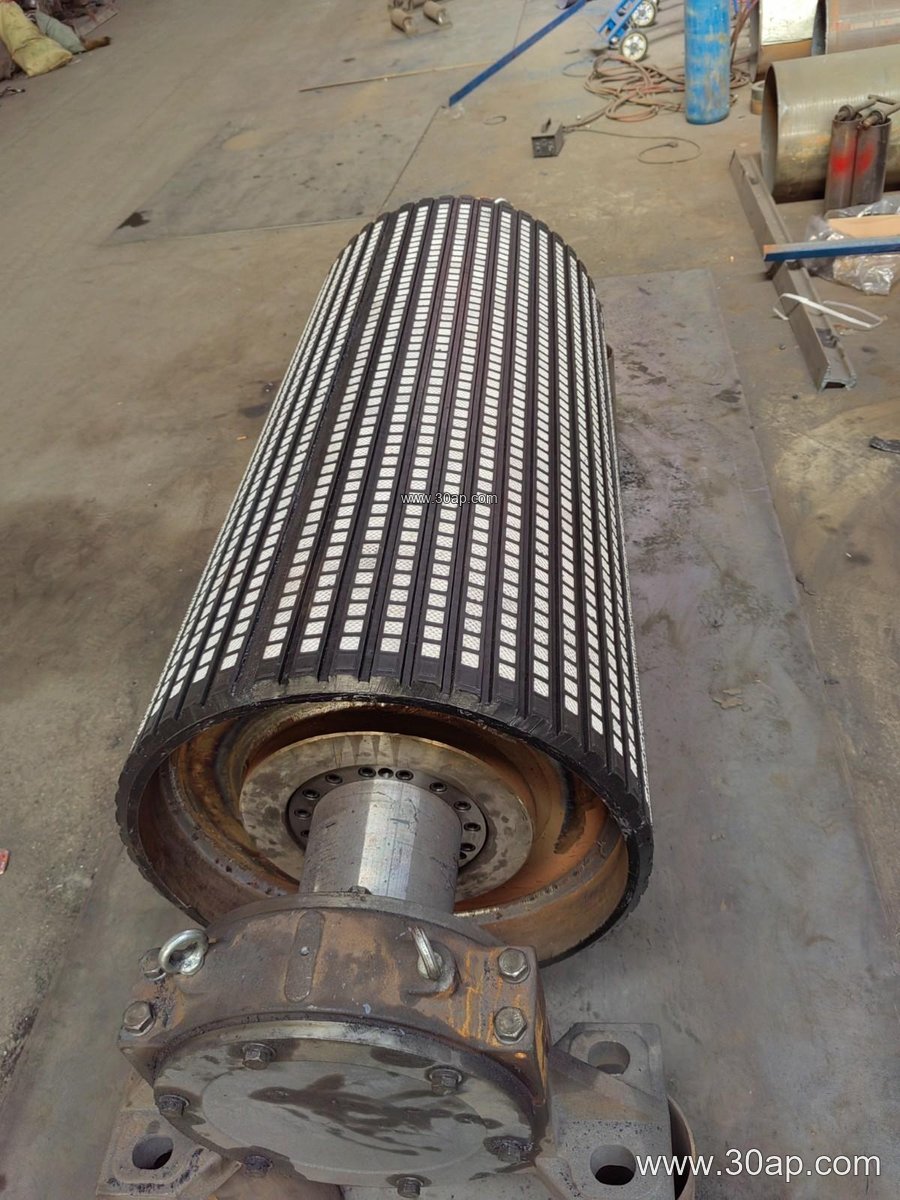
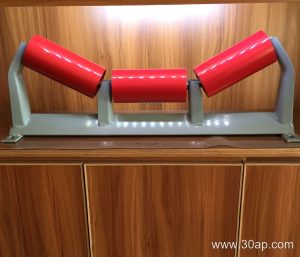
A welded pulley is also used in cement plants on clinker and limestone conveyors, in iron ore and copper ore handling, and in port bulk terminals where a heavy-duty conveyor belt runs at high tension. It is not a substitute for an idler roller: the roller supports the belt along the carry side, while the pulley turns the belt at the ends of the conveyor.
Common Dimensions and Combinations
The table below gives reference values only; final sizes follow the conveyor design and the belt tension calculation.
| Belt width | Typical pulley face width | Common drum diameter | Common shaft diameter |
|---|---|---|---|
| B500 | about 600 mm | Ø250, Ø315, Ø400 | Ø50, Ø60, Ø70 |
| B650 | about 750 mm | Ø315, Ø400, Ø500 | Ø60, Ø70, Ø80 |
| B800 | about 950 mm | Ø400, Ø500, Ø630 | Ø70, Ø80, Ø90 |
| B1000 | about 1150 mm | Ø500, Ø630, Ø800 | Ø80, Ø90, Ø100 |
| B1200 | about 1400 mm | Ø630, Ø800, Ø1000 | Ø90, Ø100, Ø120 |
| B1400 | about 1600 mm | Ø800, Ø1000, Ø1250 | Ø100, Ø120, Ø140 |
| B1600 | about 1800 mm | Ø1000, Ø1250, Ø1400 | Ø120, Ø140, Ø160 |
These are not fixed pairings. A B1200 conveyor may use a Ø800 drum on a short centre distance and a Ø1000 drum on a long, high-tension run. The shaft diameter is determined by torque and bearing load, not by belt width alone. A B800 × Ø500 drum and a B1400 × Ø800 drum are both common combinations, but each must be checked against the actual belt pull.
What a Buyer Should Check
Before ordering, confirm the belt width, the belt type and the working tension. A buyer running an EP conveyor belt at moderate tension has different requirements from one running a flame retardant conveyor belt underground, where the drum surface and the belt cover must both meet the fire safety requirement. Ask for the shell thickness, the shaft material, the bearing type and the lagging specification in writing.
Check the pulley face width against the belt width, the bearing centres against the conveyor bracket spacing, and the shaft diameter against the calculated torque. For a tail drum, confirm that the shell can take the impact from the feed chute. For a bend drum, confirm the wrap angle and the lagging pattern. Also confirm the balancing grade and the painting system if the unit will sit outdoors at a port or a quarry.
Maintenance Notes
Inspect the lagging for wear and glazing, check the shaft for fretting at the bearing seats, and verify that the shell runout stays within tolerance. Re-lagging a welded drum is usually simpler than replacing a cast drum, and the shaft can often be reused if the bearing seats are still within limits. Keep the drum aligned with the conveyor frame and the belt tracking correct, because a misaligned pulley will wear the lagging unevenly and shorten the life of the conveyor belt.