What a Trough Idler Bracket Does
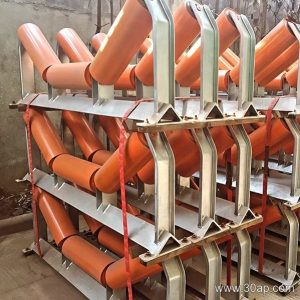
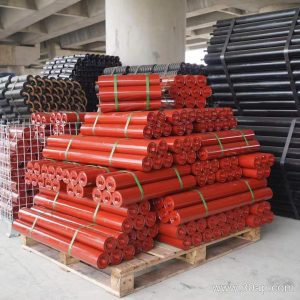
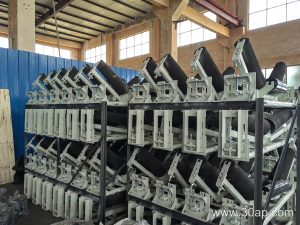
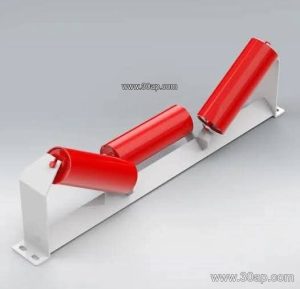
A trough idler bracket is the steel support that holds the three (or sometimes five) idler rollers in a troughed arrangement on the carrying side of a belt conveyor. It sets the trough angle, keeps the rollers at the correct spacing, and transfers the load of the belt and material into the conveyor frame. In a quarry, a coal handling plant, or a cement kiln feed line, this bracket is one of the quiet components that decides how well the belt tracks and how long the rollers last.
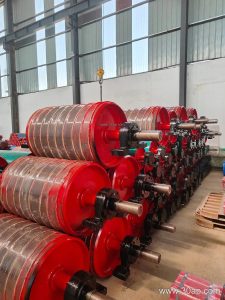
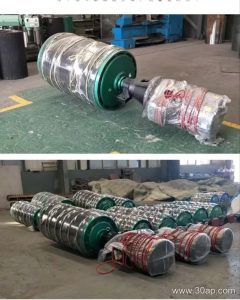
The same item is often called a troughing idler frame or troughing bracket. Those names describe the same product. A trough idler bracket is not a return bracket, not a transition bracket, and not a pulley of any kind. Drive pulleys, tail pulleys, and bend pulleys do different work at the ends of the conveyor and should never be treated as substitutes.
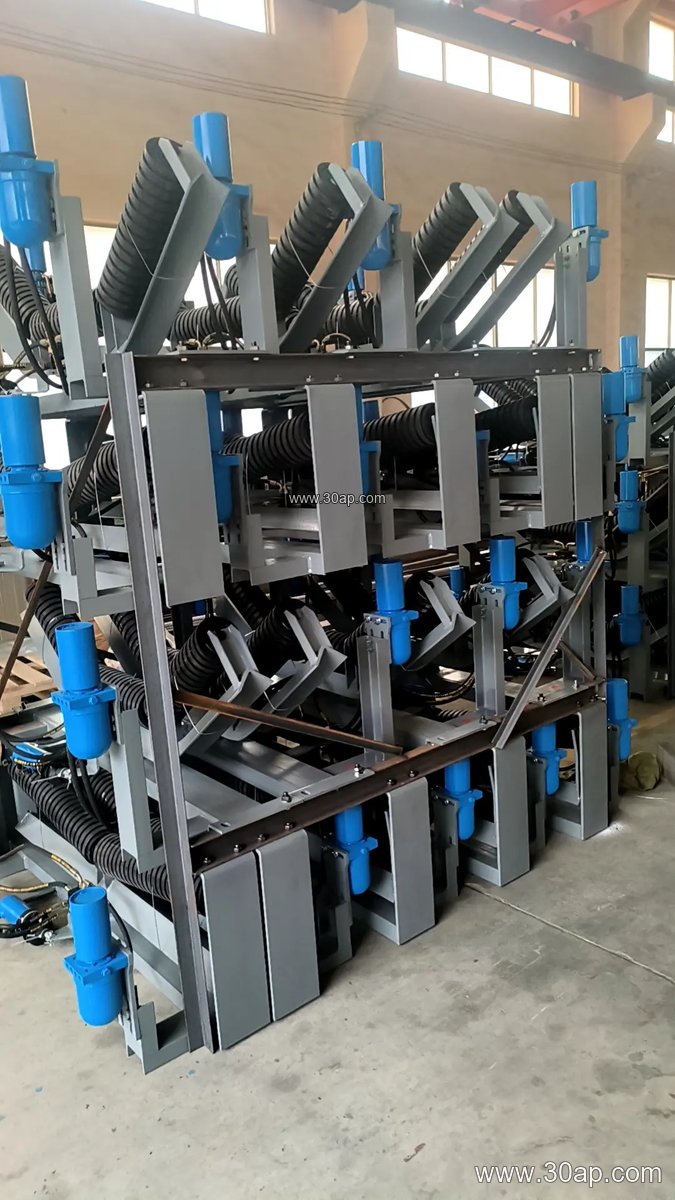
How the Bracket Is Built
Most brackets are fabricated from angle steel, channel steel, or folded steel plate. The two side arms are bent or welded to the chosen trough angle, and the crossbeam carries the mounting slots for the idler roller shafts. Holes are punched or drilled to match the frame width and the roller shaft size. A powder-coated or galvanized finish is common where dust and moisture are present.
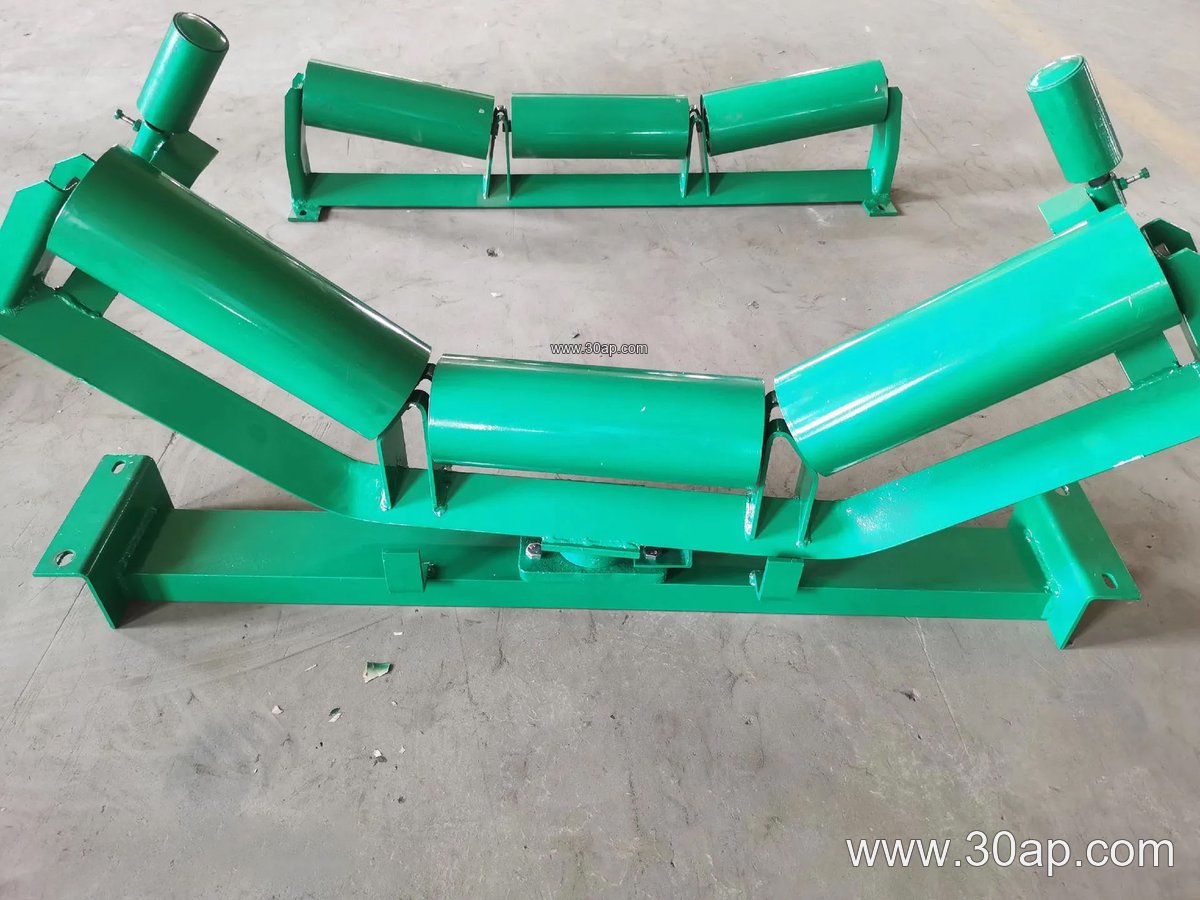
Good fabrication matters more than the steel grade alone. The arms should sit in one plane so the three rollers form a smooth trough, and the mounting slots should let the roller sit without binding. A twisted bracket will make the belt run off centre and will wear the roller seals early.
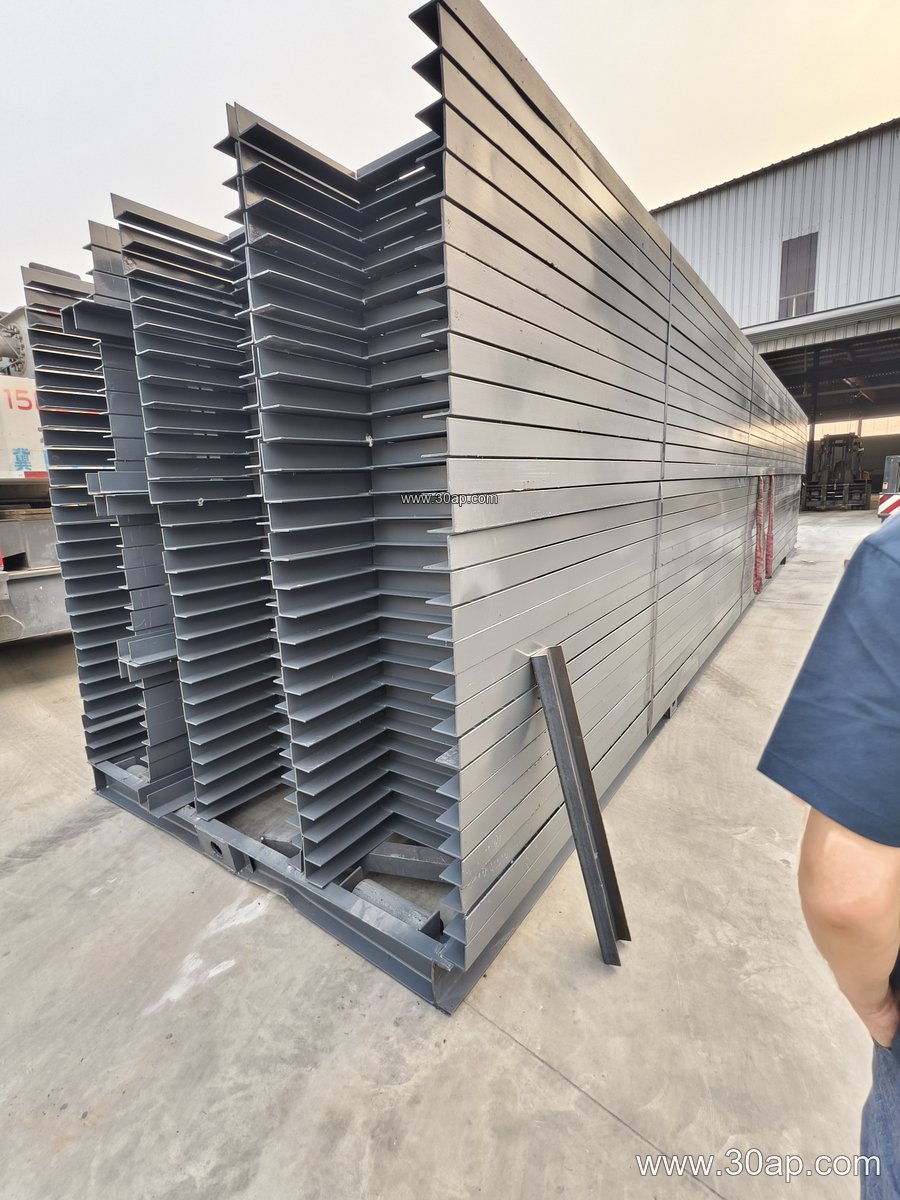
Common Sizes and Configurations
The table below gives typical reference values. Actual mounting hole spacing and crossbeam length depend on the belt width, trough angle, and roller diameter, so they are set by design rather than by a single fixed number.
| Parameter | Typical Range | Notes |
|---|---|---|
| Belt width | B500, B650, B800, B1000, B1200, B1400, B1600, B1800, B2000, B2200 | Match the frame and the conveyor belt width |
| Trough angle | 20°, 30°, 35°, 45° | Adjustable brackets can move between these angles |
| Roller diameter | Ø89, Ø108, Ø133, Ø159, Ø194 | Chosen with load and belt speed, not width alone |
| Forward tilt | About 1.5° to 2° | Used on training brackets for belt alignment |
| Material | Angle steel, channel steel, folded plate | Finish depends on the site environment |
Examples such as B800 with 35° and Ø108, or B1200 with 45° and Ø133, are common combinations, but they are not the only valid ones. A B650 frame may use 30° with Ø89 in a light duty line, while a heavy B1600 line may need a wider crossbeam and a larger roller. No single belt width locks the bracket to one angle or one roller size.
Where It Fits on the Conveyor
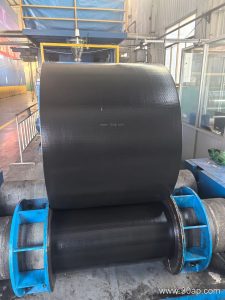
Trough idler brackets appear along the carrying run of nearly every bulk handling line. In a limestone quarry they support the belt under crushed rock; in a power plant coal yard they carry the fuel feed; in a sand and gravel plant they sit between the crusher and the screen. The bracket works together with the conveyor belt, the idler roller set, and the conveyor frame, and it must be aligned with the conveyor pulley at the discharge end so the belt leaves the trough cleanly.
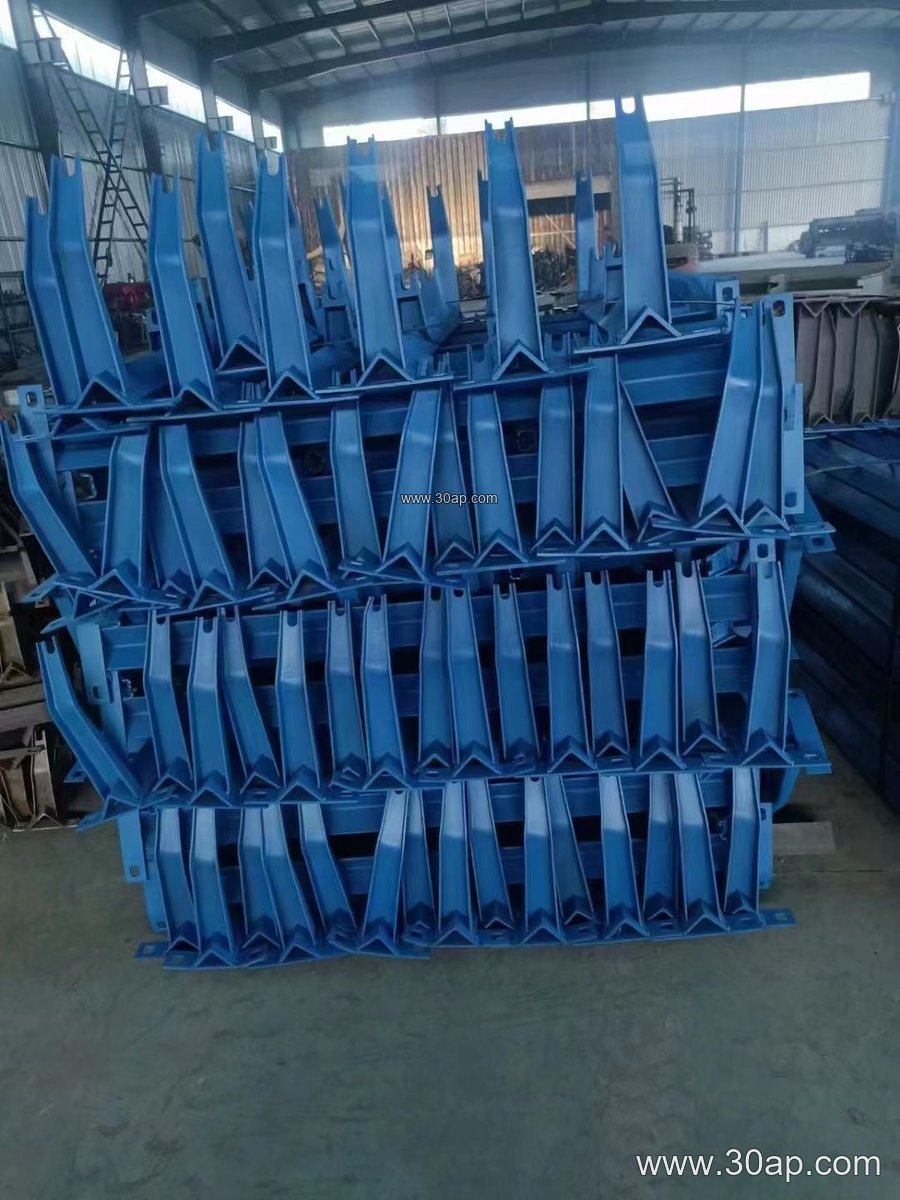
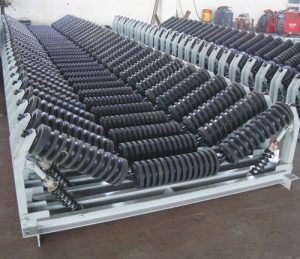
Impact zones deserve a different bracket. A buffer or impact bracket with rubber rings is used under the loading point, while a plain trough bracket is fine on the steady run. Training brackets with a slight forward tilt help keep the belt centred on long lines.
Buyer Checklist
- Confirm the belt width and the frame hole pattern before ordering; a bracket that does not match the frame will not sit flat.
- State the trough angle you need, or choose an adjustable bracket if the line may be re-tensioned or modified later.
- Match the roller shaft diameter to the bracket slot; a loose fit causes chatter and wear.
- Check the steel thickness and weld quality, especially on high-tonnage lines where the conveyor bracket carries constant load.
- Consider the environment: a wash-down area in a cement plant or a dusty coal yard may call for galvanized or coated brackets.
- Keep spare brackets on hand for the loading zone, where damage is most likely.
A well-chosen trough idler bracket is a small cost against the price of a stopped line. When it fits the frame, holds the right angle, and matches the roller, the belt runs straighter and the whole conveyor lasts longer.