What a Conveyor Bracket Assembly Does on the Line
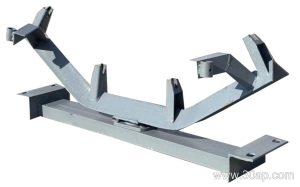
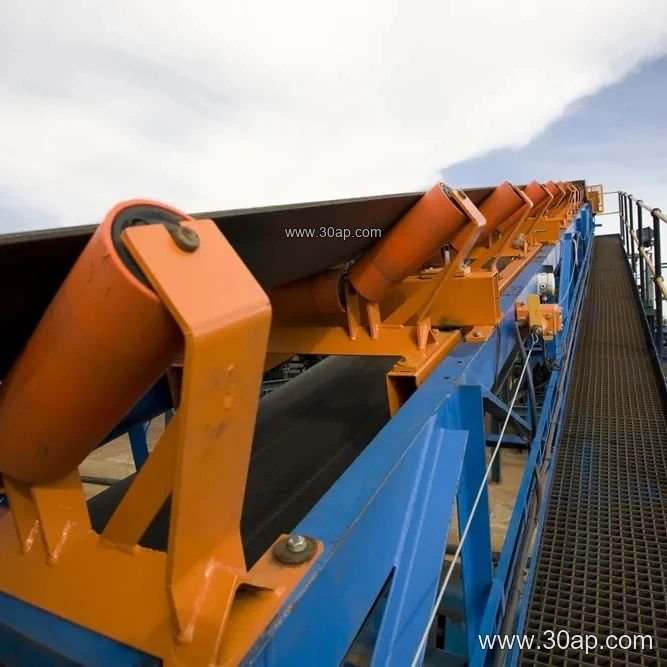
A conveyor bracket assembly is the structural interface between the conveyor frame and the carrying or return rollers. It holds the idler roller at the correct height and angle so the belt keeps its trough shape, tracks straight, and carries material without spilling. In a quarry, a coal washing plant, or a power plant coal handling line, these assemblies are bolted or welded to the stringers and are among the first parts inspected when belt misalignment or edge wear appears.
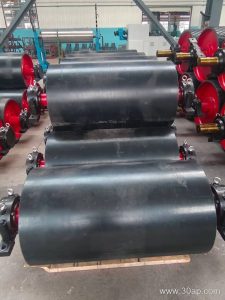
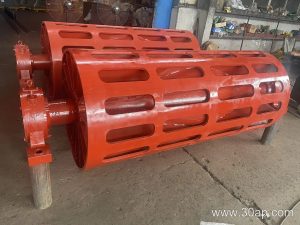
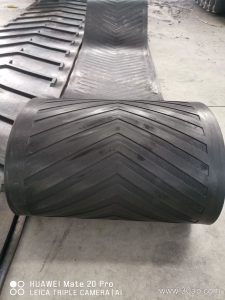
Because the bracket set works together with the conveyor belt, roller, and pulley, small errors in bracket position show up quickly as belt wander or uneven load. A well-matched assembly keeps the belt supported across its full width and lets the roller rotate freely.
How the Assembly Is Built
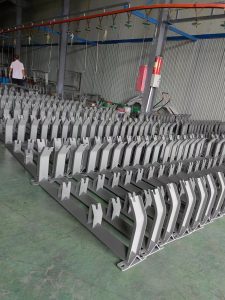
Most assemblies combine an angle or channel steel crossbeam with formed steel plates that carry the roller mounts. The common forms include:
- Troughing bracket assemblies for the carrying side, usually set at 20, 30, 35, or 45 degrees.
- Transition brackets near the head and tail to ease the belt from flat to troughed.
- Return brackets, including flat and V-return versions, for the empty strand.
- Impact and buffer brackets under loading points.
- Self-aligning and forward-leaning brackets for tracking control.
- Adjustable brackets that allow the trough angle to be changed on site.
Materials are typically angle steel, channel steel, or folded plate, with mounting holes positioned according to belt width and trough angle. Hole spacing and crossbeam length are not fixed values; they follow the design of the conveyor frame.
Matching Bracket, Belt Width and Roller Diameter
Buyers often ask which bracket suits a given belt. The table below shows typical reference combinations, not mandatory pairings. A B800 frame may run with 30 or 35 degrees, and roller diameter is chosen from load and speed rather than belt width alone.
| Belt width | Common trough angle | Typical roller diameter | Typical assembly use |
|---|---|---|---|
| B500 | 20° / 30° | Ø89 | Light aggregate, sand lines |
| B650 | 30° / 35° | Ø89 / Ø108 | Crusher discharge, screening |
| B800 | 30° / 35° | Ø108 / Ø133 | Coal washing, cement feed |
| B1000 | 35° / 45° | Ø108 / Ø133 | Power plant coal handling |
| B1200 | 35° / 45° | Ø133 / Ø159 | Iron ore, heavy bulk material |
| B1400 | 35° / 45° | Ø133 / Ø159 | Port loading, large tonnage |
| B1600 | 35° / 45° | Ø159 / Ø194 | Mining main haulage |
| B1800–B2200 | 35° / 45° | Ø159 / Ø194 | High-capacity trunk conveyors |
These figures are common references. Actual selection should confirm shaft diameter, mounting hole pattern, and frame height against the conveyor drawing.
Where These Assemblies Are Used
In a limestone quarry, troughing bracket assemblies carry the belt through the crushing and screening circuit, while impact brackets sit below the crusher outlet. In a power plant coal yard, return and self-aligning brackets keep the empty strand centered on long inclined runs. The same components appear in cement plants, steel sintering lines, and port shiploading systems.
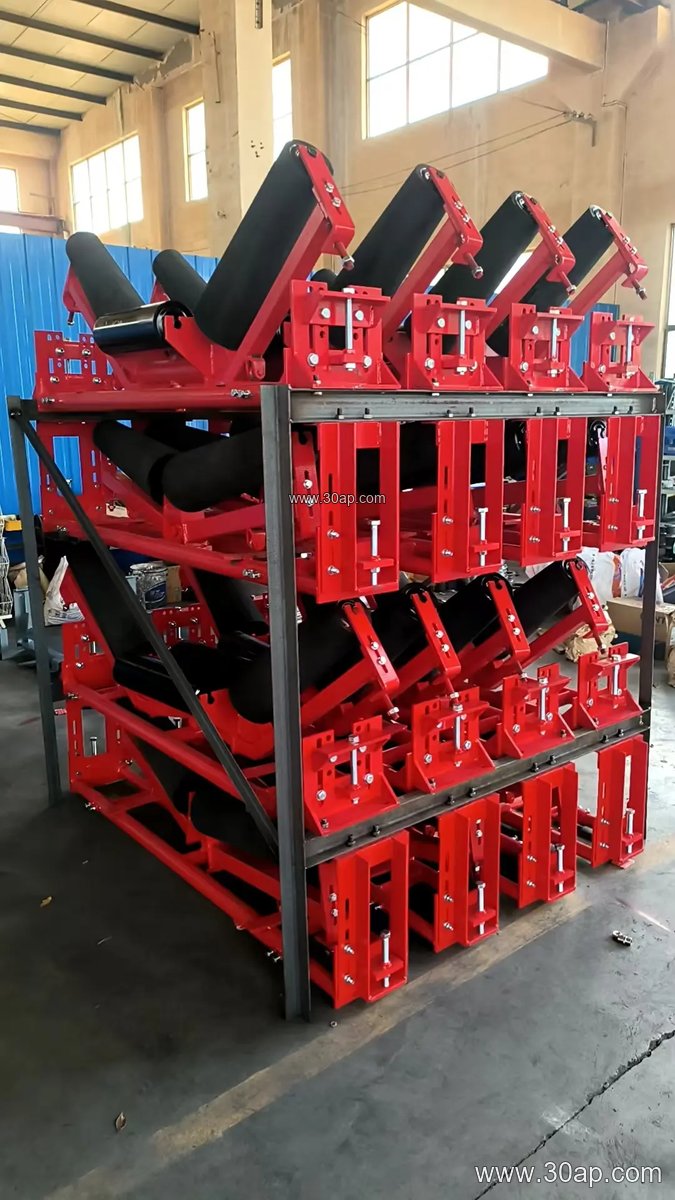
Heavy-duty service usually calls for thicker folded plate and reinforced crossbeams, especially where a steel cord conveyor belt or a high-tension fabric belt runs at speed. In dusty or wet conditions, galvanized or painted finishes help extend service life.
Selection and Maintenance Notes
Choose the bracket type by its position on the conveyor first, then confirm the trough angle and roller diameter. Adjustable brackets are useful where the belt needs fine tuning after installation, while fixed brackets give a more rigid, repeatable setup. Forward-leaning brackets, typically set around 1.5 to 2 degrees, assist tracking on long runs.
During maintenance, check for loose bolts, bent crossbeams, and worn mounting slots. A misaligned bracket assembly can cause the belt to rub the frame, so realignment should be done together with roller inspection. Keeping spare bracket sets for the loading zone reduces downtime in abrasive service.
Buyer Checklist
- Confirm belt width, trough angle, and roller diameter from the conveyor drawing.
- State whether the bracket is for carrying, return, transition, or impact duty.
- Provide mounting hole spacing and frame attachment details.
- Specify material and surface finish for the working environment.
- Match bracket strength to the belt class, whether an EP conveyor belt or a heavier steel cord type.
A correctly specified conveyor bracket assembly is a small part of the total conveyor cost but a major factor in belt life and uptime.