What a Parallel Idler Bracket Does on a Conveyor
A parallel idler bracket is the mounting frame that holds the carrying-side idler rollers in a flat or slightly troughed line along the conveyor structure. In many plants it is simply called a flat idler bracket or a parallel roller support, and it is the component that keeps each idler roller square to the belt path so the conveyor belt runs without wandering. Unlike a driven pulley or a tail pulley, which transmit motion, a parallel idler bracket only supports and guides. It is a structural part, not a rotating one, but its alignment has a direct effect on belt tracking, noise, and roller life.
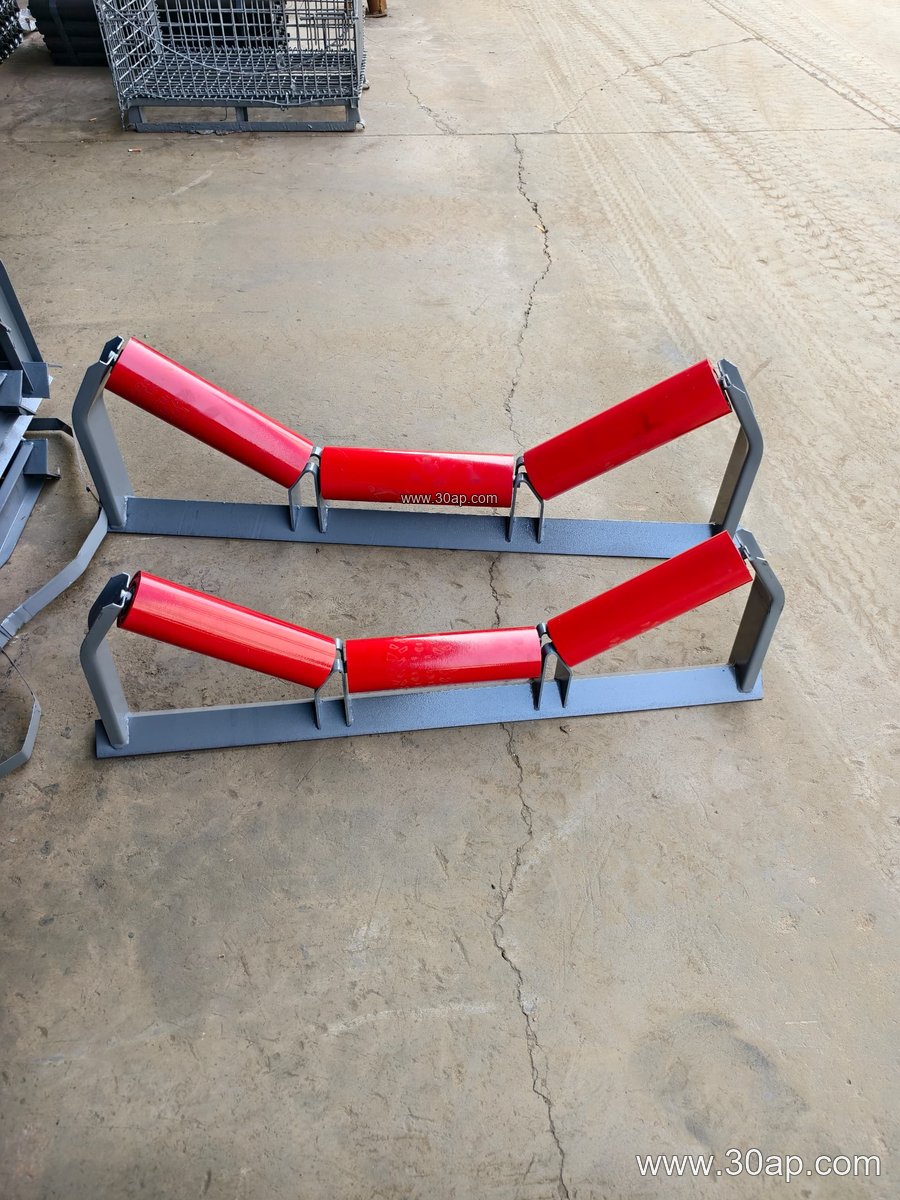
The bracket is usually built from angle steel, channel steel, or folded steel plate. Holes are punched or drilled for the idler shaft, and the frame is fixed to the conveyor stringer or cross beam. Because it is a parallel type, all rollers in the frame sit at the same height and the same angle, giving a continuous support line under the belt.
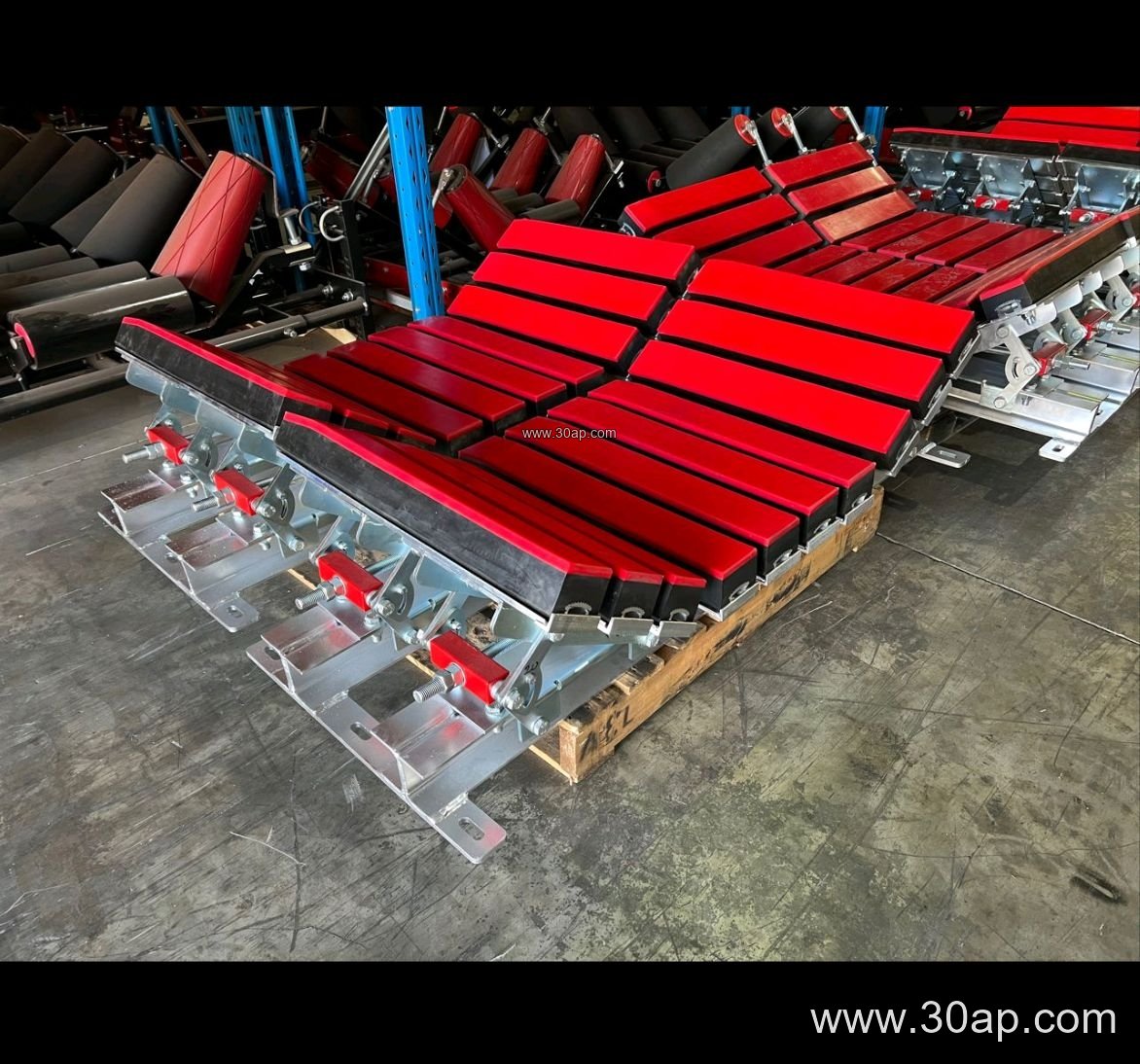
Construction and Mounting Position
A typical parallel idler bracket consists of a base beam, two side plates, and shaft slots or bolt holes. The side plates may be fixed or slotted, depending on whether the user needs to adjust the roller position during installation. Materials are chosen to suit the load: light duty frames often use folded plate, while heavy duty mining and quarry conveyors tend to use channel steel with reinforced welds.
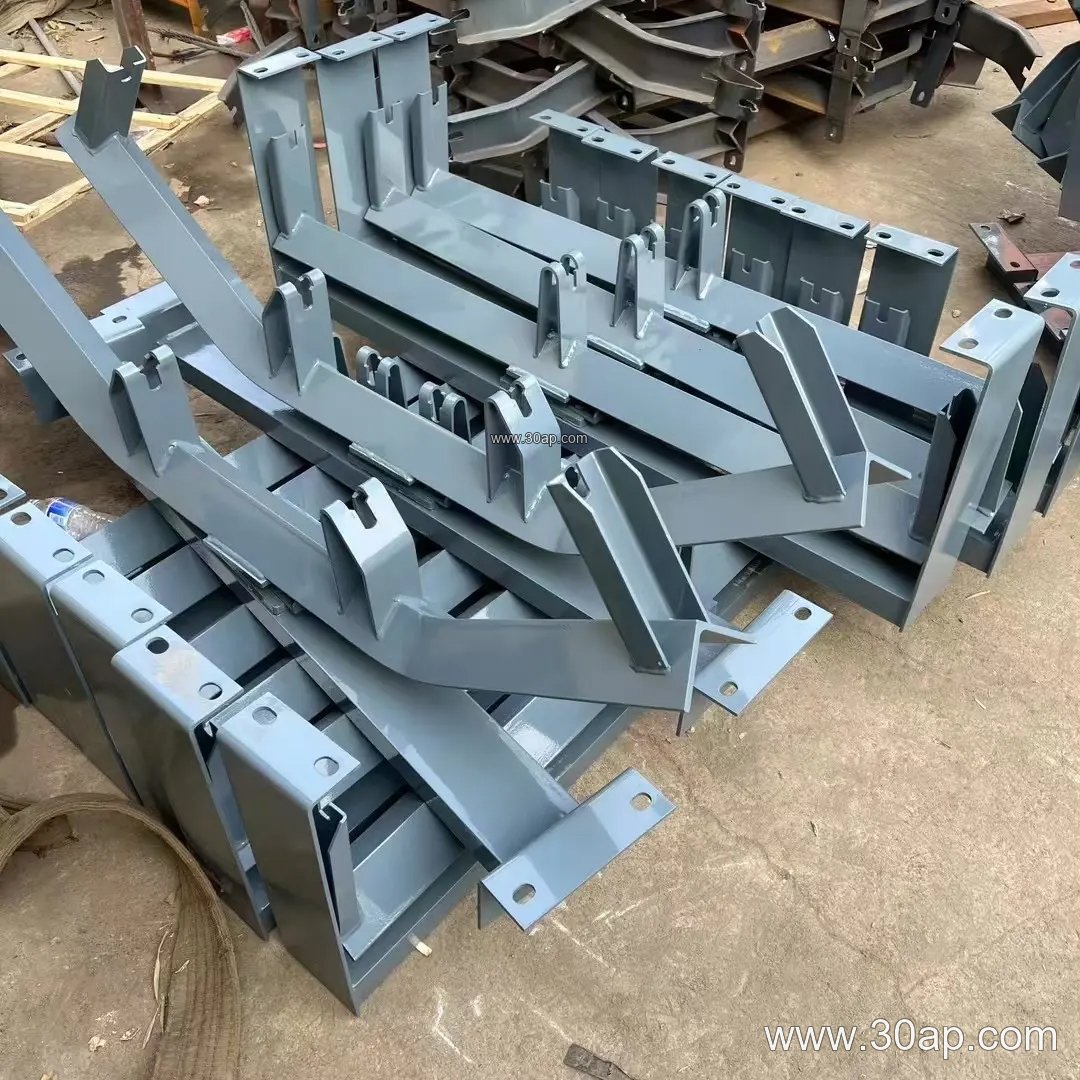
- Base beam bolted to the conveyor frame
- Side plates with shaft seats for Ø89 to Ø194 rollers
- Fixed or adjustable slot design
- Galvanized or painted surface for corrosion protection
Mounting height and hole spacing are determined by belt width and trough angle, so a bracket for a B800 line is not interchangeable with one for a B1400 line without checking the drawing. The parallel bracket is normally installed on the carrying side where a flat belt profile is required, and it can also appear on the return side in a lower flat arrangement.
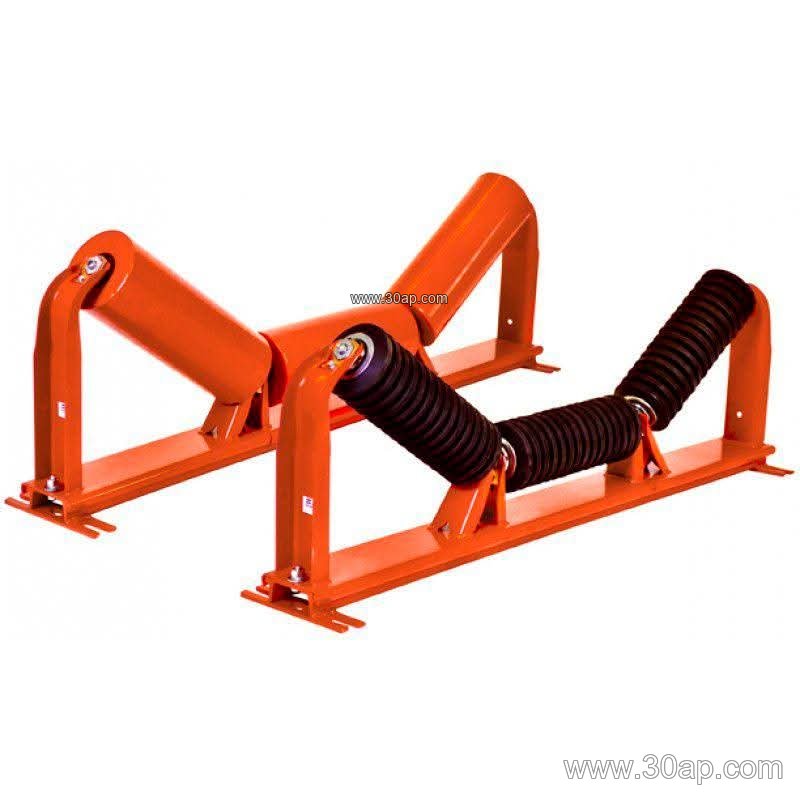
Where It Fits in Bulk Handling
Parallel idler brackets are common in cement plant clinker lines, power plant coal handling, and aggregate crushing circuits where a flat carrying profile suits the material. In a quarry or a sand and gravel line, a flat support helps when the belt carries wide, uneven rock loads. In a coal washing plant or a port loading system, the same bracket type keeps the belt stable before transfer points. They are less suitable where a deep trough is needed to contain loose material; in those sections a troughing bracket with 20 to 45 degree wings does the job, and the parallel bracket stays where the belt should remain flat.
Matching the bracket to the belt is important. A heavy abrasive duty line running an abrasion resistant conveyor belt or a high abrasion resistant conveyor belt benefits from a rigid frame that resists vibration. A long overland section using a steel cord conveyor belt or a high strength conveyor belt needs brackets that hold roller alignment over many kilometers of structure. In underground coal mining, a flame retardant conveyor belt or a PVG conveyor belt is paired with frames that are easy to inspect and re-align.
Matching Bracket, Roller, and Belt Width
Belt width and roller diameter should be selected together with the bracket drawing, not from a single rule. The table below shows common reference combinations, but actual values are confirmed by design.
| Belt Width | Common Roller Diameter | Typical Bracket Notes |
|---|---|---|
| B500 | Ø89 | Light folded plate frame |
| B650 | Ø89 / Ø108 | Fixed or adjustable side plates |
| B800 | Ø108 | Channel steel base common |
| B1000 | Ø108 / Ø133 | Heavier cross beam |
| B1200 | Ø133 | Reinforced welds for mining duty |
| B1400 | Ø133 / Ø159 | Check hole pitch against drawing |
| B1600 | Ø159 | Wide frame, extra bracing |
| B1800 | Ø159 / Ø194 | Heavy duty quarry and port use |
The bracket does not set the trough angle by itself in a parallel design, but if the frame is adjustable, the roller seats can be set between 20 and 45 degrees for transition sections. A small forward tilt of about 1.5 to 2 degrees is sometimes used in training brackets, but a parallel bracket should not be confused with a self-aligning or training bracket.
Buyer Checklist
- Confirm belt width, roller diameter, and shaft diameter from the conveyor drawing.
- State whether the frame is fixed or adjustable.
- Check material thickness and weld quality for the duty level.
- Confirm mounting hole spacing and beam length, since these vary with belt width.
- Ask for surface treatment suitable for the site, such as painting or galvanizing.
- Keep spare brackets on hand for worn or bent frames, especially in crusher and transfer areas.
A well-chosen parallel idler bracket is a small part of the conveyor, but it protects the idler roller, the conveyor pulley, and the belt itself. For more conveyor components and belt options, see conveyor belt, idler roller, and conveyor bracket references on our site.