What a Mining Conveyor Bracket Does on a Belt Line
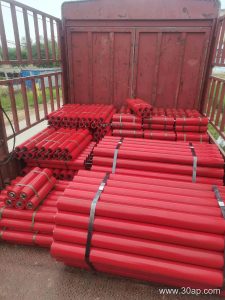
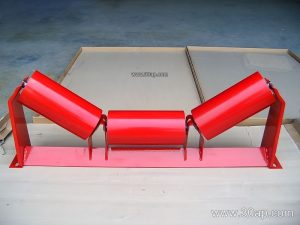
A mining conveyor bracket is the structural support that holds the idler roller in position under the belt. It carries the weight of the loaded belt, keeps the trough shape steady, and transfers the load into the conveyor frame. In a quarry, an iron ore plant, or a cement works, the bracket is a small part of the total cost but a major factor in uptime. If it flexes or corrodes, the idler tilts, the belt starts to misalign, and spillage follows.
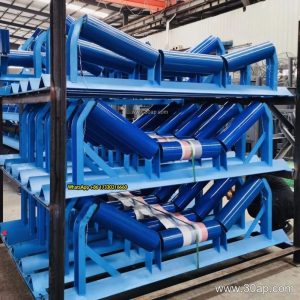
The same component is often called a conveyor idler bracket or idler support frame. These names describe the same product: a formed steel frame that positions rollers at a set trough angle.
How the Bracket Is Built
Most units are fabricated from angle steel, channel steel, or folded steel plate. The material choice depends on the load and the environment. A heavy-duty mining conveyor bracket for a primary crusher discharge may use thicker channel, while a lighter aggregate conveyor bracket on a screening line can use folded plate. Welds at the roller mounting points need to be clean and consistent, because a poor weld becomes the first crack point under vibration.
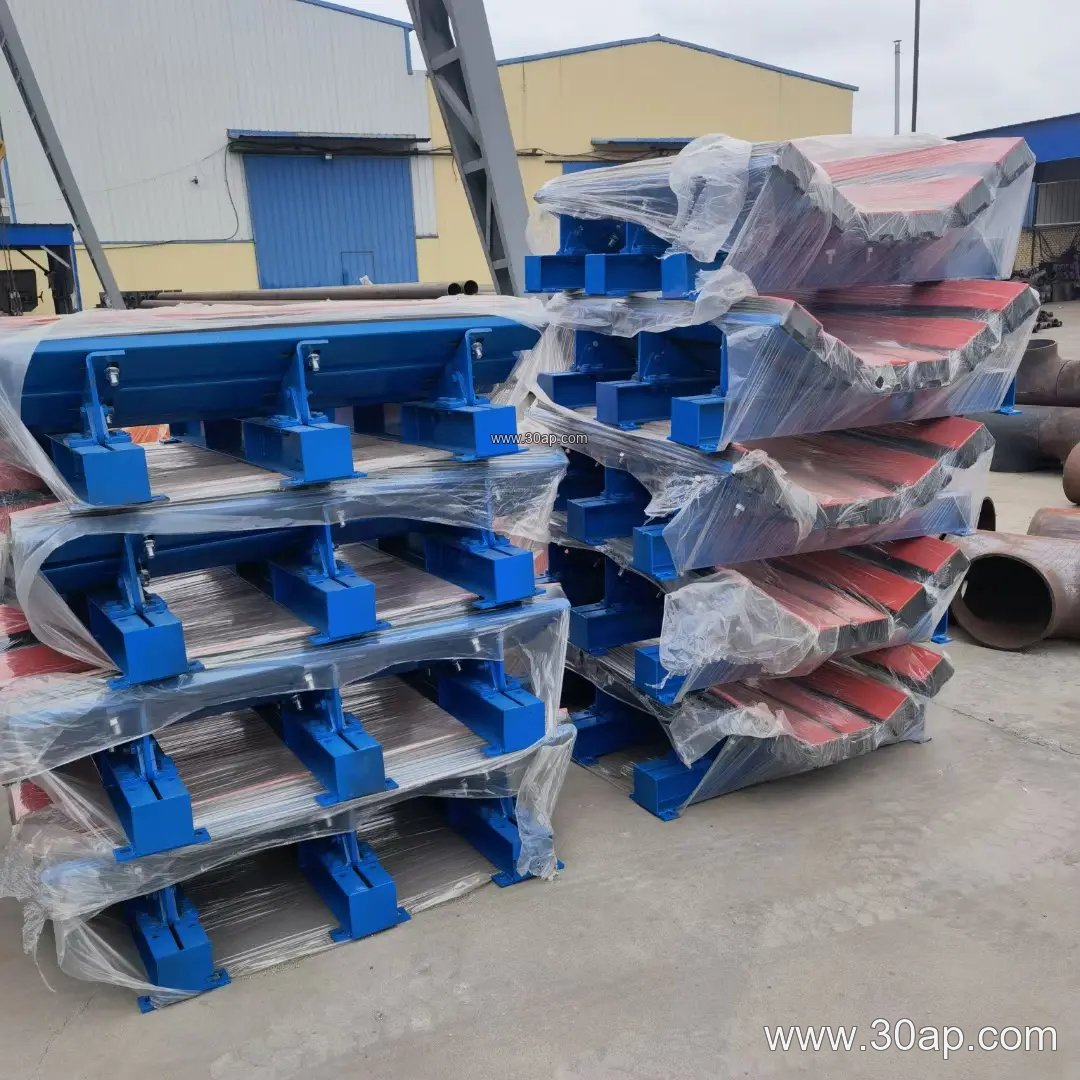
Typical bracket data that buyers discuss includes:
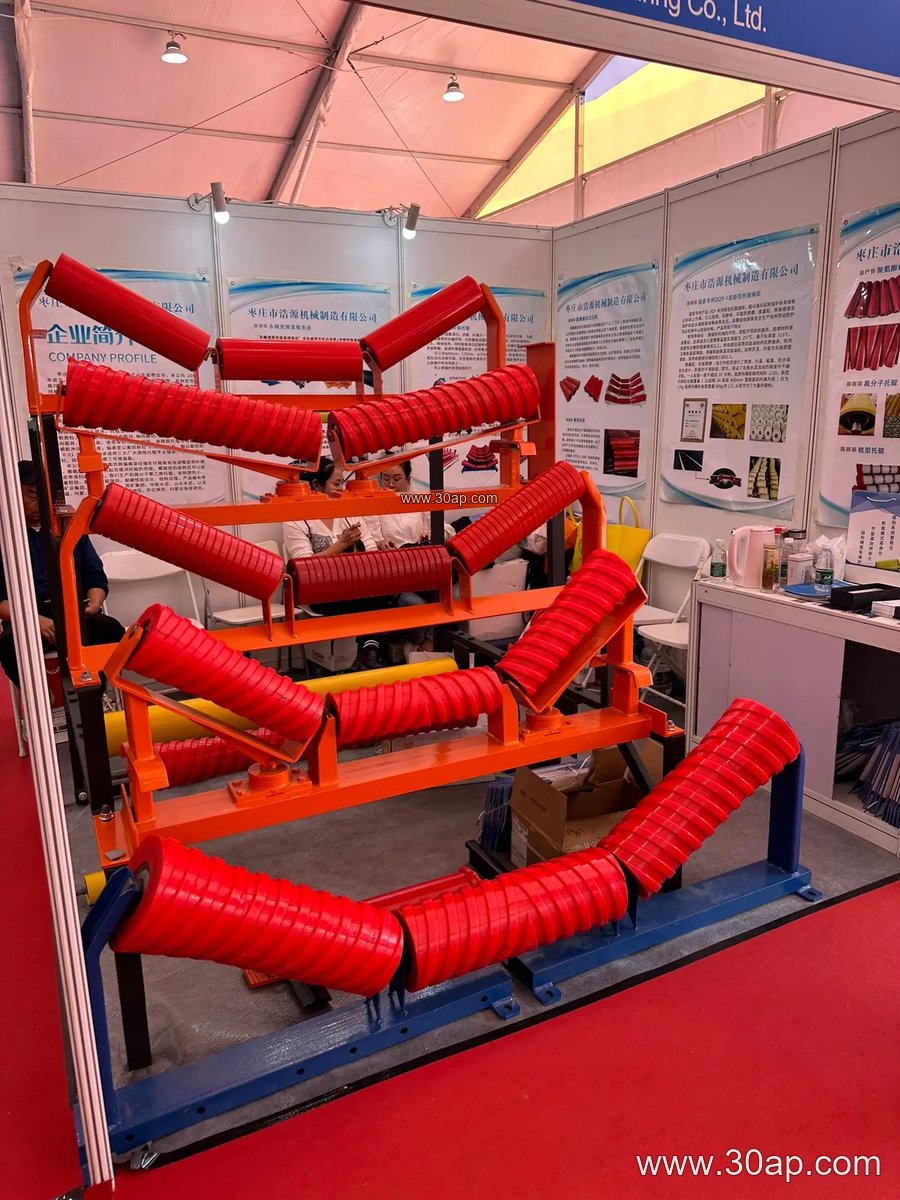
- Belt width range, commonly B500 up to B2200
- Trough angle options, usually 20, 30, 35, or 45 degrees
- Roller diameter, commonly Ø89, Ø108, Ø133, Ø159, or Ø194
- Mounting hole spacing and crossbeam length, which vary with belt width and trough angle
There is no fixed rule that one belt width matches one roller diameter. A B800 frame might be built for Ø89 or Ø108 depending on belt speed and load, and a B1200 unit may use Ø133 or Ø159. The bracket design, not the belt alone, sets the geometry.
Main Types and Where They Sit
Trough and Carrying Brackets
The trough bracket holds three rollers in a V or U shape. It appears along the carrying side of a Mining Conveyor Belt in coal handling, ore transport, and limestone crushing circuits. Transition brackets sit near the head and tail to ease the belt from flat to troughed. Self-aligning and forward-tilt brackets are used where belt tracking is difficult.
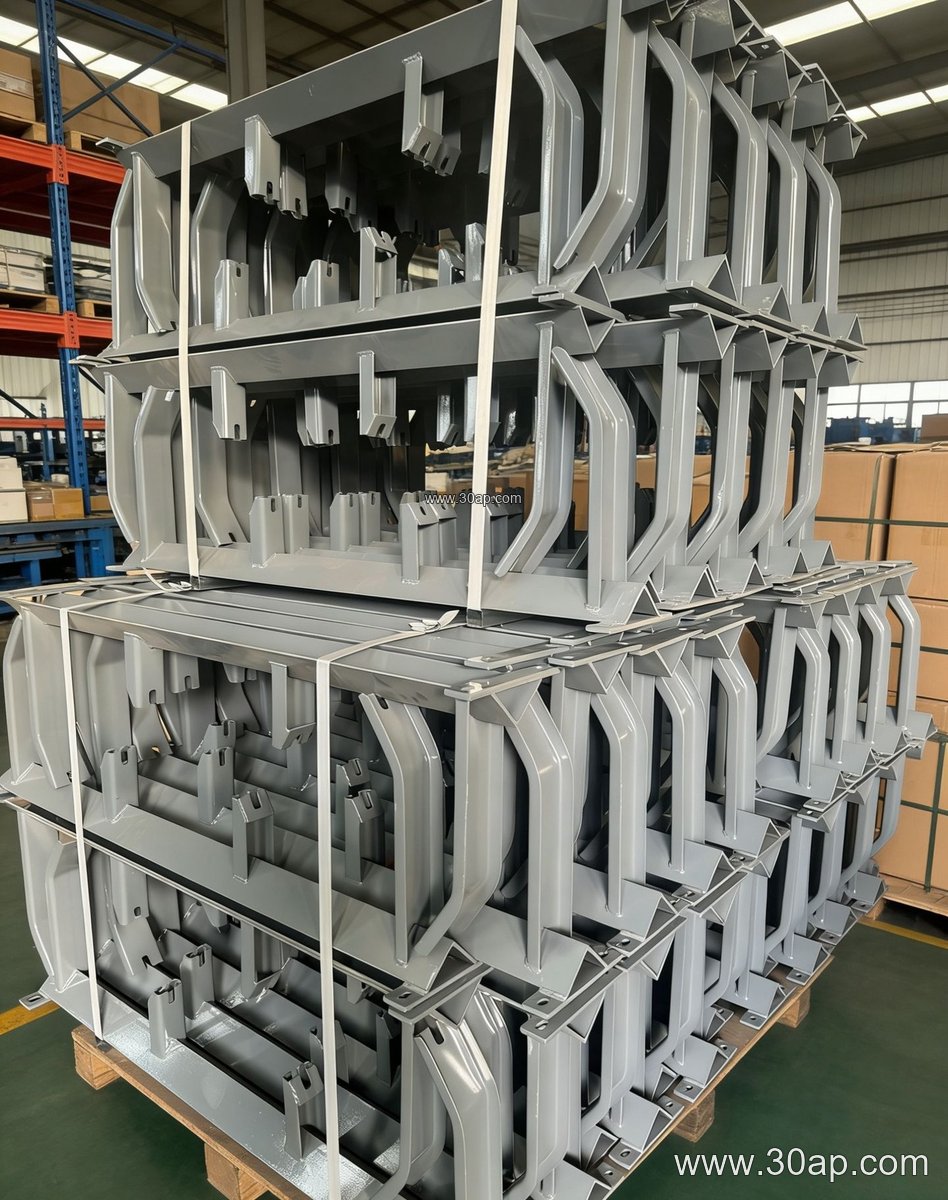
Return Brackets
On the return side, a flat bracket or a V-return bracket supports the empty belt. These are not the same as carrying brackets and should not be treated as interchangeable. A V-return bracket helps center the belt and shed material.
Impact and Buffer Brackets
Below a loading point, a buffer bracket with rubber or spring elements absorbs the drop energy. This is common in a stone crushing line where rock falls from a chute onto the belt. The bracket works with an impact idler roller to protect the conveyor belt.
Matching Brackets to the Belt and Frame
Selection starts with belt width, load, and roller diameter. A B650, 30 degree, Ø89 arrangement is common on smaller aggregate lines. A B1200, 45 degree, Ø133 layout suits a main haulage conveyor. A B1600 or B1800 frame with Ø159 rollers may appear in a power plant coal yard or a large open-pit operation using a heavy-duty mining conveyor belt.
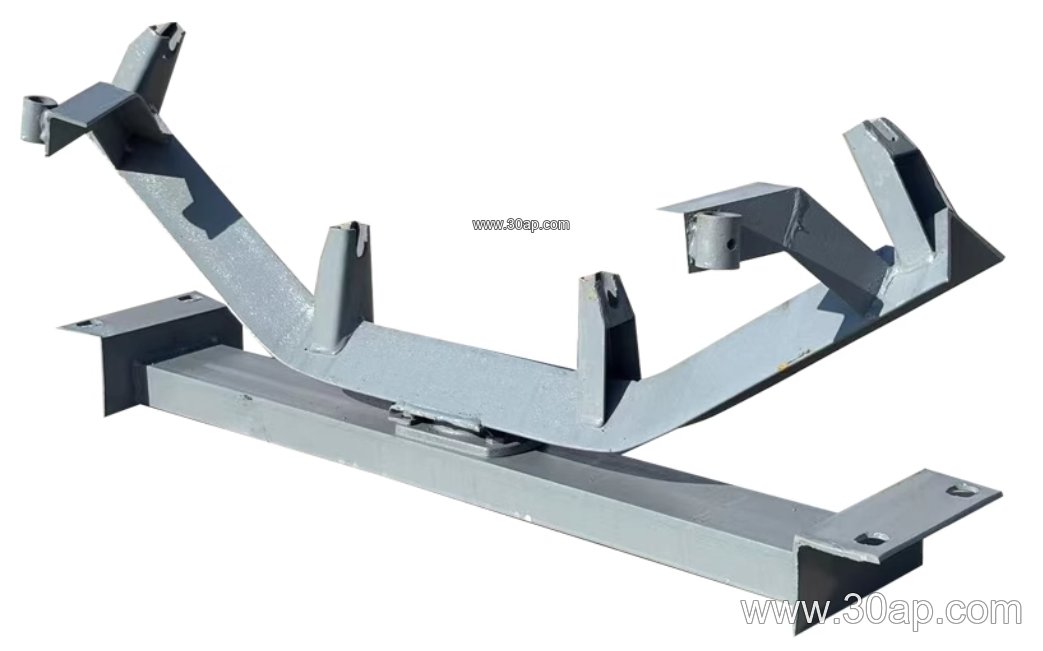
Adjustable brackets allow the trough angle to be changed between the common angles. Fixed brackets lock one angle. For a long overland run with a steel cord conveyor belt, fixed frames reduce movement; for a transfer point that may be modified later, adjustable units give flexibility.
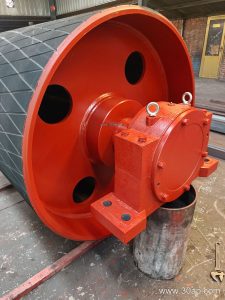
Also check the pulley and roller fit. A conveyor pulley at the drive or tail has its own bearing housing, and the bracket is not a substitute for it. Drive, tail, and bend pulleys are separate assemblies. The bracket only positions the carrying and return idlers.
Buyer Checklist
- Confirm belt width, trough angle, and roller diameter before ordering.
- Ask for material thickness and surface treatment, especially for wet or corrosive service.
- Check mounting hole spacing against the existing frame, since it changes with width and angle.
- For coal mines, specify flame retardant conveyor belt compatibility and anti-static properties where required.
- For hot material such as sinter or clinker, consider heat resistant conveyor belt and heat-tolerant bracket design.
- For dusty or wet conditions, choose a coating or galvanized finish and inspect drain paths.
A well-matched mining conveyor bracket keeps the idler roller square, the belt centered, and the whole conveyor frame stable from the primary crusher to the stockpile.