What a Conveyor Bend Pulley Does
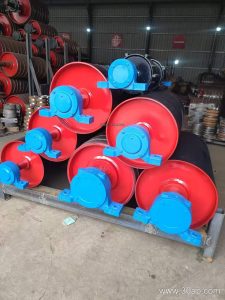
A conveyor bend pulley is the drum that redirects the conveyor belt without driving it or setting the belt path at the head or tail. Mounted on a fixed shaft and held by a conveyor bracket, it changes belt direction, wraps more belt around a drive or tail drum, or helps take up slack in the tensioning zone. In a long overland line, a set of bend pulleys may guide the return belt through several changes of direction before it reaches the tail pulley.
Because it does not transmit drive torque, the bend pulley is often lighter in construction than a drive pulley of the same diameter. It still has to carry the belt tension load and resist wear from the belt cover, so the shaft, bearings and shell are sized to the actual duty rather than to a single rule of thumb.
How the Drum Is Built
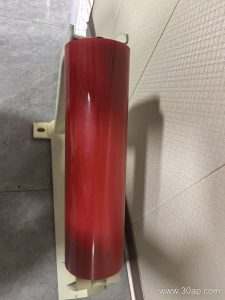
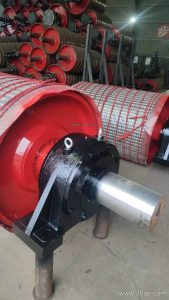
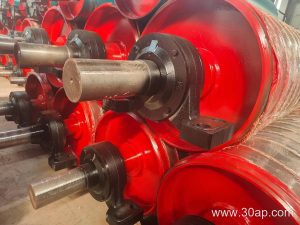
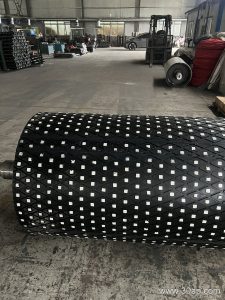
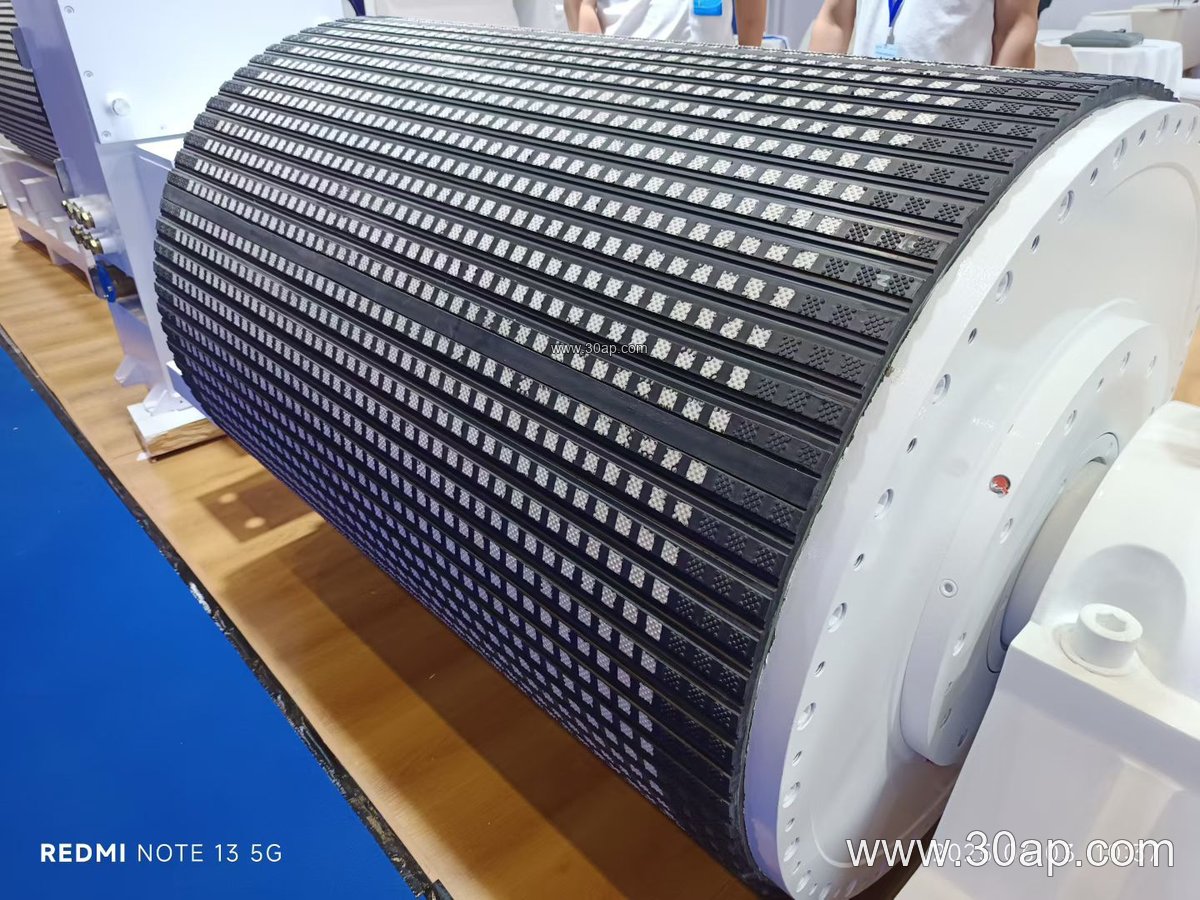
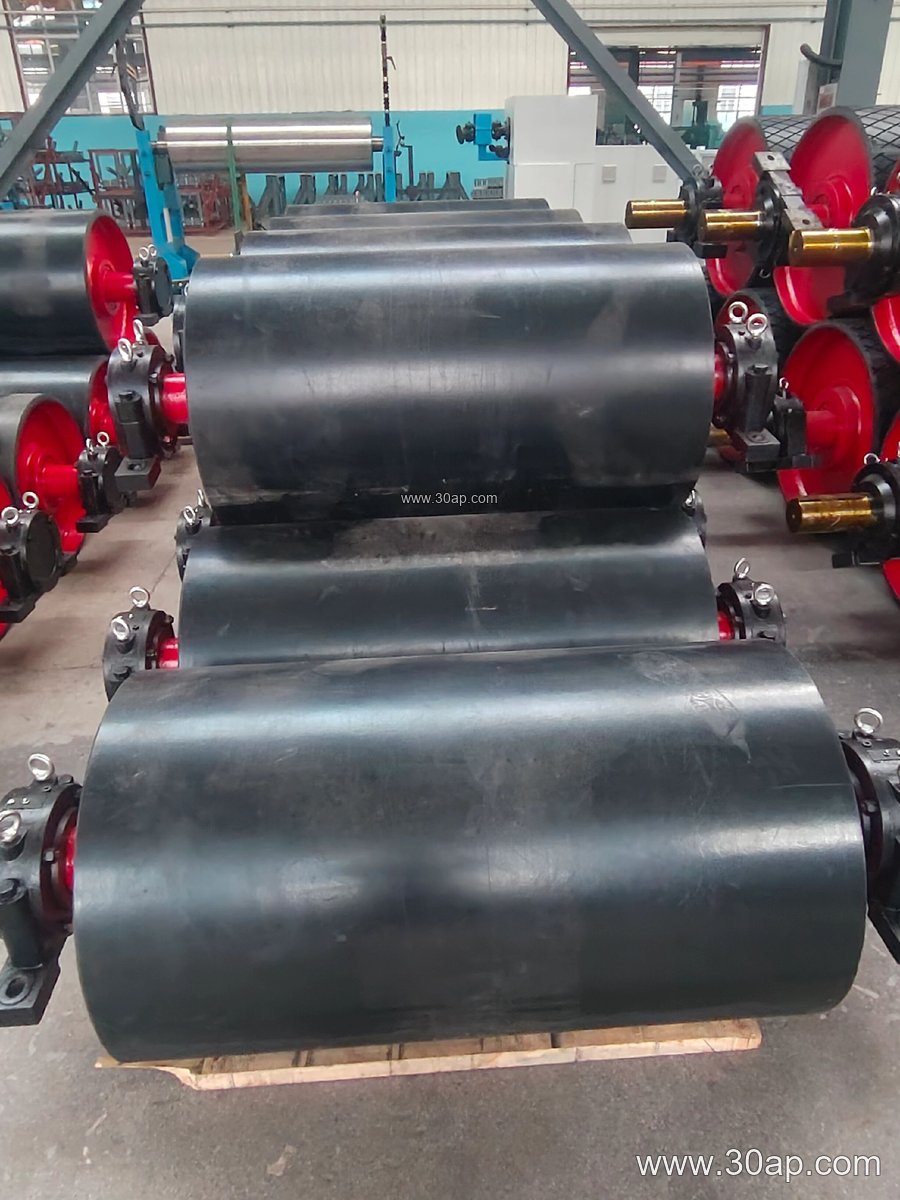
A typical bend pulley uses a welded steel shell, a shaft that runs through the full face width, and bearing housings at both ends. The shell may be machined smooth or covered with rubber lagging to improve grip and protect the belt. Lagging is usually applied as plain rubber, diamond pattern or herringbone pattern, with common thicknesses of 8, 10, 12, 15 and 20 mm. For abrasive service such as a quarry conveyor belt line, ceramic lagging may be selected.
The pulley face is normally wider than the belt. Reference values include B400 with about 500 mm face, B650 with about 750 mm, B800 with about 950 mm, B1000 with about 1150 mm, B1200 with about 1400 mm and B1400 with about 1600 mm. These are reference relationships, not fixed matches, and the final face width is set by the conveyor design. Common diameters range from about Ø200 to Ø1800, and shaft diameters from about Ø50 to Ø200 depending on torque and bearing load.
Where Bend Pulleys Are Used
In a coal preparation plant, a bend pulley may route the return strand under a transfer tower where space is tight. In a cement plant feeding clinker to the mill, it may increase the contact angle at the drive pulley so the belt does not slip under starting load. In a port bulk terminal, several bend pulleys guide a wide steel cord conveyor belt through a long, curved route.
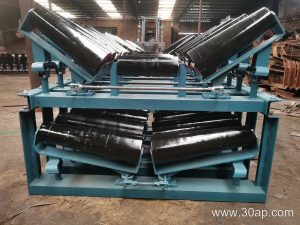
The same drum type appears in crushing and screening circuits, power plant coal handling, fertilizer plants and tunnel spoil lines. It is often used together with idler rollers that support the belt between pulleys, and with a conveyor bracket that fixes the drum to the frame. A bend pulley should not be confused with a drive pulley, which transmits power, or a tail pulley, which sets the return end of the belt path. Each has a different role, and they are not interchangeable.
Selection Points for Buyers
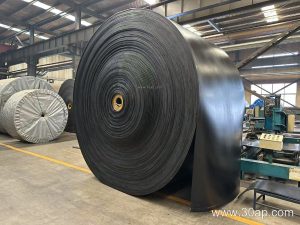
Start with the belt width, belt tension and the angle through which the belt must turn. The pulley diameter should be large enough for the belt carcass and the number of plies; a stiff multi-ply fabric core conveyor belt or a steel cord belt generally needs a larger minimum diameter than a thin endless belt. The following table gives reference examples only.
- B800 with Ø500, face about 950 mm, plain or diamond lagging
- B1000 with Ø630, face about 1150 mm, rubber lagging 10 to 12 mm
- B1200 with Ø800, face about 1400 mm, herringbone lagging for wet service
- B1400 with Ø1000, face about 1600 mm, ceramic lagging for abrasive ore
Check the shaft diameter against the bearing load and the torque from belt tension, not against belt width alone. Confirm the lagging type for the environment: oil resistant rubber for oily material, heat resistant grades near hot clinker, and flame retardant grades in underground coal mining. A conveyor bend pulley in a dusty quarry may need sealed bearings and a robust bracket, while one in a food or fertilizer plant may need a smooth, cleanable surface.
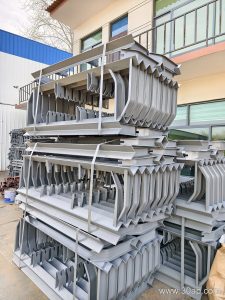
Ask for the balancing grade, bearing type and lagging thickness in writing. For a replacement unit, measure the existing shaft, bearing centers and face width before ordering, and confirm the mounting position on the conveyor bracket. For related belt and roller options, see rubber conveyor belt and idler roller references, and for heavy-duty lines compare with a steel cord conveyor belt or a flame retardant conveyor belt where the application requires it.
Installation and Maintenance Notes
Align the bend pulley square to the belt centerline so the belt does not run off. Check that the drum turns freely by hand before tensioning, and retighten the bearing bolts after the first run-in period. Inspect lagging for wear, cuts and embedded material, especially in a crusher conveyor belt circuit where sharp rock can damage the rubber. Keep the pulley clean and confirm that the belt tracking stays stable after any change in tension.
A bend pulley that is correctly sized and maintained protects the belt, reduces slip at the drive and keeps the whole conveyor route running smoothly. Review the drum together with the belt specification and the surrounding structure before purchase, and treat all sizes above as reference data to be confirmed by the actual conveyor design.