What the Tail Pulley Does on a Conveyor
The belt conveyor tail pulley sits at the return end of the conveyor, where the belt loops back after discharging its load. Its main jobs are to support the belt, maintain alignment, and—on many conveyors—serve as the tensioning point through a take-up mechanism. Unlike the drive pulley that transmits power, or a bend pulley that only changes belt direction, the tail pulley is the last point of contact before the belt begins its return run. In quarry and aggregate lines, this component often works alongside a heavy-duty conveyor belt and a series of idler rollers to keep material moving without spillage or mistracking.
Construction and Surface Options
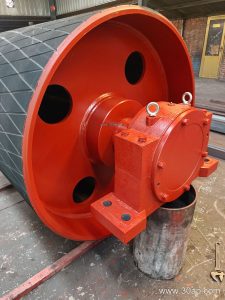
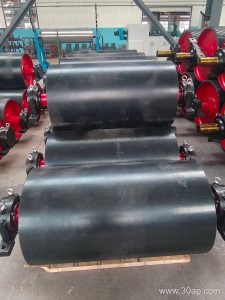
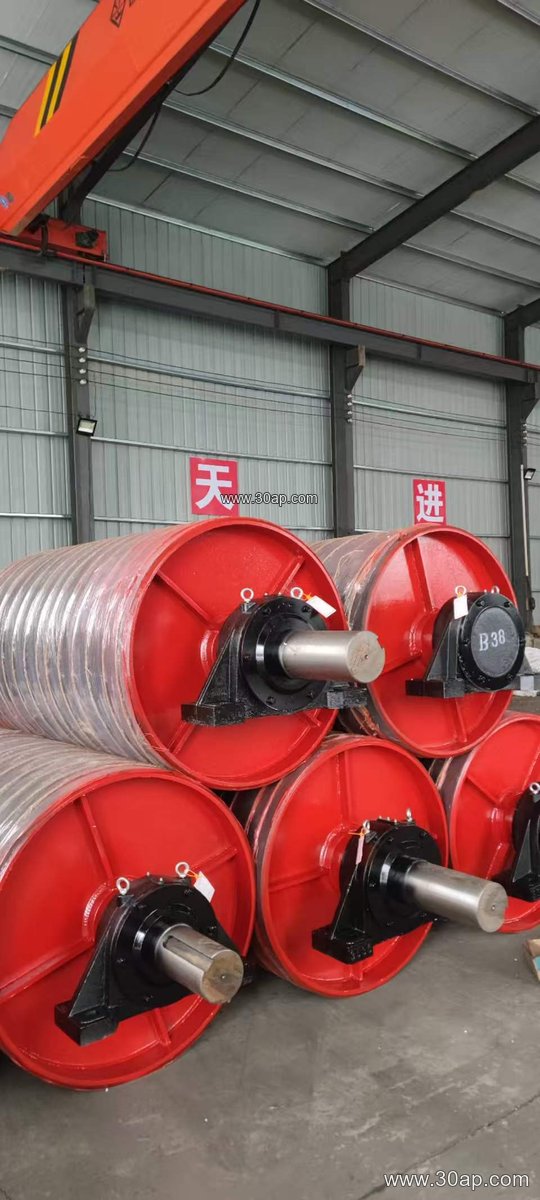
A typical tail pulley is built around a steel drum with welded end discs and a through shaft. The shell may be plain, or it may carry lagging to improve grip and protect the belt. Common surface forms include plain finish, cold-bonded rubber, hot-vulcanized rubber, diamond lagging, and ceramic lagging. Lagging thickness is often 8, 10, 12, 15, or 20 mm, chosen according to belt tension and ambient conditions. For a coal mining conveyor belt that carries fines and moisture, diamond lagging can help shed material and reduce slip, while a smooth finish may suit lighter duty. The pulley is mounted in conveyor brackets or a tensioning frame, and its shaft diameter is determined by torque and load rather than by belt width alone.
Matching Diameter and Face Width to the Belt
Tail pulley size is not a single fixed number for a given belt width. Common combinations include B800 × Ø500, B1200 × Ø1000, and B1400 × Ø800, but these are reference examples, not mandatory pairings. The pulley face is usually wider than the belt: roughly 500 mm for B400, 600 mm for B500, 750 mm for B650, 950 mm for B800, 1150 mm for B1000, 1400 mm for B1200, 1600 mm for B1400, and 1800 mm for B1600. Diameters often range from Ø200 to Ø1800 depending on the belt path and tension requirements. Shaft diameters such as Ø80, Ø100, Ø120, and Ø140 are common, but the final value must be calculated from the actual load and torque.
Reference Dimensions for Planning
| Belt Width | Typical Pulley Face Width | Example Diameter Range |
|---|---|---|
| B500 | 600 mm | Ø250–Ø400 |
| B650 | 750 mm | Ø315–Ø500 |
| B800 | 950 mm | Ø400–Ø630 |
| B1000 | 1150 mm | Ø500–Ø800 |
| B1200 | 1400 mm | Ø630–Ø1000 |
| B1400 | 1600 mm | Ø800–Ø1250 |
These figures are for general reference. A belt width can work with more than one pulley diameter, and the right choice depends on the conveyor profile, belt type, and take-up travel.
Where It Fits in Different Industries
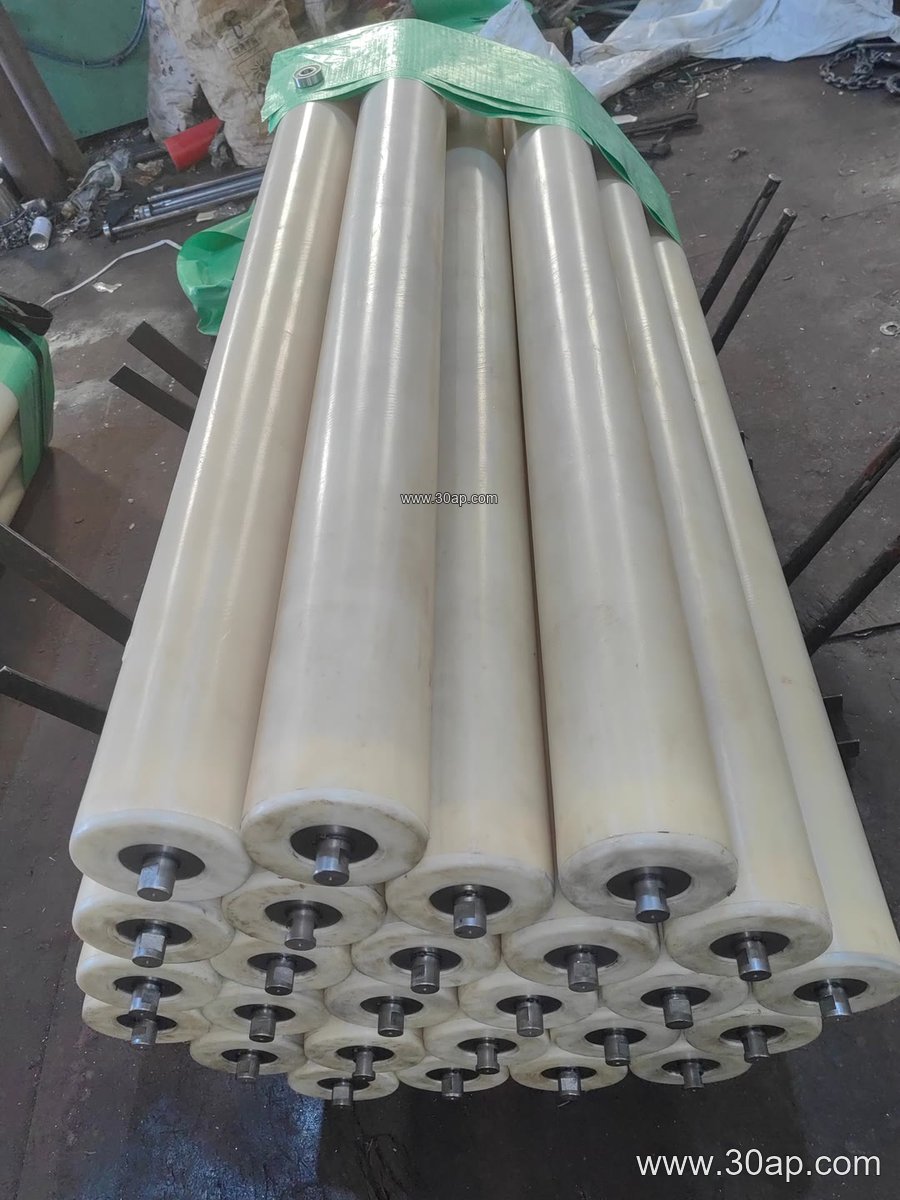
In a limestone quarry or a sand and gravel plant, the tail pulley often sits at the start of a secondary conveyor that receives material from a crusher. Here it may be paired with an abrasion resistant conveyor belt and impact idlers to handle sharp, heavy rock. In a coal washing plant or a power plant coal yard, the tail pulley is usually part of a tensioning arrangement that keeps a flame retardant conveyor belt running true. The same component appears in cement plants, steel mills, and port bulk terminals, but the surrounding hardware—conveyor brackets, take-up frames, and belt cleaners—changes with the duty.
Buyer Checklist for a Tail Pulley
- Confirm the belt width and the required pulley face width, allowing for belt wander and lagging thickness.
- State the belt type and tension so the pulley shell, shaft, and bearings can be sized correctly. A steel cord conveyor belt may call for a larger shaft than a fabric core belt at the same width.
- Choose the lagging based on material carried: diamond or ceramic for wet, sticky loads; plain or rubber for dry, fine material.
- Check the bearing housing style and mounting centers against the conveyor bracket dimensions.
- Specify the take-up method—screw, gravity, or hydraulic—so the tail pulley is supplied with the correct shaft end details.
- Ask for the balancing grade and runout tolerance if the conveyor runs at higher speed.
For more information on matching pulleys with rubber conveyor belt and conveyor idler components, review the full conveyor assembly rather than the pulley alone. A well-selected conveyor pulley at the tail end reduces belt edge wear, improves tracking, and keeps the return strand clean in dusty quarry or cement environments.