What an Iron Ore Conveyor Pulley Does on a Bulk Handling Line
An iron ore conveyor pulley is the cylindrical drum that turns a conveyor belt, sets its tension, and guides it through the transfer points of a bulk handling line. On a typical iron ore conveyor, the drum at the discharge end drives the belt forward, while drums at the tail and along the return side keep the belt tracking and tensioned. The pulley is usually the most heavily loaded rotating part in the system, because it carries the belt tension plus the weight of the ore.
Because iron ore is dense and abrasive, the drum shell, shaft, and lagging must be matched to the duty. A standard light-duty drum will wear quickly under ore that contains sharp fragments. In practice, an iron ore conveyor pulley is built heavier than a comparable drum on a sand or grain line, with thicker shell plate, larger shaft ends, and a lagging surface chosen for grip and wear life.
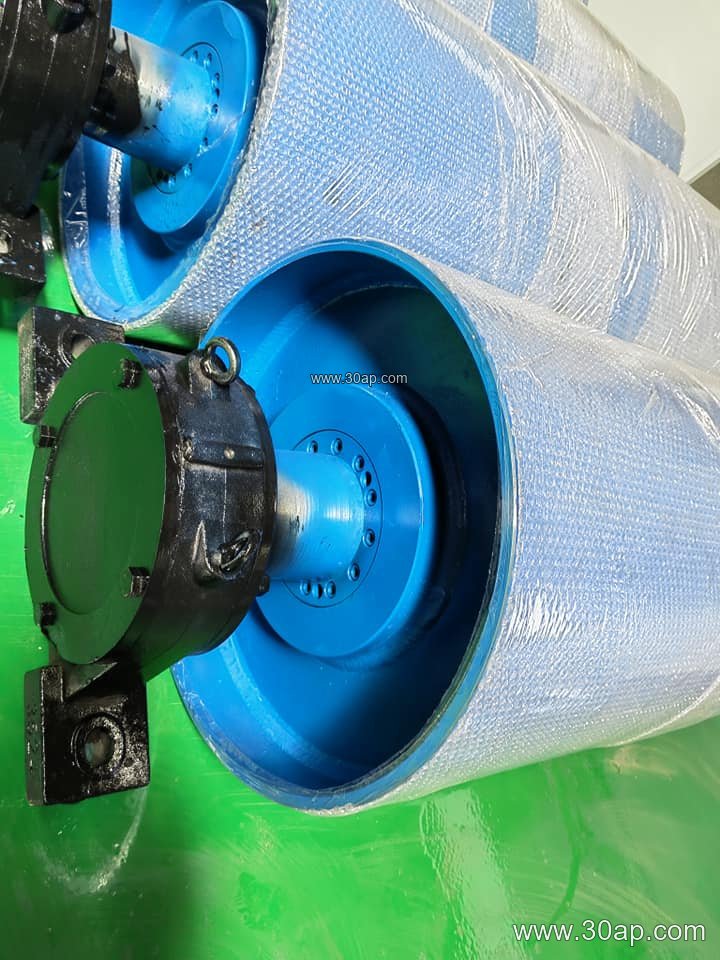
How the Drum Is Built
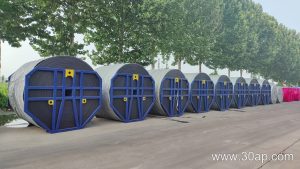
The main body is a rolled steel shell welded to end discs, with a shaft running through the centre. The shaft is supported by bearing housings that sit in conveyor bracket assemblies bolted to the conveyor frame. The shell may be plain, or it may be covered with rubber, ceramic, or a combination of both.
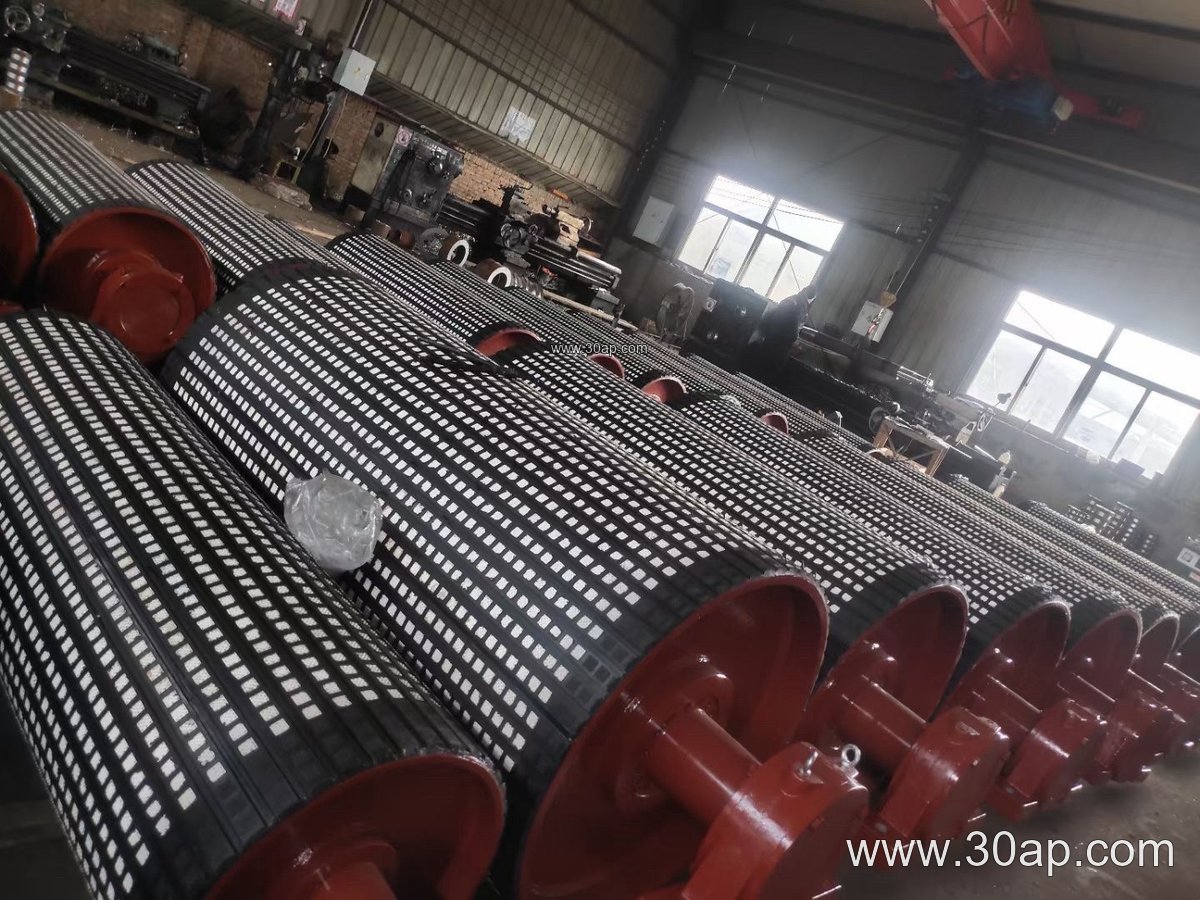
- Shell: rolled and welded steel plate; thickness follows the belt tension and load.
- Shaft: sized by torque and bending load, not by belt width alone. Common shaft diameters include Ø80, Ø100, Ø120, Ø140, Ø160, and larger.
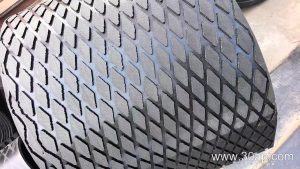
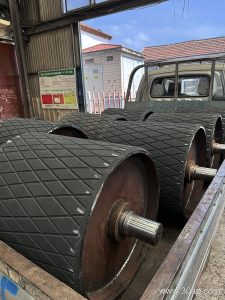
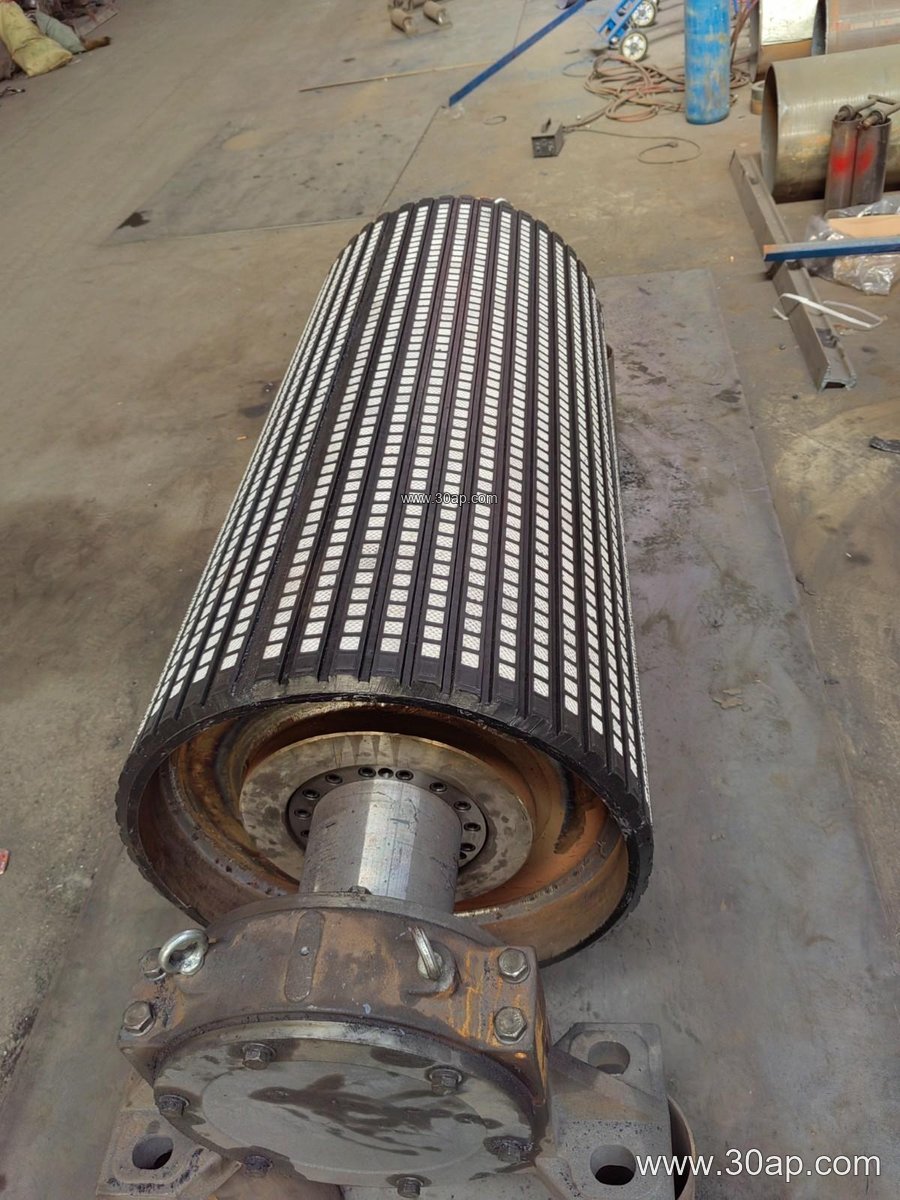
- Lagging: plain, cast rubber, cold-bonded rubber, hot-vulcanised rubber, diamond pattern, herringbone, or ceramic tile, typically 8, 10, 12, 15, or 20 mm thick.
- Bearings and seals: selected for the radial load and for dusty, wet conditions.
The shell face is normally wider than the belt. For example, a B800 belt usually runs on a drum face of about 950 mm, and a B1200 belt on a face of about 1400 mm. These are reference proportions, not fixed rules, and the final face width is confirmed at design stage.
Drive, Tail, and Bend Positions Are Not Interchangeable
A drive pulley (also called the head or discharge pulley) transmits power to the belt and usually carries the highest tension. It is often lagged with diamond or ceramic rubber to prevent slip. A tail pulley sits at the loading end and may be smaller in diameter, sometimes with a self-cleaning or wing design to shed fines. A bend pulley changes belt direction on the return run and carries lower tension, so it is usually plain-faced or lightly lagged.
These three positions serve different jobs, so a drive drum cannot simply be swapped for a bend drum of the same width. When specifying, state the position, the belt tension, and the belt speed so the supplier can size the shell, shaft, and lagging correctly.
Matching the Pulley to the Belt
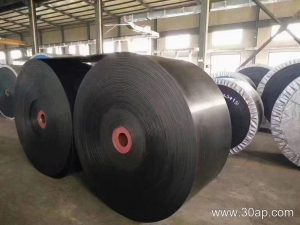
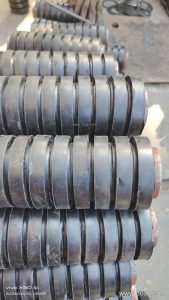
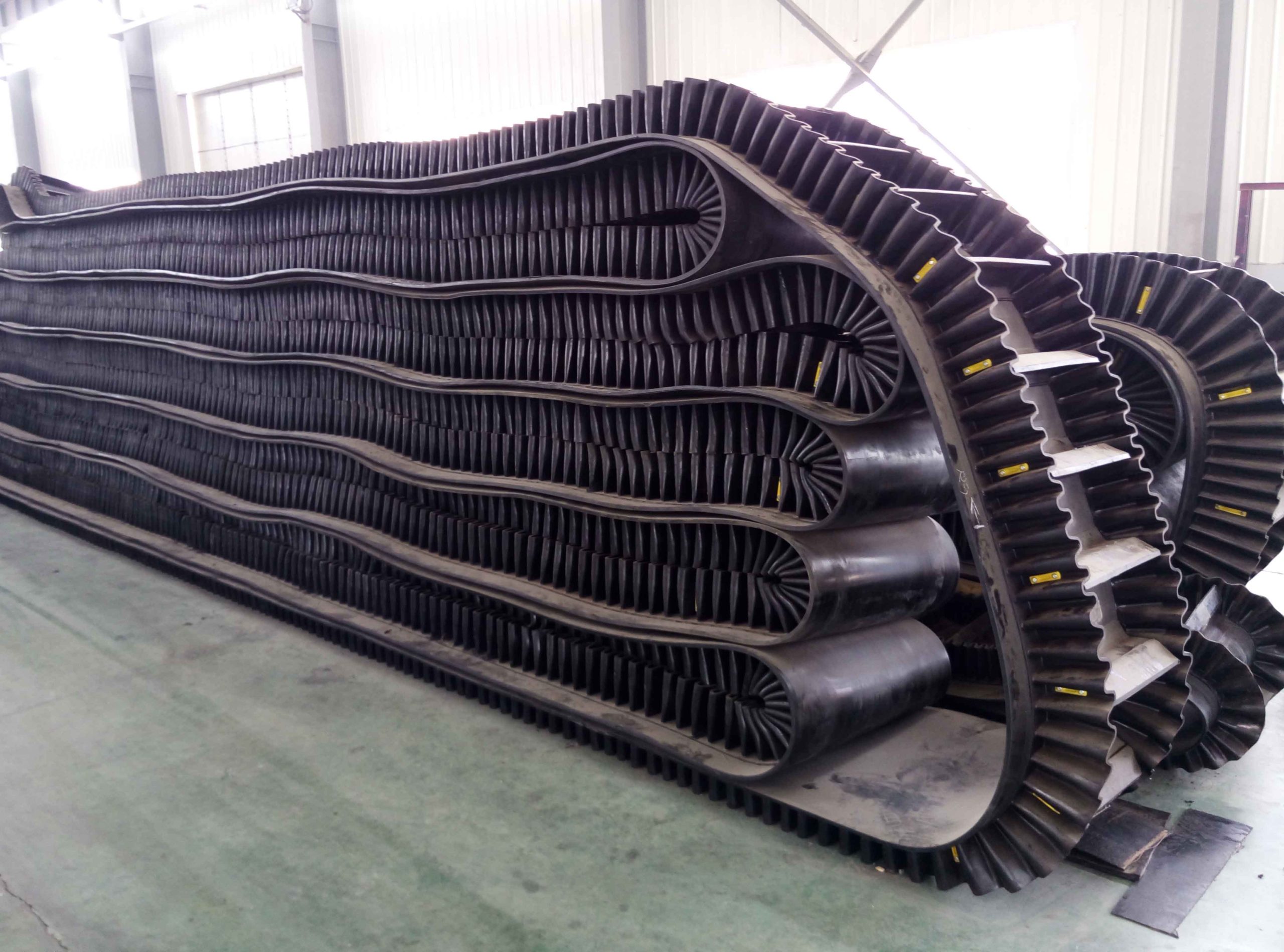
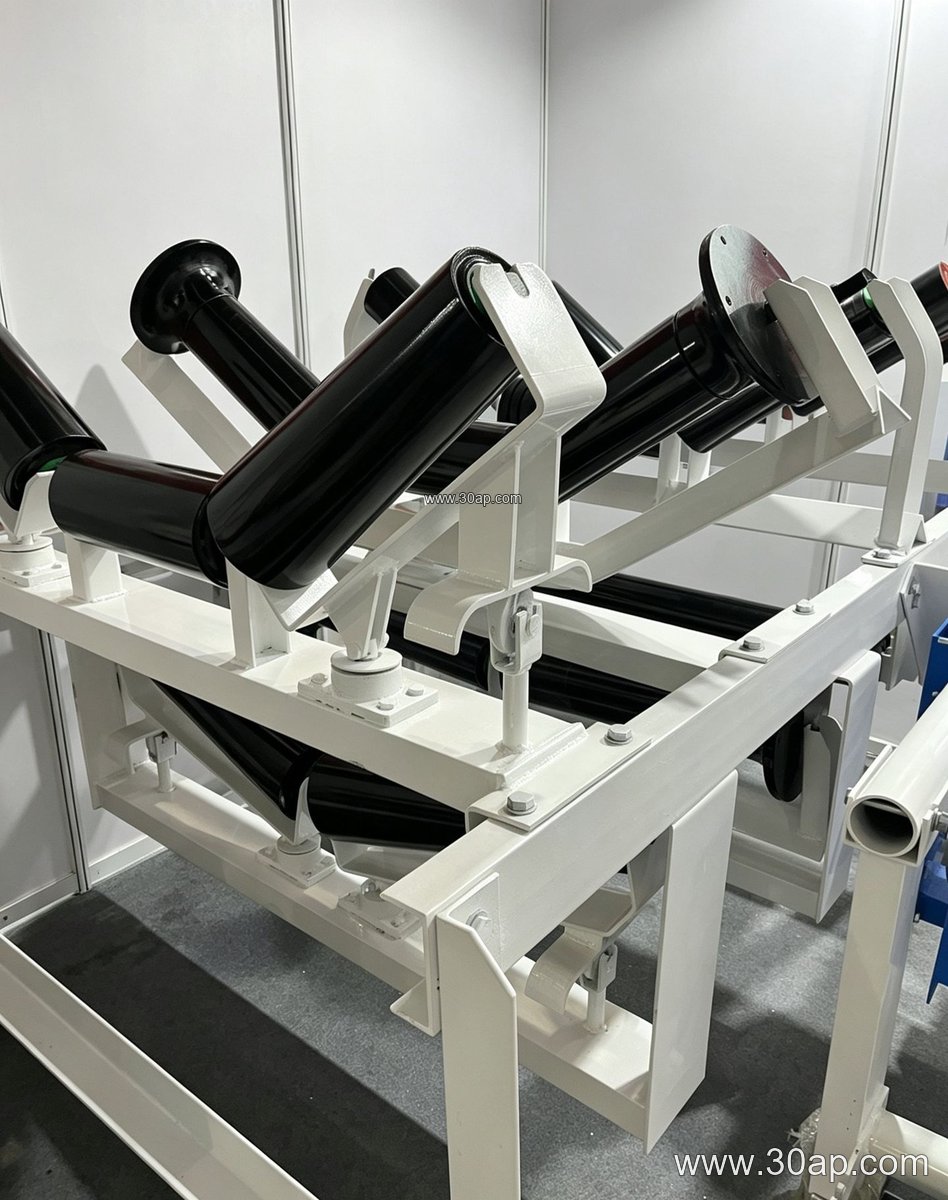
The drum works together with the conveyor belt and the idler roller set. A common pairing on an ore line is an Iron Ore Conveyor Belt with a steel cord or heavy fabric core, running over a lagged drive drum and plain return drums. The table below shows typical reference combinations; each still needs confirmation against actual tension and load.
| Belt width | Typical drum face | Common diameter range |
|---|---|---|
| B650 | about 750 mm | Ø400 to Ø630 |
| B800 | about 950 mm | Ø500 to Ø800 |
| B1000 | about 1150 mm | Ø630 to Ø1000 |
| B1200 | about 1400 mm | Ø630 to Ø1250 |
| B1400 | about 1600 mm | Ø800 to Ø1400 |
| B1600 | about 1800 mm | Ø1000 to Ø1600 |
Combinations such as B1200 × Ø1000 or B800 × Ø500 appear on real conveyors, but a given belt width does not lock the drum to one diameter. Diameter depends on belt speed, tension, and the space available for the belt wrap.
Where These Drums Are Used
Iron ore drums appear in mine crushing circuits, in sinter plants and steel works, and at port stockyards where ore is loaded onto ships. In a crushing and screening plant, the drive drum often runs behind a crusher discharge, where impact and dust are constant. In a port bulk terminal, the same drum type may run at higher speed with a longer centre distance, so the shaft and bearings are sized differently.
What a Buyer Should Check Before Ordering
- Position and duty: drive, tail, or bend, plus continuous or intermittent running.
- Belt data: width, type, and rated tension, so the drum face and lagging can be matched.
- Shaft and bearing load: supply the calculated tension and the conveyor geometry.
- Lagging: plain for a bend drum, diamond or ceramic rubber for a drive drum in wet or dusty ore service.
- Balance and runout: ask for the balancing grade and the permitted runout, since vibration shortens bearing life.
- Environment: dust, moisture, and temperature at the installation point, which affect seal and lagging choice.
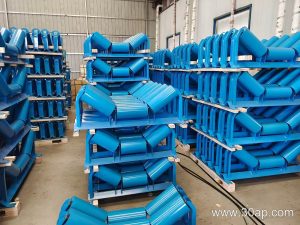
A well-matched iron ore conveyor pulley lasts longer when it is paired with a suitable heavy-duty belt, correctly aligned idlers, and brackets that keep the shaft square to the frame. Buyers who supply the full duty data at the enquiry stage usually get a drum that fits the first time.