What a Conveyor Bracket Does on the Line
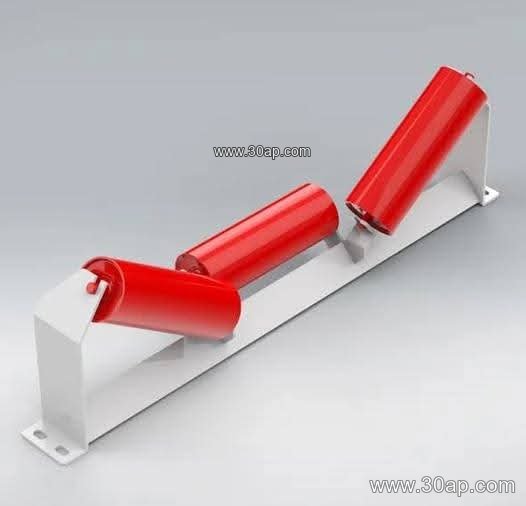
A conveyor bracket is the structural component that holds idlers in the correct position under or above the belt path. It looks simple, but it sets the trough angle, keeps the belt centered, and carries the load transferred from the belt and material. In a quarry, a cement plant, or a power plant coal yard, a loose or misaligned bracket quickly shows up as belt wander, spillage, or premature idler failure. The bracket is not a rotating part, yet it decides how well the rotating parts work.
How the Bracket Is Built
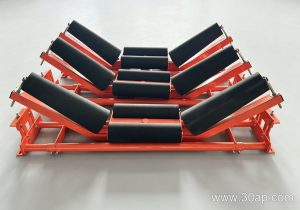
Most brackets are fabricated from angle steel, channel steel, or folded steel plate. The frame is drilled or slotted so idler shafts sit at the designed spacing, and the ends are shaped to bolt onto the conveyor stringer. Common forms include the trough bracket on the carrying side, the transition bracket near the tail, the return bracket and V-return bracket on the lower run, and impact or self-aligning brackets where loading and tracking need extra control. Adjustable versions allow the trough angle to be changed on site, while fixed versions keep one angle.
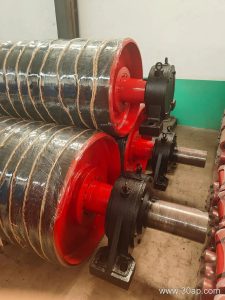
Because the bracket is a wear and alignment item, welding quality, hole position, and coating matter as much as steel thickness. A bracket that is square and accurately drilled saves hours during installation and keeps the conveyor pulley and idler roller lines true.
Matching Bracket to Belt and Idler
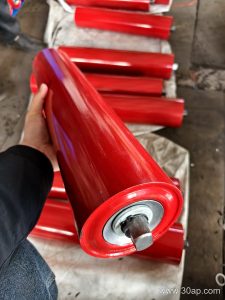
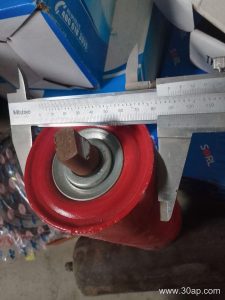
Bracket selection follows belt width, trough angle, and idler diameter, but these are design choices, not fixed pairs. A B800 line may run at 30 degrees with Ø108 idlers, while a B1200 line at 45 degrees with Ø133 idlers is equally normal. Installation hole spacing and crossbeam length change with belt width and trough angle, so they should be confirmed against the conveyor drawing rather than assumed. The table below shows typical reference combinations only.
| Belt Width | Trough Angle | Idler Diameter | Typical Bracket Form |
|---|---|---|---|
| B500 | 20-30 degrees | Ø89 | Trough bracket, fixed or adjustable |
| B650 | 30 degrees | Ø89 / Ø108 | Trough bracket, transition bracket |
| B800 | 30-35 degrees | Ø108 | Trough bracket, impact bracket |
| B1000 | 35 degrees | Ø108 / Ø133 | Trough bracket, self-aligning bracket |
| B1200 | 35-45 degrees | Ø133 | Trough bracket, V-return bracket |
| B1400 | 35-45 degrees | Ø133 / Ø159 | Trough bracket, return bracket |
| B1600 | 35-45 degrees | Ø159 | Heavy trough bracket, impact bracket |
| B1800-B2000 | 35-45 degrees | Ø159 / Ø194 | Heavy trough bracket, transition bracket |
On the carrying side, a 1.5 to 2 degree forward tilt is common on forward-tilt brackets to help tracking. Impact brackets are usually placed at the load point, and self-aligning brackets where the belt tends to drift.
Where Brackets Are Used
In a limestone mine or aggregate crushing line, trough brackets support the belt through the crusher discharge and screening section. In a coal-fired power plant, return and V-return brackets keep the lower run steady on long coal conveyors. In a cement plant, transition brackets near the head and tail reduce stress on the EP conveyor belt as it opens from the pulley. A food or fertilizer plant may use lighter brackets, but the alignment principle is the same.
Buyer Checklist
- Confirm belt width, trough angle, and idler diameter before ordering.
- Ask for hole spacing and crossbeam length per drawing, not a generic size.
- Choose adjustable brackets where the trough angle may change; fixed brackets where it will not.
- Check steel section, weld quality, and surface treatment for the site conditions.
- Match impact and self-aligning brackets to the actual load and tracking problem.
- Keep spare brackets for high-wear points such as the load zone.
When brackets, idlers, and the Rubber Conveyor Belt are specified together, the conveyor runs straighter and the maintenance team spends less time on spillage and edge damage. A well-chosen conveyor bracket is a small part of the capital cost and a large part of daily reliability.