What a Three-Roll Idler Bracket Does on a Conveyor
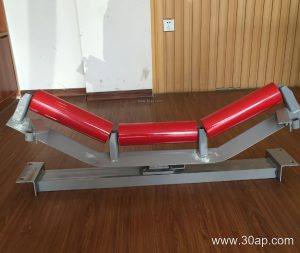
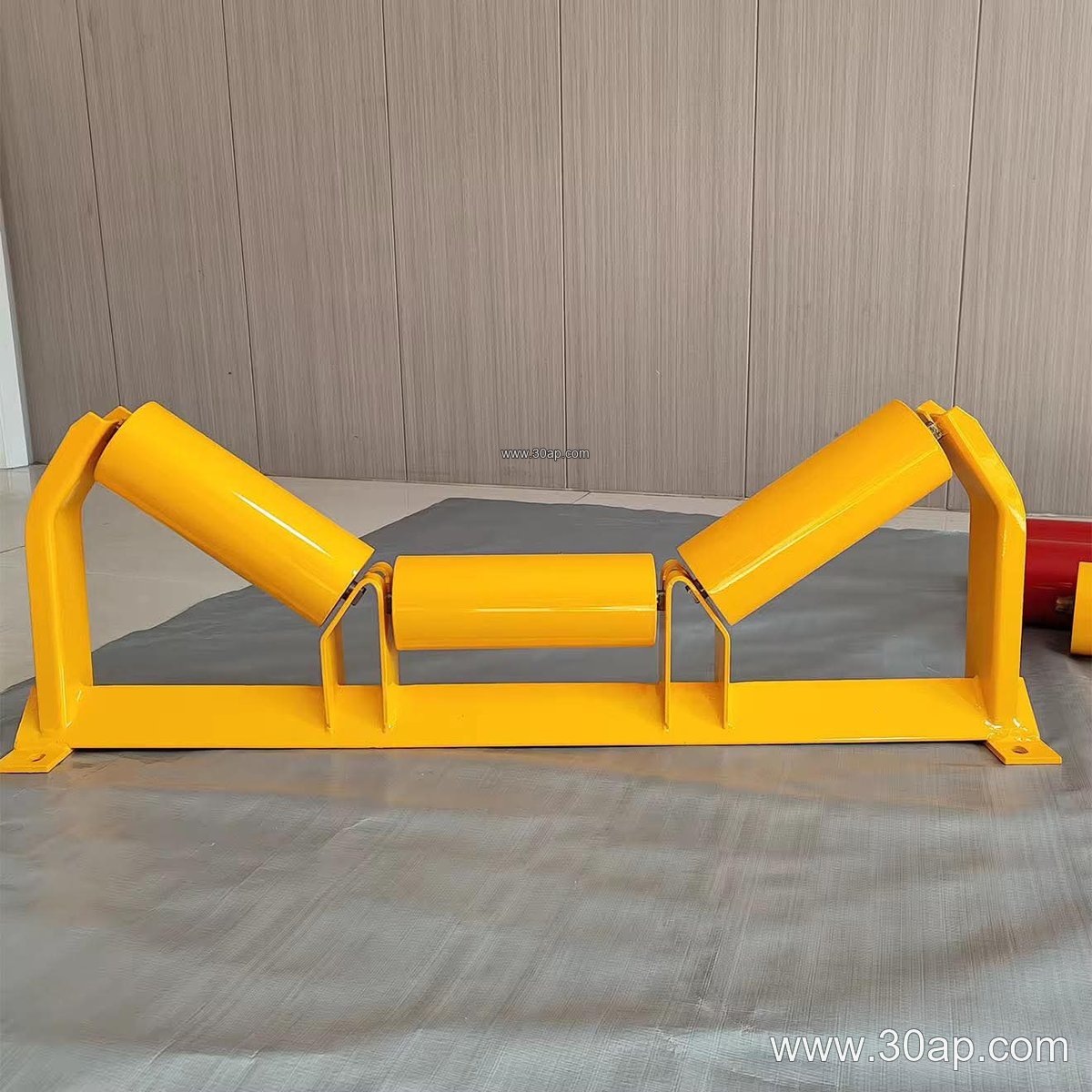
A three-roll idler bracket is the steel frame that carries the three-roll troughing idler set under the loaded side of a conveyor belt. It holds the center roll level and the two side rolls at an angle, forming the trough that keeps bulk material centered on the belt. In many plants this part is simply called a troughing idler bracket or a troughing frame, and those names refer to the same assembly. It should not be confused with a return bracket or with conveyor pulleys such as the drive pulley, tail pulley, or bend pulley, which serve different roles in the belt path.
The bracket works together with the idler roller and the conveyor belt. When the trough angle and roll spacing are right, the belt sits evenly, material stays in the middle, and the rolls turn freely. On a busy aggregate conveyor belt line, a weak or misaligned bracket is often the reason for belt edge wear, spillage, and noisy idlers.
How the Bracket Is Built
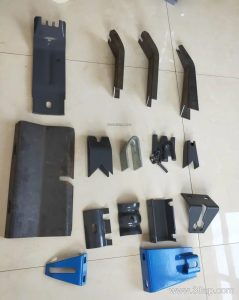
Most three-roll idler brackets are fabricated from angle steel, channel steel, or folded steel plate. The two side arms are set to a fixed trough angle or made adjustable, and the center seat is positioned to support the middle roll. Mounting slots or holes are cut to match the conveyor stringer spacing, and the bracket height is matched to the roll diameter so the belt line stays level from one frame to the next.
Common trough angles are 20, 30, 35, and 45 degrees. Adjustable brackets can be set between these angles during installation, which helps when a customer wants to fine-tune the trough without buying new frames. Forward-tilted designs, usually around 1.5 to 2 degrees, are used to help the belt track better in some layouts. The correct choice depends on belt width, material, and the conveyor design, not on a single rule.
Where It Fits in the Conveyor Line
Three-roll brackets are used on the carrying side of troughed conveyors in many industries. In a limestone quarry or a sand and gravel plant, they support the belt after the crusher and before the screen. In a coal handling system at a power plant, they carry coal along the transfer points. Cement plants, steel plants, and port loading lines also use them where bulk material must be moved at a steady rate.
They are not used on the return side; that position takes a return bracket, often a V-return or flat return type. They are also different from transition brackets or impact brackets, which handle specific zones near the tail or loading point. A three-roll frame is the standard carrying support, and its job is to keep the trough shape consistent along the run.
Common Reference Sizes and Combinations
The table below shows reference data often used when specifying a three-roll idler bracket. These values are examples, not a fixed match. Belt width, trough angle, and roll diameter are selected together with the conveyor design.
| Belt Width | Trough Angle | Roll Diameter | Typical Use |
|---|---|---|---|
| B500 | 20 degrees | Ø89 | Small aggregate or sand lines |
| B650 | 30 degrees | Ø89 | Quarry and gravel conveyors |
| B800 | 35 degrees | Ø108 | Cement and coal handling |
| B1000 | 35 degrees | Ø108 or Ø133 | Power plant coal belts |
| B1200 | 45 degrees | Ø133 | Heavy bulk material lines |
| B1400 | 35 or 45 degrees | Ø159 | Port and steel plant conveyors |
| B1600 | 45 degrees | Ø159 or Ø194 | High-capacity mining belts |
| B1800 and above | 35 or 45 degrees | Ø194 | Large ore and bulk terminals |
Mounting hole spacing and crossbeam length change with belt width and trough angle, so these are usually confirmed from the conveyor drawing rather than chosen from a single number. A wide heavy-duty conveyor belt may need a stronger frame and larger rolls, while a short transfer line can use a lighter bracket.
What Buyers Should Check Before Ordering
- Confirm the belt width and the required trough angle, since the frame geometry depends on both.
- Match the bracket to the idler roll diameter, because the seat height must keep the belt line correct.
- Check the stringer spacing and mounting hole pattern on the existing conveyor.
- Decide between fixed and adjustable brackets based on whether the trough angle may need fine-tuning.
- Review the material and finish for the site conditions, especially in dusty or wet areas.
- Ask for the drawing or dimensional data so the bracket fits the conveyor, not just the belt width.
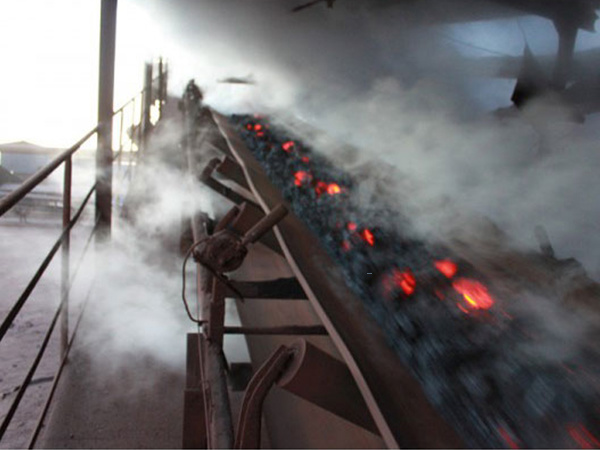
For a coal mining conveyor or a flame retardant conveyor belt installation, the bracket should be checked against the same fire-safety and dust requirements as the belt and the idler roller. In a cement plant, abrasion and dust build-up are common concerns, so easy cleaning and sturdy construction matter.
Installation and Maintenance Notes
Set the brackets in line with the conveyor centerline and check that all three rolls sit at the same height. A bracket that is twisted or loose will push the belt to one side and wear the edge. Grease or sealed idler rolls should turn by hand after installation, and any bracket that has bent or cracked should be replaced rather than straightened. During routine inspection, look for loose bolts, worn seats, and material build-up under the rolls.
When replacing a frame, keep the same trough angle and roll diameter unless the conveyor design is being changed on purpose. A three-roll idler bracket is a simple part, but it controls the belt shape over the whole carrying run, so the right fit pays off in longer belt life and steadier material flow.