What a Fixed Conveyor Bracket Does on a Belt Conveyor
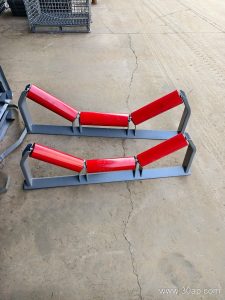
A fixed conveyor bracket is the stationary support that holds idler rollers at a set position and a set angle along the carrying or return side of a belt conveyor. Unlike an adjustable bracket, it has no sliding slot or pivoting arm; once bolted or welded in place, the trough angle and roller position stay where the designer put them. That makes it a simple, rigid, low-maintenance component, and it is often the default choice on long straight runs where the belt profile does not need to change.
In a quarry, a limestone mine, or a cement plant feeding a raw mill, dozens of these brackets line the stringers. Each one carries a group of idlers that shape the conveyor belt into a trough, and the whole assembly transfers the weight of the load into the conveyor frame.
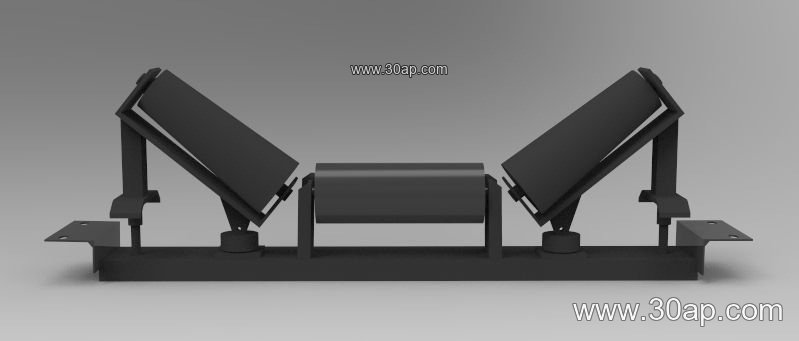
How the Bracket Is Built
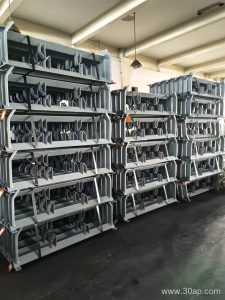
Most fixed brackets are fabricated from angle steel, channel steel, or folded steel plate. The frame is cut, drilled, and either bolted or welded to form a rigid cradle. Common forms include trough brackets for the carrying side, transition brackets near pulleys, return brackets, and V-return brackets. Surface treatment is usually painting or galvanizing, depending on the environment; a wash plant or a port terminal with salt air will call for more corrosion protection than a dry screening building.
Key dimensions are set by the conveyor design rather than by a single universal standard. Mounting hole spacing, crossbeam length, and the height of the roller seat all change with belt width and trough angle, so brackets are normally ordered against a drawing or a specific conveyor model.
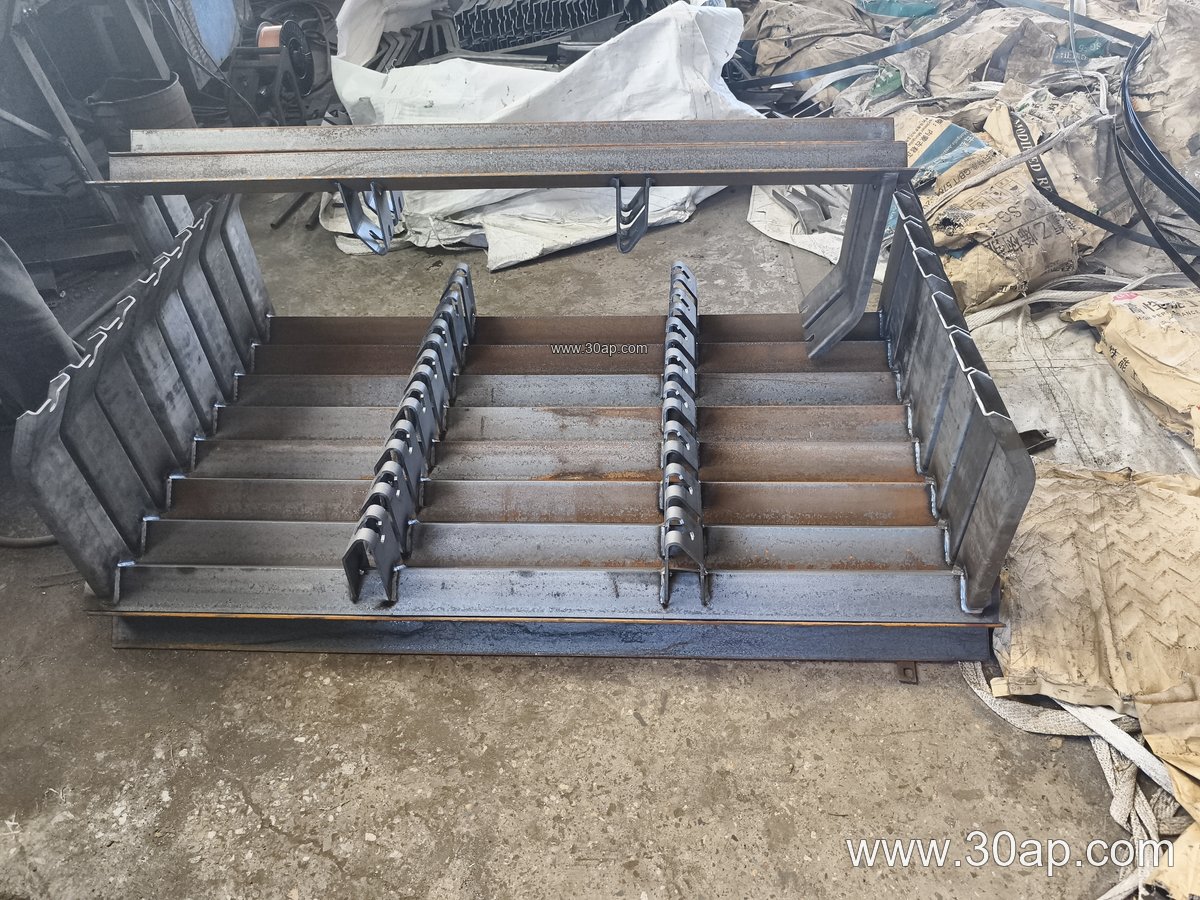
Typical Reference Configurations
The values below are common reference points, not fixed rules. A given belt width can be paired with more than one trough angle and more than one roller diameter, depending on capacity, material lump size, and transition geometry.
| Belt width | Trough angle | Roller diameter | Typical use |
|---|---|---|---|
| B500 | 20° or 30° | Ø89 | Small aggregate lines, auxiliary conveyors |
| B650 | 30° | Ø89 or Ø108 | Sand and gravel, crushing circuits |
| B800 | 35° | Ø108 | General bulk handling, cement raw materials |
| B1000 | 35° or 45° | Ø108 or Ø133 | Iron ore, coal preparation, power plant coal feed |
| B1200 | 45° | Ø133 | High-capacity main lines, port loading |
| B1400 to B2000 | 35° to 45° | Ø159 or Ø194 | Heavy-duty mining and long overland conveyors |
Forward-leaning brackets are sometimes used to give the idlers a slight tilt of about 1.5 to 2 degrees, which helps the belt track toward the center. That is a tracking detail, not a replacement for proper alignment of the whole frame.
Where Fixed Brackets Fit Best
Fixed brackets suit long, straight sections where the belt path is stable. In a coal washing plant, they support the main haulage conveyor day after day with almost no attention. In a crushing and screening line, transition brackets placed close to the head and tail pulleys ease the belt from a flat profile into a full trough without stressing the edges.
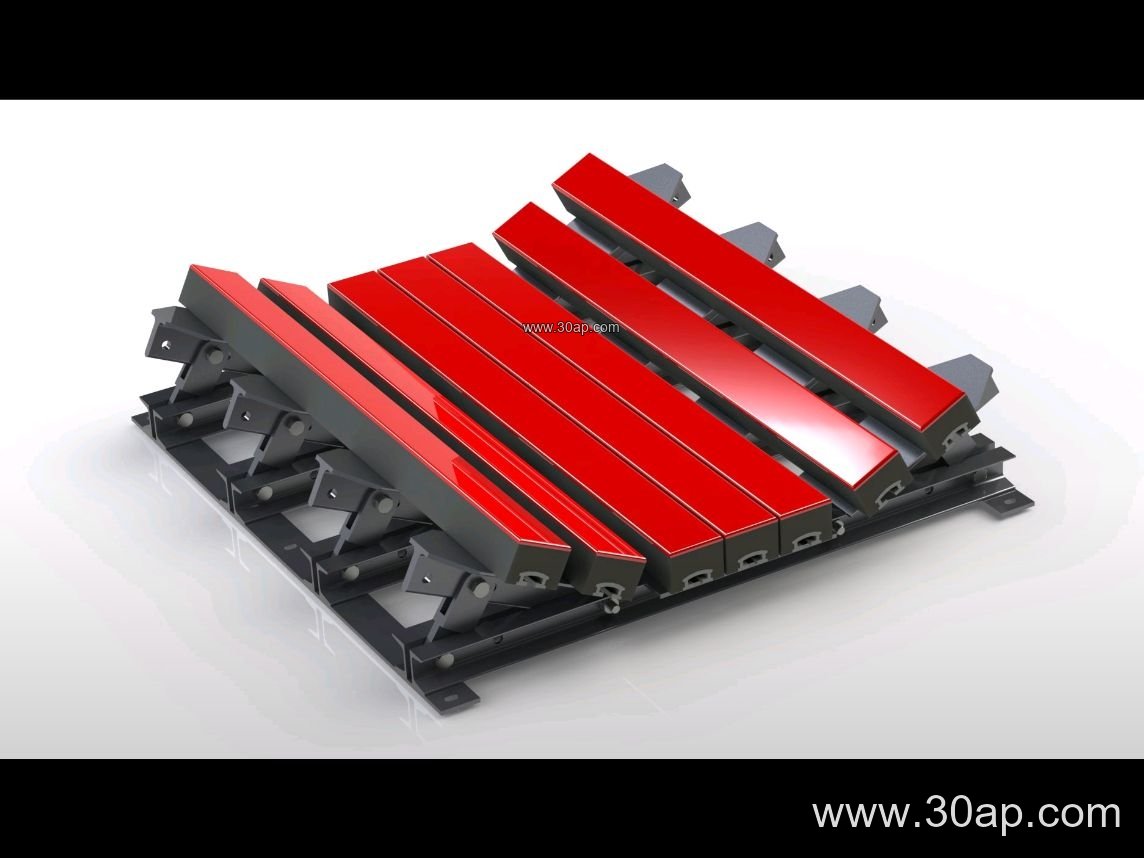
Where the belt must be trained or the trough angle changed on site, adjustable brackets are the better match, and a fixed bracket should not be forced to do that job. Similarly, cushion brackets under a loading point absorb impact, while a standard fixed bracket simply holds position. Choosing between these subtypes is a matter of function, not of swapping one name for another.
Buyer Checklist
- Confirm belt width and required trough angle before ordering, since hole spacing follows both.
- Match roller diameter to the idler frame the bracket will carry; do not assume one diameter fits every belt width.
- State the mounting method: bolted to the stringer or welded to the frame.
- Describe the environment so the fabricator can choose paint, galvanizing, or heavier plate.
- Ask for a dimension drawing, especially for transition and return positions where clearance to the conveyor pulley matters.
- Check that the bracket pairs correctly with the idler roller series you already stock.
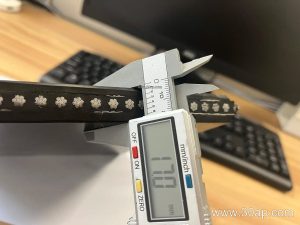
A well-matched bracket keeps the conveyor bracket frame square, the idlers level, and the belt running true. When specifying a full line, it also helps to note the belt construction, since a heavy steel cord conveyor belt or a thick EP conveyor belt behaves differently from a light fabric core belt and may call for closer idler spacing. Get the bracket geometry right at the drawing stage, and the conveyor will reward you with fewer tracking problems and longer roller life.