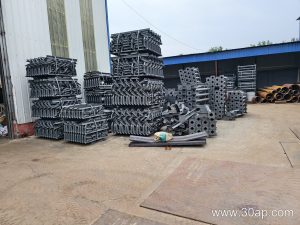
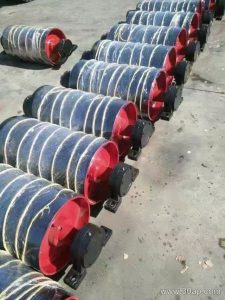
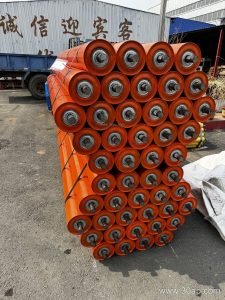
What the Tail Pulley Does on a Conveyor
The belt conveyor tail pulley sits at the return end of the conveyor, opposite the drive. It supports the conveyor belt as it completes its loop and returns to the carrying side. In many layouts it also serves as the tension pulley, taking up slack so the belt stays in contact with the drive pulley. This component is not a drive pulley and not a bend pulley; each has a distinct role. The tail pulley mainly guides and tensions, while the drive pulley transmits power and the bend pulley changes belt direction without driving or tensioning.
Because it is often the take-up point, the tail pulley influences belt tracking and splice life. A poorly aligned tail pulley can cause the belt to run off-center, wear edges, and stress the conveyor bracket. In quarry, limestone, and aggregate lines, the tail end may be exposed to dust and spillage, so the pulley design should shed material rather than trap it.
Construction and Surface Options
A typical belt conveyor tail pulley is a steel drum with a shaft, bearing housings, and a lagged or plain shell. The shell is usually wider than the belt to allow for misalignment. Common combinations are B800 with Ø500, B1000 with Ø630, and B1200 with Ø1000, but diameter is selected by belt tension, wrap angle, and shaft load, not by belt width alone. Shaft diameter is determined by torque and radial load; common shaft sizes include Ø80, Ø100, Ø120, and Ø140, but these are design choices rather than fixed matches to a given belt width.
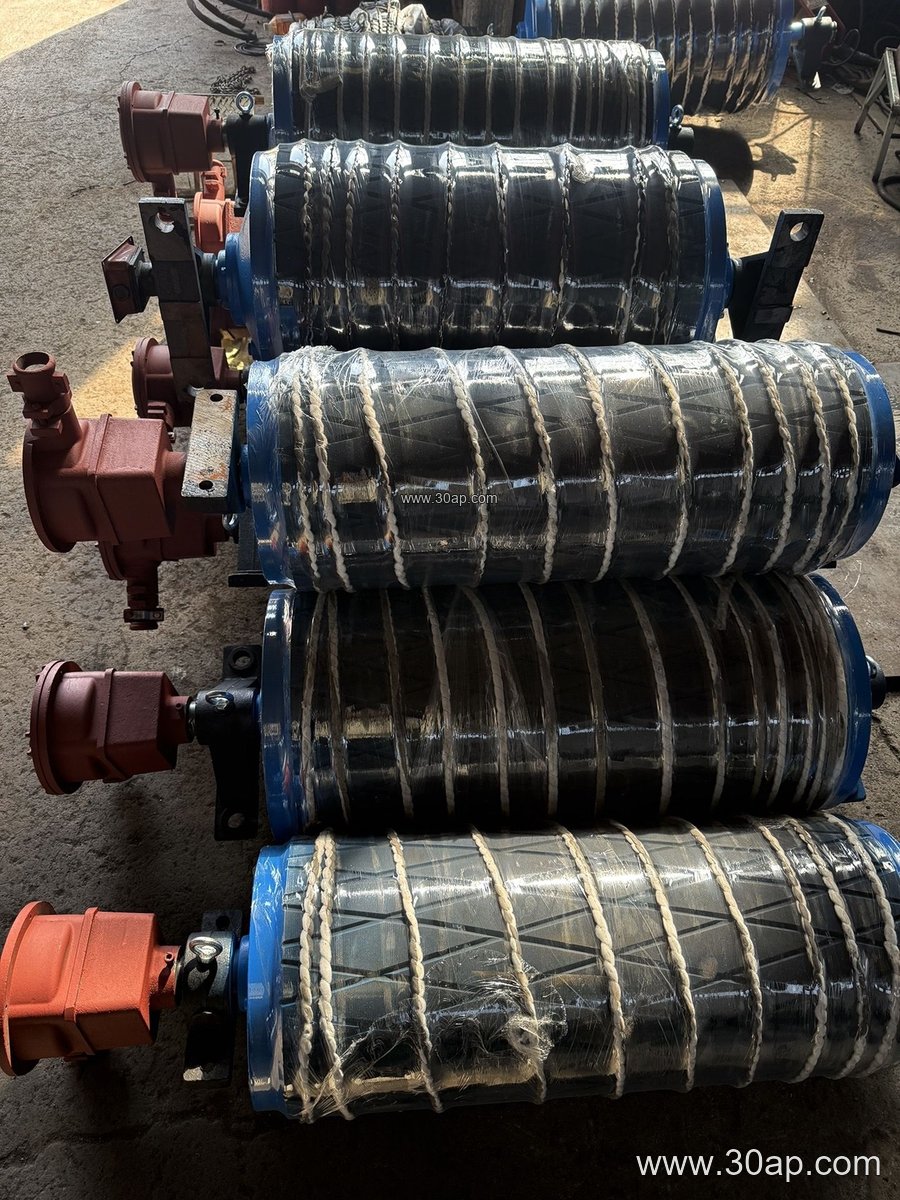
Surface finish matters at the tail end. A plain steel shell is common where the pulley only supports the return belt. Rubber lagging—applied as cold-bonded rubber, hot-vulcanized rubber, or cast rubber—improves grip when the tail pulley also tensions the belt. Diamond lagging and herringbone lagging help shed water and fines. Ceramic lagging is used in heavy-duty mining conveyors where slip and wear are concerns. Lagging thickness is often 8, 10, 12, 15, or 20 mm, depending on the duty.
Bearing selection and sealing are critical in coal mining, cement plants, and power plant coal handling. Dust and moisture ingress shorten bearing life, so effective seals and a robust bearing housing are more important than cosmetic details.
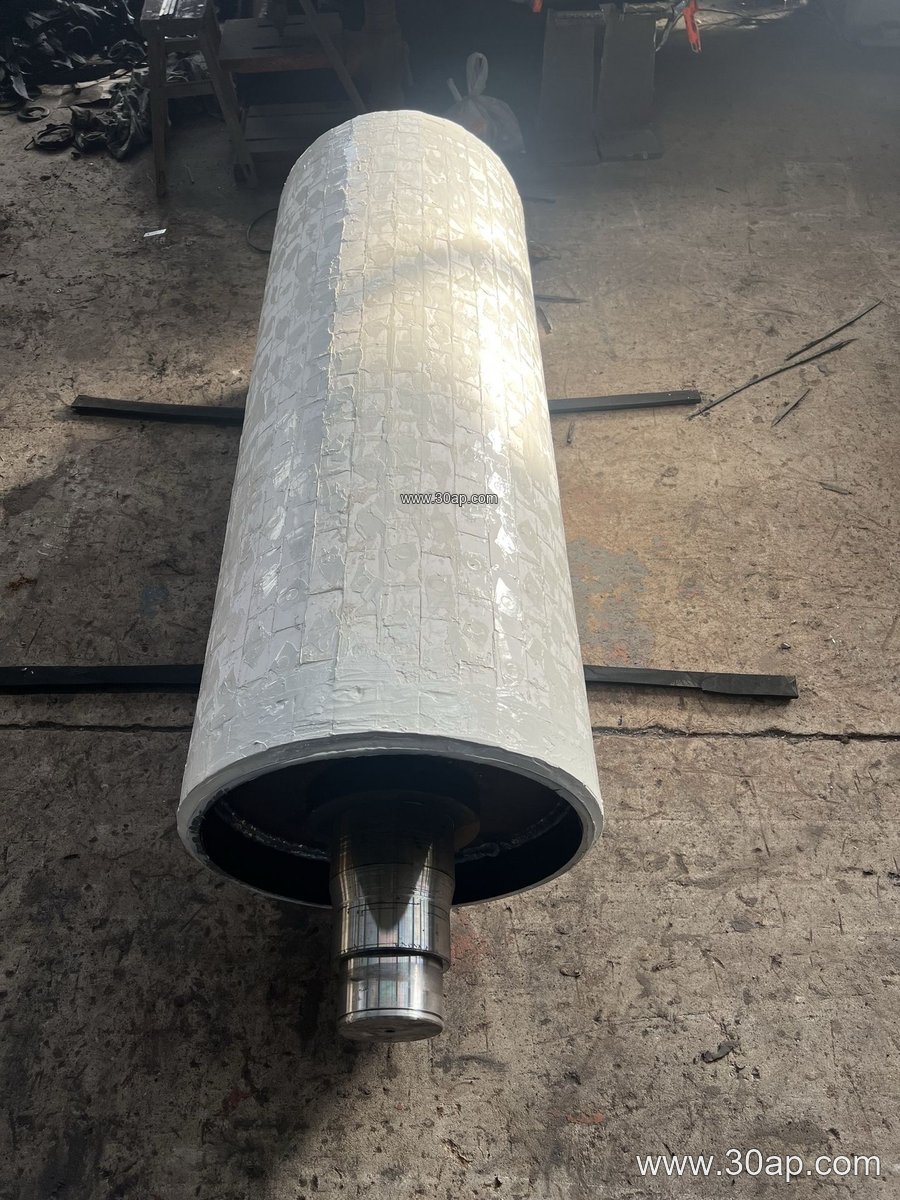
Where It Fits in the System
The tail pulley works with the conveyor belt, idler rollers, and conveyor brackets to form a reliable loop. In a crusher conveyor or screen feed line, the tail pulley is often close to the loading point, where impact and spillage are high. In underground coal mining, flame retardant conveyor belt and anti-static conveyor belt are common, and the tail pulley must be compatible with the take-up arrangement. In port bulk handling and ship loading, long conveyors may use a tail pulley as part of a gravity or screw take-up system.
It is important not to confuse the tail pulley with a snub pulley or a pressure pulley. Those are separate subtypes used to increase wrap angle or hold the belt against a drive pulley. The tail pulley remains the return-end tension and support component.
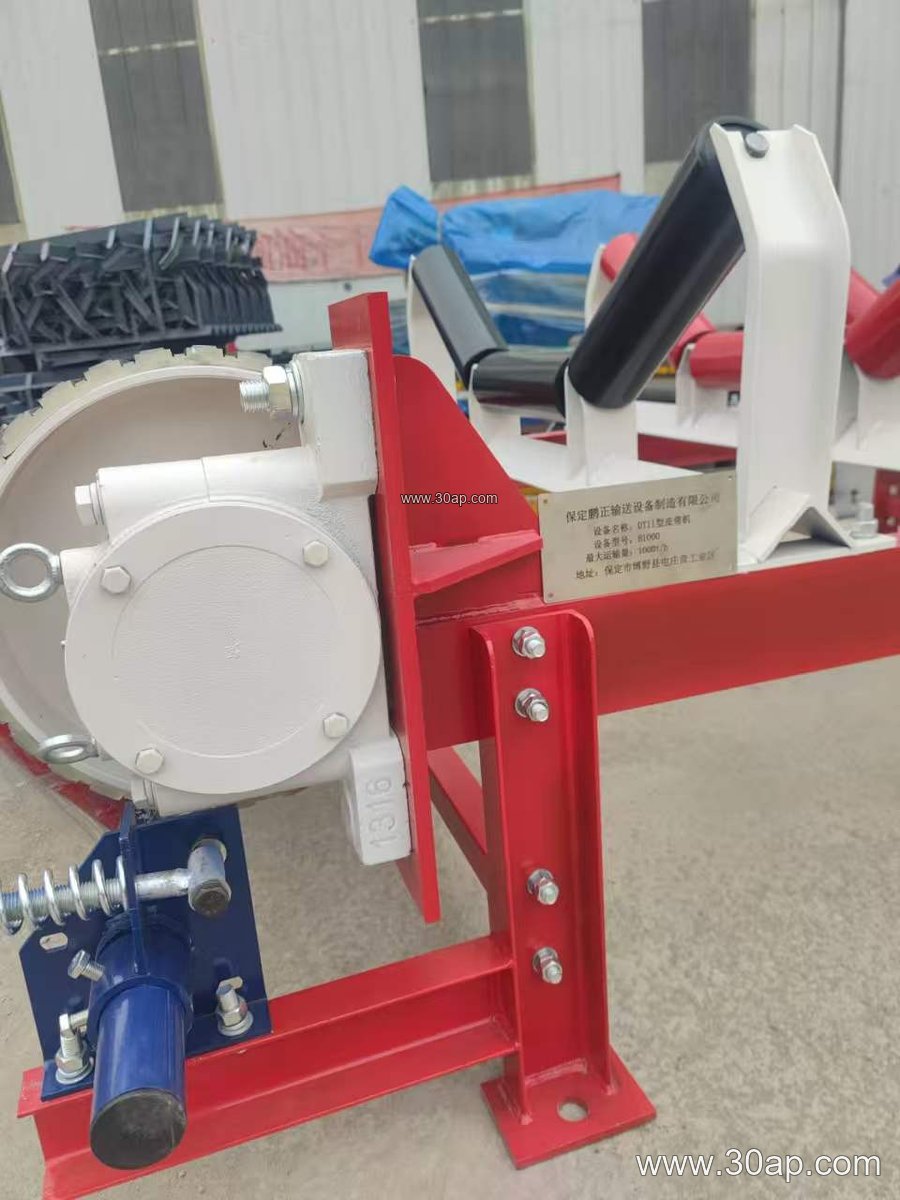
Specification Planning for Buyers
Buyers should start with belt width, belt type, and the take-up method. A belt conveyor tail pulley for a 1200mm wide EP conveyor belt in a cement plant may differ from one for a steel cord conveyor belt in an iron ore mine. The table below shows reference combinations, not mandatory matches.
| Belt Width | Common Pulley Diameter | Common Shell Width | Typical Lagging |
|---|---|---|---|
| B500 | Ø320–Ø400 | 600 mm | Plain or 10 mm rubber |
| B650 | Ø400–Ø500 | 750 mm | 10–12 mm rubber |
| B800 | Ø500–Ø630 | 950 mm | 12 mm diamond lagging |
| B1000 | Ø630–Ø800 | 1150 mm | 12–15 mm rubber |
| B1200 | Ø800–Ø1000 | 1400 mm | 15 mm diamond or ceramic |
| B1400 | Ø1000–Ø1250 | 1600 mm | 15–20 mm ceramic |
For abrasive bulk material, consider a wear-resistant lagging. For coal mining, flame retardant and anti-static properties of nearby components matter, and the tail pulley should be selected with the same safety approach as the conveyor belt. In food or fertilizer handling, avoid lagging that traps material and choose a cleanable surface.
Installation and Maintenance Notes
Alignment is the first priority. The tail pulley shaft should be square to the conveyor centerline. Check bearing clearances and lubrication intervals. Inspect lagging for wear, cracking, or missing segments. In cold climates, cold resistant conveyor belt may be used, and the tail pulley bearings should be rated for low temperature. Keep the return side clean; material buildup on the pulley face can change belt tracking. Replace worn lagging before it damages the belt cover.
For more information on conveyor pulleys and related components, visit conveyor pulley resources. Matching the tail pulley to the belt, load, and environment is the key to long service life.