What a Food Grade Conveyor Belt Is
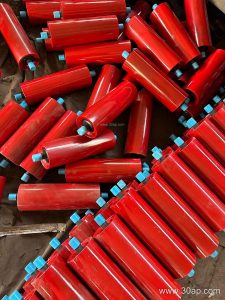
A food grade conveyor belt is a conveyor belt built for direct or indirect contact with food, food ingredients, and food packaging. In practice, the term describes the whole belt construction, not only the cover compound. The carcass, the cover, the edge treatment, and the splicing method all need to suit a hygienic process. In food plants, this belt often runs on the same basic hardware used in mining, cement, and power plant lines, including idler rollers, conveyor pulleys, and conveyor brackets, but the belt itself must resist cleaning agents, fats, oils, and temperature swings without releasing anything harmful into the product stream.
Buyers sometimes call this product a food handling belt or a hygienic conveyor belt. These are accurate equivalent names for the same product. A food grade belt is not a heat resistant conveyor belt, an oil resistant conveyor belt, or a flame retardant conveyor belt by default, although one belt may combine several of these properties when the process requires it.
How the Belt Is Built
Most food grade conveyor belts use a fabric core. Common carcass options include EP conveyor belt fabric, NN conveyor belt fabric, and multi-ply fabric core constructions. A light PVC conveyor belt is also common on packing and sorting lines. The cover compound is usually PVC, polyurethane, or a food-compatible rubber, chosen for easy cleaning and low absorption.
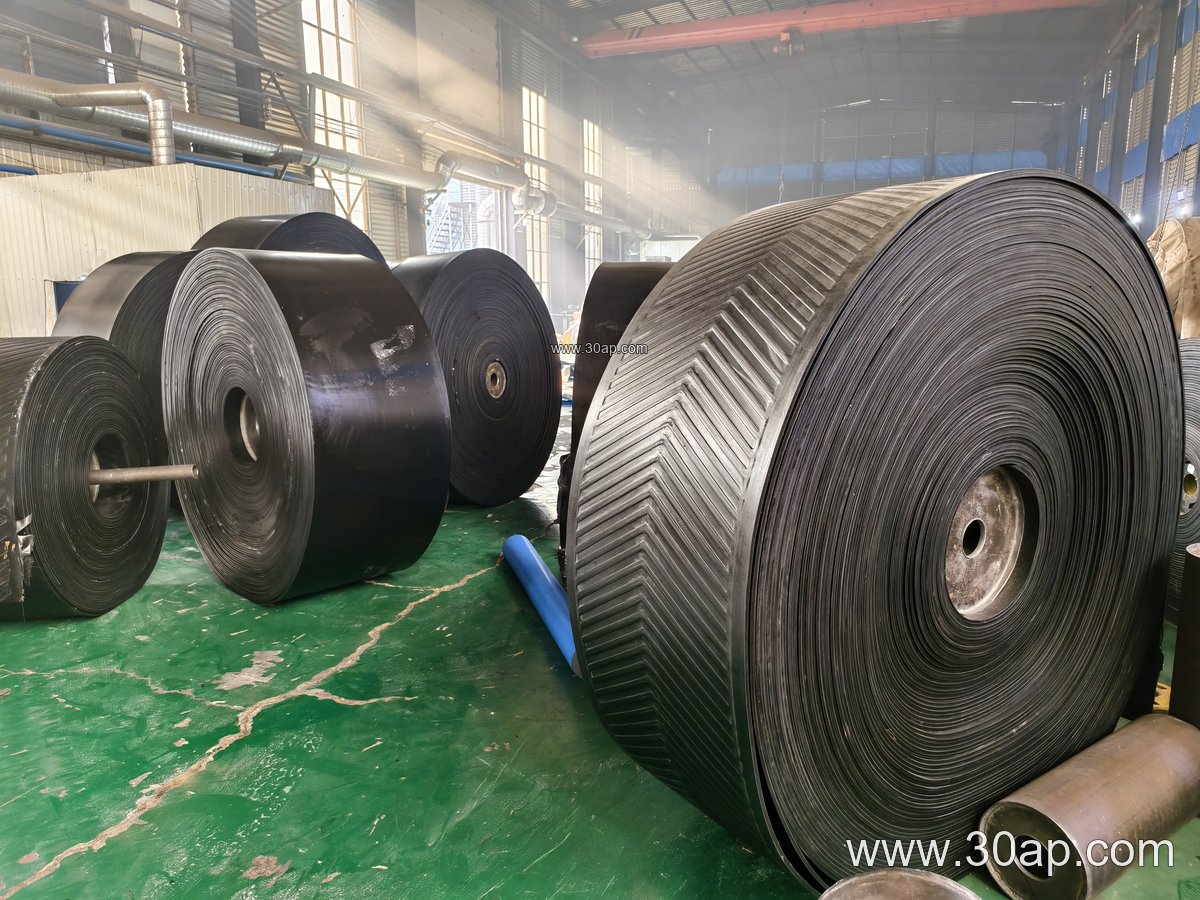
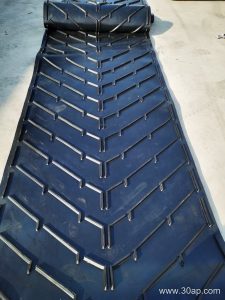
Surface form matters as much as the compound. Smooth covers suit general transport, while a chevron conveyor belt profile or a corrugated sidewall conveyor belt helps on inclines or when the product would otherwise spill. A skirted conveyor belt can keep loose material on the belt in a transfer zone. Closed designs such as a pipe conveyor belt are used where dust control and product protection are priorities.
Typical construction reference
| Element | Common options | Notes |
|---|---|---|
| Carcass | EP fabric, NN fabric, multi-ply fabric | 2 to 6 plies are common; light PVC belts may use fewer |
| Cover compound | PVC, PU, food-compatible rubber | Selected for cleaning and product contact |
| Cover thickness | 3+1.5, 4+2, 5+2, 6+2, 8+3 mm | Top and bottom cover are stated separately |
| Belt width | B500, B650, B800, B1000, B1200, B1400, B1600 | Width follows the conveyor design and product size |
| Surface | Smooth, chevron, sidewall, skirted | Chosen for incline, spill control, or cleaning |
| Splice | Endless, mechanical, stepped | Endless conveyor belt joints reduce catch points |
Where It Is Used
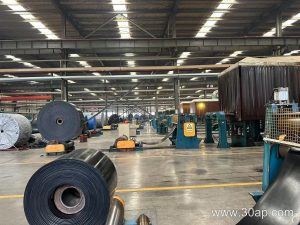
Food grade belts appear in bakeries, dairy plants, meat and poultry processing, snack lines, confectionery, beverage bottling, and cold storage. They also work in grain handling, sugar refineries, and pet food plants where hygiene rules are strict. The same plant may run a food grade rubber conveyor belt on one line and an abrasion resistant conveyor belt on a raw material intake, because the duty is different.
Equipment outside the food area is often heavier. Mines, coal preparation plants, cement works, power stations, and sand and gravel yards rely on a mining conveyor belt or a heavy-duty mining conveyor belt, frequently with a steel cord conveyor belt carcass. A quarry conveyor belt or crusher conveyor belt handles sharp rock, and an iron ore conveyor belt or copper ore conveyor belt must survive high impact. Those belts are not substitutes for a food grade belt, and a food grade belt should not be sent into a primary crusher duty.
Selection Points for Buyers
- Confirm the actual contact: direct food contact, packaged contact, or splash zone only.
- Match the cover to the cleaning method. Washdown, steam, and chemical foam all stress the compound differently.
- Check temperature range. A cold resistant conveyor belt may be needed in freezers, while warm areas may call for a heat resistant grade.
- Review oil and fat exposure. A dedicated oil resistant conveyor belt compound can outperform a general food grade cover.
- Ask about anti-static properties where dust or solvent vapor is present; an anti-static conveyor belt may be specified.
- Decide on joint type early. An endless belt gives a smoother surface for scraper and cleaning systems.
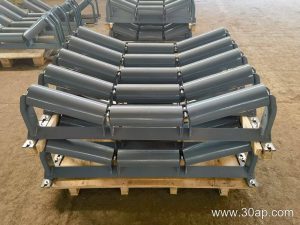
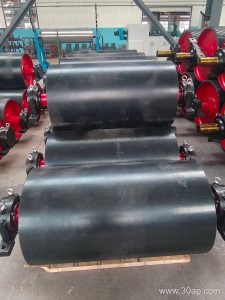
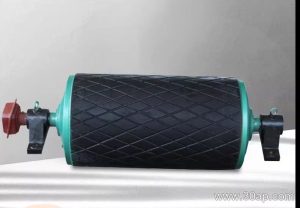
Pulley and roller selection is a separate exercise. Drive pulleys, tail pulleys, and bend pulleys are not interchangeable, and belt width alone does not fix a shaft diameter. The conveyor designer should size each conveyor pulley from the actual tension, wrap angle, and load. The same applies to idler roller spacing and conveyor bracket choice.
Maintenance and Care
Keep the belt clean and inspect the cover for cuts, staining, and embedded debris. Check that cleaning blades and brushes are set correctly, because poor adjustment wears the cover faster than the product does. Track the belt regularly and correct mistracking before edge damage starts. Store spare rolls flat, away from sunlight and ozone sources, and record the belt type and cover thickness so replacement matches the original specification.
For more product information on related conveyor components, see food grade conveyor belt and conveyor pulley references. Matching a rubber conveyor belt to the right duty, and pairing it with a correctly sized idler roller and conveyor bracket, keeps a food line running cleanly.