What a Dust-Proof Idler Does on a Conveyor
A dust-proof idler is a carrying or return roller built to keep fine abrasive particles away from its bearings. In a quarry, a coal washing plant, a cement mill, or a power station coal yard, the conveyor belt runs through air that is thick with stone powder, coal fines, or clinker dust. Standard rollers may survive there, but grit works its way into the seal gaps, mixes with grease, and grinds the bearing races. A dust-proof idler roller is the same basic component as a normal idler, only with a sealing arrangement designed for that kind of airborne contamination.
The part is not a different machine type. It is still an idler roller mounted on a conveyor bracket, supporting an endless conveyor belt. What changes is the seal, the bearing housing, and often the surface finish of the roller shell.
How the Sealing Is Usually Built
The core of the design is a multi-stage seal, typically a combination of a labyrinth ring, a felt or rubber lip, and a metal dust cap. Some designs add a grease-filled chamber between the outer and inner seals so that any particle that gets past the first barrier is trapped in grease rather than reaching the bearing.
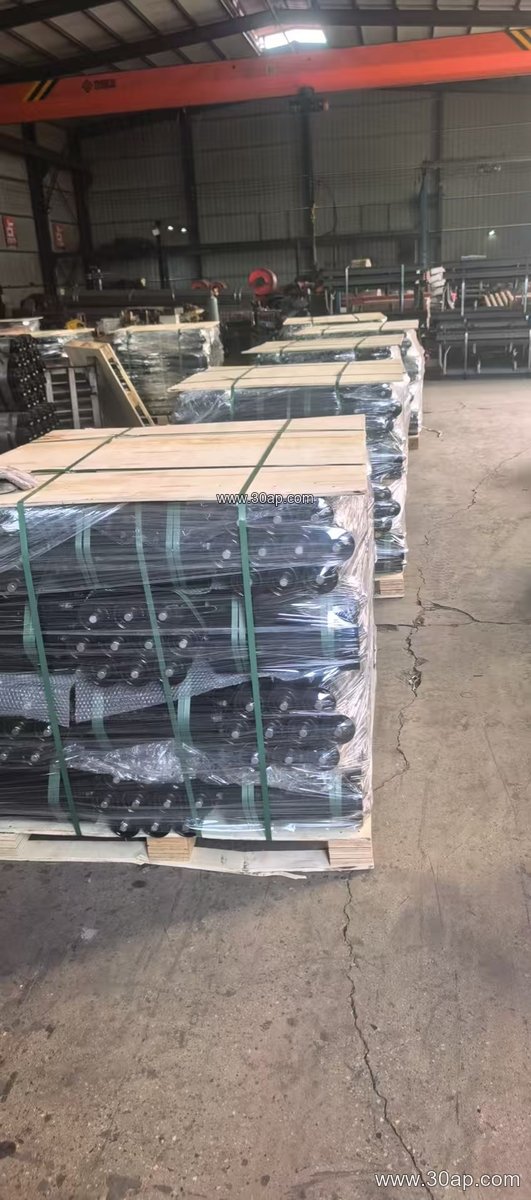
Typical build details include:
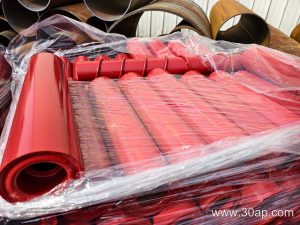
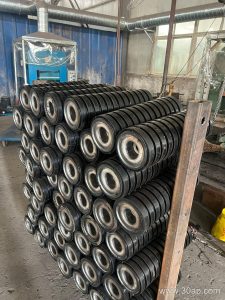
- Roller shell: steel tube, sometimes nylon or ceramic faced where wear is severe; the surface form should suit the material, not the other way round.
- Bearing: deep-groove ball bearings such as 6204, 6205, 6305, 6306, 6308 or 6310, chosen by load and shaft size rather than by belt width alone.
- Shaft: fixed through the end caps and locked to the conveyor bracket; the shaft diameter follows the bearing bore and load, not a single formula from belt width.
- Seal stack: labyrinth plus lip seal, often with a dust cap on the outer face.
Bearings are greased for life in most sealed versions, though some plants prefer regreasable designs for slow-running, heavily loaded lines.
Where Dust-Proof Rollers Fit in a Conveyor Line
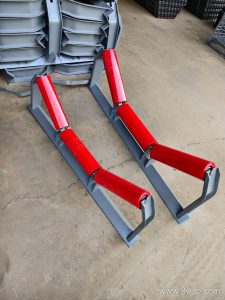
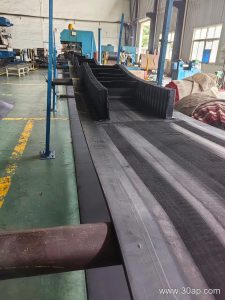
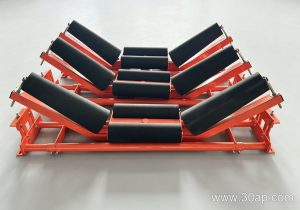
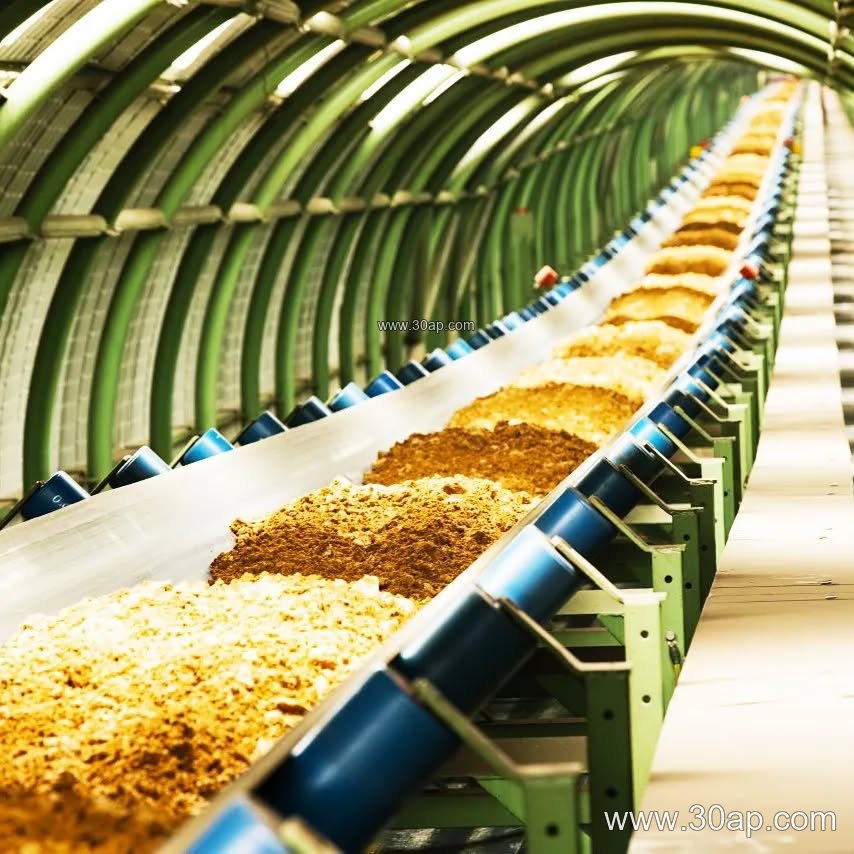
These rollers are usually specified on the carrying side, in three-roll trough sets, and on the return side as plain or V-return rollers. They are common in the following settings:
- Cement plants handling clinker and raw meal, where fine alkaline dust attacks seals.
- Coal washing plants and power station coal yards, where coal fines are abrasive and often damp.
- Crushing and screening circuits in aggregate and limestone operations.
- Fertilizer and grain handling, where dust is fine and the risk of build-up on the roller face is real.
Note that a dust-proof idler is not the same as a buffer idler or an impact roller. A buffer roller is placed at the loading point to absorb impact; a dust-proof roller is placed wherever fine particles are the main threat. A self-aligning roller is a separate function again. Where both problems exist, the two duties are usually handled by different positions in the same conveyor.
Common Sizes and Reference Data
The table below gives reference values only. Actual selection depends on belt width, trough angle, load, and the roller set form. Values are typical, not fixed pairings.
| Item | Common Reference Values |
|---|---|
| Roller diameter | Ø63, Ø76, Ø89, Ø102, Ø108, Ø127, Ø133, Ø159, Ø178, Ø194, Ø219 mm |
| Belt width | B400, B500, B650, B800, B1000, B1200, B1400, B1600, B1800, B2000, B2200, B2400 |
| Trough angle | 20°, 30°, 35°, 45° |
| Roller set form | single roll, two-roll, three-roll trough |
| Roller surface | steel tube, nylon, ceramic, rubber ring |
| Bearing | 6204, 6205, 6305, 6306, 6308, 6310 |
For a three-roll trough set, common roller lengths are roughly 200 mm at B500, 250 mm at B650, 315 mm at B800, 380 mm at B1000, 465 mm at B1200, 530 mm at B1400, 600 mm at B1600, 670 mm at B1800 and 750 mm at B2000. Side rollers and the centre roller can differ in length, and these figures are examples rather than a fixed rule. A B1000 belt, for instance, can be paired with more than one roller diameter depending on the load and the pulley and bracket arrangement.
What a Buyer Should Check Before Ordering
Start with the environment, not the catalogue. Fine dry dust, damp sticky dust, and hot clinker dust call for different seal and surface choices. Ask for the seal construction in writing, including whether the bearing is greased for life or regreasable. Confirm the bearing number and the shaft diameter as a pair, and check that the roller end fits the existing conveyor bracket rather than assuming a standard frame.
Also check the roller face. A nylon or ceramic sleeve can extend service life in abrasive slurry or wet dust, while a plain steel shell is often enough in a dry coal yard. If the line has a loading point nearby, keep the buffer rollers separate from the dust-proof carrying rollers; the two jobs should not be merged into one purchase line.
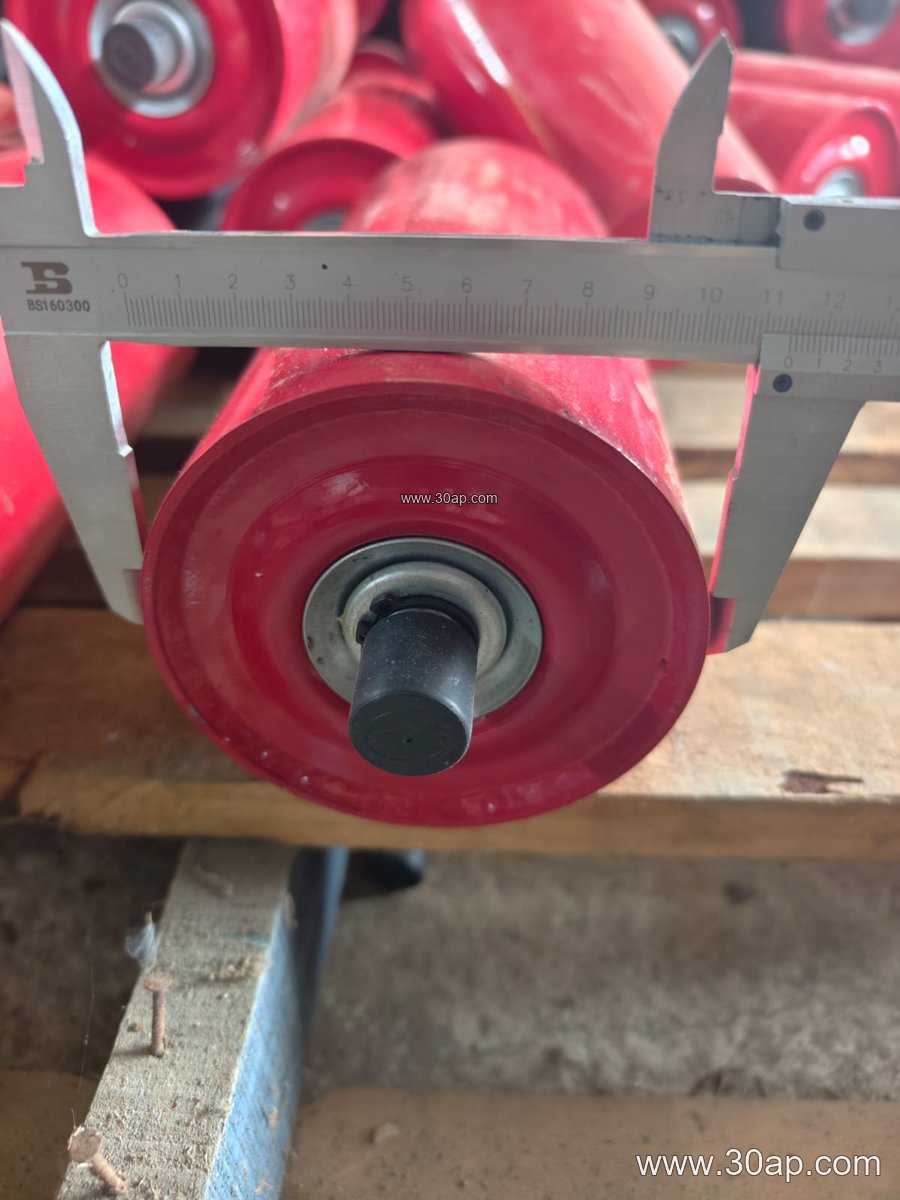
Finally, match the order to the actual belt width and trough angle on site. A dust-proof idler that is well sealed but the wrong length will cause belt tracking problems that no seal can fix. Measure the existing roller, record the bracket spacing, and specify the roller by diameter, length, bearing, and seal type together.