What a Large-Diameter Pulley Does on a Conveyor
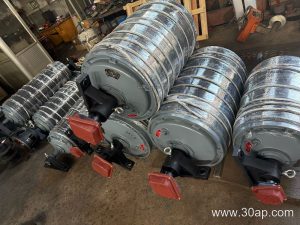
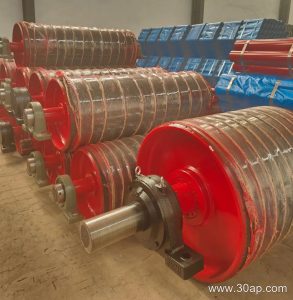
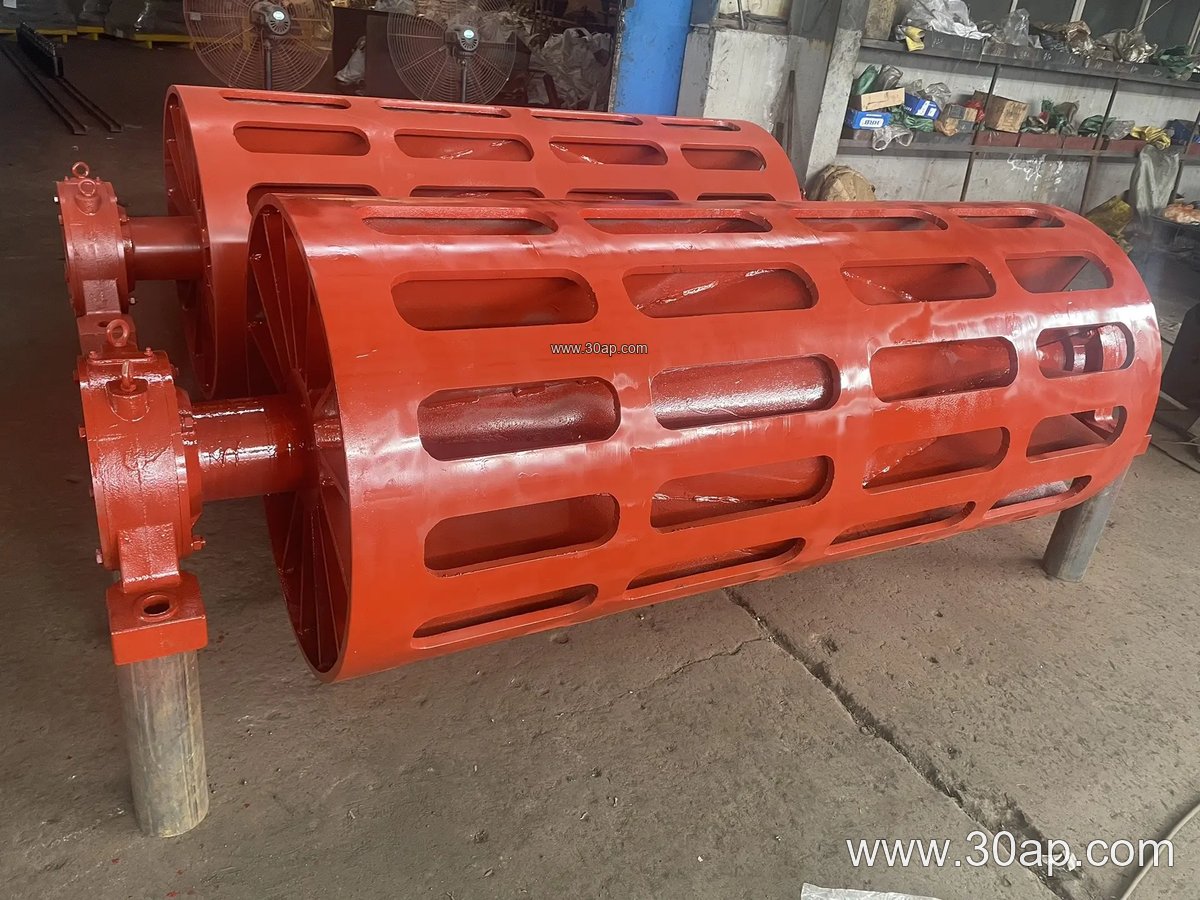
A large-diameter pulley is a conveyor pulley whose shell diameter is sized well above the minimum needed to carry the belt, usually to reduce belt bending stress, improve traction, or handle high tension in demanding duty. In a limestone quarry or a coal handling plant, engineers often specify a larger drum when the conveyor belt is thick, heavily loaded, or expected to run for long shifts. The same component may be called a large conveyor drum or a heavy-duty conveyor pulley, but it remains the same product: a rotating cylindrical shell with shaft, hubs, and bearing supports that guides and drives the belt.
Diameter is not a cosmetic choice. A larger drum increases the contact arc between belt and shell, which can improve grip and reduce slip at the drive point. It also lowers the bending frequency the belt carcass experiences per revolution, which matters where fabric or steel-cord belts are thick and stiff.
How the Drum Is Built
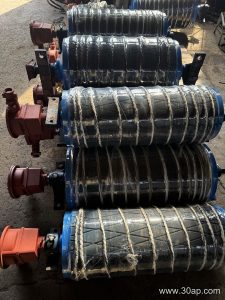
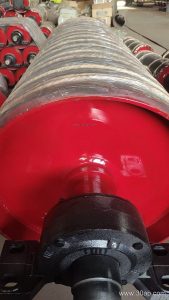
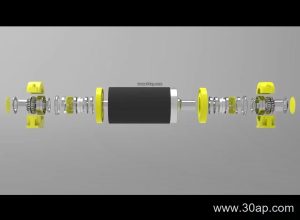
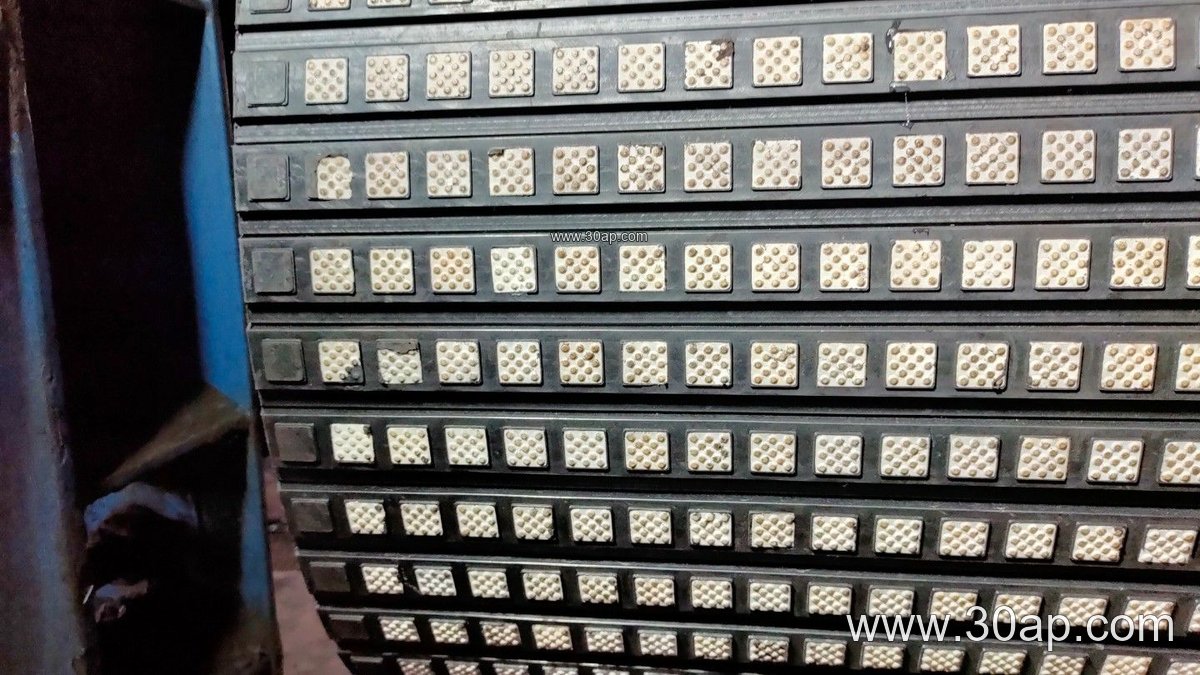
Most large-diameter pulleys use a welded steel shell with machined end discs, a through shaft or stub shafts, and hub connections sized for the torque. The shell surface may be plain, rubber lagged, or ceramic lagged, depending on grip and wear requirements. Lagging thickness is commonly 8, 10, 12, 15, or 20 mm, and the pattern may be diamond, herringbone, or plain sheet.
Bearing housings and the conveyor bracket interface deserve early attention. A drum with a 1250 mm or 1400 mm diameter carries significant mass, so the bracket and shaft fit must be checked against the actual load case rather than assumed from belt width alone.
Typical Reference Dimensions
The values below are reference data, not a fixed selection table. Final sizes follow the conveyor design, torque, and belt tension.
| Belt width | Typical shell face width | Example diameter pairing |
|---|---|---|
| B650 | about 750 mm | Ø400 to Ø630 |
| B800 | about 950 mm | Ø500 to Ø800 |
| B1000 | about 1150 mm | Ø630 to Ø1000 |
| B1200 | about 1400 mm | Ø800 to Ø1250 |
| B1400 | about 1600 mm | Ø1000 to Ø1400 |
| B1600 | about 1800 mm | Ø1250 to Ø1600 |
Shaft diameters are commonly in the range of Ø80 to Ø200 mm for these sizes, but the correct value comes from torque and bearing load calculation. A B1200 belt does not automatically require one shaft size, and a single belt width can work with more than one drum diameter.
Where Large Drums Fit Best
In a copper mine or an iron ore concentrator, a large-diameter pulley is often used at the head or drive position where tension is highest. In a cement plant clinker line, a larger drum can help where the conveyor belt is hot, dusty, and heavily loaded. Port bulk terminals also use heavy drums on long conveyors that move material at high capacity.
Position matters. A drive pulley or head pulley transmits power and needs good lagging and traction. A bend pulley changes belt direction and usually carries lower tension, so its diameter may be smaller. These are different roles and should not be treated as interchangeable names. A tail pulley at the loading end may also be large where belt support and cleaning demand it.
Buyer Checklist
- Confirm the actual belt width, shell face width, and required diameter range before quoting.
- State the duty: drive, bend, tail, or tension position, since each has different load expectations.
- Choose lagging by grip and wear: plain rubber for general use, diamond or herringbone for wet and dusty conditions, ceramic where abrasion is severe.
- Check shaft size against calculated torque, not against belt width alone.
- Review bearing type, housing, and conveyor bracket dimensions with the frame drawing.
- Plan inspection of lagging wear, shell runout, and bearing condition as part of routine maintenance.
A large-diameter pulley is a long-life component when the diameter, lagging, shaft, and mounting are matched to the conveyor. Matching the drum to the belt and the load case is the practical route to reliable operation.