What a Bend Pulley Assembly Does
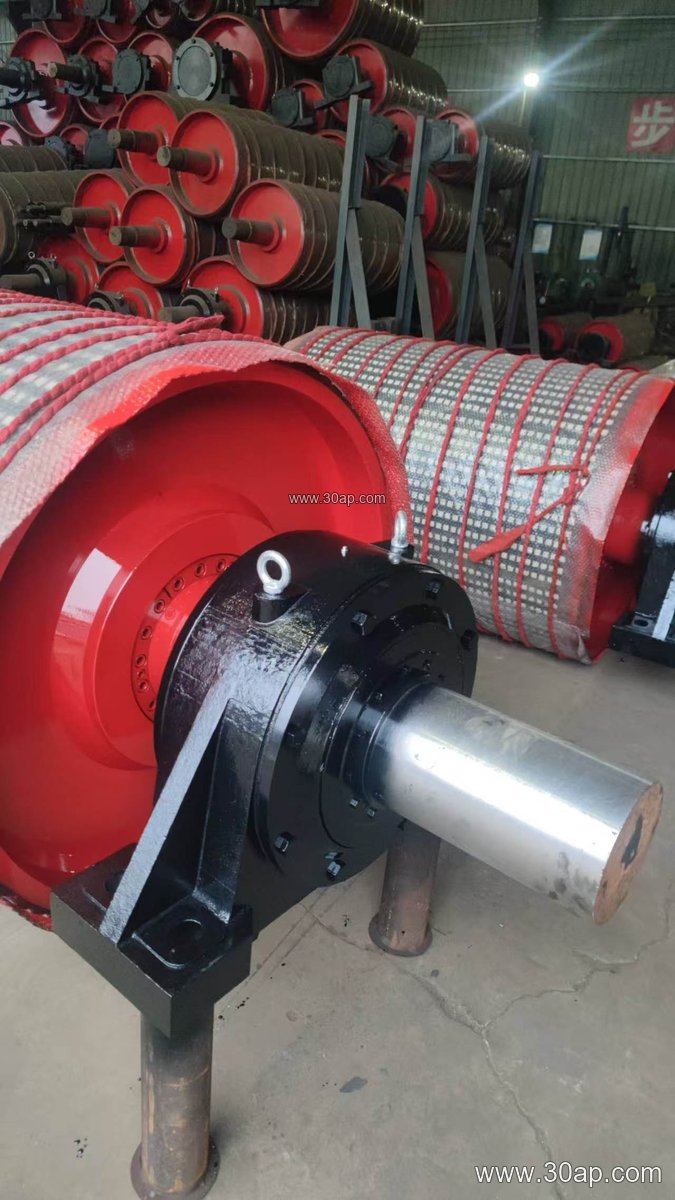
In a belt conveyor system, the bend pulley assembly is the group of components that guides the conveyor belt through a change of direction. It usually sits at the tail end, in the tensioning zone, or at an intermediate point where the belt must turn without being driven. Unlike the drive pulley that transmits power, or the tail pulley that often serves as the return point, the bend pulley simply redirects the belt path. The assembly typically includes the pulley shell, shaft, bearings, bearing housings, and a supporting frame or bracket that ties it to the conveyor structure. In many plants, the assembly is mounted on a conveyor bracket that allows adjustment for belt tracking and tension.
The bend pulley is not interchangeable with a drive pulley or a tail pulley. Each has a distinct role: the drive pulley delivers torque, the tail pulley completes the loop, and the bend pulley changes the belt’s route. A bend pulley assembly may also include a tensioning function when used as a tension pulley, but its primary job remains redirection.
Construction and Key Components
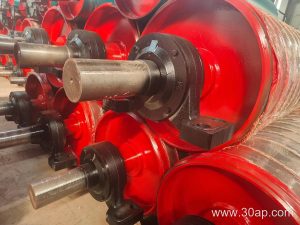
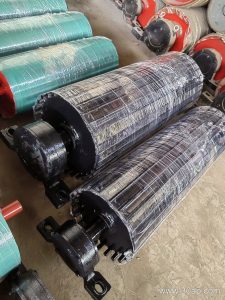
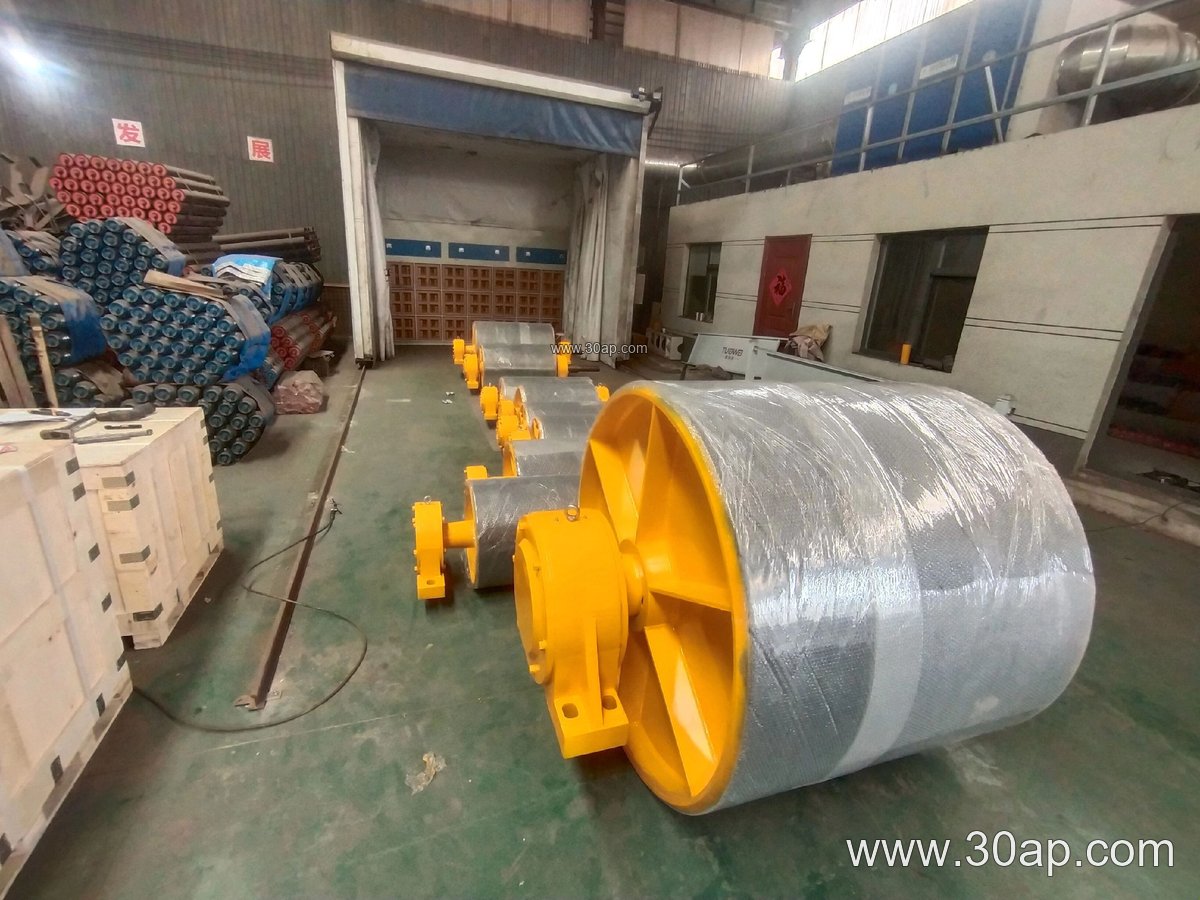
A typical bend pulley assembly is built around a cylindrical shell with end discs welded to a central shaft. The shaft is supported by bearing housings that are bolted to the frame. Surface options include plain finish, rubber lagging applied by cold bonding or hot vulcanizing, diamond grooved lagging, herringbone lagging, and ceramic lagging. Lagging thickness commonly ranges from 8 mm to 20 mm, depending on the belt and environmental conditions. For dusty or wet operations, such as a limestone quarry or a coal washing plant, diamond or ceramic lagging can help maintain belt contact and reduce slip.
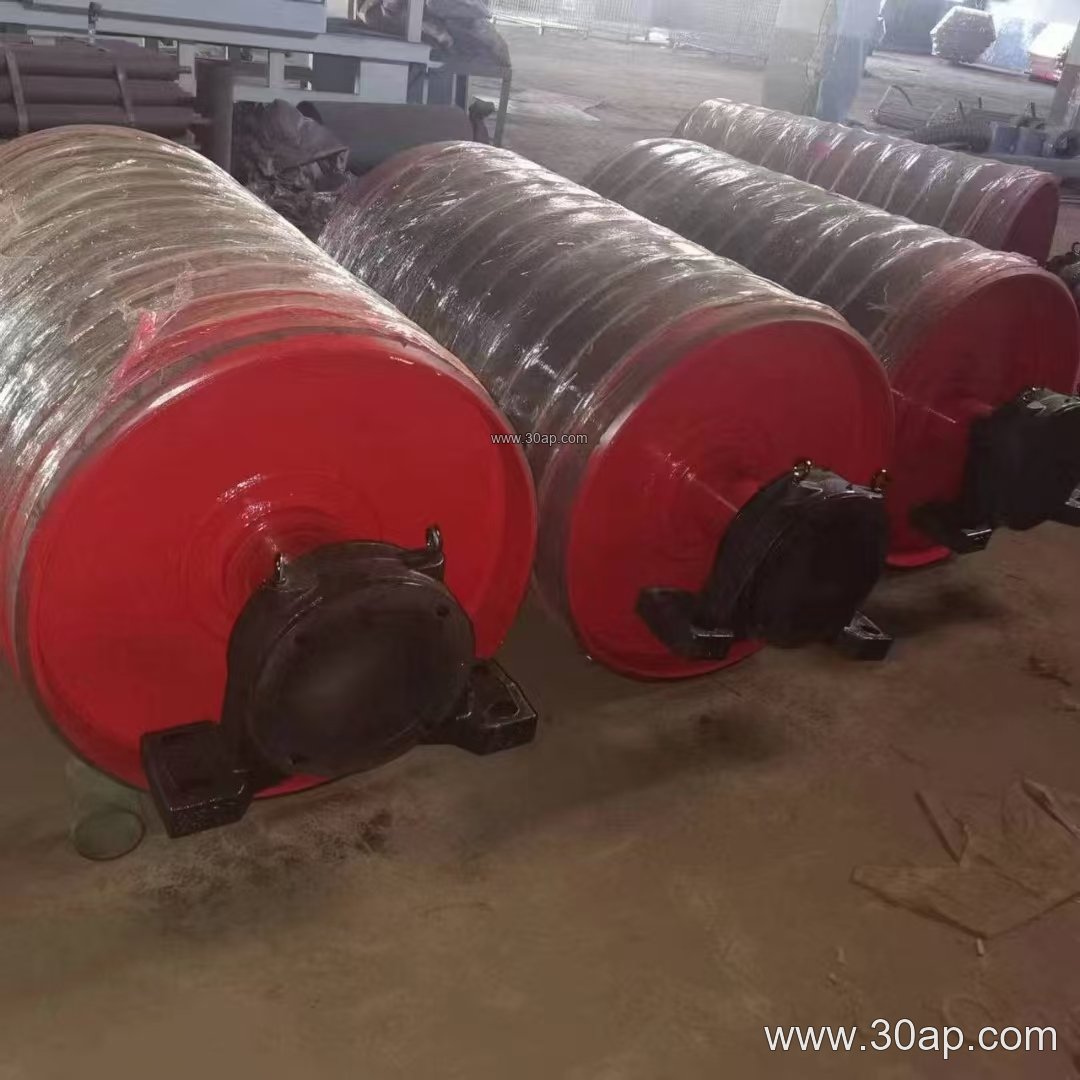
Common shell diameters for bend pulleys include Ø200, Ø250, Ø315, Ø400, Ø500, Ø630, Ø800, and larger sizes up to Ø1250 or more when the belt width and tension require it. Belt widths from B400 to B2400 are regularly paired with these pulleys, but the diameter is not fixed by belt width alone. The shaft diameter is determined by torque and load, with common sizes such as Ø50, Ø60, Ø80, Ø100, Ø120, and Ø160. The pulley face width is usually slightly wider than the belt; for example, a B800 belt often uses a pulley face around 950 mm, and a B1200 belt may use about 1400 mm. These are reference values, not universal rules.
Where It Fits in the Conveyor Layout
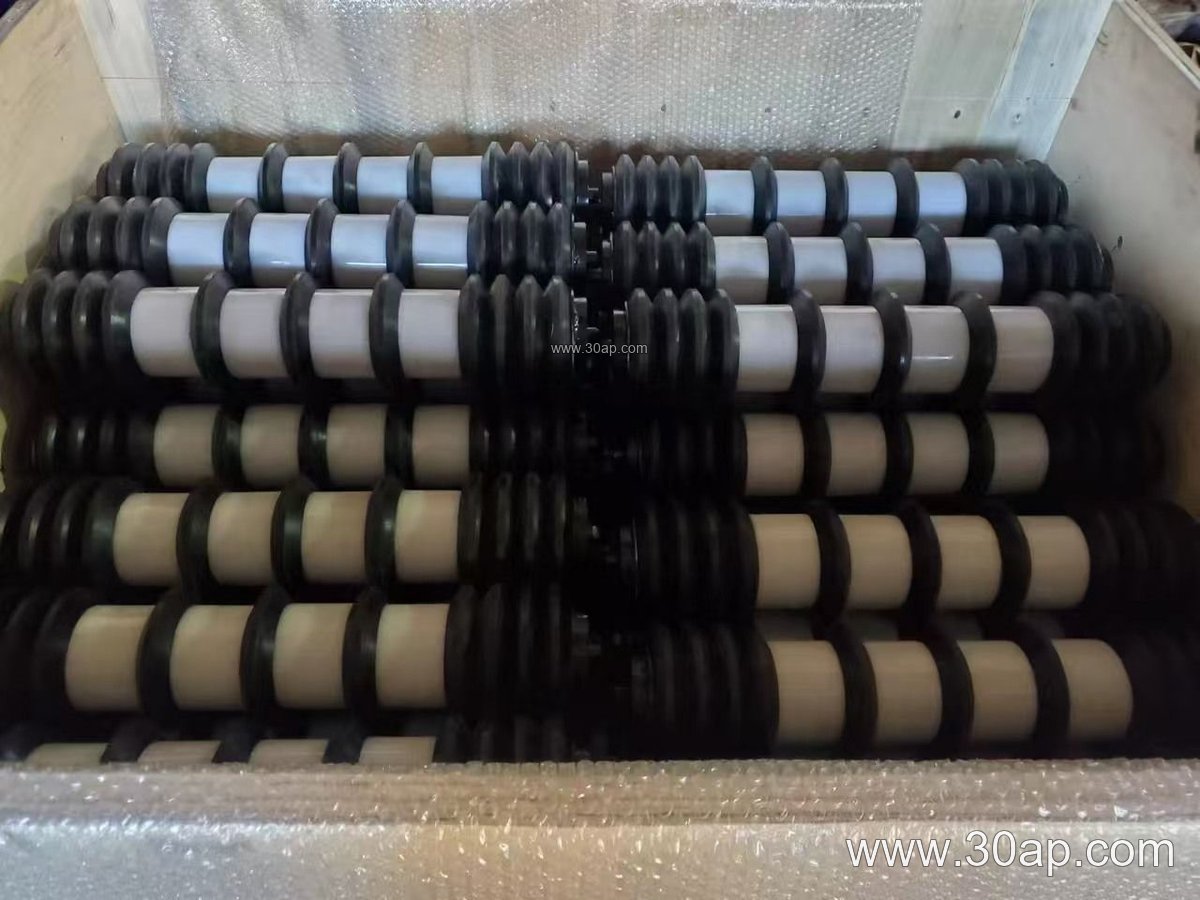
Bend pulley assemblies appear in many bulk handling industries. In a sand and gravel plant, they help route the conveyor belt around structural obstacles or into a transfer chute. In a cement plant’s clinker handling line, a bend pulley assembly may be used in the tensioning take-up area to maintain belt wrap on the drive pulley. In a power plant coal yard, these assemblies work alongside conveyor idlers and support brackets to keep the belt aligned through long horizontal runs. The assembly is also common in tunnel muck removal, fertilizer handling, and grain silo operations where space is limited and the belt must change elevation or direction.
Because the bend pulley does not transmit drive torque, its bearing load is mainly radial from belt tension. Proper alignment with the conveyor frame and with adjacent idler rollers is important to prevent belt edge wear and misalignment. The assembly should be mounted so that the belt approaches and leaves at the intended wrap angle, which is often modest compared with the drive pulley.
Selection and Maintenance Notes for Buyers
When specifying a bend pulley assembly, buyers should confirm the belt width, the required pulley diameter, the shaft diameter based on calculated tension, and the lagging type. A common combination might be B1200 × Ø1000 with 12 mm diamond lagging, but many other combinations are valid. The table below shows reference examples, not fixed pairings.
| Belt Width | Typical Pulley Face Width | Example Pulley Diameter | Common Lagging |
|---|---|---|---|
| B500 | ≈600 mm | Ø250 or Ø315 | Plain or 8 mm rubber |
| B800 | ≈950 mm | Ø400 or Ø500 | 10 mm diamond |
| B1000 | ≈1150 mm | Ø500 or Ø630 | 12 mm rubber |
| B1400 | ≈1600 mm | Ø800 or Ø1000 | 15 mm ceramic |
| B1800 | ≈2000 mm | Ø1000 or Ø1250 | 15–20 mm rubber |
Buyers should also check bearing type and sealing, as dusty conditions in a quarry or a coal plant can shorten bearing life. The frame or bracket should match the conveyor structure and allow for belt tracking adjustment. During maintenance, inspect lagging wear, bearing play, and shaft alignment. A worn bend pulley assembly can cause belt mistracking and increased edge damage. Replacing lagging or bearings at the recommended intervals helps avoid unplanned downtime.
Remember that a bend pulley assembly is a directional component, not a substitute for a drive or tail pulley. When used correctly with compatible conveyor idlers and brackets, it contributes to smooth belt travel and reliable material transport across many industries.