What a Large Conveyor Idler Is
A large conveyor idler is a heavy-duty roller assembly that supports the conveyor belt and the material load on high-capacity bulk handling lines. In practice, the term usually refers to an idler roller built around a larger roll diameter, a thicker shell, and a heavier bearing set than a standard unit, matched to wide belts and high tonnage. It is a carrying component, not a drive component: the conveyor pulley at the head end pulls the belt, while the idlers along the structure simply keep the belt in shape and reduce friction.
These units appear in a wide range of duty points, from a limestone quarry transfer tower to a coal yard feeding a power plant boiler, and from a cement clinker line to a port stockyard. In each case the job is the same: carry the belt, keep the trough profile, and let the belt run with minimal drag.
How a Large Idler Roller Is Built
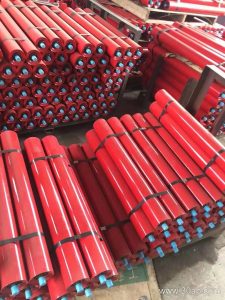
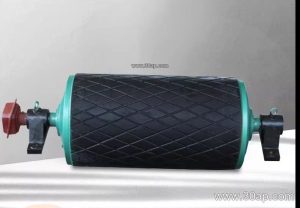
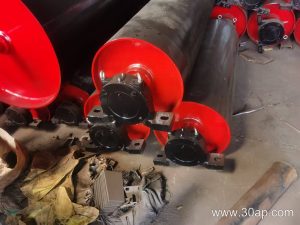
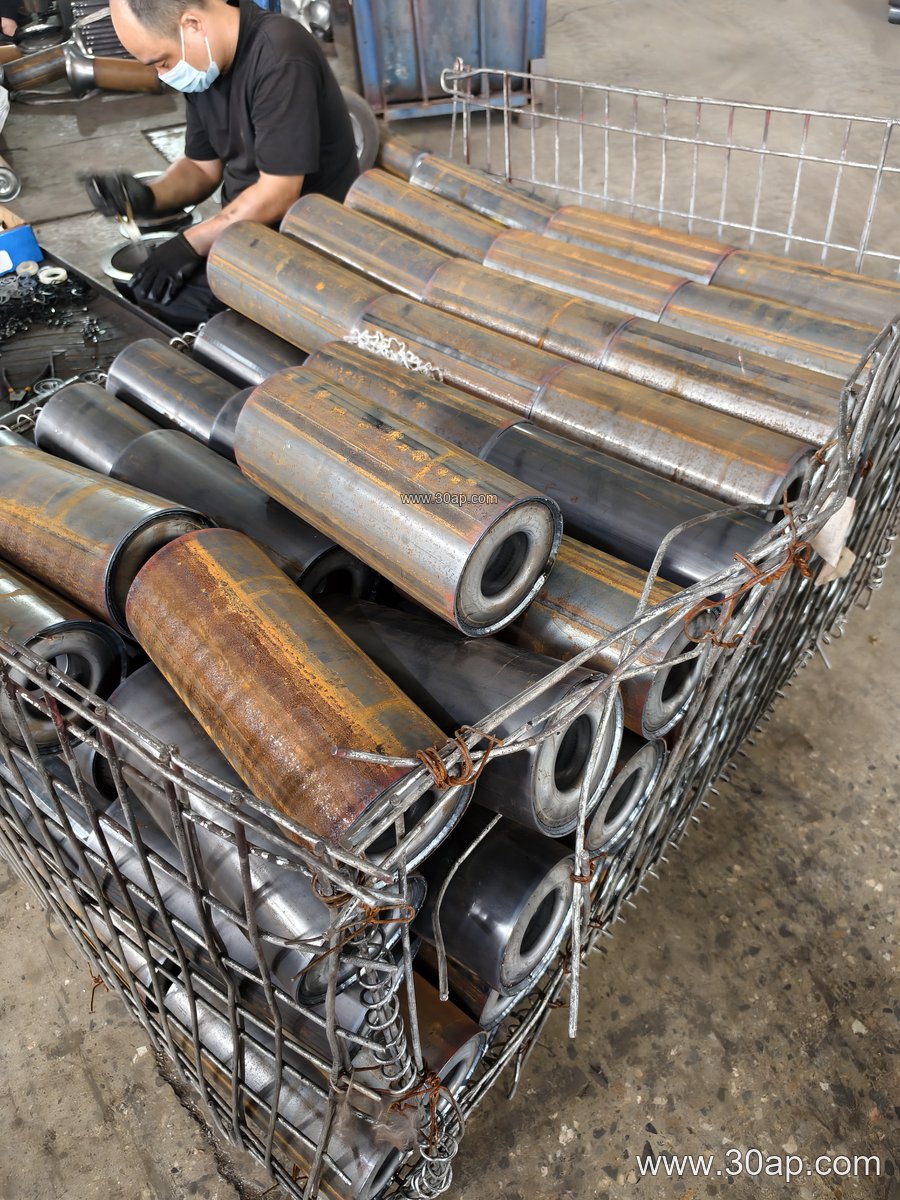
A typical large idler roller combines a steel tube shell, end caps, a shaft, and sealed bearings. The shell may be plain steel, nylon coated, ceramic covered, or fitted with rubber rings where impact and wear are severe. Bearing selection follows load and speed rather than belt width alone; common bearing sizes in this class include 6205, 6306, 6308, and 6310, and the same roll diameter can be supplied with more than one bearing option depending on the duty.
Sealing is the detail that decides service life in dusty plants. Labyrinth seals, contact seals, and grease retention features keep fines out of the bearing cavity. On a large conveyor idler running under a loaded belt, a failed seal usually leads to bearing seizure and a stopped line, so buyers should ask about seal design and grease arrangement rather than only the shell thickness.
Frame Forms and Where They Sit
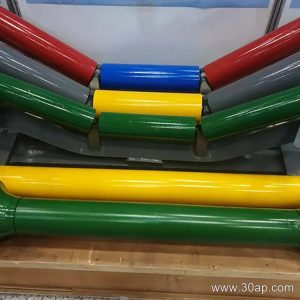
Large idlers are usually supplied as part of an idler set. The carrying side often uses a three-roll trough set, with the side rolls inclined at a trough angle. Common trough angles are 20, 30, 35, and 45 degrees; a steeper angle deepens the material profile but raises the load on the side rolls. Transition idlers are placed near the head and tail to ease the belt from flat to troughed, while return idlers support the empty strand underneath.
- Three-roll trough set — main carrying position on wide belts
- Transition set — smooths the belt path near pulleys
- Return and V-return idlers — support the empty side
- Impact and rubber-ring idlers — used at loading points
- Self-aligning types — used where belt tracking is a concern
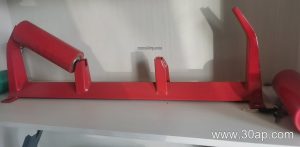
The conveyor bracket and frame that hold these rolls must match the roll length and the trough angle; a set built for one frame will not fit another without checking dimensions.
Roll Diameter, Belt Width, and Roll Length
Roll diameter in this class is commonly in the range of Ø133, Ø159, Ø178, Ø194, and Ø219 mm, though smaller diameters still appear on lighter sections of the same line. Belt width and roll length are related but not fixed pairs: roll length changes with belt width, trough angle, and set form, and the side rolls and centre roll can differ within one set. The figures below are common examples only, not a supply rule.
| Belt width | Typical centre roll length (three-roll trough, example) |
|---|---|
| B650 | 250 mm |
| B800 | 315 mm |
| B1000 | 380 mm |
| B1200 | 465 mm |
| B1400 | 530 mm |
| B1600 | 600 mm |
| B1800 | 670 mm |
Do not assume one belt width locks in one pulley diameter or one shaft size. Load, belt speed, spacing, and material density all shape the final selection, and a large conveyor idler on a steep or impact-heavy section may need a different specification from the same belt width on a flat run.
Buyer Checklist
Before ordering, confirm the belt width, the trough angle, the set form, the roll diameter, the roll length, and the bearing size. State the material being handled and whether the location is a loading point, a long carry run, or a return strand. Ask how the idler roller is sealed and how it is greased. Check that the conveyor bracket and frame match the supplied rolls. For a coal handling system, a cement plant, or a quarry line, a few extra questions at the quotation stage are cheaper than a stopped belt later.