What a Stone Crushing Conveyor Belt Is
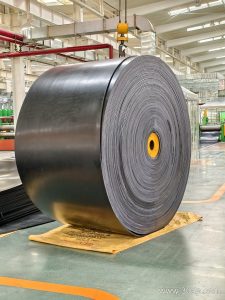
A stone crushing conveyor belt is the heavy-duty rubber belt that carries blasted rock, crushed aggregate and screened stone from the crusher discharge to stockpiles, screening decks or load-out points. It is the load-carrying element of a crushing line, and its job is simple to state but hard to do well: move sharp, abrasive, heavy material continuously without stretching, tearing or slipping. In mines, quarries, cement works, power plants and sand and gravel yards, this belt is often the single component that decides whether the whole circuit keeps running.
Engineers also call the same product a crusher belt, a quarry conveyor belt or a stone crusher conveyor belt. These are equivalent names for the same item, not different products.
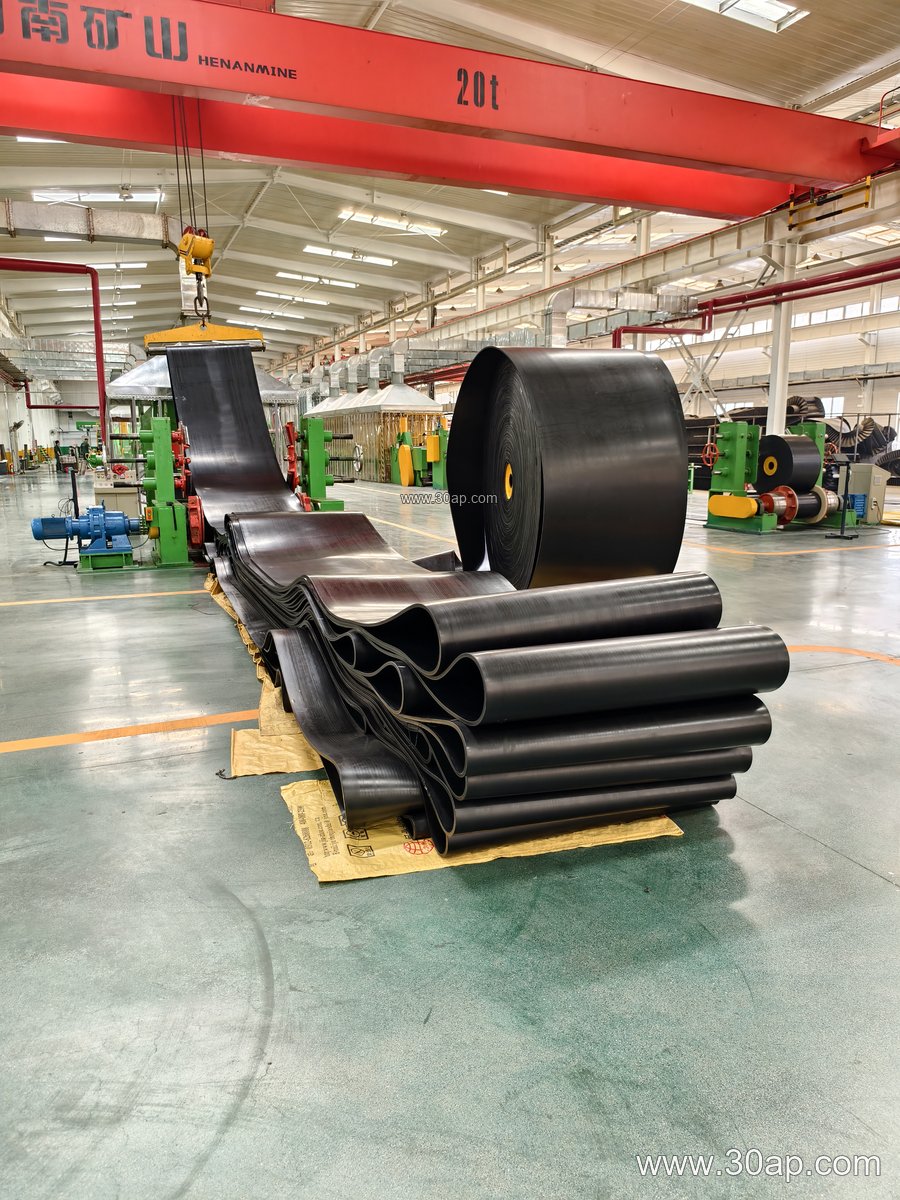
Construction and Belt Build
The belt is a composite. A carcass of fabric plies or steel cords carries the tension, and rubber covers on both faces protect that carcass from impact and abrasion. Fabric carcasses are usually made of EP (polyester-cotton) or NN (nylon) plies; steel cord construction is chosen for long runs and high tonnage. The top cover faces the stone, the bottom cover runs on the idler rollers, and the edge rubber guards the carcass against moisture and fraying.
Cover thickness and compound quality matter more in a crusher line than in a light-duty conveyor. A primary crusher discharge belt takes lumpy, angular rock, so a thicker, tougher top cover and, where needed, impact idlers under the loading point reduce damage. Secondary and tertiary belts carry smaller but still abrasive material and usually need strong abrasion resistance rather than extreme impact protection.
Common Specifications
The figures below are typical reference values. Actual construction is set by the conveyor design, the material and the supplier.
| Parameter | Common options | Notes |
|---|---|---|
| Belt type | EP, NN, steel cord, PVC, PVG | EP and NN are common in crushing plants; PVC/PVG suit special duty such as underground or fire-sensitive areas |
| Strength grade | EP200, EP315, EP400, EP500, EP630, EP800, EP1000, EP1250, EP1600, EP2000 | Selected by calculated tension, not by habit |
| Belt width | B500, B650, B800, B1000, B1200, B1400, B1600, B1800, B2000 | Set by lump size, capacity and troughing angle |
| Cover thickness | 3+1.5, 4+2, 5+2, 6+2, 8+3 mm | Top + bottom cover; crusher discharge belts often use thicker tops |
| Carcass plies | 2 to 6 plies | More plies for higher tension and longer centres |
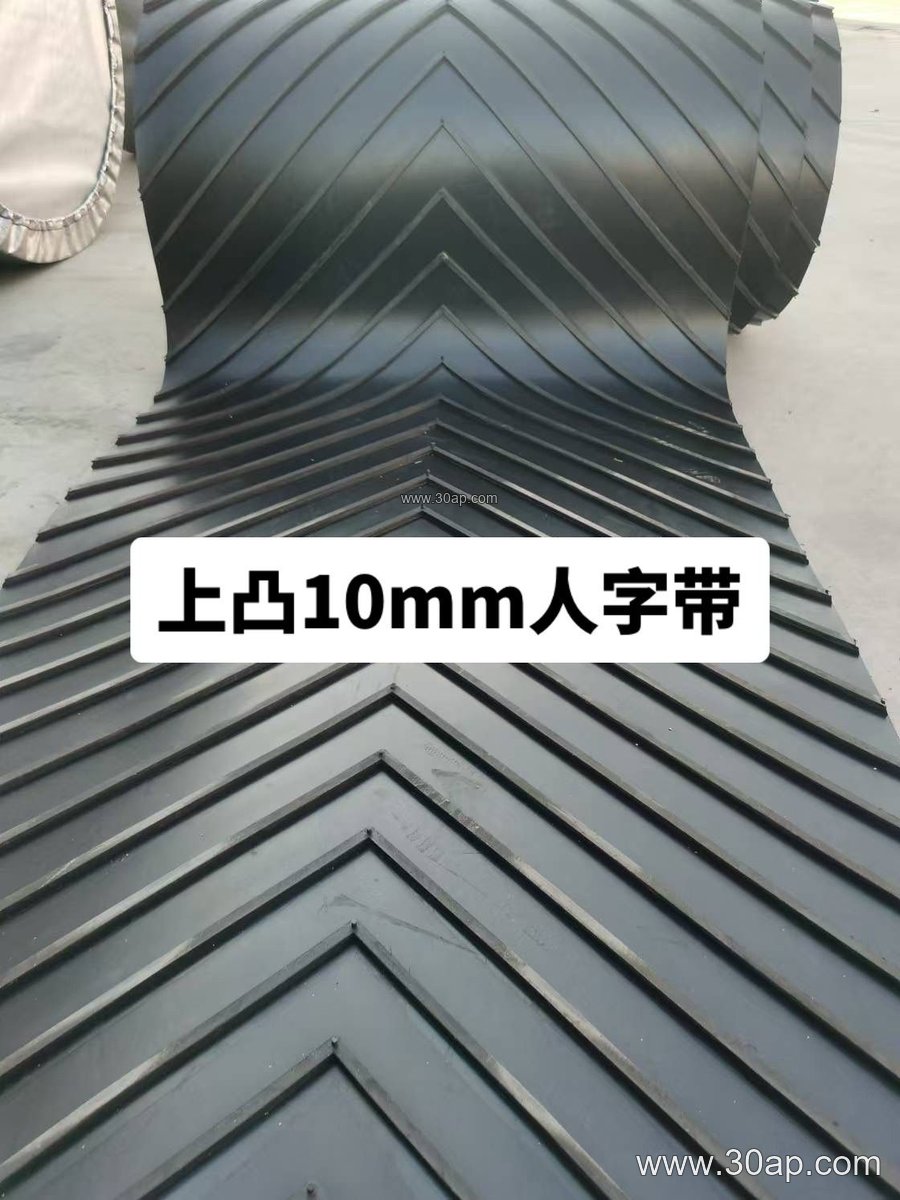
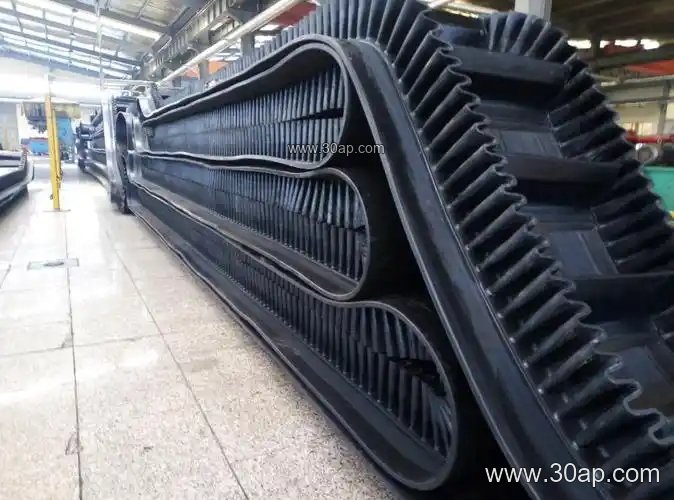
| Surface forms | Smooth, patterned, chevron, corrugated sidewall | Patterned and chevron belts help on inclines; sidewall belts contain material on steep lifts |
Special compounds are available for heat, oil, flame resistance, antistatic service, cold climates and acid or alkaline environments. A cement plant handling hot clinker and a coal yard needing flame resistance will not use the same cover compound, even if the width and strength grade look identical.
Where It Runs
In a quarry, the belt usually starts under the primary jaw or impact crusher, where surge loads and sharp edges are worst. From there it feeds a screen, transfers to a stockpile conveyor or returns oversize to a secondary crusher. In a coal preparation plant the same belt type moves raw coal and washed product, often with flame-resistant covers. Cement plants use it for limestone, clay and clinker; power plants for coal and ash; sand and gravel yards for washed aggregate. Transfer points, inclines and shuttle conveyors all place different demands on the belt, so the specification should follow the duty, not a single plant-wide standard.
Selection Points for Buyers
- Calculate tension first. Belt strength follows the duty tension with a safety margin, not the width alone. A wide belt is not automatically a strong one.
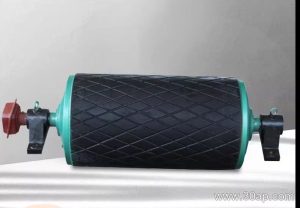
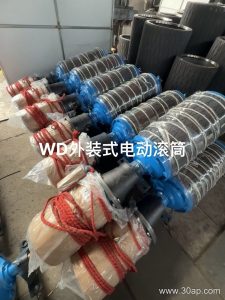
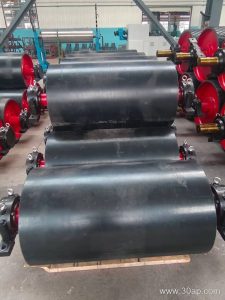
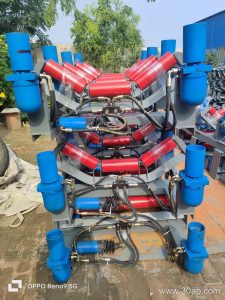
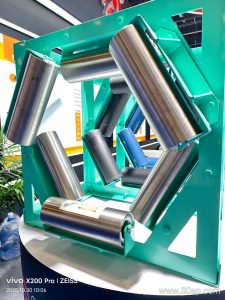
- Match the belt to the pulleys and rollers. The conveyor pulley, including drive, tail and bend pulleys, has its own diameter and shaft size; these are separate from belt width and must be checked against the belt’s minimum pulley requirement.
- Check the loading zone. Impact idlers, skirt rubber and a suitable top cover protect the carcass where stone hits the belt.
- Consider the environment. Heat, oil, dust, cold and fire risk each point to a different cover compound.
- Plan splices and spares. Long belts need reliable splicing; keeping a spare length and a set of idler rollers shortens downtime.
Installation and Maintenance Notes
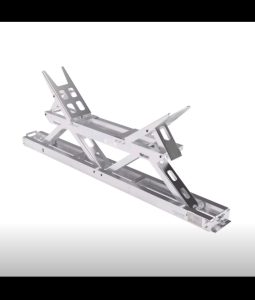
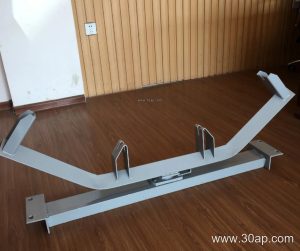
Alignment is the first defence against edge damage. Check that the belt tracks centrally over the idler rollers and that the conveyor pulley faces are square to the frame. Keep the conveyor bracket and frame bolts tight, since a loose bracket can tilt a roller and start a tracking fault. Clean spillage from return rollers, inspect the belt edges for cuts, and re-tension or re-splice before small damage becomes a full break. In crushing circuits, most belt failures start at the loading point or the splice, so those two areas deserve routine attention.
Choose the belt for the stone, the tonnage and the site conditions, and confirm the final specification with the conveyor designer and the belt supplier.